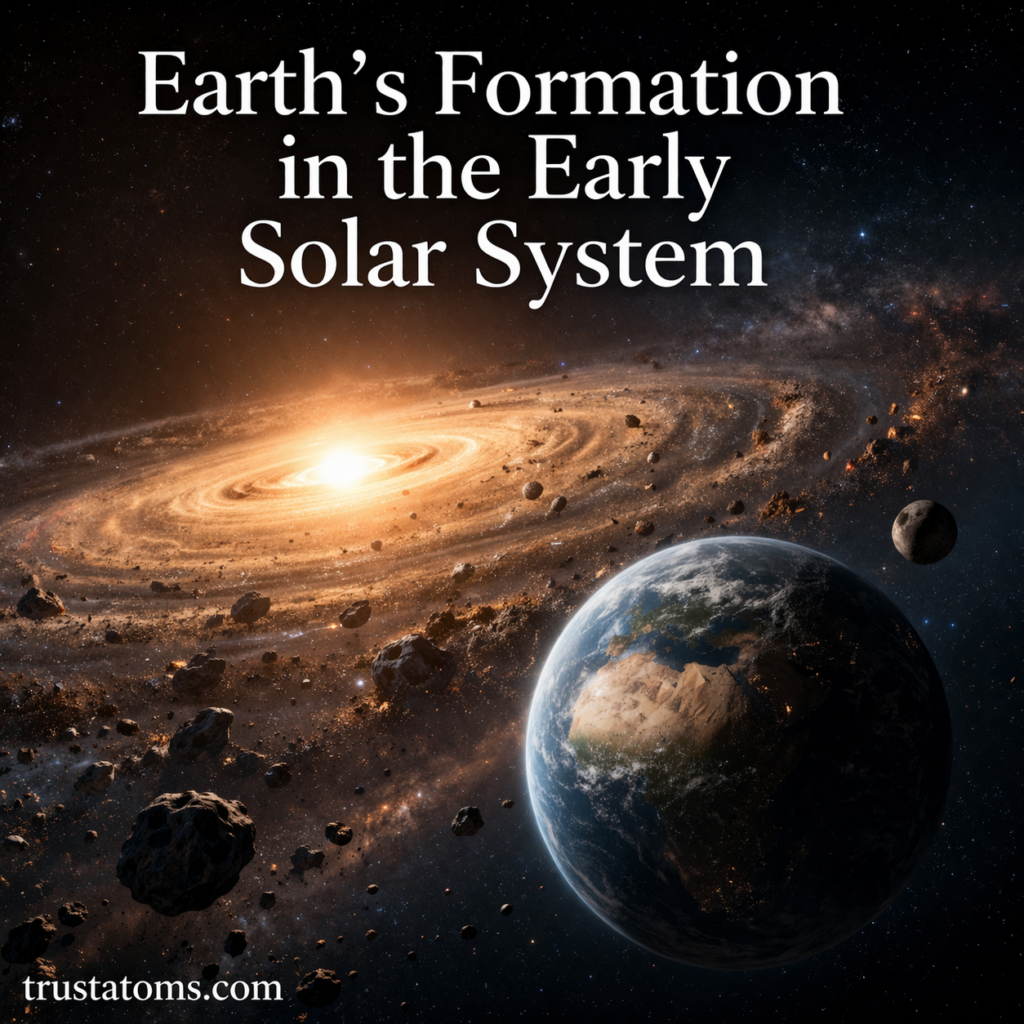
Earth did not come into existence by chance alone. Its origin reflects a sequence of ordered, purposeful processes that brought structure out of what was once an unformed cloud of material. From its earliest stages, the development of Earth shows patterns of balance, stability, and precise conditions that would eventually support life.
The Beginning of the Solar System
The story of Earth begins with a vast cloud of gas and dust in space, often called a solar nebula.
How it all started
Rather than random activity, this stage shows a clear progression:
- The cloud condensed and began rotating
- Material gathered toward the center, forming the Sun
- The remaining matter spread into a disk with defined structure
This organized disk became the foundation from which the planets formed.
From Fine Particles to Solid Bodies
Within this disk, tiny particles began coming together in a consistent and orderly way.
Stages of formation
- Dust particles bonded into larger grains
- Grains combined into pebbles and rocks
- These grew into larger bodies called planetesimals
The steady buildup of material reflects a process that moved toward increasing complexity and stability.
Accretion: The Growth of Earth
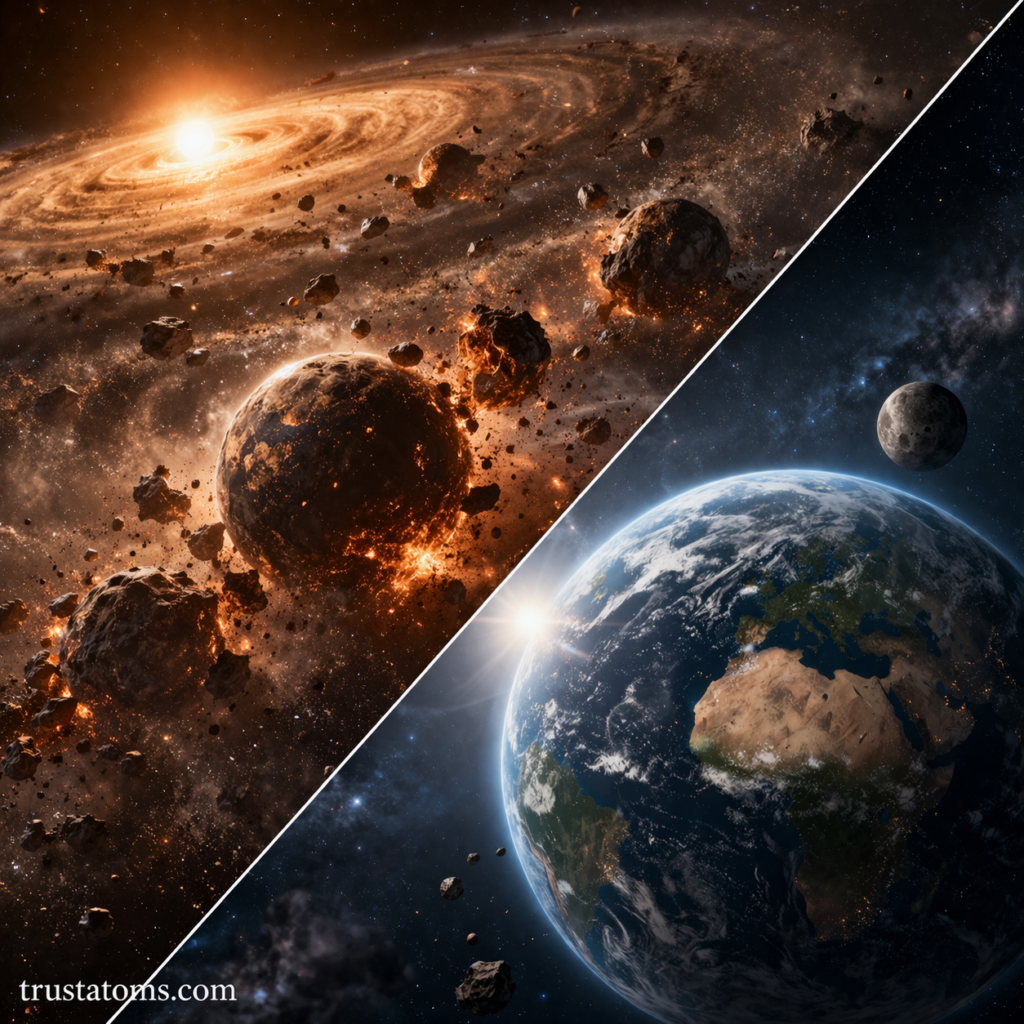
Earth formed as these bodies came together through accretion—a process of gradual assembly.
What shaped early Earth?
- Repeated collisions that contributed to growth
- Gravitational attraction guiding material together
- The formation of a single, cohesive planetary body
Rather than chaotic randomness, this process followed a clear direction, resulting in a planet with consistent physical properties.
Differentiation: A Structured Interior
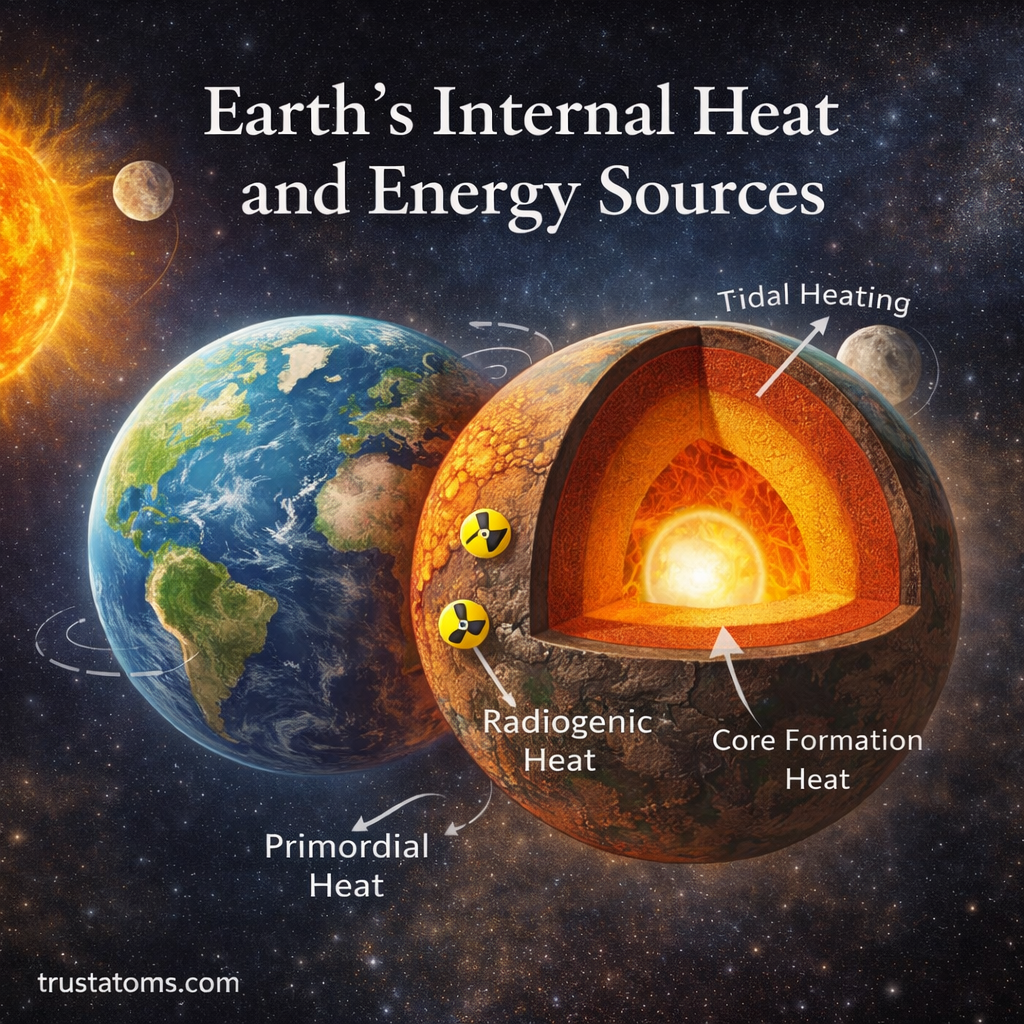
As Earth formed and heated, its interior separated into distinct layers.
How the layers formed
- Dense materials moved inward to form the core
- Lighter materials rose to form the mantle and crust
This layering is not arbitrary—it creates a stable structure that supports geological activity and protects the planet.
The Formation of the Moon
A major event in Earth’s early history involved a large collision with another body.
Outcomes of this event
- Material was placed into orbit around Earth
- This material formed the Moon
- Earth’s rotation and tilt were influenced in a balanced way
The result is a system where Earth and Moon interact in ways that stabilize climate and tides.
Cooling and Surface Formation
As Earth cooled, its surface began to solidify.
Key developments
- A stable crust formed
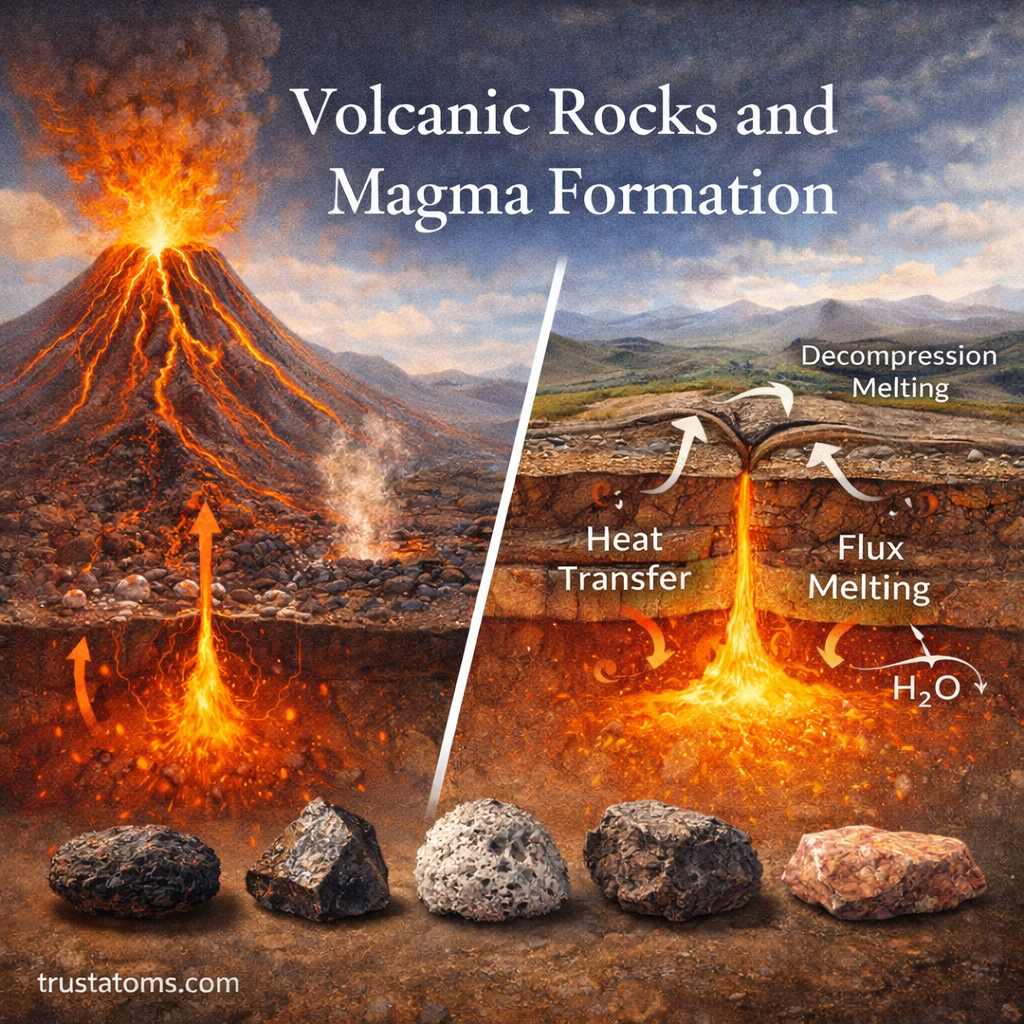
- Volcanic activity released gases into the atmosphere
- Water vapor condensed to form oceans
These changes transformed Earth into a more stable and life-supporting environment.
The Early Atmosphere
Earth’s first atmosphere contained the essential building blocks for future development.
Main components
- Water vapor
- Carbon dioxide
- Nitrogen
- Small amounts of other gases
Over time, this atmosphere changed in ways that made Earth even more suitable for life.
Conditions That Support Life
Earth’s ability to sustain life is not the result of a single factor but a combination of well-balanced conditions.
Key features
- The right distance from the Sun
- The presence of liquid water
- A protective magnetic field
- A stable rotation and orbit
Each of these factors contributes to an environment where life can exist and thrive.
Key Takeaways
- Earth formed from a structured disk of gas and dust surrounding the Sun
- Small particles combined in a steady progression to form a planet
- Internal layering created a stable and functional structure
- The Moon formed in a way that contributes to Earth’s stability
- Cooling led to the formation of oceans and atmosphere
- Earth’s conditions are finely balanced to support life
Final Thoughts
Earth’s formation reflects a process marked by order, structure, and balance. From its earliest beginnings, the conditions that shaped the planet appear carefully aligned to produce a stable world capable of sustaining life.
Studying Earth’s origins highlights how interconnected its features are—from its internal structure to its position in space—and how each part contributes to the whole.