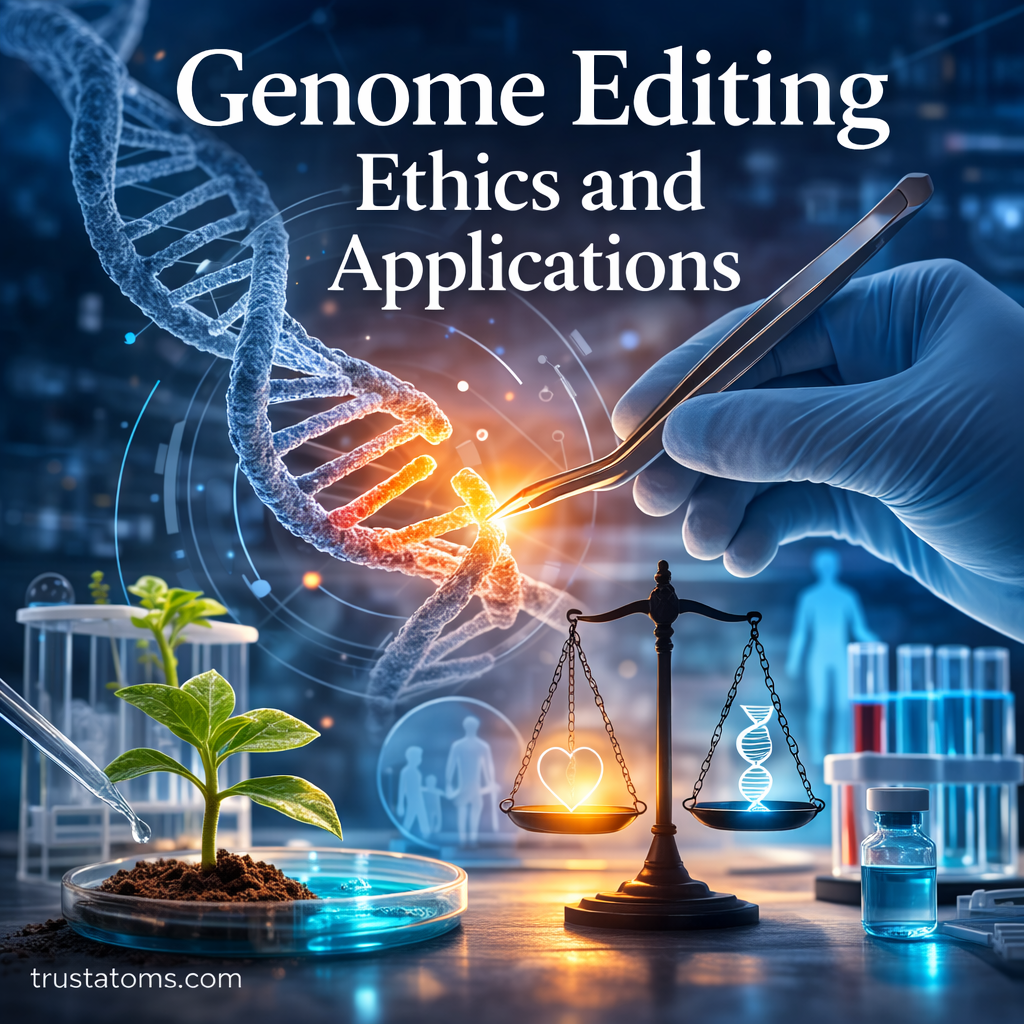
Genome editing is one of the most transformative scientific developments of the 21st century. By allowing scientists to precisely modify DNA, genome editing technologies open new possibilities in medicine, agriculture, and biological research. These tools enable researchers to remove harmful mutations, study gene function, and potentially treat genetic diseases.
At the same time, genome editing raises important ethical questions. Altering genetic material can have long-term biological consequences, and some applications—especially those affecting human embryos—spark intense debates about safety, fairness, and responsibility.
Understanding both the applications and ethical considerations of genome editing is essential as the technology continues to evolve.
What Is Genome Editing?
Genome editing refers to technologies that allow scientists to make targeted changes to an organism’s DNA. These changes may involve:
- Adding new genetic material
- Removing specific DNA segments
- Replacing one DNA sequence with another
- Turning genes on or off
Modern genome editing tools work like molecular scissors that cut DNA at precise locations. After the cut, the cell’s natural repair systems modify the DNA sequence.
These techniques enable researchers to study genes more efficiently and develop potential treatments for genetic disorders.
Major Genome Editing Technologies
Several tools have been developed to perform genome editing. Each uses different methods to locate and modify DNA sequences.
CRISPR-Cas Systems
CRISPR-based technologies are currently the most widely used genome editing tools. They rely on a guide molecule that directs a DNA-cutting enzyme to a specific genetic sequence.
Key advantages include:
- High precision in targeting DNA
- Relatively low cost
- Faster editing compared to older techniques
- Flexibility for multiple genetic targets
CRISPR technology has rapidly accelerated research across genetics and biotechnology.
Zinc Finger Nucleases
Zinc finger nucleases were among the first programmable genome editing tools. These engineered proteins bind to specific DNA sequences and cut the DNA at targeted locations.
Although effective, they are more difficult to design and implement than newer editing systems.
TALENs (Transcription Activator-Like Effector Nucleases)
TALENs are another gene editing technology that uses engineered proteins to recognize DNA sequences and create targeted breaks.
They are known for their high specificity but require complex design processes compared with CRISPR-based approaches.
Applications of Genome Editing
Genome editing technologies are used across many scientific fields, from medicine to environmental research.
Medical Applications
Genome editing holds significant promise for treating genetic diseases.
Potential medical uses include:
- Correcting mutations responsible for inherited disorders
- Developing gene therapies for rare diseases
- Creating personalized treatments based on a patient’s genetics
- Improving immune cell therapies for cancer
Researchers are exploring genome editing as a way to treat conditions such as sickle cell disease and certain types of inherited blindness.
Agricultural Biotechnology
Genome editing is also transforming agriculture.
Scientists can modify crop genomes to:
- Improve resistance to pests and diseases
- Enhance tolerance to drought or heat
- Increase crop yield
- Improve nutritional content
These advances could help support global food security in the face of climate change and population growth.
Disease Research
Researchers frequently use genome editing in laboratory studies to investigate how genes function.
Applications include:
- Creating model organisms with specific genetic mutations
- Studying gene interactions
- Understanding disease mechanisms
- Testing experimental therapies
These studies help scientists better understand complex biological systems.
Environmental and Conservation Efforts
Genome editing is being explored for ecological and conservation purposes.
Possible uses include:
- Controlling invasive species
- Preventing the spread of vector-borne diseases
- Protecting endangered species through genetic interventions
However, environmental genome editing raises additional ethical and ecological concerns.
Ethical Concerns in Genome Editing
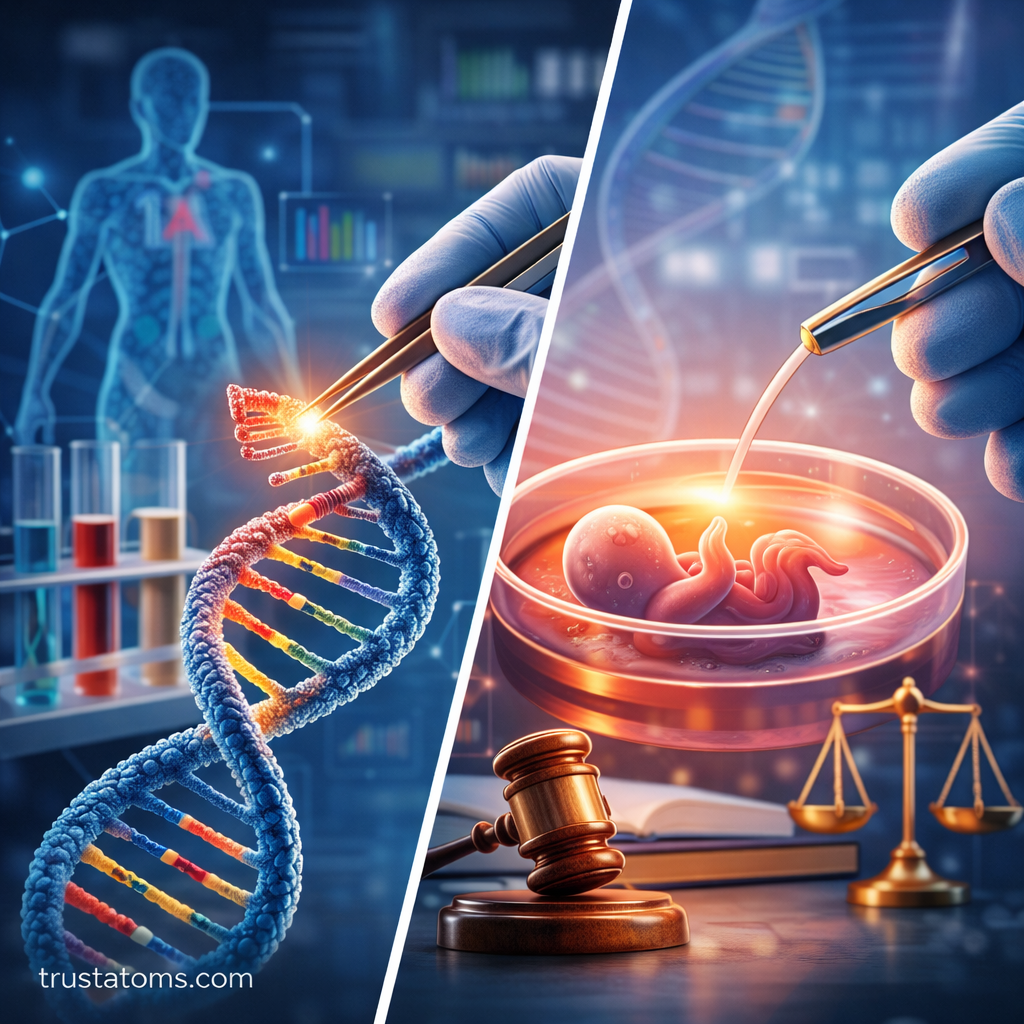
Despite its scientific potential, genome editing raises complex ethical questions. These concerns often focus on the consequences of altering genetic material in living organisms.
Germline Editing
One of the most controversial issues is germline editing, which involves altering DNA in reproductive cells or embryos.
Because these changes can be inherited by future generations, they may permanently alter the human gene pool.
Concerns surrounding germline editing include:
- Unknown long-term health effects
- Lack of consent from future generations
- Potential misuse for non-medical enhancements
- Ethical questions about altering human inheritance
Many countries currently restrict or regulate germline editing research.
Genetic Enhancement
Another ethical issue involves using genome editing not to treat disease but to enhance human traits.
Possible enhancement goals might include:
- Increased physical strength
- Improved cognitive abilities
- Altered physical appearance
Critics argue that such applications could create social inequalities or promote forms of genetic discrimination.
Safety and Unintended Effects
Genome editing is powerful but not perfect. One concern is the possibility of off-target effects, where unintended DNA sequences are modified.
Potential risks include:
- Unexpected genetic mutations
- Unintended health consequences
- Long-term ecological impacts
Ensuring safety and accuracy remains a key focus of genome editing research.
Accessibility and Fairness
Another ethical challenge is ensuring equitable access to genome editing therapies.
Advanced genetic treatments could be expensive, raising concerns about:
- Unequal access between wealthy and low-income populations
- Global disparities in healthcare technology
- Ethical distribution of medical innovation
Balancing innovation with fairness is an ongoing challenge.
Regulatory Approaches Around the World
Countries have developed different policies for regulating genome editing.
Some governments allow genome editing for research but prohibit clinical applications involving human embryos. Others permit limited medical uses under strict oversight.
Regulation generally focuses on:
- Research ethics review boards
- Clinical trial oversight
- Restrictions on human germline editing
- Environmental impact assessments
International scientific organizations also encourage transparency and responsible research practices.
Future Directions in Genome Editing
Genome editing technologies are advancing rapidly. Scientists continue to improve precision, safety, and efficiency.
Emerging developments include:
- More accurate gene editing enzymes
- Improved delivery systems for gene therapies
- Advanced genome editing methods that avoid cutting DNA entirely
- Integration with artificial intelligence for genetic analysis
These innovations may expand the potential of genome editing while reducing risks.
Balancing Innovation and Responsibility
Genome editing has the potential to revolutionize medicine, agriculture, and biological research. However, the same technologies that offer powerful benefits also require careful ethical oversight.
Responsible development of genome editing will depend on:
- Strong regulatory frameworks
- Transparent scientific practices
- Global collaboration among researchers
- Public engagement in ethical discussions
By balancing innovation with ethical responsibility, society can harness the benefits of genome editing while minimizing potential risks.
Final Thoughts
Genome editing represents a remarkable scientific breakthrough with the power to reshape biology and medicine. From treating genetic diseases to improving crop resilience, its applications are vast and transformative.
At the same time, ethical questions surrounding genetic modification—especially in humans—highlight the need for thoughtful regulation and responsible use.
As the science progresses, ongoing dialogue between scientists, policymakers, and the public will be essential to guide the future of genome editing.