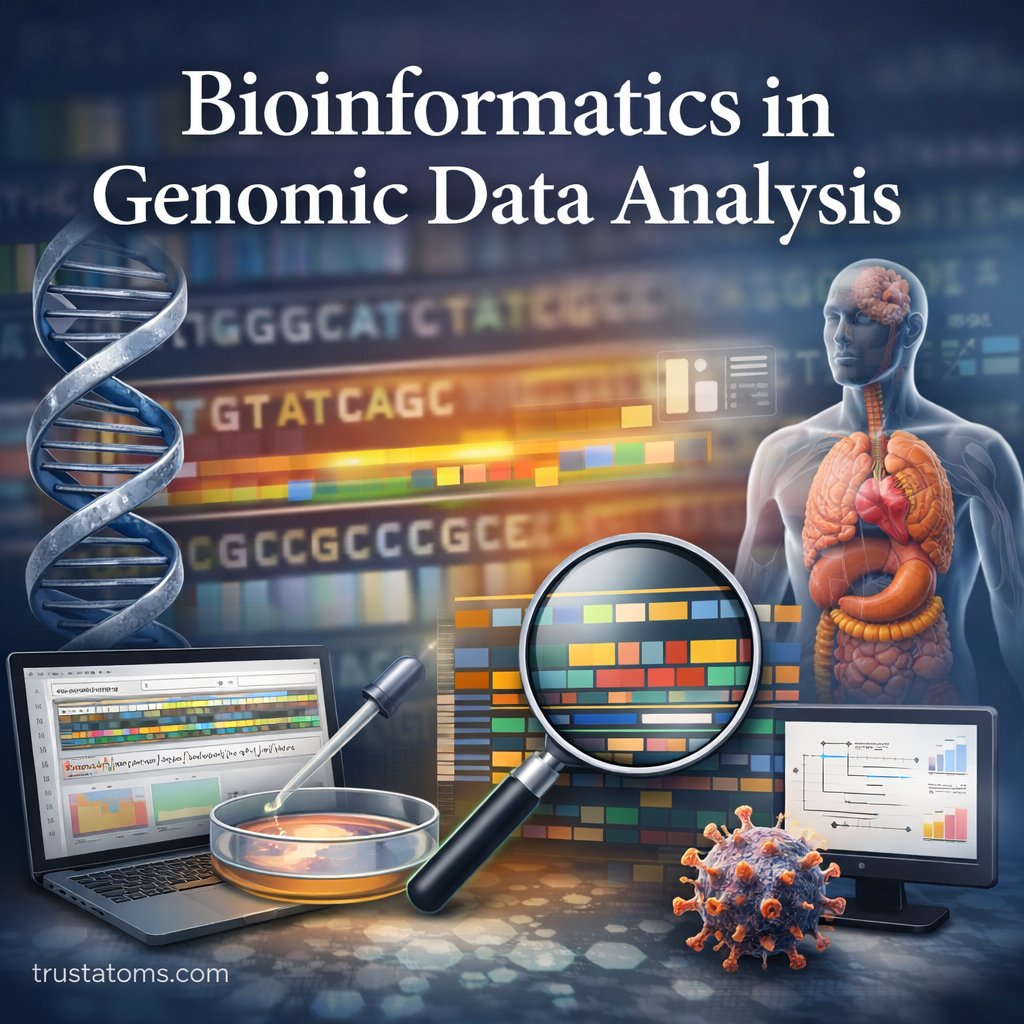
Bioinformatics in genomic data analysis uses computers, statistics, and biological knowledge to interpret DNA sequences and identify genetic differences. It transforms raw sequencing information into results that help scientists investigate genes, inherited conditions, microorganisms, and relationships between organisms.
Modern sequencing instruments can generate millions of DNA fragments in a single experiment, making manual analysis impractical. By combining the study of biology with computational methods, researchers can organize these fragments, compare genomes, and investigate how genetic changes affect biological processes.
However, identifying a DNA difference does not automatically explain its significance. Reliable genomic analysis requires quality checks, appropriate statistical methods, and careful interpretation of the available evidence.
What Is Bioinformatics?
Bioinformatics is an interdisciplinary field that develops and applies computational methods to collect, store, analyze, and interpret biological information. Although it includes protein structures, molecular interactions, and other datasets, genomic bioinformatics focuses primarily on DNA and related genetic information.
Researchers use bioinformatics to compare DNA sequences, identify genes, detect genetic variants, and investigate relationships between biological characteristics and genetic differences.
Genomic analysis also connects with other research methods. For example, transcriptomics in gene expression studies examines RNA activity, while genome-wide association studies investigate statistical relationships between genetic variants and observable traits.
These approaches answer different questions. DNA sequencing identifies genetic information, RNA analysis helps reveal which genes are active, and association studies investigate how genetic differences relate to characteristics across populations.
Why Bioinformatics Is Essential in Genomic Research
The human genome contains approximately 3 billion DNA base pairs in a single set of chromosomes. Sequencing instruments typically read DNA in smaller fragments, so researchers need software to organize those fragments and determine how they relate to a complete genome.
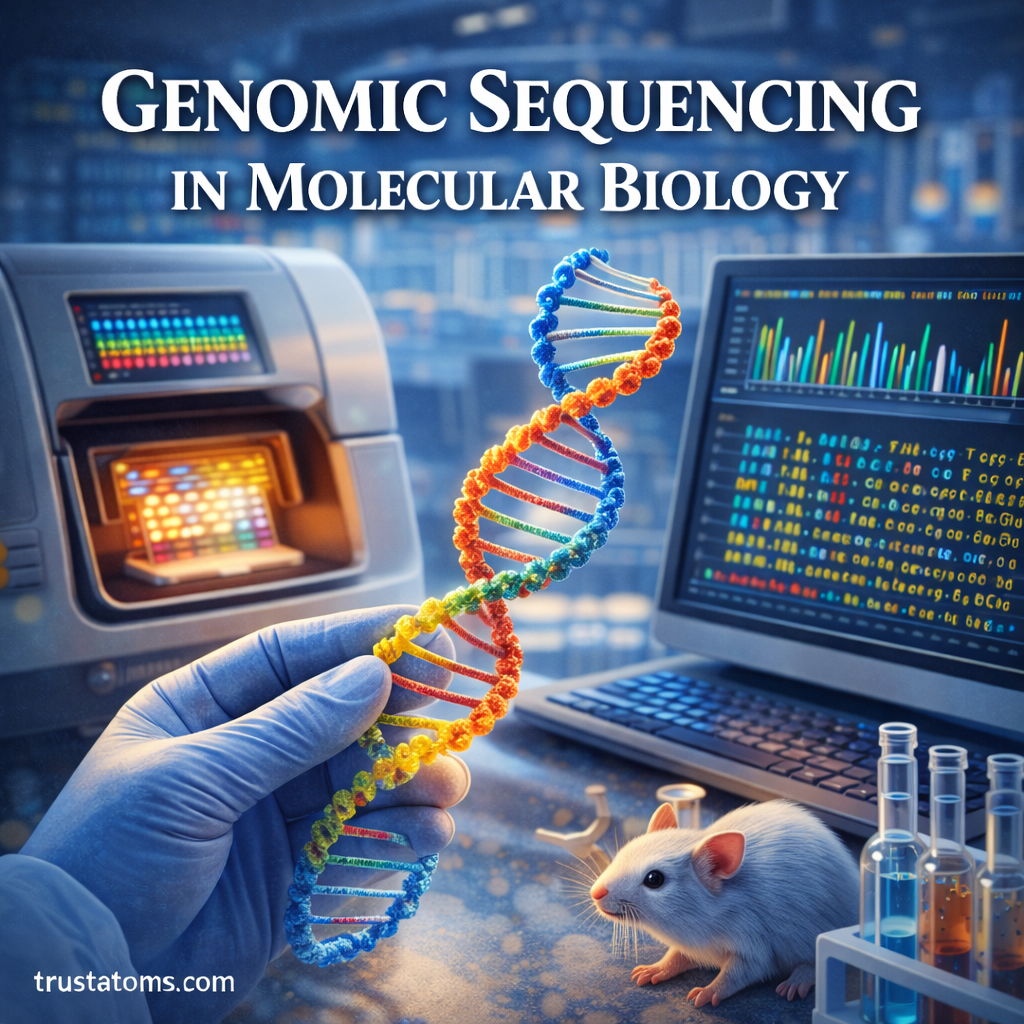
Understanding genomic sequencing in molecular biology explains how researchers obtain genetic information from biological samples. Different DNA sequencing technologies produce reads with different lengths, accuracy characteristics, and computational requirements.
Bioinformatics makes these datasets manageable by automating sequence comparisons, detecting potential errors, identifying genetic differences, and organizing results into reproducible workflows.
Without computational analysis, comparing millions of DNA fragments or examining genetic differences across hundreds of samples would be extremely difficult.
Types of Genomic Data Analyzed Using Bioinformatics
DNA Sequence Data
DNA sequencing produces information about the order of four nucleotide bases: adenine (A), thymine (T), cytosine (C), and guanine (G).
Bioinformatics pipelines process these sequences to identify genes, mutations, and structural variations. Researchers may compare sequences against a reference genome or assemble overlapping fragments when a suitable reference is unavailable.
Gene Expression Data
Gene expression studies investigate how actively genes are used under different conditions. RNA sequencing measures RNA molecules in a sample, allowing researchers to compare expression patterns between tissues, treatments, or experimental groups.
Computational analysis helps determine which genes show increased or decreased expression. These findings can suggest biological pathways involved in development, environmental responses, or disease.
Genetic Variant Data
Genetic variants are differences in DNA sequences between individuals or samples. Common categories include:
- Single-nucleotide variants, involving a change at one DNA position.
- Insertions and deletions, involving added or missing DNA bases.
- Copy-number variations, involving differences in the number of copies of a DNA region.
- Large rearrangements, including inversions and translocations.
Most detected variants are not necessarily harmful. Their significance depends on factors such as location, frequency, biological function, and supporting scientific evidence.
How Genomic Data Analysis Works
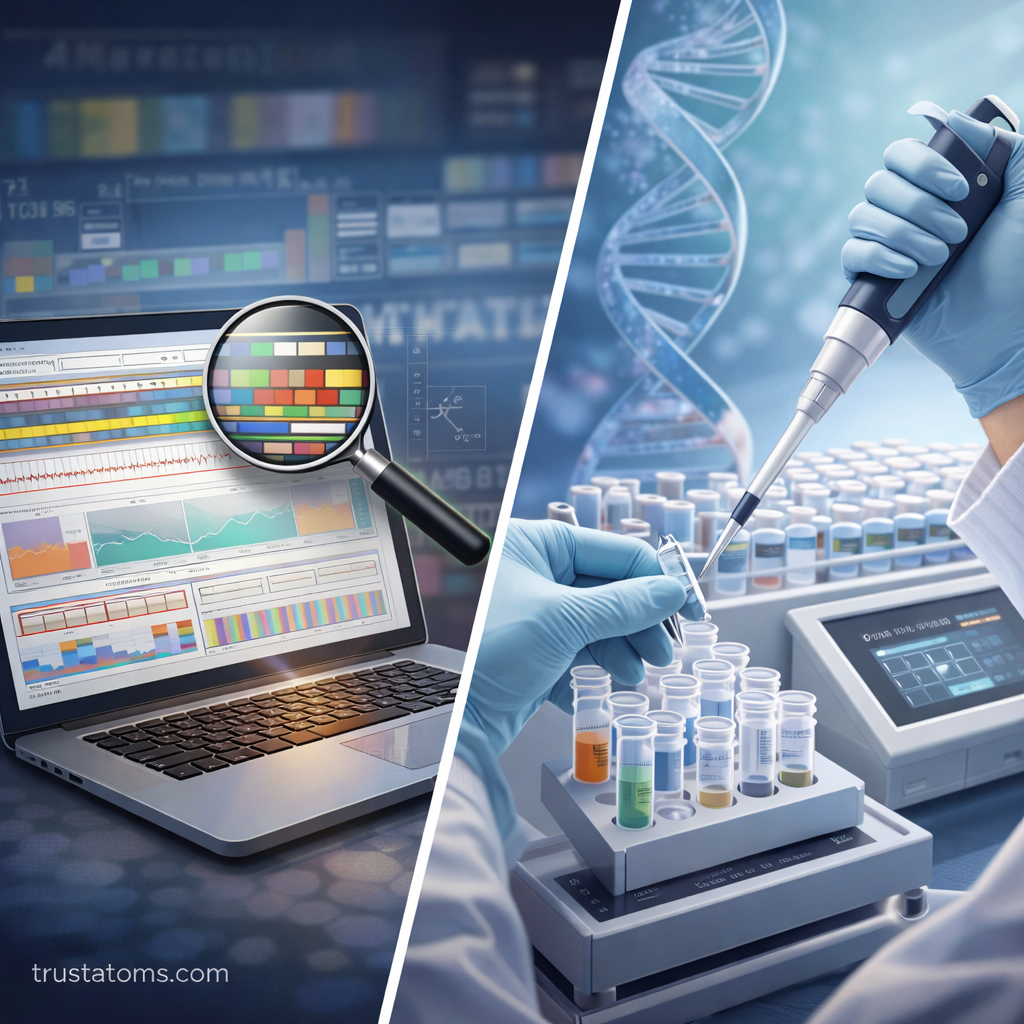
A typical genomic analysis workflow transforms sequencing output into information that researchers can investigate and interpret.
1. Sequencing and Data Collection
Scientists extract DNA from biological samples and use sequencing instruments to determine nucleotide sequences. Many technologies produce numerous individual reads rather than one continuous chromosome sequence.
Sequencing reads and their quality measurements are commonly stored in FASTQ files, which computational tools can process.
2. Quality Control
Raw sequencing data may contain incorrect base calls, unwanted adapter sequences, or low-quality regions. Quality-control software examines these problems before further analysis.
Researchers may trim low-quality regions, remove adapter contamination, or exclude unsuitable reads. Excessive filtering can also remove useful information, so thresholds must match the sequencing method and research objective.
3. Sequence Alignment or Assembly
When a reference genome is available, alignment software determines where sequencing reads most likely belong. Researchers can then examine differences between the sample and reference.
Genome assembly takes a different approach by reconstructing longer sequences from overlapping reads. This is especially useful when studying organisms without well-established reference genomes.
4. Variant Calling
Variant-calling software identifies positions where the sample differs from a reference sequence. Statistical models evaluate sequencing evidence to distinguish likely genetic differences from technical errors.
For example, suppose a reference genome contains an adenine at a particular position, while many high-quality reads from a sample contain guanine. The software may identify a single-nucleotide variant, provided the evidence satisfies its quality criteria.
5. Functional Annotation and Interpretation
Annotation software connects detected variants and genomic regions with existing biological information. It may identify nearby genes, predicted effects on proteins, regulatory regions, or previously reported associations.
These predictions require interpretation. A variant located within a gene does not necessarily alter its function, and an association with a condition does not establish that the variant causes it.
Common Bioinformatics Tools and Their Functions
Different software programs handle specific stages of genomic analysis. Researchers often combine several tools rather than relying on one application.
| Tool | Primary Function |
|---|---|
| FastQC | Examines sequencing-read quality |
| BWA | Aligns DNA reads to reference sequences |
| SAMtools | Processes and examines alignment files |
| GATK | Supports genomic variant discovery and analysis |
| BLAST | Finds similarities between biological sequences |
| IGV | Visualizes genomic alignments and variants |
Tool selection depends on sequencing technology, organism, dataset size, and analytical goals. Software versions and parameters should be documented so other researchers can reproduce the analysis.
Applications of Bioinformatics in Genomic Science
Medical Genetics and Cancer Research
Genomic analysis can help identify inherited variants associated with genetic disorders and mutations acquired by cancer cells. Researchers compare genetic findings with clinical information to investigate potential disease mechanisms and treatment options.
Clinical interpretation requires validated procedures and professional evaluation. A computational prediction alone is not sufficient to diagnose a disease or determine treatment.
Infectious Disease Surveillance
Scientists analyze bacterial and viral genomes to compare pathogen samples, investigate transmission patterns, and identify genetic changes associated with antimicrobial resistance.
Genomic similarities can support outbreak investigations, although epidemiological evidence is also necessary to understand how infections spread.
Agriculture and Crop Improvement
Plant genomic analysis helps researchers identify genetic regions associated with drought tolerance, disease resistance, and crop quality. These findings can support selective breeding and the development of improved agricultural varieties.
Evolutionary and Population Genetics
Scientists compare genetic sequences across organisms to investigate shared ancestry, population relationships, and genetic diversity. According to evolutionary biology, patterns of inherited sequence similarities and differences provide evidence for evolutionary relationships.
Computational methods help construct evolutionary trees and estimate relationships, although conclusions depend on the genes examined and the assumptions of the analytical models.
Challenges in Genomic Bioinformatics
Although computational methods make large-scale genomic research possible, several limitations affect accuracy, accessibility, and interpretation.
- Data volume: Large sequencing projects require substantial storage, processing power, and efficient data management.
- Computational complexity: Genome assembly, sequence alignment, and statistical analysis can require significant computing resources.
- Reference bias: Results may be less reliable when a reference genome poorly represents the sample being studied.
- Variant interpretation: Many genetic differences have uncertain biological or clinical significance.
- Data privacy: Human genomic information requires appropriate security, consent, and responsible data-sharing practices.
Researchers address these challenges through improved algorithms, standardized workflows, quality-control procedures, and careful management of sensitive information.
The Future of Bioinformatics in Genomics
Advances in long-read sequencing, cloud computing, and machine learning are expanding the types of genomic questions researchers can investigate. Long-read technologies can help resolve repetitive regions and complex structural changes that are difficult to analyze using short reads alone.
Researchers are also integrating genomic information with RNA, protein, and metabolite measurements. These multi-omics approaches can provide a more complete picture of biological processes than DNA analysis alone.
Artificial intelligence may improve pattern recognition and variant interpretation, but models still require independent validation, representative datasets, and transparent evaluation.
Frequently Asked Questions
What is the difference between bioinformatics and genomics?
Genomics studies the complete genetic material of organisms, including genome structure, function, and variation. Bioinformatics provides computational methods for analyzing genomic information and many other types of biological data.
Do scientists need programming skills for genomic analysis?
Programming skills are useful for automating analyses, managing datasets, and creating reproducible workflows. Languages such as Python and R are commonly used, although some genomic analysis platforms offer graphical interfaces.
Can bioinformatics predict whether someone will develop a disease?
Bioinformatics can help identify genetic variants associated with disease risk, but most conditions cannot be predicted from DNA alone. Environmental influences, lifestyle factors, and interactions among genes may also affect disease development.
Bioinformatics turns sequencing reads into interpretable genomic evidence through quality control, sequence comparison, variant detection, and biological annotation. Its greatest value comes from combining computational results with experimental findings and careful scientific interpretation, allowing researchers to investigate genetic questions with greater precision.
Sources: National Human Genome Research Institute (NHGRI), Genetics and Genomics resources; National Center for Biotechnology Information (NCBI), Bookshelf and sequence analysis resources; Broad Institute, Genome Analysis Toolkit Best Practices.