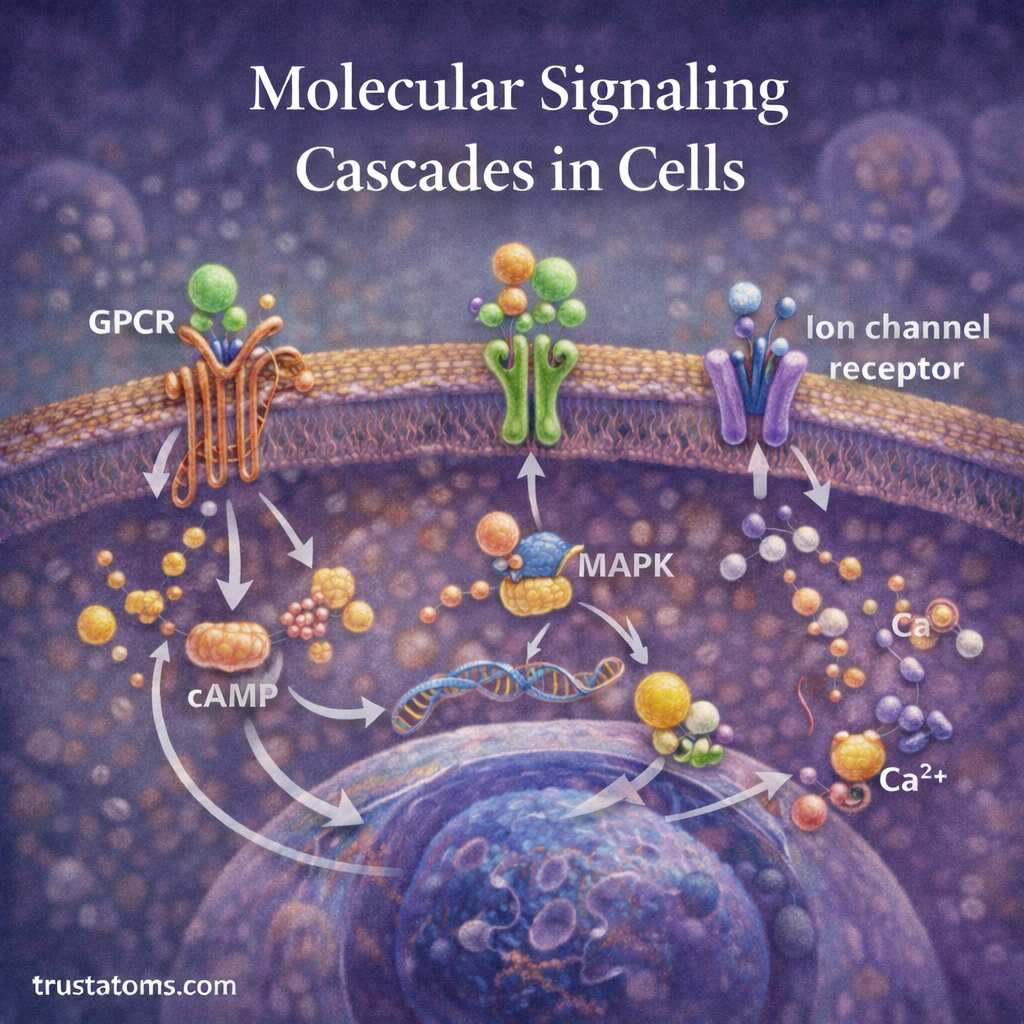
Molecular signaling cascades are sequences of biochemical reactions that allow cells to detect signals and convert them into specific responses. They work by activating receptors, signaling proteins, and intracellular messengers that regulate activities such as metabolism, growth, gene expression, and cell division.
Cells constantly receive information from hormones, nutrients, neighboring cells, and environmental conditions. Understanding how they process these signals is an important part of the study of biology because communication between cells helps coordinate the functions of tissues and organs.
A signaling cascade can amplify a weak signal, direct it toward particular cellular targets, and stop the response when it is no longer needed. Different cascades often interact, allowing cells to respond to several conditions at once.
What Are Molecular Signaling Cascades?
A molecular signaling cascade is a connected series of molecular events triggered by a signal inside or outside a cell. Many cascades begin when a signaling molecule, called a ligand, binds to a receptor.
Receptor activation changes the activity of proteins or other molecules inside the cell. These changes are passed through a pathway until they reach targets that produce a biological response.
A typical signaling sequence follows five steps:
- Reception: A receptor detects a signaling molecule.
- Transduction: Intracellular molecules relay the signal.
- Amplification: Activated components may stimulate multiple downstream molecules.
- Response: Target proteins alter cellular activity.
- Termination: Regulatory mechanisms reduce or stop signaling.
Not every pathway follows a simple linear sequence. Some signals branch toward several targets, while others require multiple inputs before a response occurs.
These processes are part of intracellular communication in cells, which coordinates molecular activities within the cytoplasm, membranes, and nucleus.
The Main Components of a Signaling Cascade
Signaling pathways use several types of molecules, each performing a different function in detecting, transmitting, or interpreting information.
Ligands and Receptors
Ligands include hormones, neurotransmitters, growth factors, and cytokines. They interact with receptors that recognize particular molecular features.
Many receptors are embedded in the cell membrane, allowing cells to detect signals without the ligand entering the cytoplasm. Other receptors are located inside cells and respond to molecules capable of crossing the membrane.
Common receptor classes include G protein-coupled receptors, receptor tyrosine kinases, and ligand-gated ion channels. Different receptor types initiate different signaling mechanisms.
Protein Kinases and Phosphorylation
Protein kinases are enzymes that transfer phosphate groups, usually from ATP, to target proteins. This process is called phosphorylation.
Phosphorylation can activate or inhibit a protein, alter its interactions, or change its location within the cell. A sequence of kinases activating one another forms a phosphorylation cascade.
Protein phosphatases reverse many phosphorylation events by removing phosphate groups. Together, kinases and phosphatases help regulate signaling intensity and duration.
Second Messengers
Second messengers are small intracellular molecules or ions that transmit signals from activated receptors to downstream targets.
| Second Messenger | Common Function |
|---|---|
| Cyclic AMP (cAMP) | Activates signaling proteins such as protein kinase A |
| Calcium ions | Regulate contraction, secretion, and enzyme activity |
| Inositol trisphosphate (IP3) | Promotes calcium release from intracellular stores |
| Diacylglycerol (DAG) | Helps activate certain forms of protein kinase C |
Second messengers can spread or propagate signals within cells, allowing one receptor activation event to influence multiple molecular targets.
Effector Proteins
Effector proteins carry out cellular responses. They include metabolic enzymes, ion channels, structural proteins, and transcription factors that regulate gene expression.
Some effectors produce changes within seconds, while others alter gene expression over longer periods.
How Signal Amplification Works
Signal amplification occurs when one activated molecule influences multiple downstream molecules. This allows a relatively small amount of signaling substance to produce a substantial cellular response.
For example, an activated receptor may stimulate several G proteins. Those proteins can regulate enzymes that generate many second messenger molecules, which then activate additional proteins.
Amplification is not unlimited. Enzyme availability, messenger breakdown, receptor regulation, and feedback mechanisms constrain the response.
Some pathways also use scaffolding proteins to hold signaling components close together. This can improve signaling efficiency and reduce unintended activation of unrelated pathways.
Major Types of Molecular Signaling Cascades
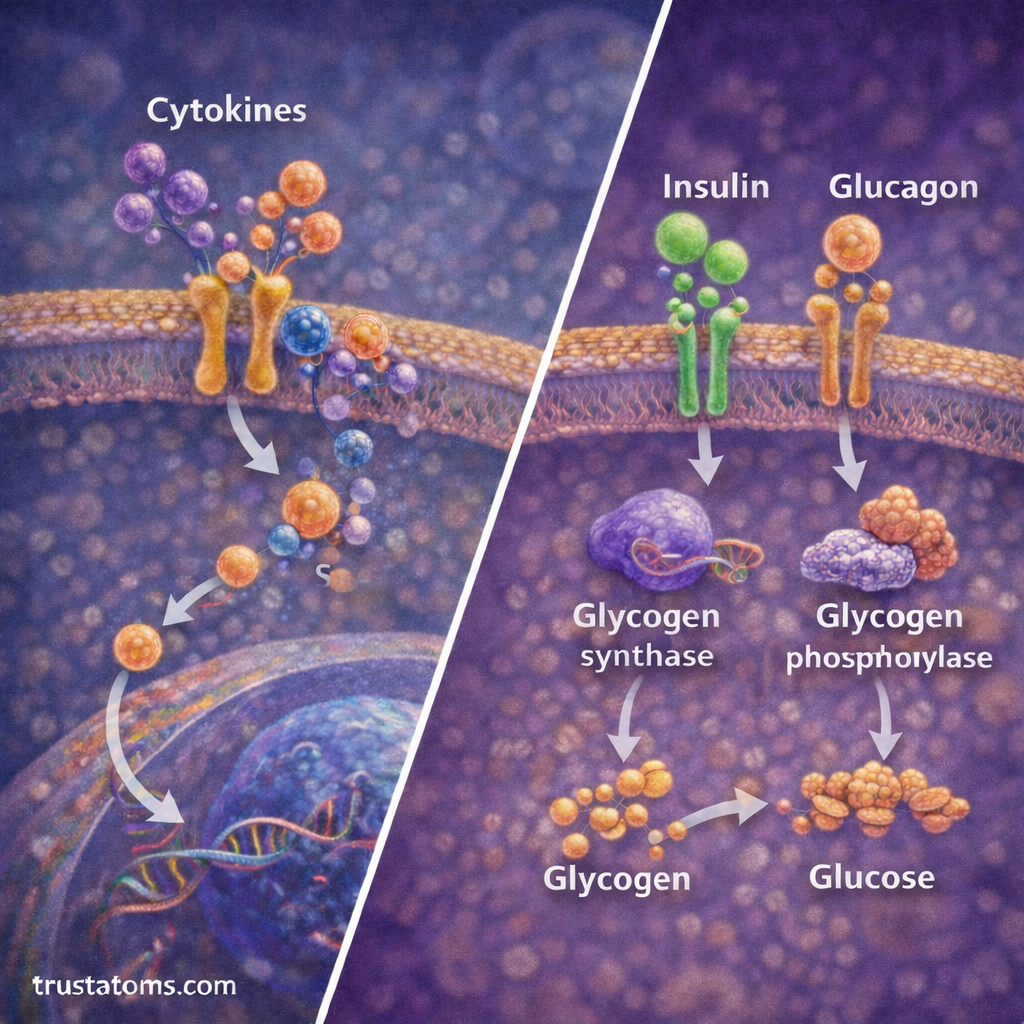
Different signaling cascades use distinct molecular components, although many share common principles such as phosphorylation, second messenger production, and feedback regulation.
MAPK Signaling
Mitogen-activated protein kinase, or MAPK, cascades regulate processes including cell growth, differentiation, and stress responses.
A common MAPK pathway contains three sequential kinase levels: MAP kinase kinase kinase, MAP kinase kinase, and MAP kinase. Each kinase activates the next through phosphorylation.
The final kinase can regulate transcription factors and other proteins. Different MAPK pathways respond to different signals, so their effects depend on cellular context.
cAMP and Protein Kinase A Signaling
In a common cAMP pathway, a ligand activates a G protein-coupled receptor. The activated G protein stimulates adenylyl cyclase, which converts ATP into cyclic AMP.
cAMP activates protein kinase A, allowing it to phosphorylate proteins involved in metabolism and other cellular activities.
Enzymes called phosphodiesterases break down cAMP, helping terminate the signal. Not all G protein-coupled receptors increase cAMP; some inhibit its production or activate other pathways.
Calcium Signaling
Calcium ions act as intracellular messengers in processes such as muscle contraction, neurotransmitter release, and secretion.
Receptor activation can open calcium channels or trigger calcium release from intracellular stores. Calcium then binds proteins such as calmodulin, which regulate downstream enzymes.
Pumps and transporters restore low cytoplasmic calcium concentrations after signaling. This regulation prevents prolonged activation and helps cells generate precisely timed responses.
JAK-STAT Signaling
The JAK-STAT pathway commonly transmits signals from cytokines and certain hormones to the nucleus.
Ligand binding activates receptor-associated Janus kinases, or JAKs. These kinases phosphorylate STAT proteins, which can form dimers and move into the nucleus to regulate gene expression.
This pathway is involved in immune communication, blood cell development, and responses to particular hormones.
A Practical Example: Adrenaline and Stored Energy
Imagine suddenly needing to run to catch a bus. Your body increases adrenaline release as part of its response to physical and emotional demands.
In liver cells, adrenaline can bind beta-adrenergic receptors and activate a signaling cascade involving a G protein, adenylyl cyclase, cAMP, and protein kinase A.
Protein kinase A helps activate enzymes involved in glycogen breakdown. Glycogen is a stored form of glucose, and its breakdown in the liver helps make glucose available for release into the bloodstream.
The pathway also helps suppress glycogen synthesis while the breakdown response is active. When adrenaline signaling decreases, regulatory enzymes help return metabolic activity toward its previous state.
This example demonstrates how an external hormonal signal can rapidly alter enzyme activity without requiring the cell to produce entirely new proteins.
Cross-Talk Between Signaling Pathways
Signaling cascades rarely function independently. Cross-talk occurs when components of one pathway influence another, allowing cells to combine information from multiple sources.
For example, growth factor signaling can interact with pathways that monitor nutrient availability. A cell may receive signals encouraging growth while simultaneously detecting insufficient energy resources.
Understanding cell signaling pathways in biological systems helps explain how receptors and intracellular proteins coordinate responses across tissues.
These interactions also influence cellular decision-making pathways, through which cells respond to competing signals about growth, survival, and differentiation.
Cross-talk can improve coordination, but abnormal interactions may contribute to inappropriate signaling during disease.
How Feedback Controls Signaling Activity
Cells regulate signaling through feedback mechanisms that adjust the strength and duration of a response.
Negative Feedback
Negative feedback reduces pathway activity. It may involve receptor internalization, protein dephosphorylation, messenger degradation, or production of inhibitory proteins.
These mechanisms help prevent a temporary signal from causing prolonged or excessive cellular activity.
Positive Feedback
Positive feedback strengthens an existing response. Under certain conditions, it can produce switch-like behavior in which a cell moves rapidly from one functional state to another.
Such mechanisms contribute to the regulation of processes including cell cycle transitions and some developmental decisions.
How Signaling Cascades Guide Cellular Decisions
Cells interpret signaling activity to determine whether to grow, divide, differentiate, change metabolism, or initiate programmed cell death.
The response depends on more than the presence of a signal. Signal strength, duration, location, and interactions with other pathways can change the outcome.
Cellular information processing describes how cells interpret molecular signals rather than responding to every stimulus in the same way.
These decisions emerge from interconnected cellular signaling networks that combine information from receptors, enzymes, and regulatory proteins.
For instance, a growth factor may stimulate division in one cell type but encourage differentiation in another because the cells contain different regulatory proteins.
What Happens When Signaling Cascades Malfunction?
Disrupted signaling can cause cells to respond incorrectly to their environment. Mutations, receptor abnormalities, and changes in regulatory proteins may produce excessive or insufficient pathway activity.
In some cancers, mutations cause growth-related signaling proteins to remain active even without normal external stimulation. Certain immune disorders involve abnormal cytokine signaling, while impaired insulin signaling can contribute to metabolic disease.
Because signaling proteins influence many cellular processes, researchers investigate them as potential drug targets. Some approved medicines inhibit specific kinases or receptors, although treatment effects depend on the disease and molecular target.
How Scientists Study Signaling Cascades
Researchers combine laboratory experiments and computational methods to investigate signaling activity.
- Protein analysis: Measures changes in signaling protein abundance or phosphorylation.
- Live-cell imaging: Tracks signaling molecules and cellular responses over time.
- Gene editing: Tests how particular genes influence pathway activity.
- Computational modeling: Examines how interacting reactions produce changes in signaling behavior.
These approaches help scientists distinguish direct molecular interactions from indirect effects and investigate how signaling changes under different conditions.
Frequently Asked Questions
What is the main purpose of a signaling cascade?
A signaling cascade converts a detected signal into a cellular response. It allows receptors and intracellular molecules to coordinate activities such as metabolism, gene expression, growth, and communication.
What is the difference between a receptor and a second messenger?
A receptor detects a signaling molecule and initiates a response. A second messenger is an intracellular molecule or ion that helps transmit the signal to downstream targets after receptor activation.
How do cells stop signaling cascades?
Cells can reduce signaling by removing phosphate groups from proteins, breaking down second messengers, inactivating receptors, or activating inhibitory feedback pathways. These processes help restore normal cellular activity.
Molecular signaling cascades allow cells to translate chemical information into coordinated biological responses through receptors, signaling proteins, and intracellular messengers. Amplification increases sensitivity, while feedback and cross-talk regulate how strongly and how long cells respond. These mechanisms explain how a hormone can rapidly change metabolism and how disruptions in signaling can contribute to disease.
Sources: Alberts et al., Molecular Biology of the Cell; Lodish et al., Molecular Cell Biology; Cooper and Hausman, The Cell: A Molecular Approach.