The human body maintains a stable internal temperature despite constant changes in the environment. This process, known as thermoregulation, is tightly controlled by the nervous system—especially the brain.
Neural regulation of temperature ensures that core body temperature stays around 37°C (98.6°F), allowing enzymes, cells, and organs to function optimally. Whether you’re sweating on a hot day or shivering in the cold, your nervous system is constantly adjusting to keep your body in balance.
What Is Thermoregulation?
Thermoregulation is the body’s ability to maintain a stable internal temperature through physiological and behavioral responses.
Why It Matters
- Supports enzyme activity and metabolism
- Protects organs from overheating or freezing
- Maintains homeostasis (internal balance)
- Ensures proper brain and muscle function
Even small deviations from normal temperature can disrupt critical biological processes.
The Role of the Hypothalamus
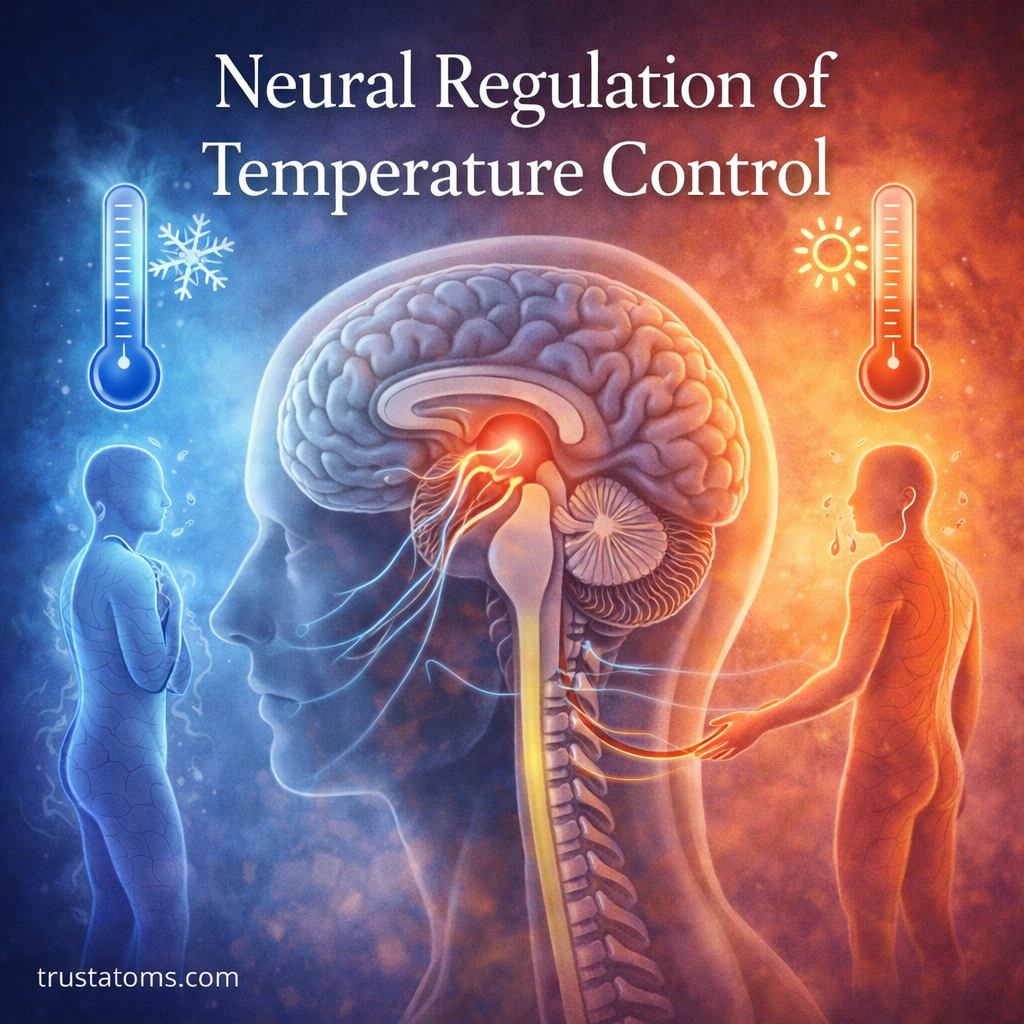
At the center of temperature regulation is the hypothalamus, a small but powerful region of the brain.
Functions of the Hypothalamus
- Acts as the body’s “thermostat”
- Receives temperature signals from the body
- Compares current temperature to a set point
- Initiates responses to restore balance
The hypothalamus integrates information from both internal and external sources to make rapid adjustments.
Temperature Sensors in the Body
The nervous system relies on specialized receptors to detect temperature changes.
Types of Thermoreceptors
Peripheral Thermoreceptors
- Located in the skin
- Detect external temperature changes
- Provide early warning of environmental conditions
Central Thermoreceptors
- Found in the brain and spinal cord
- Monitor internal body temperature
- Detect changes in blood temperature
These sensors send signals through sensory neurons to the hypothalamus for processing.
Neural Pathways in Temperature Control
Once temperature changes are detected, the nervous system activates specific pathways to respond.
Basic Process
- Thermoreceptors detect a temperature change
- Sensory signals travel to the hypothalamus
- The hypothalamus processes the information
- Motor signals are sent to effectors (muscles, glands, blood vessels)
This rapid feedback loop allows the body to adjust quickly to temperature shifts.
Cooling Mechanisms (Heat Loss)
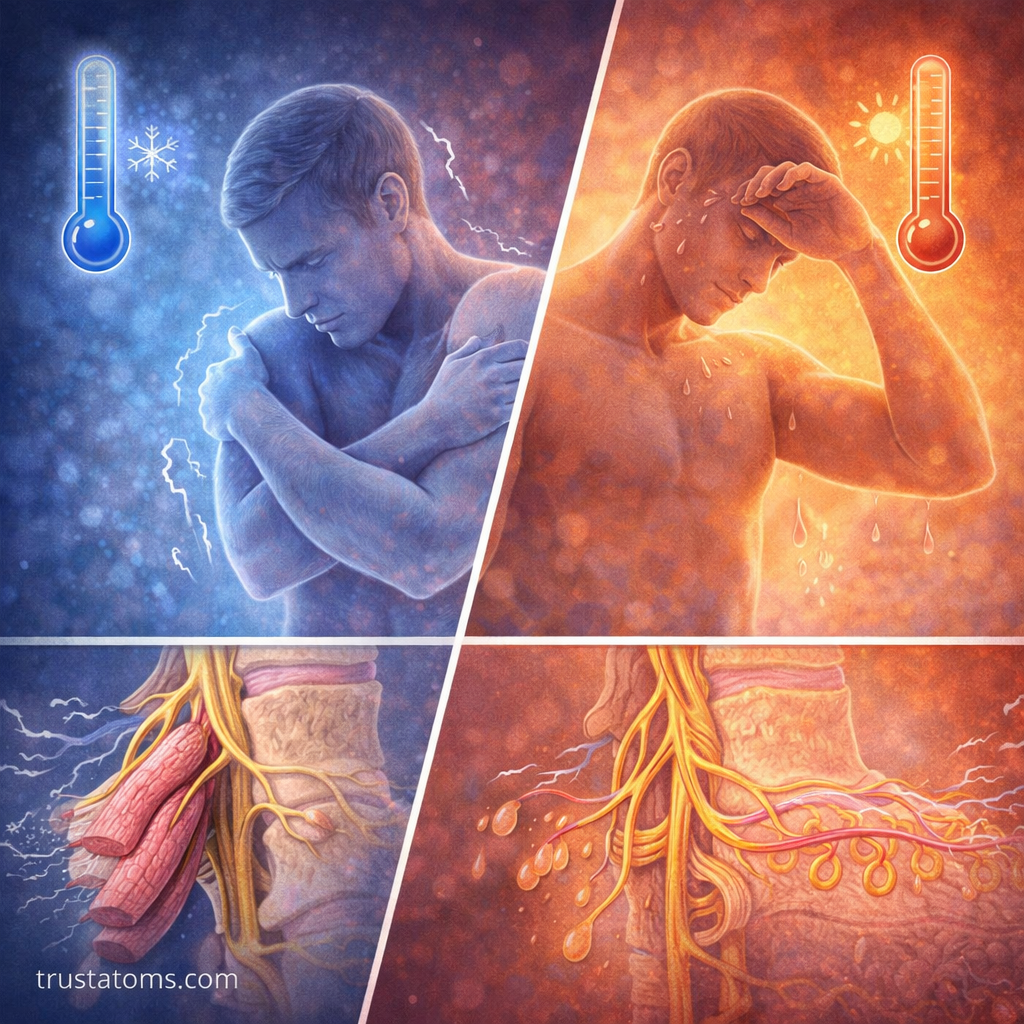
When the body becomes too warm, the nervous system triggers responses to release heat.
Key Cooling Responses
- Sweating: Sweat glands produce moisture that evaporates and cools the skin
- Vasodilation: Blood vessels near the skin widen, increasing heat loss
- Reduced muscle activity: Less heat is generated internally
- Behavioral changes: Seeking shade or removing layers
These mechanisms help lower body temperature efficiently.
Heating Mechanisms (Heat Conservation and Production)
When the body gets too cold, neural signals activate heat-producing and conserving responses.
Key Heating Responses
- Shivering: Rapid muscle contractions generate heat
- Vasoconstriction: Blood vessels narrow to reduce heat loss
- Increased metabolism: Hormonal signals boost heat production
- Behavioral changes: Adding clothing or seeking warmth
Together, these responses help restore normal temperature.
Autonomic Nervous System Involvement
The autonomic nervous system (ANS) plays a major role in thermoregulation.
Two Key Divisions
Sympathetic Nervous System
- Controls sweating
- Regulates blood vessel constriction and dilation
- Activates heat-producing mechanisms
Parasympathetic Nervous System
- Plays a lesser role but helps maintain baseline balance
Most temperature responses are automatic and do not require conscious effort.
Feedback Loops and Homeostasis
Thermoregulation relies on negative feedback loops.
How It Works
- A deviation from normal temperature is detected
- The nervous system activates corrective responses
- Once the set point is reached, responses are reduced or stopped
This continuous loop ensures stability and prevents overcorrection.
Behavioral and Cognitive Influence
While much of thermoregulation is automatic, the brain also influences behavior.
Examples
- Putting on a jacket when cold
- Drinking water when overheated
- Moving to a cooler or warmer environment
These voluntary actions complement the body’s automatic responses.
Disorders of Temperature Regulation
When neural control of temperature is disrupted, serious conditions can occur.
Hyperthermia
- Body temperature rises excessively
- Caused by heat exposure or impaired cooling
- Can lead to heat exhaustion or heat stroke
Hypothermia
- Body temperature drops too low
- Occurs in cold environments or prolonged exposure
- Slows metabolism and organ function
Fever
- Controlled increase in body temperature
- Triggered by the immune system during infection
- Reset of the hypothalamic set point
Understanding these conditions highlights the importance of proper neural regulation.
Why Neural Temperature Control Matters
The nervous system’s role in thermoregulation is essential for survival.
Key Takeaways
- Maintains stable internal conditions
- Coordinates complex physiological responses
- Protects against environmental extremes
- Supports overall health and performance
Without this system, the body would struggle to adapt to even minor temperature changes.
Final Thoughts
Neural regulation of temperature control is a powerful example of how the brain maintains balance within the body. Through constant monitoring, rapid signaling, and coordinated responses, the nervous system ensures that internal temperature remains within a narrow, safe range.
From sweating in the heat to shivering in the cold, these automatic processes work seamlessly alongside conscious behaviors to keep the body functioning at its best.