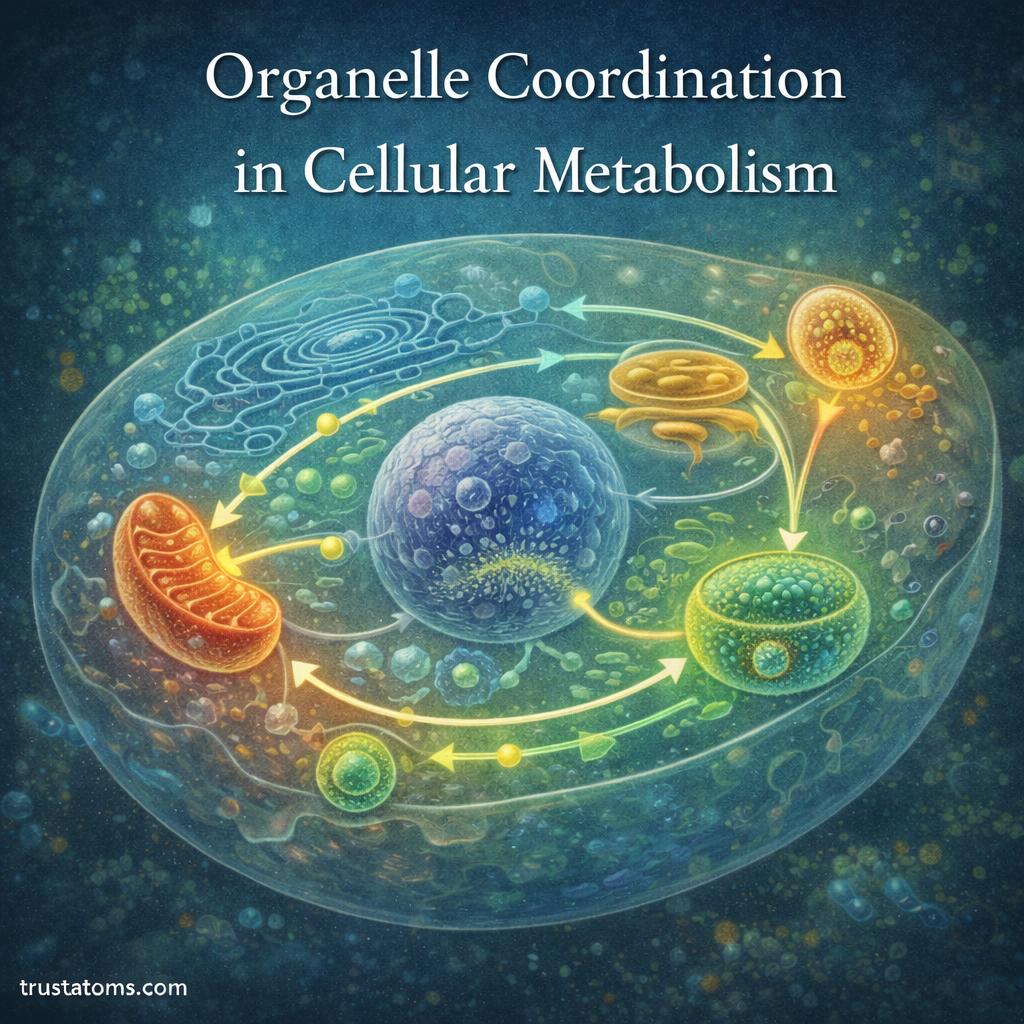
Cells are highly organized systems where specialized structures called organelles work together to maintain life. Each organelle performs distinct biochemical tasks, but cellular metabolism depends on the coordination between these structures rather than their individual functions alone.
Organelle coordination ensures that nutrients are processed efficiently, energy is produced at the right time, and metabolic products are delivered where they are needed. This dynamic communication between cellular compartments allows cells to regulate metabolism, respond to environmental changes, and maintain overall cellular health.
Understanding how organelles coordinate their activities provides insight into fundamental biological processes and helps researchers study metabolic diseases, aging, and cellular stress responses.
What Are Organelles?
Organelles are membrane-bound structures within eukaryotic cells that perform specific biological functions.
Common organelles include:
- Mitochondria
- Endoplasmic reticulum
- Golgi apparatus
- Lysosomes
- Peroxisomes
- Nucleus
- Chloroplasts (in plant cells)
Each organelle contains unique enzymes and molecular machinery that enable specialized metabolic activities.
While these structures operate independently in some ways, efficient cellular metabolism requires constant communication and coordination among them.
The Importance of Organelle Coordination
Metabolism involves thousands of interconnected biochemical reactions that occur in different cellular compartments. No single organelle carries out all metabolic processes.
Coordination among organelles allows cells to:
- Optimize energy production
- Regulate nutrient processing
- Maintain cellular homeostasis
- Adapt to environmental stress
- Prevent harmful metabolic imbalances
If communication between organelles fails, metabolic pathways may become disrupted, potentially leading to cellular dysfunction or disease.
Key Organelles Involved in Cellular Metabolism
Several organelles play central roles in metabolic coordination.
Mitochondria
Mitochondria are often called the powerhouses of the cell because they generate most cellular ATP through oxidative phosphorylation.
Key metabolic roles include:
- Energy production
- Regulation of cellular respiration
- Fatty acid oxidation
- Control of programmed cell death
Mitochondria interact closely with other organelles to coordinate energy metabolism.
Endoplasmic Reticulum
The endoplasmic reticulum (ER) is a large membrane network involved in protein and lipid synthesis.
Two major regions exist:
- Rough ER – synthesizes proteins destined for membranes or secretion
- Smooth ER – synthesizes lipids and regulates calcium storage
The ER also plays an important role in metabolic signaling and cellular stress responses.
Golgi Apparatus
The Golgi apparatus processes and packages proteins and lipids produced by the ER.
Functions include:
- Modifying proteins through glycosylation
- Sorting cellular products
- Directing molecules to their proper cellular destinations
Golgi coordination ensures that metabolic enzymes and proteins reach the correct organelles.
Lysosomes
Lysosomes are responsible for degrading cellular waste and recycling biological molecules.
They break down:
- damaged proteins
- cellular debris
- old organelles
This recycling process provides nutrients and building blocks that support cellular metabolism.
Peroxisomes
Peroxisomes perform specialized metabolic reactions involving oxidative processes.
Their functions include:
- Fatty acid metabolism
- Detoxification of harmful compounds
- Hydrogen peroxide breakdown
Peroxisomes work alongside mitochondria to regulate lipid metabolism and cellular detoxification.
Communication Between Organelles
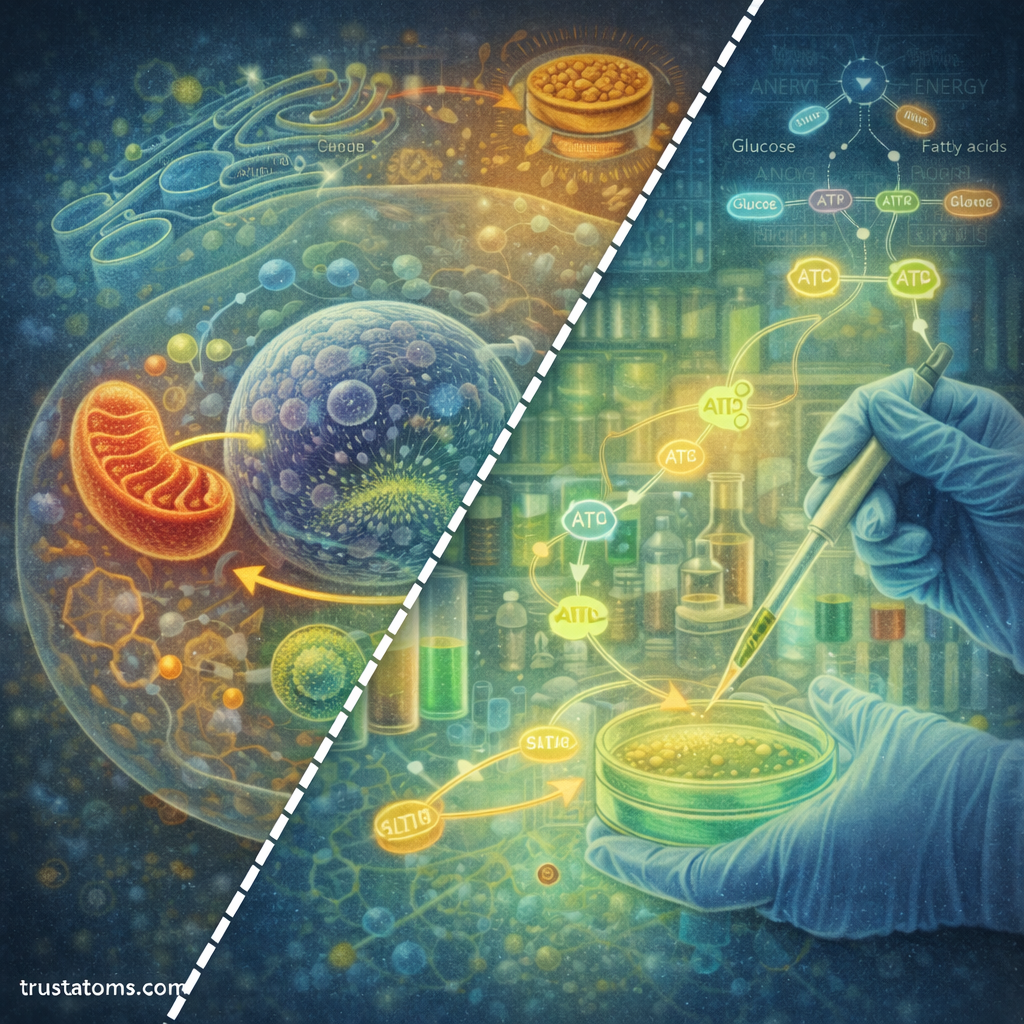
Cells coordinate organelle activity through several mechanisms that allow information and molecules to move between compartments.
Membrane Contact Sites
Membrane contact sites occur when the membranes of two organelles come into close proximity without fusing.
These contact points allow direct transfer of molecules such as:
- lipids
- calcium ions
- metabolic intermediates
Examples include interactions between mitochondria and the endoplasmic reticulum.
Vesicle Transport
Vesicles are small membrane-bound sacs that transport molecules between organelles.
Vesicle transport helps move:
- proteins from the ER to the Golgi apparatus
- enzymes to lysosomes
- lipids to various cellular compartments
This system ensures metabolic components reach their proper destinations.
Metabolic Signaling Pathways
Cells also coordinate metabolism through biochemical signaling networks.
These signaling pathways regulate organelle activity by:
- adjusting enzyme activity
- modifying metabolic pathways
- responding to nutrient availability
Signaling molecules help synchronize metabolic processes across multiple organelles.
Organelle Cooperation in Major Metabolic Processes
Many metabolic pathways require contributions from multiple organelles.
Cellular Energy Production
Energy production involves coordinated activity between several organelles.
For example:
- Glycolysis occurs in the cytoplasm.
- Metabolites are transported into mitochondria.
- Mitochondria perform oxidative phosphorylation to generate ATP.
This multi-step process depends on efficient coordination between cellular compartments.
Lipid Metabolism
Lipid metabolism requires cooperation between:
- the endoplasmic reticulum
- mitochondria
- peroxisomes
Fatty acids may be synthesized in the ER, modified in peroxisomes, and oxidized in mitochondria to produce energy.
Protein Processing and Degradation
Protein metabolism involves multiple organelles.
The pathway typically includes:
- Protein synthesis in the rough ER
- Modification in the Golgi apparatus
- Delivery to cellular destinations
- Degradation by lysosomes when proteins become damaged
This coordination ensures cellular proteins remain functional and properly regulated.
Organelle Coordination During Cellular Stress
Cells constantly encounter environmental challenges such as nutrient deprivation, toxins, and oxidative stress.
Organelle communication helps cells respond effectively to these conditions.
Stress responses may include:
- Increasing energy production
- Activating detoxification pathways
- Recycling damaged cellular components
- Adjusting metabolic activity
Coordinated responses allow cells to restore metabolic balance.
Organelle Dysfunction and Metabolic Disease
Disruptions in organelle coordination can contribute to many diseases.
Examples include:
- mitochondrial disorders affecting energy metabolism
- lysosomal storage diseases
- metabolic syndromes linked to lipid metabolism
- neurodegenerative diseases involving organelle dysfunction
Understanding these interactions helps researchers identify potential treatment strategies for metabolic and genetic disorders.
Advances in Studying Organelle Coordination
Modern biological research uses advanced tools to study how organelles interact.
Key techniques include:
- high-resolution microscopy
- live-cell imaging
- molecular genetics
- proteomics and metabolomics
- computational modeling of cellular networks
These technologies allow scientists to observe organelle interactions in real time and analyze complex metabolic systems.
The Future of Organelle Research
Research into organelle coordination continues to expand as scientists uncover new mechanisms of cellular communication.
Future studies may reveal:
- new metabolic signaling pathways
- previously unknown organelle contact sites
- improved understanding of metabolic diseases
- novel targets for medical treatments
As knowledge of cellular metabolism grows, researchers are gaining a deeper appreciation for how organelles function as an integrated system rather than isolated structures.
Conclusion
Cellular metabolism relies on the coordinated activity of multiple organelles that work together to regulate energy production, nutrient processing, and molecular recycling. Through mechanisms such as membrane contact sites, vesicle transport, and metabolic signaling, organelles communicate and exchange materials to maintain cellular balance.
This coordination allows cells to adapt to environmental changes, optimize metabolic efficiency, and prevent harmful biochemical disruptions. Understanding organelle cooperation provides valuable insights into the inner workings of cells and the biological foundations of health and disease.
As scientific tools continue to improve, research into organelle coordination will deepen our understanding of cellular metabolism and reveal new opportunities for biomedical innovation.