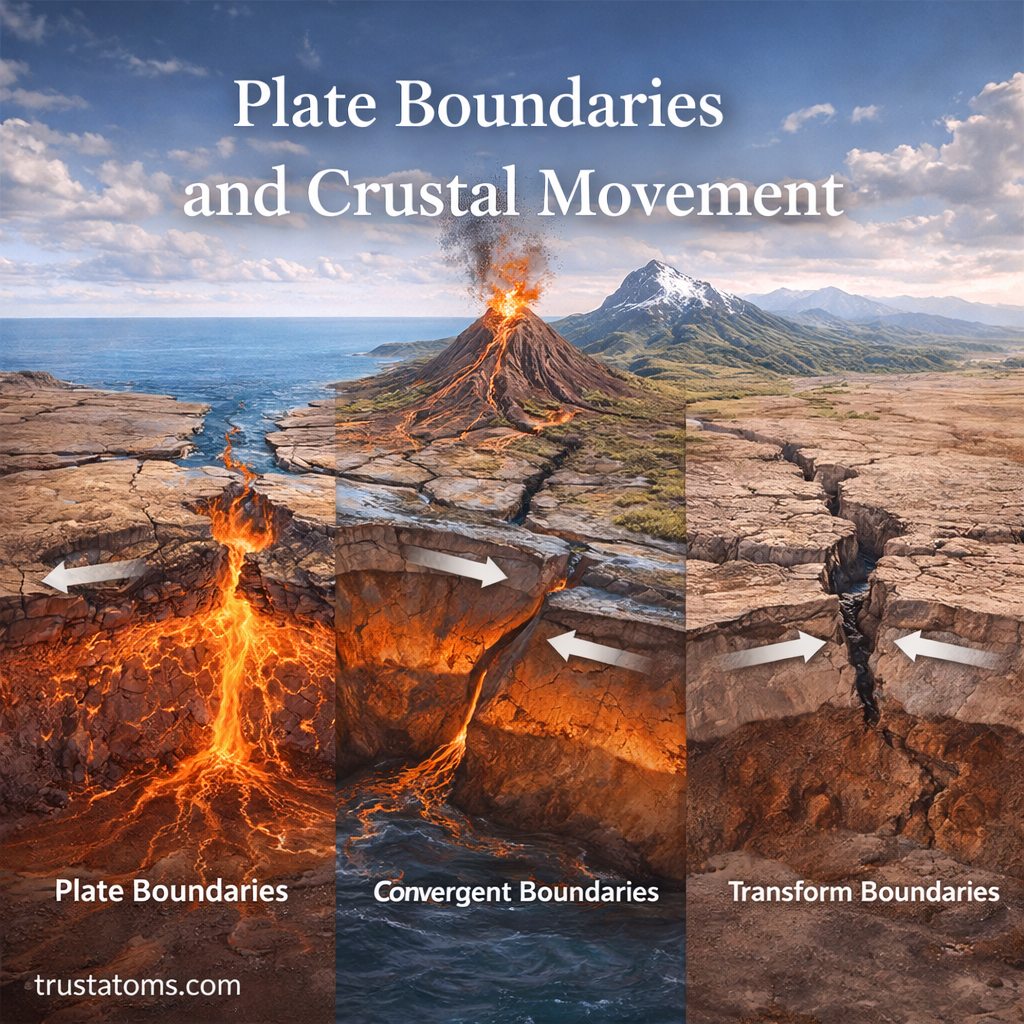
Earth’s surface is not a single solid shell—it is divided into large pieces called tectonic plates. These plates are constantly moving, though very slowly, driven by forces deep within the planet. Where these plates meet, interactions occur that shape the planet’s surface in dramatic ways.
Plate boundaries and crustal movement are responsible for earthquakes, volcanoes, mountain building, and the creation of ocean basins.
What Are Tectonic Plates?
Tectonic plates are large sections of Earth’s lithosphere (the crust and uppermost mantle). These plates float on the semi-fluid layer beneath them called the asthenosphere.
Key characteristics:
- Plates can carry continents, oceans, or both
- They move at rates of a few centimeters per year
- Their interactions define major geological activity
What Drives Plate Movement?
Plate motion is powered by heat from Earth’s interior, which creates movement in the mantle.
Main driving forces include:
- Mantle convection: Hot material rises, cools, and sinks, creating circular currents
- Ridge push: Gravity causes plates to slide away from mid-ocean ridges
- Slab pull: Dense, sinking plates pull the rest of the plate downward
These forces work together to keep plates in constant motion.
Types of Plate Boundaries
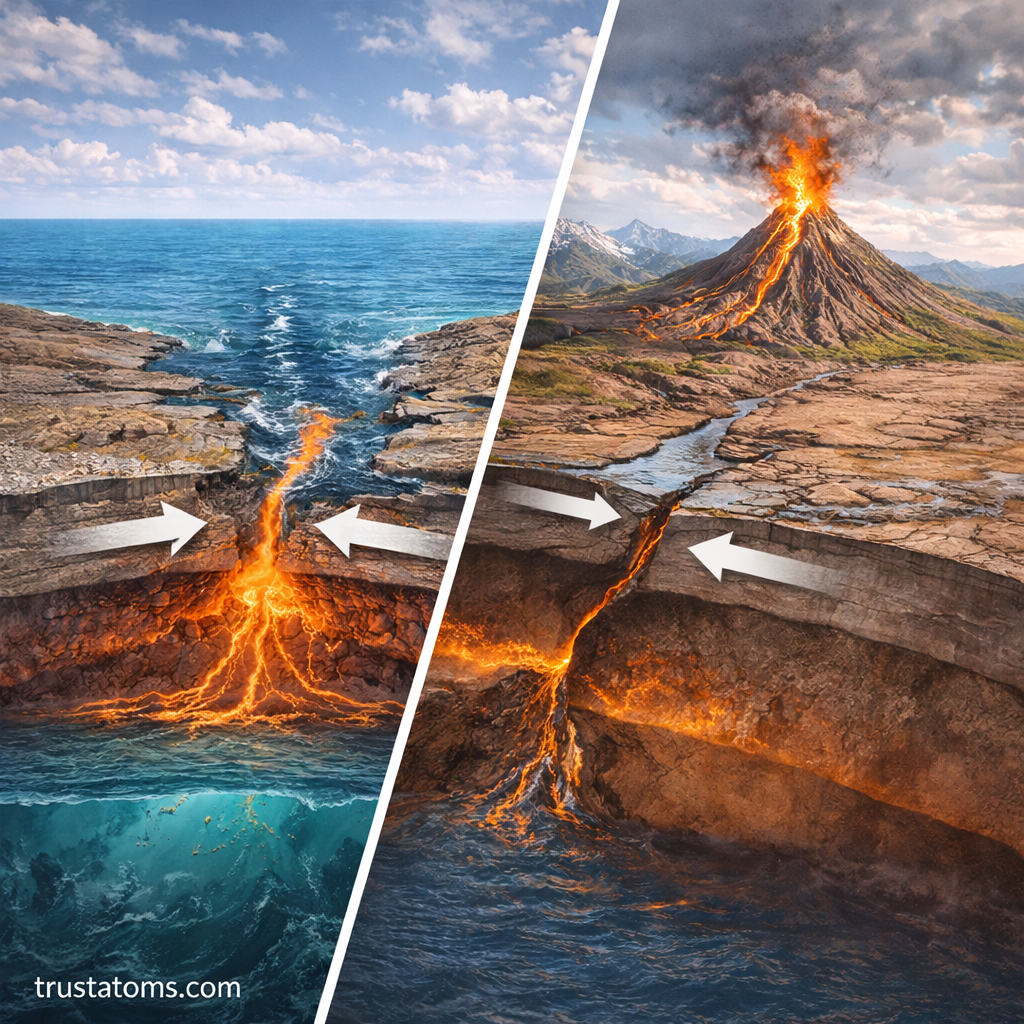
Plate boundaries are the edges where tectonic plates meet. There are three main types, each with distinct characteristics.
Divergent Boundaries
Divergent boundaries occur where plates move away from each other.
What happens:
- Magma rises to fill the gap
- New crust is created as magma cools
- Often forms mid-ocean ridges
Common features:
- Rift valleys
- Volcanic activity
- Seafloor spreading
Convergent Boundaries
Convergent boundaries occur where plates move toward each other.
What happens depends on the type of plates involved:
- Oceanic–continental: Denser oceanic plate sinks beneath continental plate (subduction)
- Oceanic–oceanic: One oceanic plate subducts under another
- Continental–continental: Plates collide and form mountains
Common features:
- Deep ocean trenches
- Volcanic arcs
- Mountain ranges
Transform Boundaries
Transform boundaries occur where plates slide past each other horizontally.
What happens:
- Crust is neither created nor destroyed
- Stress builds up and is released as earthquakes
Common features:
- Fault lines
- Frequent seismic activity
Crustal Movement and Its Effects
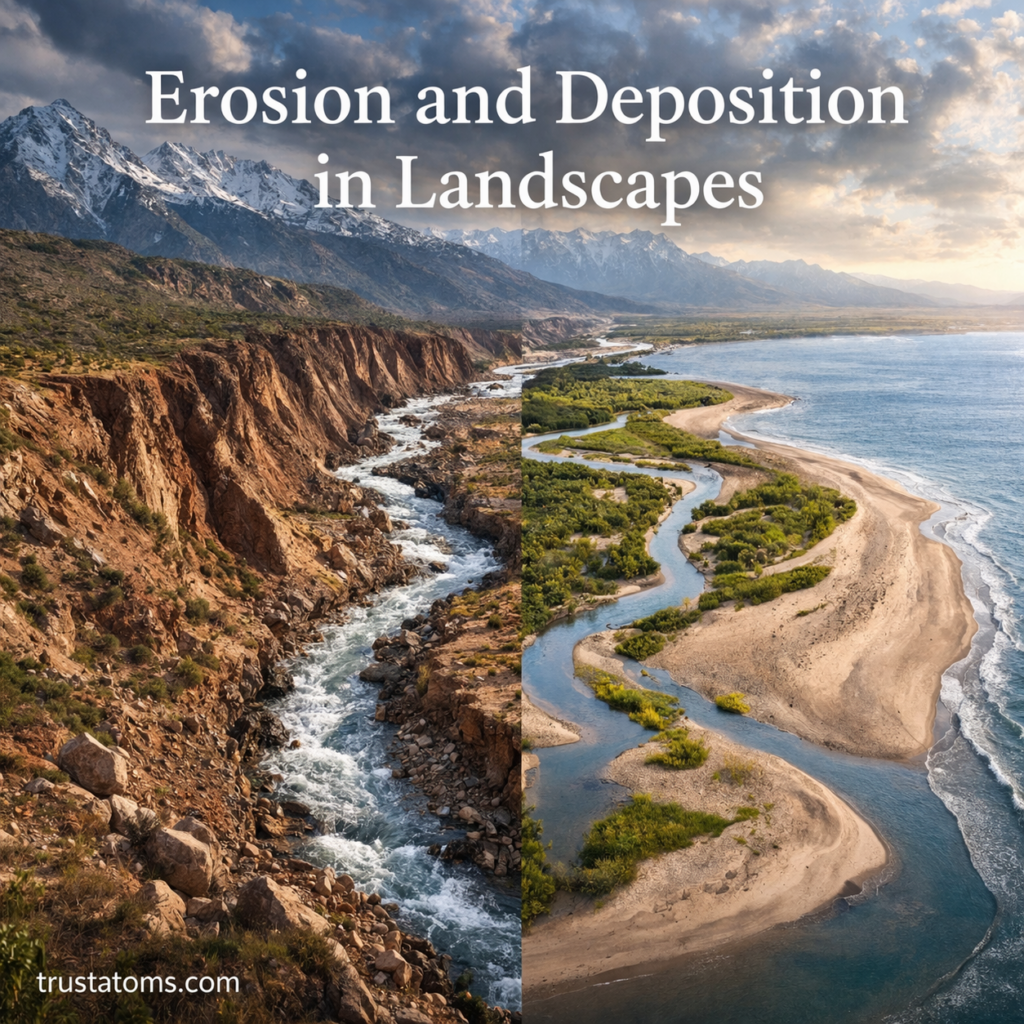
The movement of tectonic plates reshapes Earth’s surface over time.
Earthquakes
- Occur when stress builds up along faults
- Sudden release of energy causes ground shaking
- Common near plate boundaries
Volcanic Activity
- Occurs mainly at divergent and convergent boundaries
- Magma rises through cracks in the crust
- Forms volcanoes and lava flows
Mountain Building
- Happens at convergent boundaries
- Colliding plates push crust upward
- Creates mountain ranges over millions of years
Ocean Basin Formation
- New ocean crust forms at divergent boundaries
- Seafloor spreading widens ocean basins
The Plate Tectonic Cycle
Plate movement is part of a continuous cycle that reshapes Earth.
- Magma rises at divergent boundaries, creating new crust
- Plates move across Earth’s surface
- Old crust is recycled at convergent boundaries through subduction
- The cycle repeats over millions of years
This ongoing process is known as the plate tectonic cycle.
Why Plate Boundaries Matter
Plate boundaries are key to understanding Earth’s dynamic nature.
They help scientists:
- Predict earthquake-prone regions
- Study volcanic activity
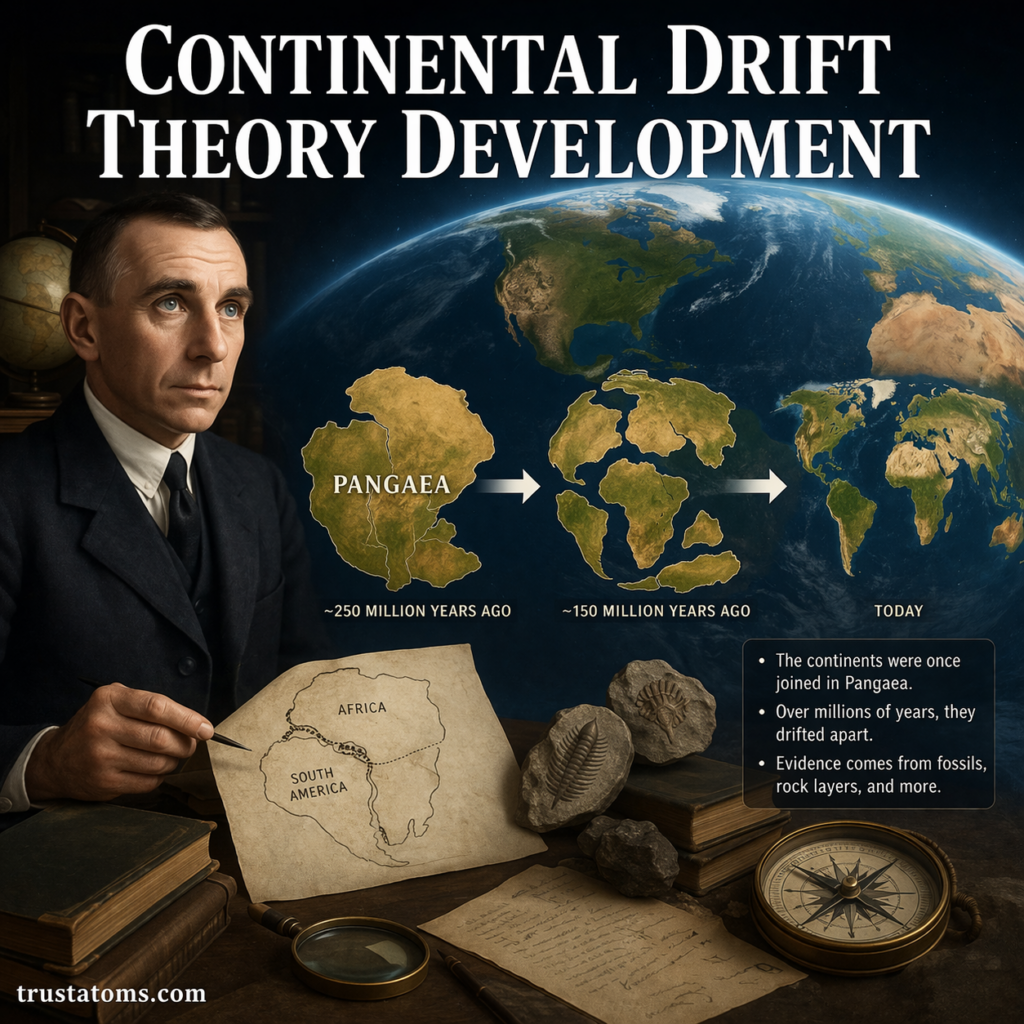
- Understand how continents move
- Reconstruct Earth’s geological history
These boundaries are where most geological activity is concentrated.
Key Takeaways
- Earth’s crust is divided into moving tectonic plates
- Plate movement is driven by heat and forces within the mantle
- There are three main boundary types: divergent, convergent, and transform
- Plate interactions cause earthquakes, volcanoes, and mountain formation
- The plate tectonic cycle continuously reshapes Earth’s surface
Final Thoughts
Plate boundaries and crustal movement are fundamental to understanding how Earth works. These slow but powerful processes drive many of the natural events that shape our planet’s surface.
By studying plate tectonics, scientists can better understand past changes, monitor current activity, and anticipate future geological events—revealing the dynamic nature of the Earth beneath our feet.