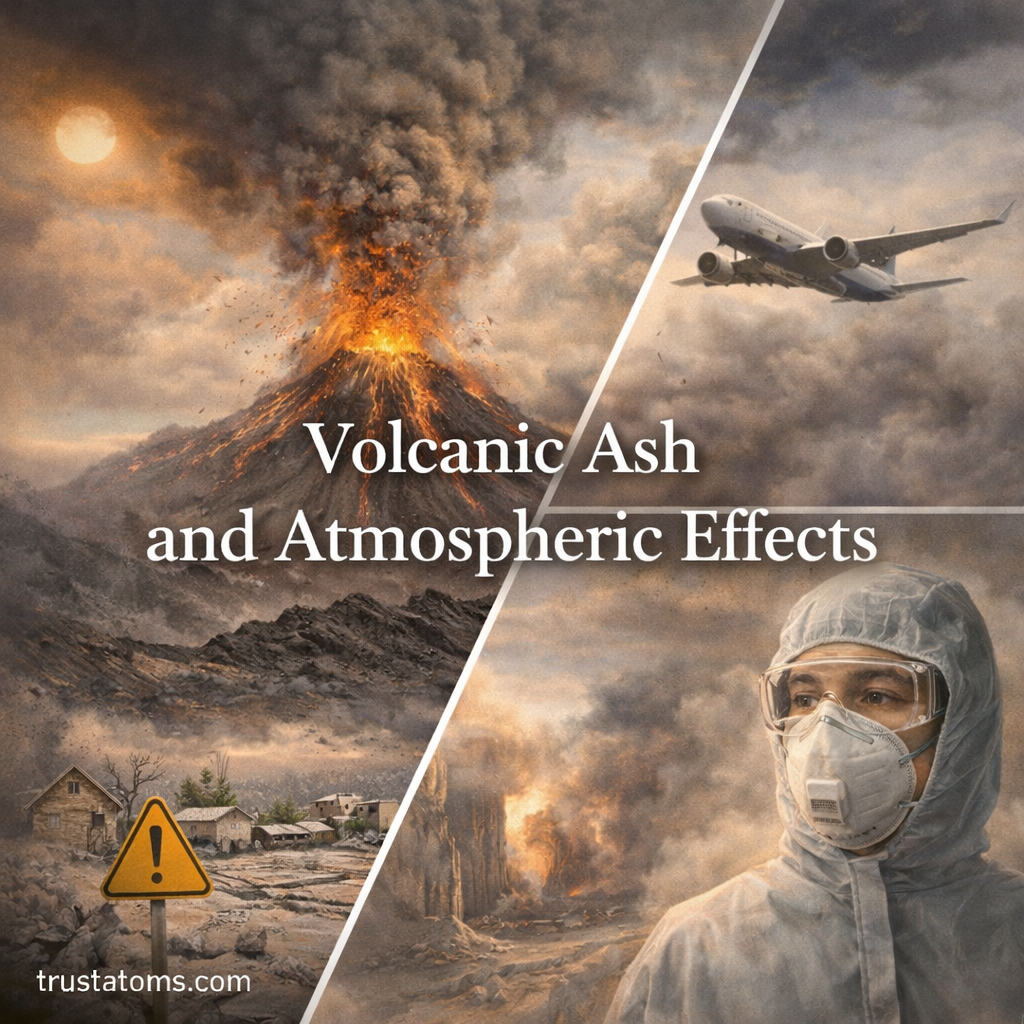
Volcanic eruptions are among the most powerful natural events on Earth, and one of their most far-reaching impacts comes from volcanic ash. Unlike lava flows that affect nearby areas, volcanic ash can travel thousands of miles through the atmosphere, influencing weather, climate, air quality, and even global systems.
Understanding how volcanic ash interacts with the atmosphere is essential for predicting environmental impacts and protecting human health.
What Is Volcanic Ash?
Volcanic ash is made up of tiny fragments of rock, minerals, and volcanic glass created during explosive eruptions. Despite the name, it is not soft like fireplace ash—it is sharp, abrasive, and often microscopic.
Key characteristics:
- Particle size is usually less than 2 millimeters
- Composed of pulverized rock and glass
- Can remain suspended in the air for long periods
- Easily carried by wind over vast distances
How Volcanic Ash Enters the Atmosphere
During explosive eruptions, gases and pressure force ash high into the atmosphere, forming an eruption column.
Eruption Columns
- Can reach heights of 10–50 kilometers
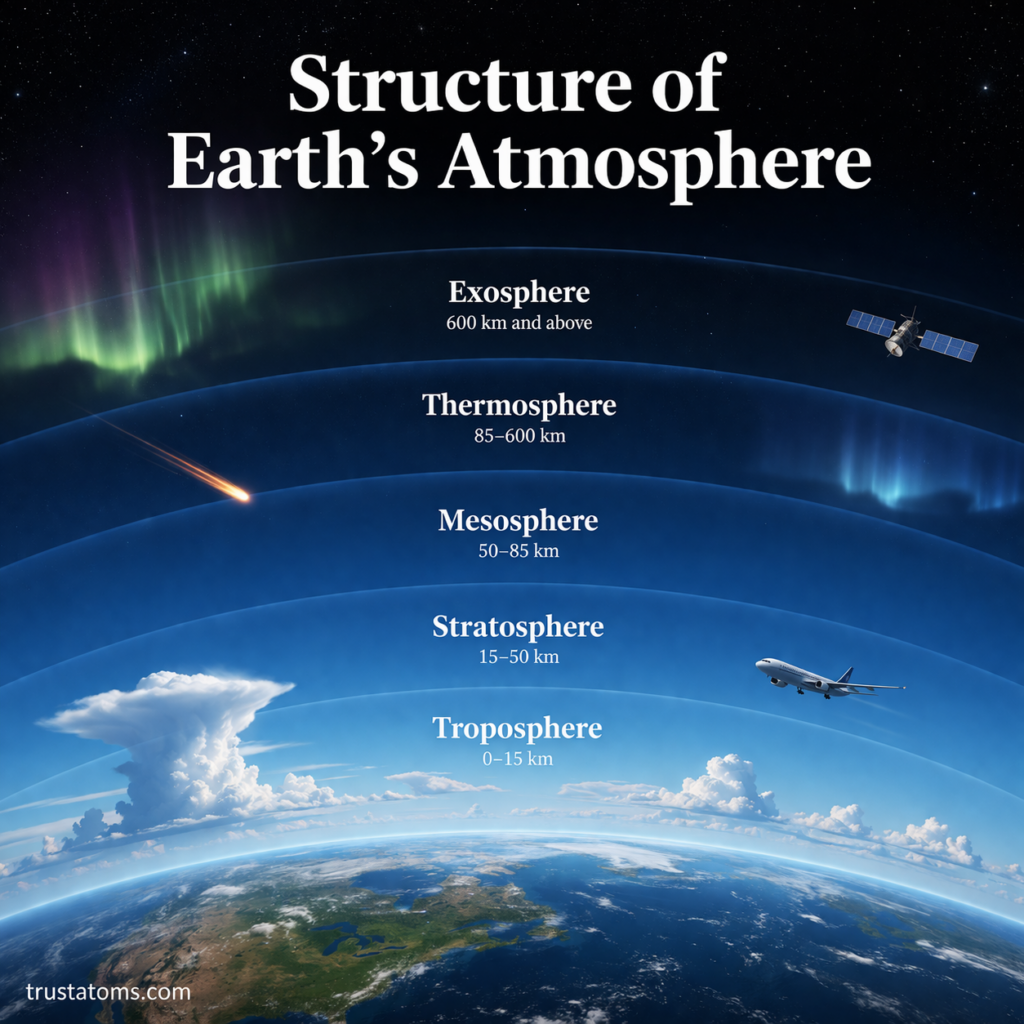
- Inject ash into the troposphere and sometimes the stratosphere
- Spread ash clouds across continents
Ash Clouds
Once airborne, ash forms clouds that drift with atmospheric currents.
- Can circle the globe
- May persist for days to weeks
- Affect aviation and weather systems
Atmospheric Effects of Volcanic Ash
Volcanic ash has both short-term and long-term effects on the atmosphere.
Impact on Sunlight and Temperature
Ash and volcanic particles can block and scatter sunlight.
Effects include:
- Reduced surface temperatures (cooling effect)
- Dimmed sunlight reaching Earth
- Temporary changes in regional weather patterns
In major eruptions, this can lead to short-term global cooling.
Interaction with Atmospheric Gases
Volcanic eruptions release gases such as sulfur dioxide (SO₂), which interact with ash and atmospheric moisture.
- Formation of sulfate aerosols
- Increased cloud reflectivity
- Enhanced cooling effects
These aerosols can remain in the stratosphere for extended periods, amplifying climate impacts.
Effects on Weather Patterns
Volcanic ash and aerosols can disrupt normal weather systems.
- Alter precipitation patterns
- Influence storm development
- Shift atmospheric circulation
These effects are usually temporary but can be significant after large eruptions.
Effects on Air Quality and Health
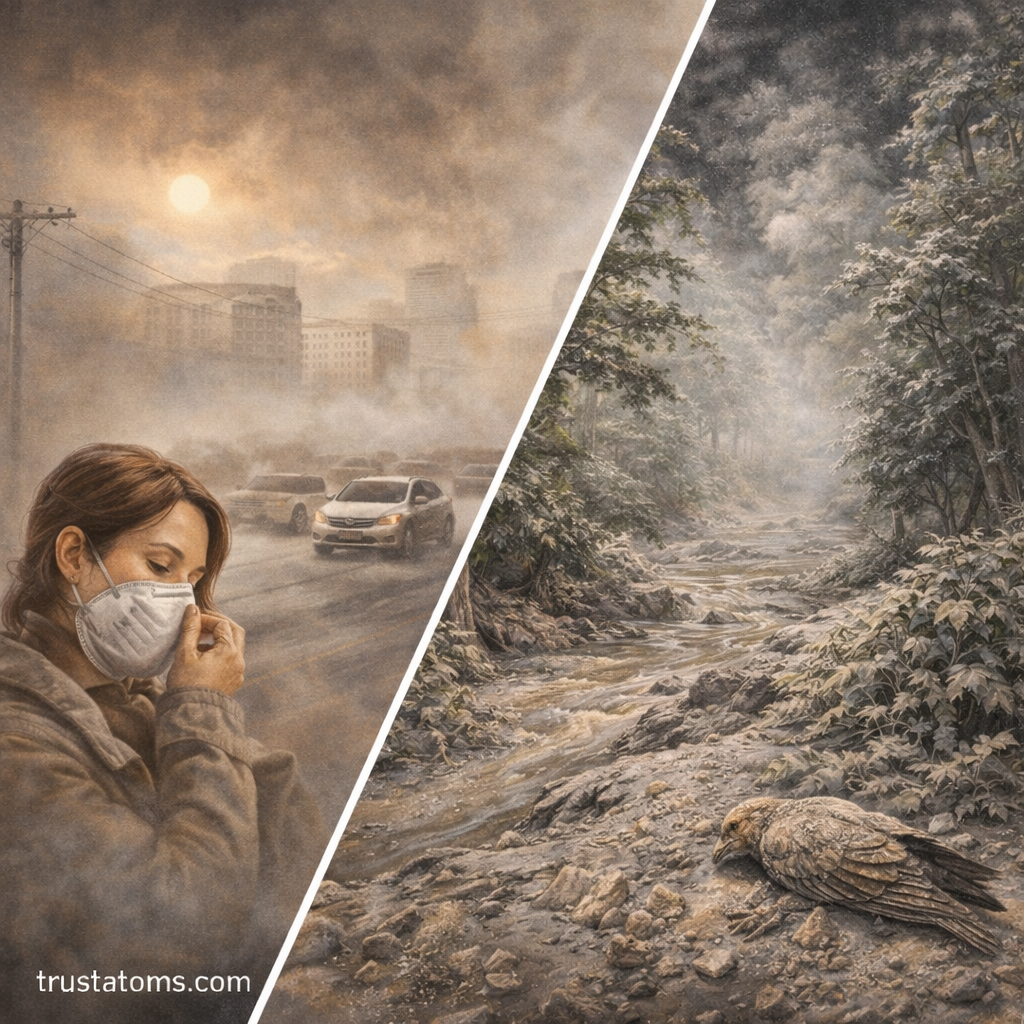
Volcanic ash poses serious risks to air quality and human health.
Air Quality Impacts
- Fine particles reduce visibility
- Ash can travel into populated areas
- Contaminates water and soil
Health Risks
- Respiratory irritation
- Eye and skin irritation
- Increased risk for people with asthma or lung conditions
Protective measures include wearing masks and staying indoors during ashfall.
Impact on Aviation
Volcanic ash is extremely dangerous for aircraft.
- Ash can damage jet engines
- Reduces visibility for pilots
- Can cause engine failure mid-flight
One major example is the 2010 Eyjafjallajökull Eruption, which disrupted air travel across Europe for days.
Global Climate Effects
Large volcanic eruptions can influence global climate systems.
Short-Term Cooling
- Ash and aerosols reflect sunlight
- Surface temperatures may drop temporarily
Long-Term Effects
- Climate impacts can last months to years
- Depends on eruption size and altitude reached
A well-known case is the Mount Pinatubo Eruption, which caused measurable global cooling for over a year.
Environmental Impacts
Volcanic ash affects ecosystems and natural systems.
Negative Effects
- Damages crops and vegetation
- Pollutes water sources
- Harms wildlife
Positive Effects
- Adds nutrients to soil over time
- Contributes to fertile volcanic landscapes
This dual impact makes volcanic regions both hazardous and agriculturally rich.
Monitoring and Predicting Ash Clouds
Modern technology helps track and predict volcanic ash movement.
Tools Used
- Satellites to track ash clouds
- Ground-based monitoring stations
- Computer models to predict dispersion
These tools help governments issue warnings and protect public safety.
How Communities Can Prepare
Preparation reduces the impact of volcanic ash events.
Practical Steps
- Stock masks and protective gear
- Seal homes to prevent ash entry
- Stay informed through official alerts
- Avoid driving during heavy ashfall
Why Volcanic Ash Matters
Volcanic ash is more than just debris—it plays a major role in atmospheric processes and environmental change.
Understanding its effects helps:
- Improve climate models
- Protect public health
- Enhance disaster preparedness
- Ensure aviation safety
Final Thoughts
Volcanic ash demonstrates how interconnected Earth’s systems are. A single eruption can influence the atmosphere, climate, ecosystems, and human activity on a global scale.
By studying volcanic ash and its atmospheric effects, scientists can better predict future impacts and help communities stay safe in the face of powerful natural events.