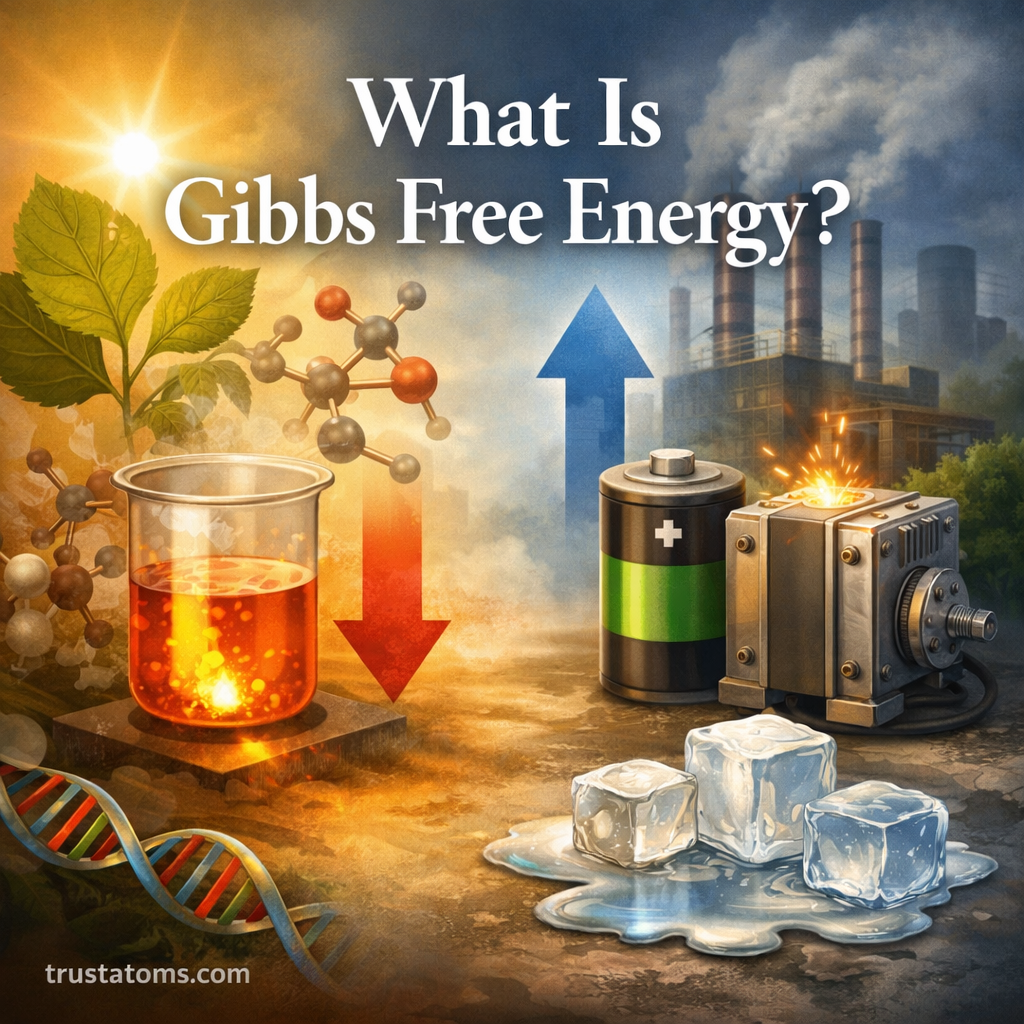
Gibbs Free Energy is one of the most important concepts in chemistry and thermodynamics. It helps scientists determine whether a chemical reaction will happen spontaneously under certain conditions. By combining ideas about energy, heat, and disorder, Gibbs Free Energy provides a powerful way to predict the direction and feasibility of chemical processes.
Chemists use this concept to analyze reactions in everything from biological systems and industrial manufacturing to environmental processes and energy storage technologies.
The Basic Idea of Gibbs Free Energy
Gibbs Free Energy (often represented by the symbol G) measures the amount of usable energy available in a system to perform work when temperature and pressure remain constant.
In simpler terms, it answers a key question:
Will this reaction occur on its own, or will it require additional energy?
Every chemical reaction involves changes in energy and changes in molecular disorder. Gibbs Free Energy combines these factors into a single value that indicates whether a reaction is favorable.
Why Gibbs Free Energy Matters in Chemistry
Gibbs Free Energy helps scientists understand:
- Whether a reaction will occur spontaneously
- Whether a reaction requires external energy
- How equilibrium is established
- How temperature affects reaction feasibility
Because most chemical reactions occur at roughly constant temperature and pressure, Gibbs Free Energy is extremely useful in real-world chemistry.
The Relationship Between Energy and Disorder
Gibbs Free Energy combines two major thermodynamic ideas:
Enthalpy (Heat Energy)
Enthalpy measures the heat absorbed or released during a reaction.
- Exothermic reactions release heat.
- Endothermic reactions absorb heat.
Entropy (Disorder)
Entropy measures how spread out or disordered energy and particles are within a system.
Examples of increasing entropy include:
- Ice melting into liquid water
- Gas spreading out in a container
- Solids dissolving into solutions
Natural processes often move toward greater disorder.
How Gibbs Free Energy Combines These Factors
Gibbs Free Energy brings together enthalpy and entropy to determine whether a reaction is favorable.
The key relationship is:
- Energy change from heat (enthalpy)
- Energy change from disorder (entropy)
- Temperature of the system
Together, these determine the overall free energy change of a reaction.
Chemists focus on the change in Gibbs Free Energy, written as ΔG (delta G).
Interpreting the Change in Gibbs Free Energy (ΔG)
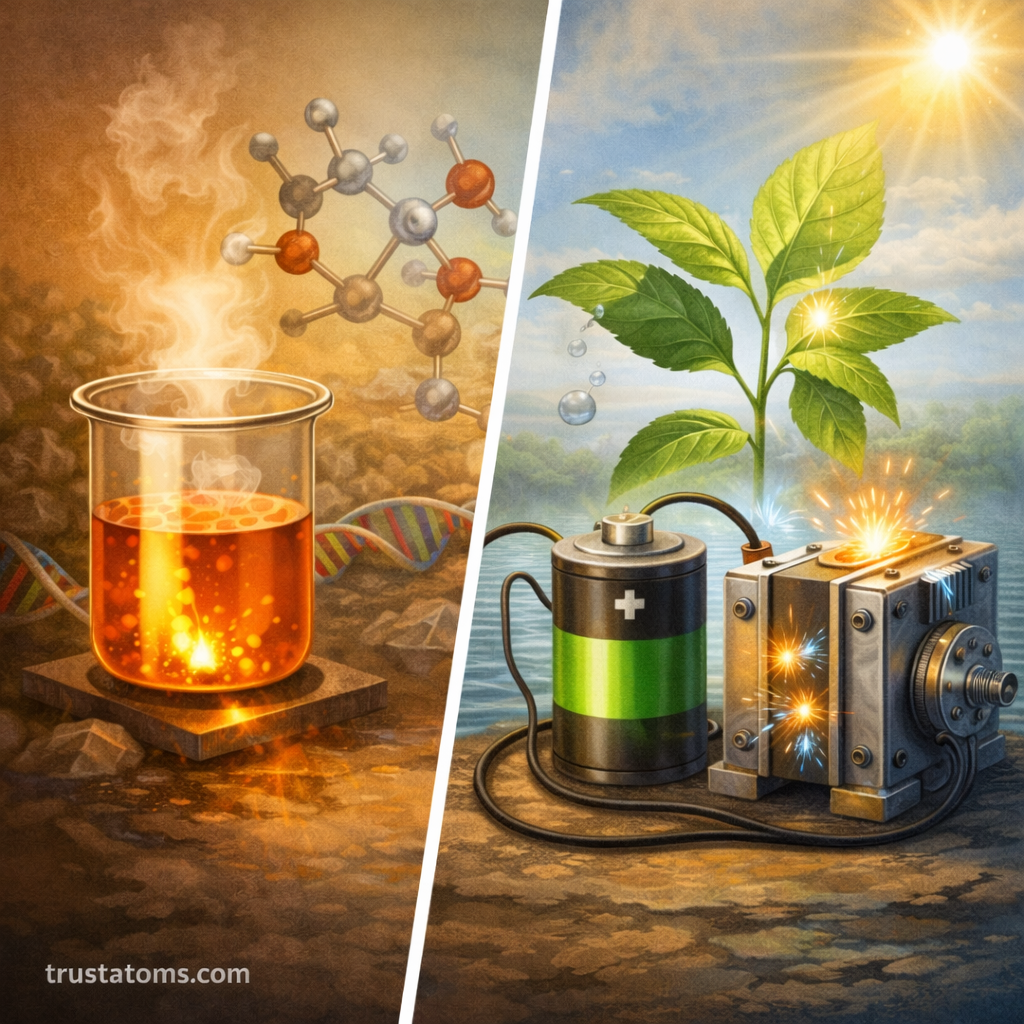
The sign of ΔG tells chemists what will happen in a reaction.
Negative ΔG (ΔG < 0)
The reaction is spontaneous.
This means the reaction can proceed on its own without needing continuous energy input.
Examples:
- Burning fuel
- Rust forming on iron
- Many biological metabolic reactions
Positive ΔG (ΔG > 0)
The reaction is non-spontaneous.
Energy must be supplied for the reaction to occur.
Examples:
- Photosynthesis
- Charging a battery
- Creating certain synthetic chemicals
ΔG Equal to Zero (ΔG = 0)
The system is at equilibrium.
At equilibrium:
- Forward and reverse reactions occur at the same rate
- No net change in concentrations occurs
Gibbs Free Energy and Chemical Equilibrium
Gibbs Free Energy plays a crucial role in understanding equilibrium.
As a reaction progresses:
- ΔG decreases
- The system moves toward its lowest possible free energy state
When ΔG becomes zero, the reaction has reached equilibrium.
This concept explains why reactions eventually stop changing, even if reactants and products are still present.
Real-World Examples of Gibbs Free Energy
Gibbs Free Energy is used in many scientific and industrial applications.
Biological Systems
Cells rely on Gibbs Free Energy to power metabolism.
Examples include:
- ATP energy transfer
- Cellular respiration
- Photosynthesis
Living organisms constantly manage energy changes to keep biological reactions moving in the correct direction.
Industrial Chemistry
Chemical engineers use Gibbs Free Energy to design efficient processes, such as:
- Fertilizer production
- Fuel refinement
- Polymer manufacturing
Understanding reaction feasibility helps reduce energy waste and improve productivity.
Energy Technologies
Gibbs Free Energy is important in technologies such as:
- Batteries
- Fuel cells
- Hydrogen production
- Electrochemical systems
These technologies rely on controlling energy changes within chemical reactions.
Factors That Affect Gibbs Free Energy
Several factors influence the value of ΔG in a reaction.
Temperature
Temperature affects the balance between enthalpy and entropy.
Some reactions only become spontaneous at higher temperatures because increased molecular motion favors disorder.
Reaction Conditions
Changes in:
- Pressure
- Concentration
- Chemical environment
can shift the reaction toward different energy states.
Molecular Structure
The arrangement of atoms and bonds determines how much energy is stored within molecules and how easily it can be released.
Gibbs Free Energy in Everyday Phenomena
Even outside laboratories, Gibbs Free Energy explains many familiar processes.
Examples include:
- Ice melting on a warm day
- Food digestion
- Combustion in engines
- Chemical reactions inside batteries
These processes all follow thermodynamic principles that favor lower free energy states.
Key Takeaways
Gibbs Free Energy is a central concept in chemistry that predicts whether reactions occur naturally.
Important points to remember:
- It measures the usable energy available to perform work.
- It combines enthalpy (heat energy) and entropy (disorder).
- The change in Gibbs Free Energy (ΔG) determines reaction spontaneity.
- Negative ΔG means a reaction occurs naturally.
- Positive ΔG means energy input is required.
- ΔG equals zero at equilibrium.
Because it connects energy, temperature, and disorder, Gibbs Free Energy provides a powerful framework for understanding chemical reactions across science and industry.