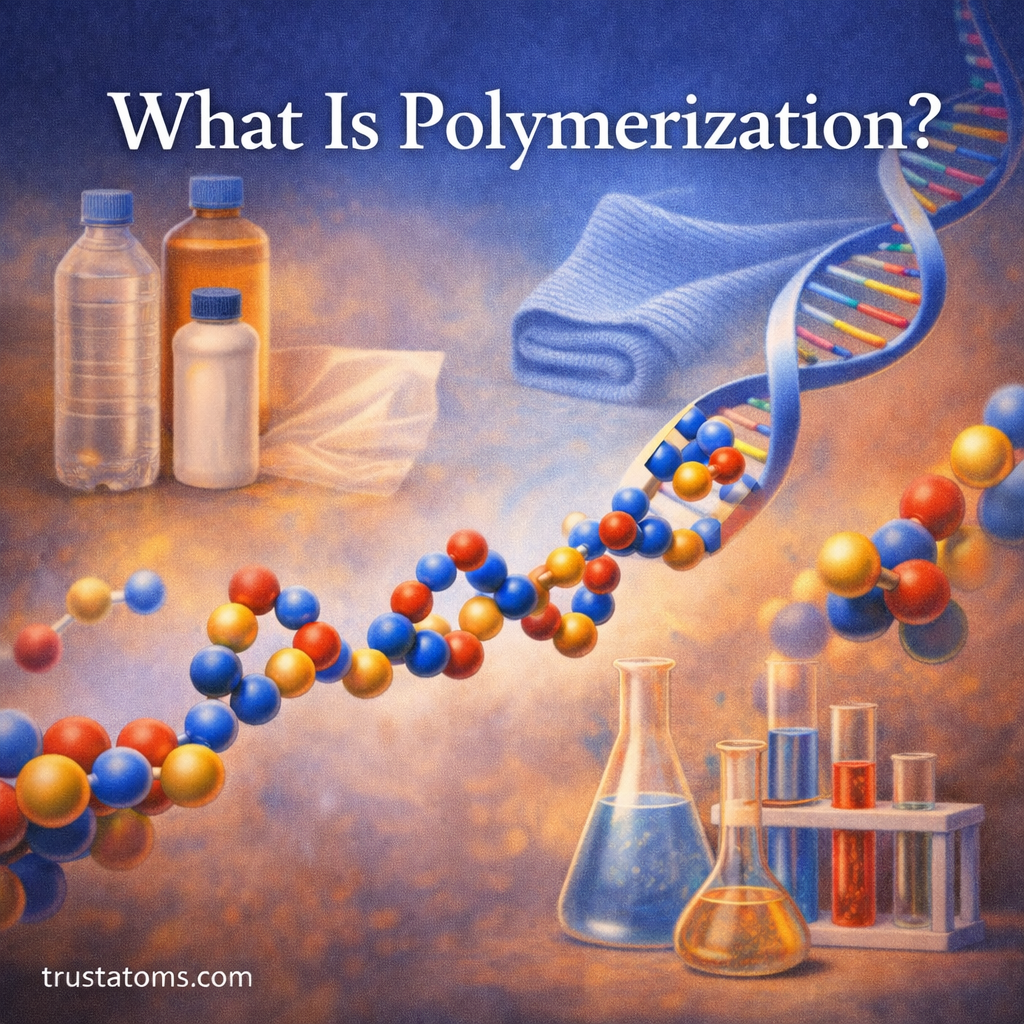
Polymerization is a fundamental process in chemistry that explains how small molecules combine to form much larger structures. This process is responsible for creating many materials used in everyday life, including plastics, synthetic fibers, rubber, and even biological molecules.
In simple terms, polymerization is the chemical process where small repeating molecules join together to form a larger chain-like molecule called a polymer. These large molecules can contain hundreds, thousands, or even millions of repeating units.
Understanding polymerization helps explain how many modern materials are created and why polymers are essential in industries such as packaging, medicine, electronics, and manufacturing.
Definition of Polymerization
Polymerization is a chemical reaction in which small molecules called monomers combine to form long-chain molecules known as polymers.
Key terms involved in polymerization include:
- Monomer – a small molecule that can join with others
- Polymer – a large molecule made of repeating monomer units
- Polymerization reaction – the chemical process that links the monomers together
A simple way to think about polymerization is like connecting many identical building blocks to create a long chain.
Why Polymerization Is Important
Polymerization is responsible for creating many materials used in daily life. Without this process, many common products would not exist.
Examples of polymer-based materials include:
- Plastic bottles
- Synthetic fabrics like polyester and nylon
- Rubber materials
- Packaging films
- Medical devices and equipment
In addition to synthetic materials, polymerization also occurs in nature. Many biological molecules are natural polymers.
Examples include:
- Proteins
- DNA
- Cellulose in plants
How Polymerization Works
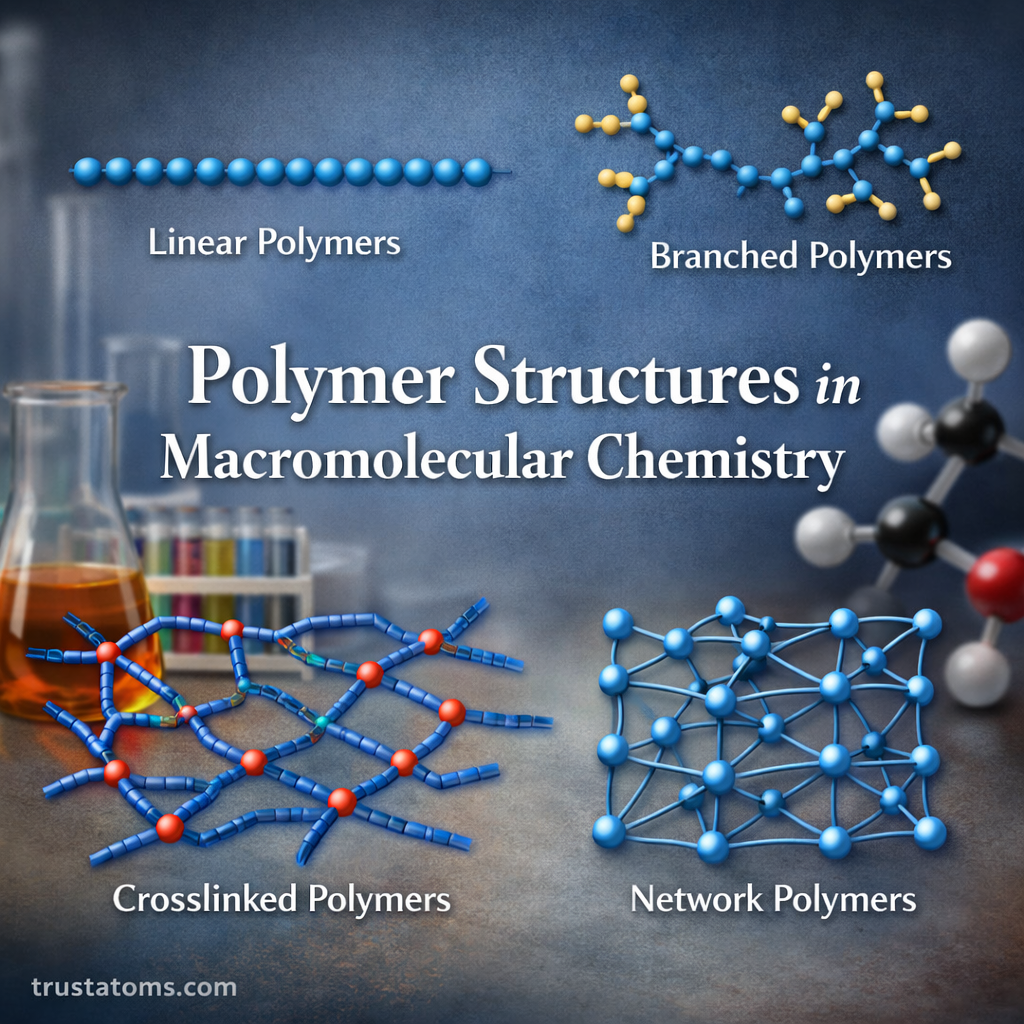
During polymerization, monomers react with each other through chemical bonds. As more monomers join together, the molecule grows into a long chain or network structure.
The basic steps of polymer formation typically include:
- Activation of monomers so they can react
- Bond formation between monomer molecules
- Chain growth as additional monomers attach
- Termination when the chain stops growing
The final polymer may contain thousands of repeating units.
Types of Polymerization
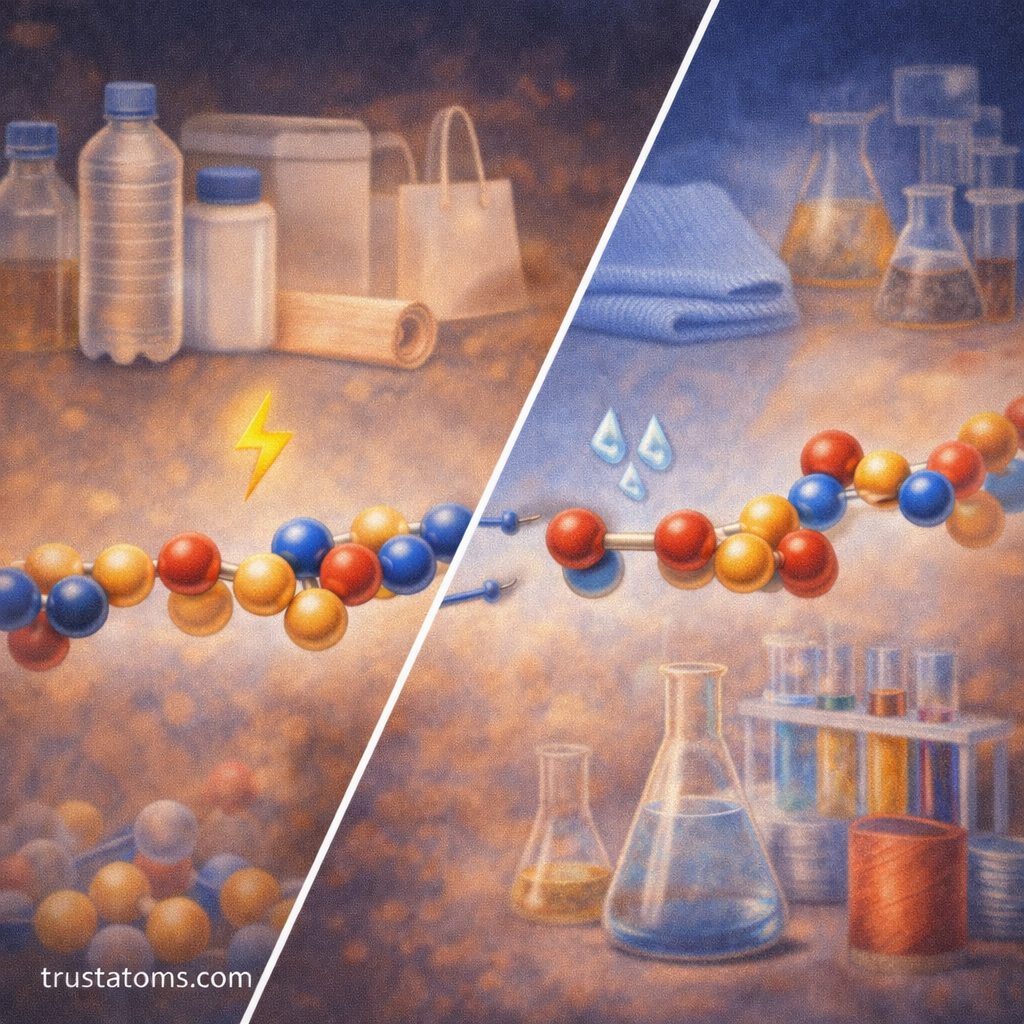
Polymerization can occur through several different mechanisms depending on the type of monomer and reaction conditions.
Two of the most common types are addition polymerization and condensation polymerization.
Addition Polymerization
In addition polymerization, monomers join together without losing any atoms. The molecules simply add onto each other to form a long chain.
This process usually occurs with molecules that contain double bonds.
Examples include the production of:
- Polyethylene (used in plastic bags)
- Polypropylene (used in containers and packaging)
- Polystyrene (used in foam packaging)
Addition polymerization often occurs rapidly once the reaction begins.
Condensation Polymerization
In condensation polymerization, monomers join together while releasing a small molecule as a byproduct.
Common byproducts include:
- Water
- Hydrogen chloride
- Alcohol molecules
Examples of condensation polymers include:
- Nylon
- Polyester
- Certain types of synthetic resins
This type of polymerization often produces materials used in textiles and engineering plastics.
Natural Polymerization in Biology
Polymerization is not limited to industrial chemistry. Many essential biological molecules are formed through polymerization reactions.
For example:
Protein Formation
Proteins are created when amino acids link together in long chains through peptide bonds.
These chains fold into complex structures that perform important biological functions.
DNA and RNA
Genetic material such as DNA and RNA is made through polymerization of nucleotides.
These long molecular chains store and transmit genetic information in living organisms.
Cellulose in Plants
Cellulose is a natural polymer made of glucose molecules linked together.
It forms the structural framework of plant cell walls and is one of the most abundant organic molecules on Earth.
Properties of Polymers
The properties of a polymer depend on several factors, including the type of monomer used and the structure of the polymer chain.
Important polymer properties include:
- Flexibility
- Strength
- Durability
- Heat resistance
- Chemical resistance
Some polymers are soft and flexible, while others are rigid and strong.
These differences allow chemists to design polymers for specific uses.
Everyday Applications of Polymerization
Polymerization has a major impact on modern technology and manufacturing.
Some common applications include:
Plastics
Many everyday plastic products are made through polymerization.
Examples include:
- Water bottles
- Food containers
- Packaging materials
Synthetic Fibers
Polymerization produces fibers used in clothing and textiles.
Examples include:
- Polyester
- Nylon
- Acrylic fibers
Medical Materials
Certain polymers are used in healthcare and medical devices.
Examples include:
- Surgical sutures
- Contact lenses
- Drug delivery materials
- Medical tubing
Electronics and Technology
Advanced polymers are also used in electronics and engineering materials.
Examples include:
- Insulation for electrical wires
- Protective coatings
- Components in electronic devices
Why Polymerization Matters in Chemistry
Polymerization is one of the most important chemical processes in modern science. It explains how simple molecules can be transformed into complex materials with useful properties.
Studying polymerization helps scientists:
- Design new materials
- Improve manufacturing processes
- Develop biodegradable plastics
- Understand biological molecules
Because polymers are so versatile, research in polymer chemistry continues to play a major role in technology, medicine, and sustainability.
Final Thoughts
Polymerization is the chemical process that links small molecules called monomers into long chains known as polymers. This process is responsible for producing many of the materials used in modern life, including plastics, synthetic fibers, and medical devices.
From natural polymers like DNA and proteins to synthetic materials used in industry, polymerization helps explain how complex structures can form from simple building blocks. Understanding this process is a key part of studying chemistry and materials science.