Electron affinity is an important concept in chemistry that explains how atoms interact during chemical reactions. It describes how much energy is released or required when an atom gains an electron. This property plays a major role in chemical bonding, periodic trends, and the formation of ions.
Atoms differ widely in how strongly they attract additional electrons. Some atoms readily accept electrons and release energy, while others resist gaining electrons. Understanding electron affinity helps explain why certain elements form stable ions, reactive compounds, and predictable chemical structures.
In this guide, we explore what electron affinity is, how it works, and why it matters in chemical systems.
What Is Electron Affinity?
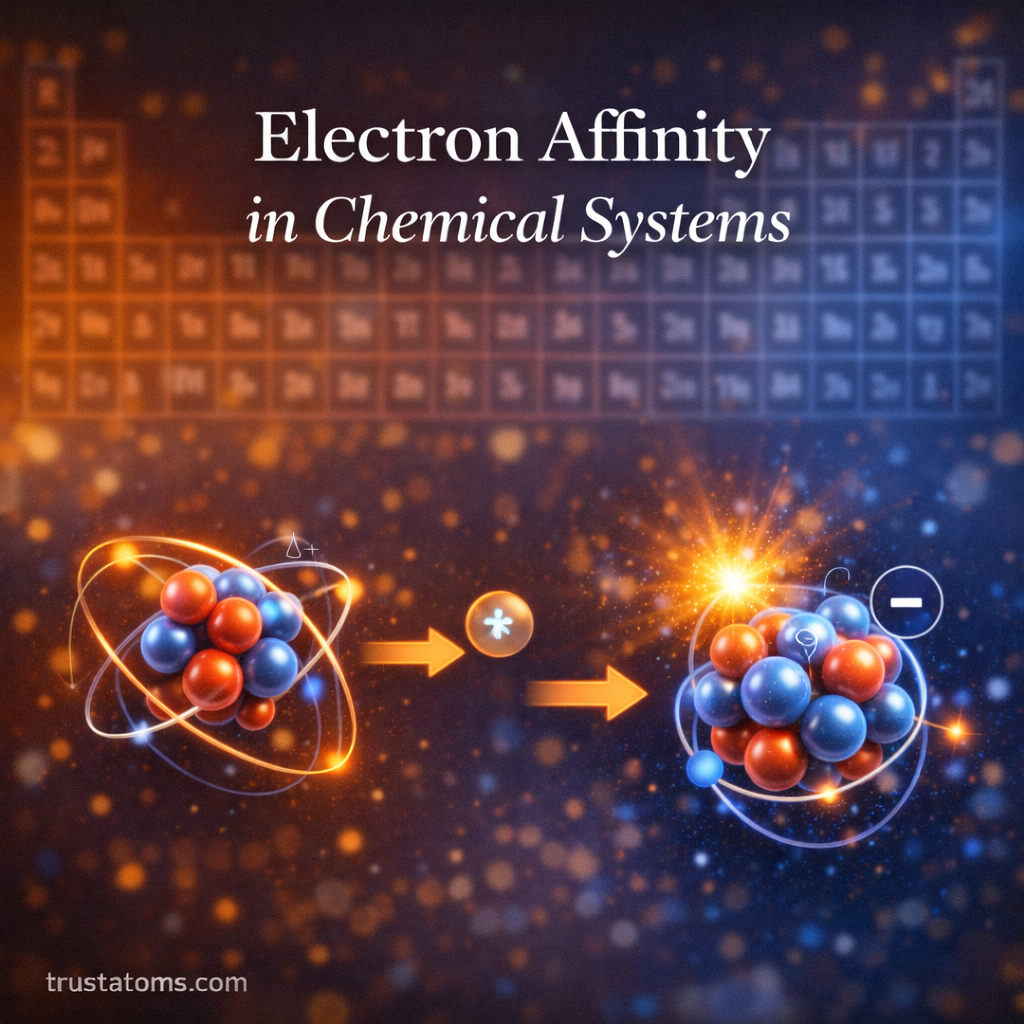
Electron affinity refers to the energy change that occurs when a neutral atom in the gas phase gains an electron to form a negatively charged ion.
The process can be written conceptually as:
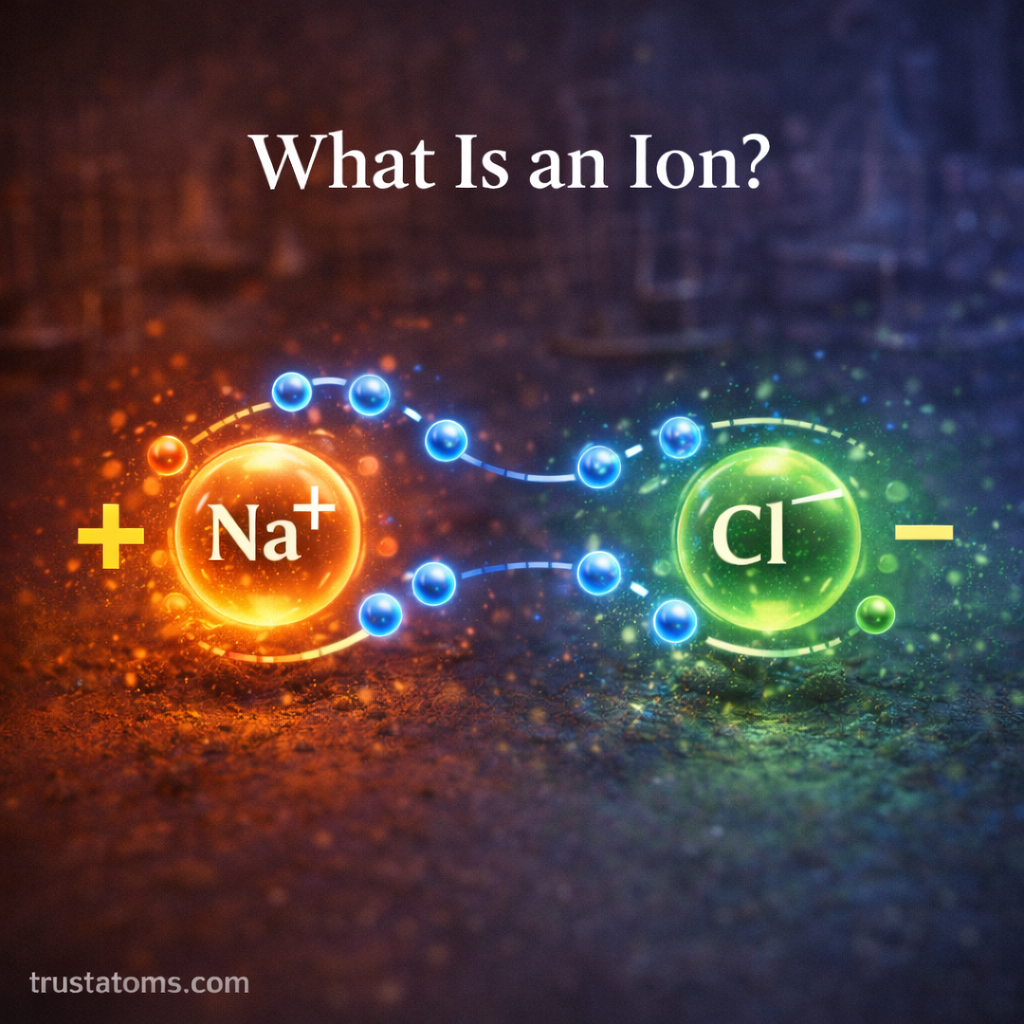
Atom + electron → negative ion + energy
In many cases, energy is released when the electron is added. This means the atom has a high electron affinity, because it strongly attracts the incoming electron.
However, some atoms require energy to accept an electron, meaning their electron affinity is low or even positive.
Electron affinity is usually measured in kilojoules per mole (kJ/mol).
Why Electron Affinity Matters in Chemistry
Electron affinity influences several important chemical behaviors.
It helps determine:
- How easily atoms form negative ions (anions)
- The strength of chemical bonds
- The reactivity of elements
- The formation of ionic and covalent compounds
Elements with high electron affinity tend to gain electrons during reactions. These atoms often act as electron acceptors, especially when reacting with metals that lose electrons easily.
For example, halogens strongly attract electrons and readily form negative ions in chemical reactions.
How Electron Affinity Works at the Atomic Level
Electron affinity depends on how strongly the atomic nucleus attracts electrons.
Several factors influence this attraction:
Nuclear Charge
Atoms with more protons exert a stronger pull on electrons. A higher nuclear charge increases the likelihood that an atom will accept an extra electron.
Atomic Radius
The distance between the nucleus and the outer electrons affects attraction.
- Smaller atoms pull electrons more strongly.
- Larger atoms attract electrons more weakly.
When electrons are closer to the nucleus, the attraction is stronger.
Electron Shielding
Inner electrons can shield outer electrons from the nucleus.
As additional electron shells are added:
- Shielding increases
- Nuclear attraction weakens
- Electron affinity generally decreases
These factors explain why electron affinity changes across the periodic table.
Periodic Trends in Electron Affinity
Electron affinity follows predictable trends across the periodic table.
Trend Across a Period
Electron affinity generally increases from left to right across a period.
Reasons include:
- Increasing nuclear charge
- Decreasing atomic radius
- Stronger attraction for incoming electrons
Nonmetals on the right side of the periodic table typically have higher electron affinity values.
Trend Down a Group
Electron affinity generally decreases from top to bottom in a group.
Reasons include:
- Larger atomic size
- Increased electron shielding
- Weaker attraction for incoming electrons
As atoms become larger, the added electron experiences less nuclear pull.
Elements with High Electron Affinity
Certain elements strongly attract additional electrons.
Examples include:
- Chlorine
- Fluorine
- Oxygen
- Sulfur
Halogens are especially known for high electron affinity because gaining one electron allows them to complete their valence electron shell.
This is why halogens easily form negative ions such as:
- chloride ions
- fluoride ions
These ions frequently appear in salts and ionic compounds.
Elements with Low or Positive Electron Affinity
Some elements resist gaining electrons.
This often occurs when:
- electron shells are already stable
- electron repulsion increases
- the added electron occupies a higher energy orbital
Examples include:
- noble gases
- alkaline earth metals
- some transition metals
Noble gases in particular rarely gain electrons because their outer electron shells are already full and stable.
First vs. Second Electron Affinity
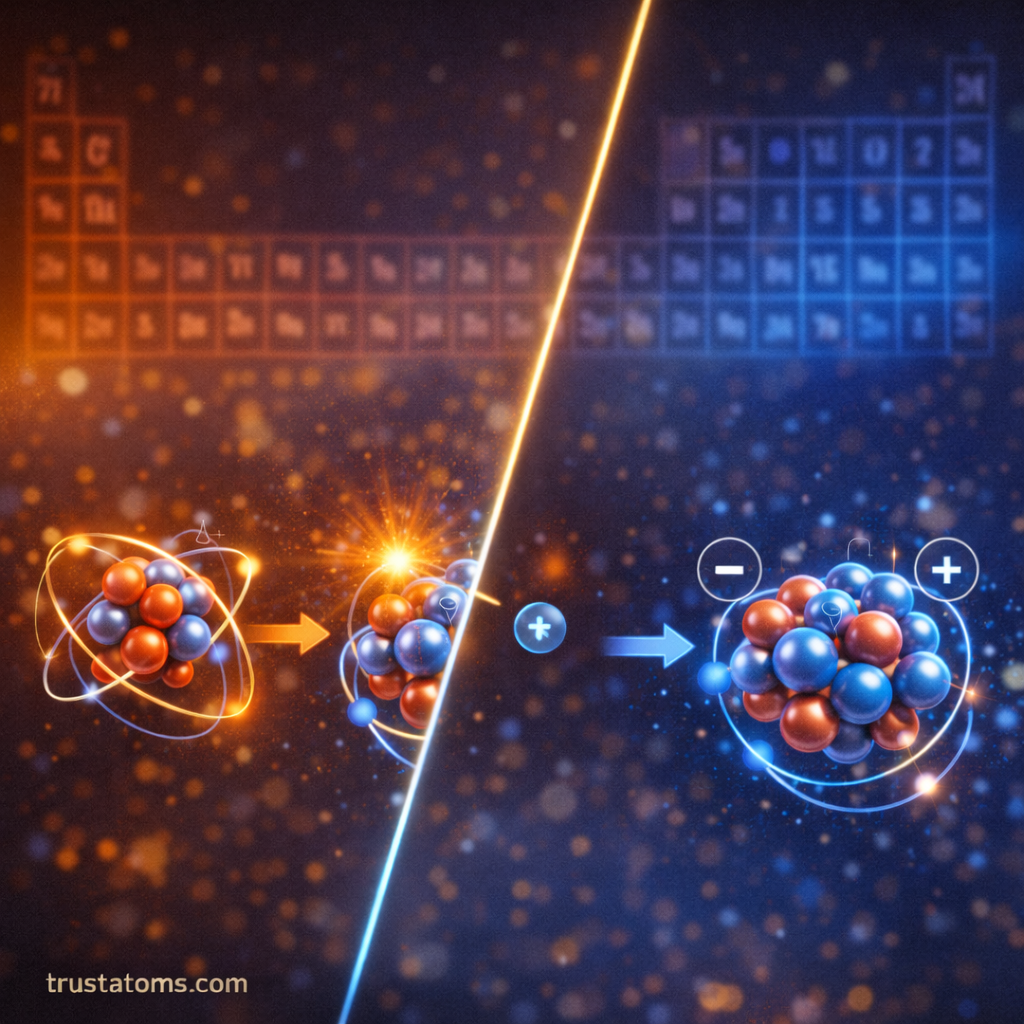
Electron affinity is usually discussed for the first electron added to a neutral atom.
However, atoms can sometimes gain additional electrons.
First Electron Affinity
This occurs when a neutral atom gains its first extra electron.
Energy is often released during this process.
Second Electron Affinity
The second electron affinity involves adding another electron to a negatively charged ion.
This process usually requires energy because:
- electrons repel each other
- the ion is already negatively charged
As a result, second electron affinities are typically endothermic.
Electron Affinity and Chemical Bonding
Electron affinity plays a key role in both ionic and covalent bonding.
Ionic Bonding
Ionic bonds form when one atom transfers electrons to another.
For example:
- metals lose electrons easily
- nonmetals with high electron affinity gain electrons
This creates positive and negative ions that attract each other through electrostatic forces.
Covalent Bonding
Electron affinity also influences how atoms share electrons in covalent bonds.
Atoms with higher electron affinity tend to pull shared electrons closer, affecting bond polarity and molecular behavior.
Electron Affinity vs. Electronegativity
Electron affinity is often confused with electronegativity, but they describe different concepts.
Electron affinity refers to:
- energy change when an atom gains an electron
Electronegativity refers to:
- an atom’s ability to attract electrons during a chemical bond
Although related, these properties measure different aspects of electron attraction.
For example:
- electron affinity focuses on isolated atoms
- electronegativity focuses on atoms within molecules
Both concepts help explain chemical reactivity and bonding.
Real-World Importance of Electron Affinity
Electron affinity is important in several scientific and technological fields.
It helps scientists understand:
- chemical reactions
- battery chemistry
- semiconductor materials
- atmospheric chemistry
- corrosion processes
For example, electron transfer reactions are essential in electrochemistry, where electrons move between substances to generate electrical energy.
Understanding electron affinity helps chemists predict which materials will gain or lose electrons during these processes.
Final Thoughts
Electron affinity is a fundamental concept that explains how atoms gain electrons and form negative ions. By examining how nuclear charge, atomic size, and electron shielding affect electron attraction, scientists can predict how elements behave in chemical systems.
This property helps explain periodic trends, chemical bonding, and many natural processes that involve electron transfer.
Together with other atomic properties, electron affinity provides a deeper understanding of how the building blocks of matter interact to form the substances we observe in everyday life.