Functional groups are one of the most important concepts in organic chemistry. They are specific groups of atoms within a molecule that determine how the molecule behaves in chemical reactions. By identifying the functional groups present in a compound, chemists can predict its chemical properties, reactivity, and potential uses.
Organic molecules can contain one or more functional groups, and these groups largely control how molecules interact with other substances. Understanding functional groups helps explain everything from biological molecules to industrial chemicals and pharmaceuticals.
What Are Functional Groups?
A functional group is a specific arrangement of atoms within an organic molecule that gives the compound characteristic chemical behavior.
These groups often include atoms such as:
- Oxygen
- Nitrogen
- Sulfur
- Halogens
When attached to a carbon skeleton, these atoms create regions in the molecule that are more reactive than the surrounding structure.
For example, two molecules with different carbon structures but the same functional group may undergo similar chemical reactions.
Why Functional Groups Matter
Functional groups help chemists classify organic compounds and predict how they will react.
They influence several important molecular properties, including:
- Chemical reactivity
- Polarity
- Solubility
- Boiling and melting points
- Biological activity
Because of this, chemists often focus on the functional group when studying organic molecules rather than the entire carbon framework.
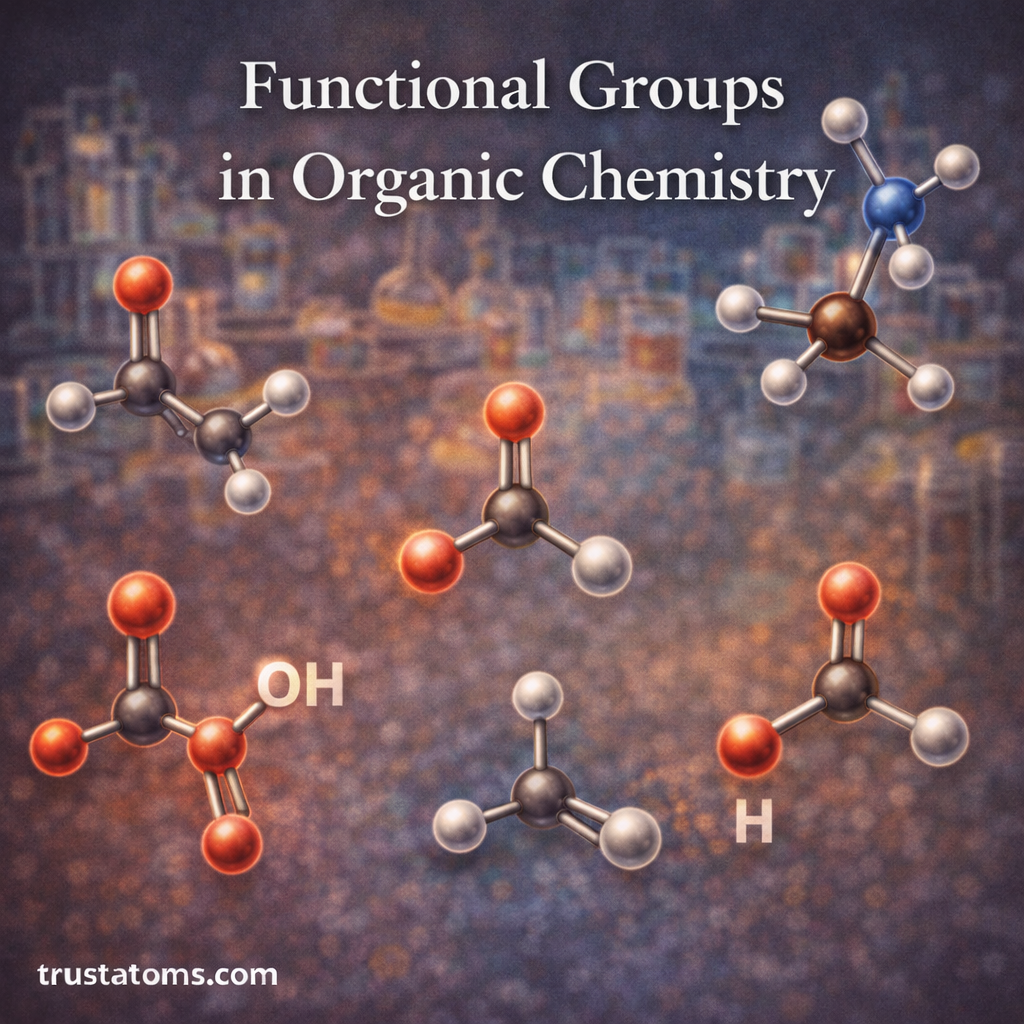
Common Functional Groups in Organic Chemistry
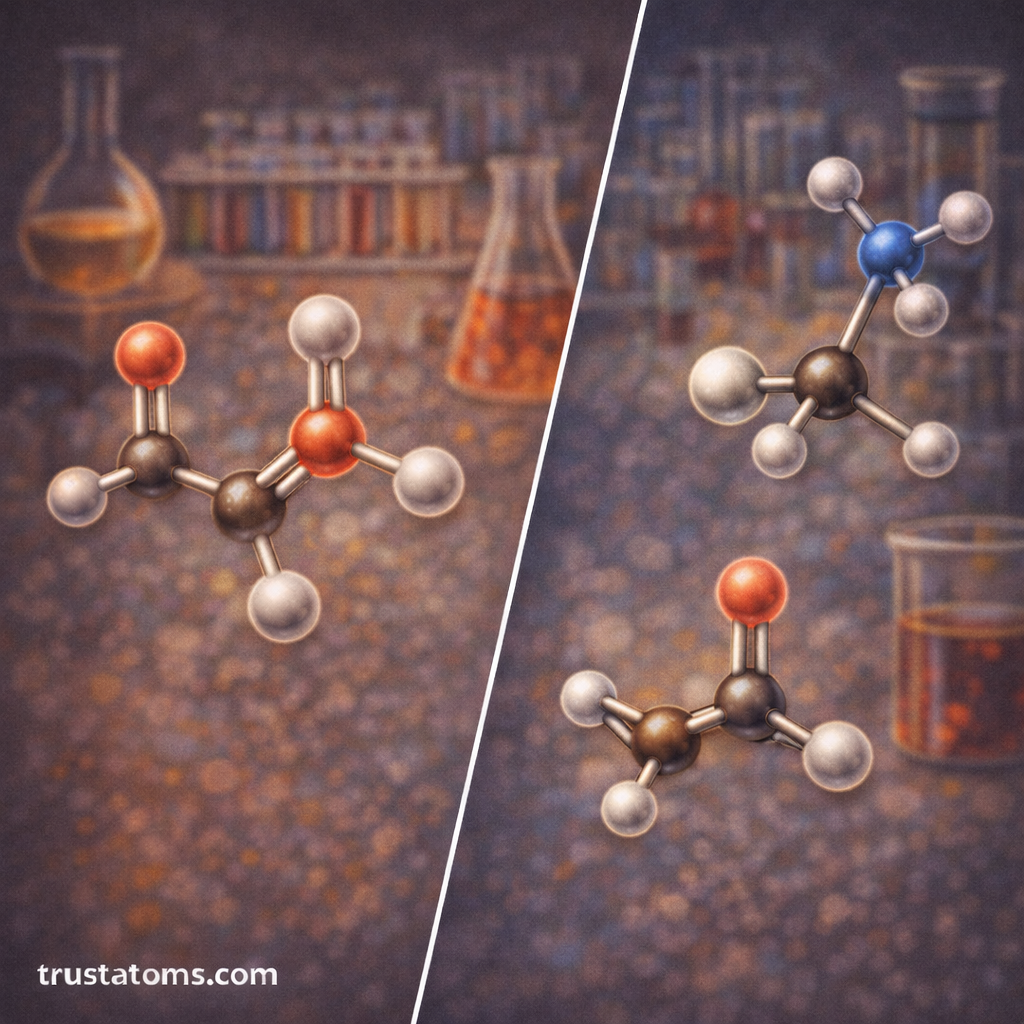
Organic chemistry includes many different functional groups, each with distinct chemical characteristics.
Alcohols
Alcohols contain a hydroxyl group attached to a carbon atom.
Key features include:
- Increased polarity
- Ability to form hydrogen bonds
- Higher boiling points than similar hydrocarbons
Alcohols are widely used in:
- Solvents
- Fuels
- Pharmaceutical products
Aldehydes
Aldehydes contain a carbon atom bonded to both hydrogen and oxygen in a carbonyl arrangement.
Characteristics include:
- High chemical reactivity
- Participation in oxidation and reduction reactions
- Important roles in biological molecules
Many natural compounds and fragrances contain aldehyde functional groups.
Ketones
Ketones also contain a carbonyl group, but the carbonyl carbon is bonded to two other carbon atoms.
Properties of ketones include:
- Moderate polarity
- Stability in many chemical environments
- Ability to participate in nucleophilic reactions
Ketones are frequently used in industrial solvents and organic synthesis.
Carboxylic Acids
Carboxylic acids contain a functional group made of both a carbonyl group and a hydroxyl group attached to the same carbon.
Key characteristics include:
- Acidic behavior in solution
- Strong hydrogen bonding
- High boiling points
These compounds appear in many biological molecules, including fatty acids and metabolic intermediates.
Amines
Amines contain nitrogen atoms bonded to carbon and hydrogen atoms.
They are commonly classified into:
- Primary amines
- Secondary amines
- Tertiary amines
Amines are important in:
- Pharmaceutical chemistry
- Biological molecules
- Synthetic materials
Many neurotransmitters and amino acids contain amine groups.
Functional Groups and Chemical Reactivity
Functional groups strongly influence how molecules react in chemical reactions.
The presence of certain atoms changes the electron distribution within the molecule, making some parts more reactive than others.
Functional groups often serve as sites where reactions occur, such as:
- Bond formation
- Bond breaking
- Electron transfer
For example, carbonyl groups frequently participate in addition reactions, while carboxylic acids often undergo substitution reactions.
Understanding these patterns allows chemists to design chemical syntheses and predict reaction outcomes.
Functional Groups in Biological Molecules
Many molecules essential for life contain functional groups that control their behavior.
Examples include:
- Proteins containing amine and carboxyl groups
- Carbohydrates containing hydroxyl and carbonyl groups
- Lipids containing ester and carboxyl groups
- DNA and RNA containing phosphate groups
These functional groups allow biological molecules to interact, react, and form complex structures necessary for life.
Identifying Functional Groups in Organic Compounds
Chemists use several methods to identify functional groups within molecules.
Common approaches include:
- Spectroscopy techniques
- Infrared spectroscopy
- Nuclear magnetic resonance
- Mass spectrometry
- Chemical tests
- Reagent-based reactions
- Color changes indicating specific groups
- Structural analysis
- Determining molecular formulas
- Studying bonding patterns
These tools help chemists understand molecular structures and confirm the identity of organic compounds.
Applications of Functional Groups in Industry
Functional groups are essential in many industrial processes and products.
Industries rely on functional group chemistry to produce:
- Pharmaceuticals
- Plastics and polymers
- Agricultural chemicals
- Dyes and pigments
- Food additives
By modifying functional groups within molecules, chemists can adjust properties such as solubility, stability, and biological activity.
Final Thoughts
Functional groups are the foundation of organic chemistry because they determine how molecules behave and interact. By focusing on these groups, chemists can classify compounds, predict chemical reactions, and design new molecules for practical applications.
From biological systems to industrial manufacturing, functional groups play a central role in the chemistry that shapes the modern world. Understanding them provides a powerful framework for studying and applying organic chemistry.