Rivers are powerful natural systems that do more than carry water—they shape the Earth’s surface. As water flows downstream, it transports sediment, erodes land, and deposits materials, constantly reshaping valleys, floodplains, and coastlines.
Understanding river systems and sediment transport helps explain how landscapes evolve, how ecosystems are sustained, and how human activities can influence natural processes.
What Is a River System?
A river system is a network of connected waterways that drains water from a watershed.
It typically includes:
- Headwaters – small streams where the river begins
- Tributaries – smaller streams that feed into larger rivers
- Main channel – the primary river flow
- Mouth – where the river empties into a lake, sea, or ocean
River systems are part of larger drainage basins and play a key role in the hydrologic cycle.
What Is Sediment Transport?
Sediment transport refers to the movement of solid materials by flowing water.
These materials can include:
- Sand
- Gravel
- Silt
- Clay
- Organic debris
Sediment is picked up, carried, and eventually deposited by rivers, shaping the land over time.
Types of Sediment Transport
Rivers move sediment in different ways depending on particle size and flow conditions.
Bed Load
- Larger particles like gravel and sand
- Move along the riverbed by rolling or sliding
- Requires strong water flow
Suspended Load
- Fine particles like silt and clay
- Carried within the water column
- Gives rivers a cloudy appearance
Dissolved Load
- Minerals dissolved in water
- Invisible to the eye
- Comes from chemical weathering of rocks
Factors That Influence Sediment Transport
Several key factors determine how much sediment a river can carry.
Water Velocity
- Faster water can carry larger and more sediment
- Slower water leads to sediment deposition
River Discharge
- The volume of water flowing in the river
- Higher discharge increases transport capacity
Gradient (Slope)
- Steeper slopes increase water speed
- Common in mountainous headwaters
Sediment Size and Availability
- Smaller particles are easier to transport
- Availability depends on erosion and weathering upstream
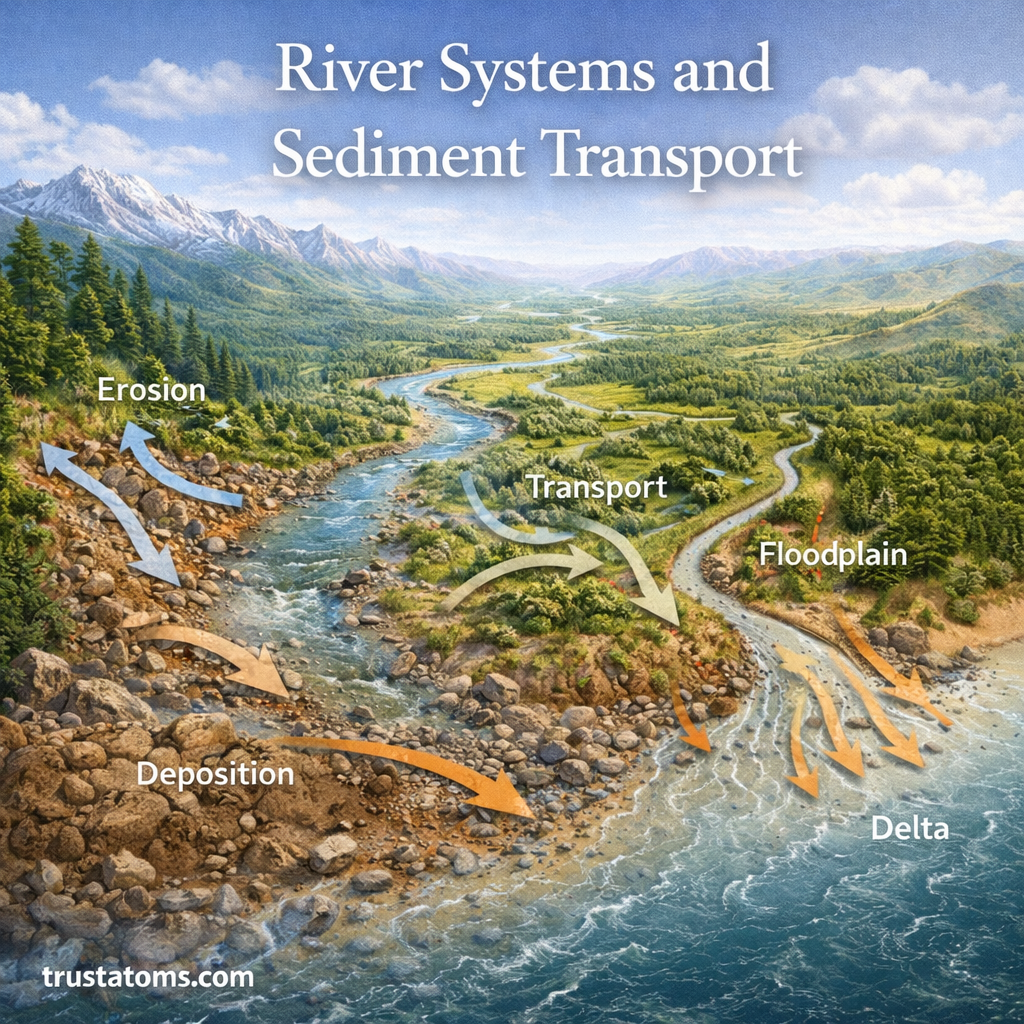
Erosion, Transport, and Deposition
Rivers shape landscapes through three main processes.
Erosion
- Wearing away of rock and soil
- Occurs when water force removes material
- Strongest in fast-moving sections
Transport
- Movement of eroded material downstream
- Occurs through bed load, suspended load, and dissolved load
Deposition
- Occurs when water slows down
- Sediment settles and accumulates
- Forms new land features
Landforms Created by Rivers
Sediment transport leads to the formation of distinct landforms.
Meanders
- Curving bends in rivers
- Form as water erodes outer banks and deposits sediment on inner banks
Floodplains
- Flat areas beside rivers
- Built from repeated sediment deposition during floods
Deltas
- Form at river mouths
- Sediment accumulates as river water slows entering a larger body of water
Alluvial Fans
- Cone-shaped deposits
- Form where rivers exit steep areas onto flatter land
The Role of Sediment in Ecosystems
Sediment transport is not just a geological process—it also supports life.
Nutrient Distribution
- Sediments carry nutrients essential for plant growth
- Enrich soils in floodplains and deltas
Habitat Formation
- Creates diverse habitats like sandbars and wetlands
- Supports aquatic and terrestrial species
Water Quality
- Fine sediments can affect clarity and oxygen levels
- Excess sediment may harm ecosystems
Human Impact on River Systems
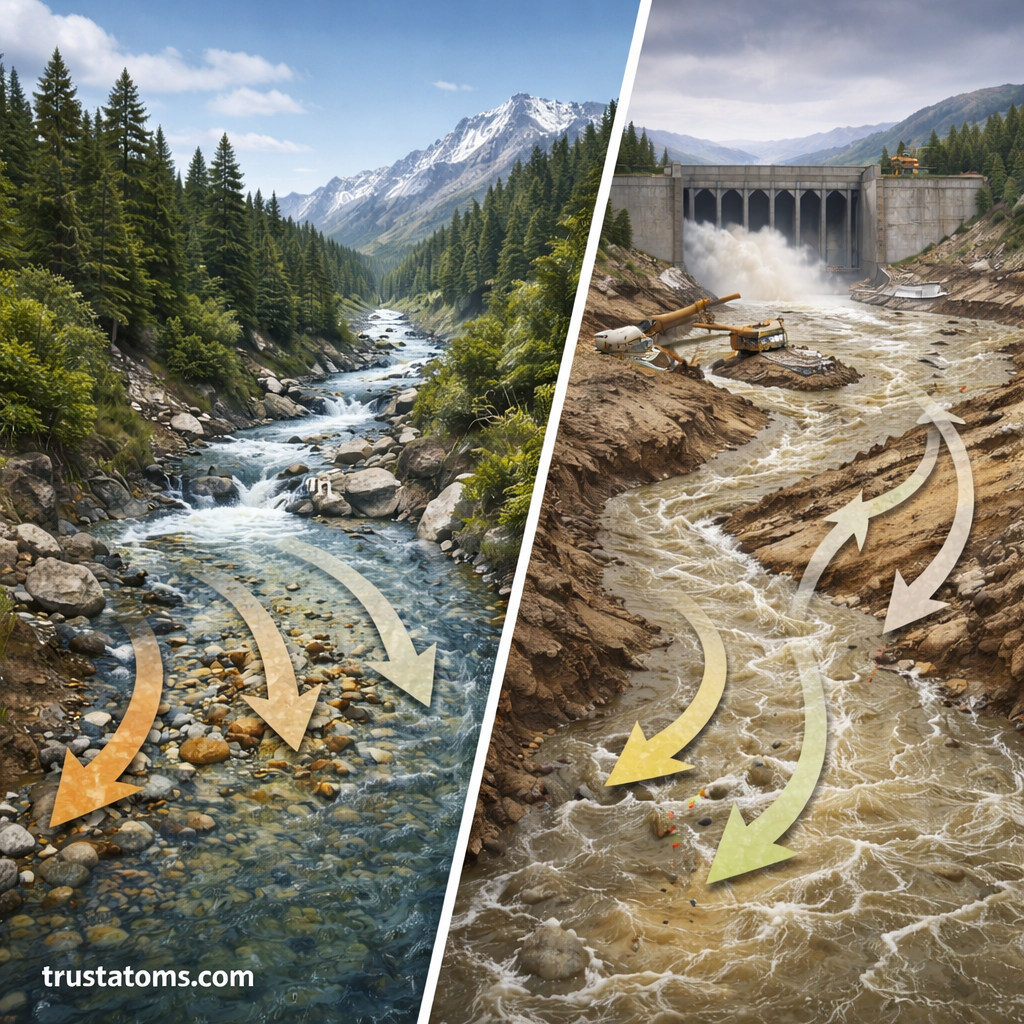
Human activities can significantly alter sediment transport.
Dams and Reservoirs
- Trap sediment upstream
- Reduce sediment flow downstream
- Affect delta formation and coastal stability
Deforestation
- Increases soil erosion
- Adds excess sediment to rivers
Urbanization
- Increases runoff and erosion
- Changes natural flow patterns
Agriculture
- Soil disturbance leads to higher sediment loads
- Can impact water quality
Managing Sediment and River Health
Sustainable management is essential for maintaining healthy river systems.
Key Strategies
- Protect Vegetation
- Reduces erosion
- Stabilizes riverbanks
- Control Runoff
- Use proper land management practices
- Limit soil disturbance
- Monitor Sediment Levels
- Track changes in river systems
- Prevent excessive buildup or loss
- Restore Natural Flow
- Modify dam operations where possible
- Reconnect rivers with floodplains
Real-World Examples of Sediment Transport
The Mississippi River Delta
- Built from sediment carried over thousands of years
- Shrinking due to reduced sediment flow from dams
The Nile River
- Historically deposited fertile sediment along its banks
- Changes after dam construction have reduced natural flooding
The Amazon River
- Carries one of the largest sediment loads in the world
- Plays a major role in shaping coastal and marine environments
Final Thoughts
River systems and sediment transport are fundamental processes that shape Earth’s surface. Through erosion, movement, and deposition, rivers continuously transform landscapes and support ecosystems.
Understanding these processes helps us manage water resources, protect habitats, and reduce environmental impacts caused by human activity.