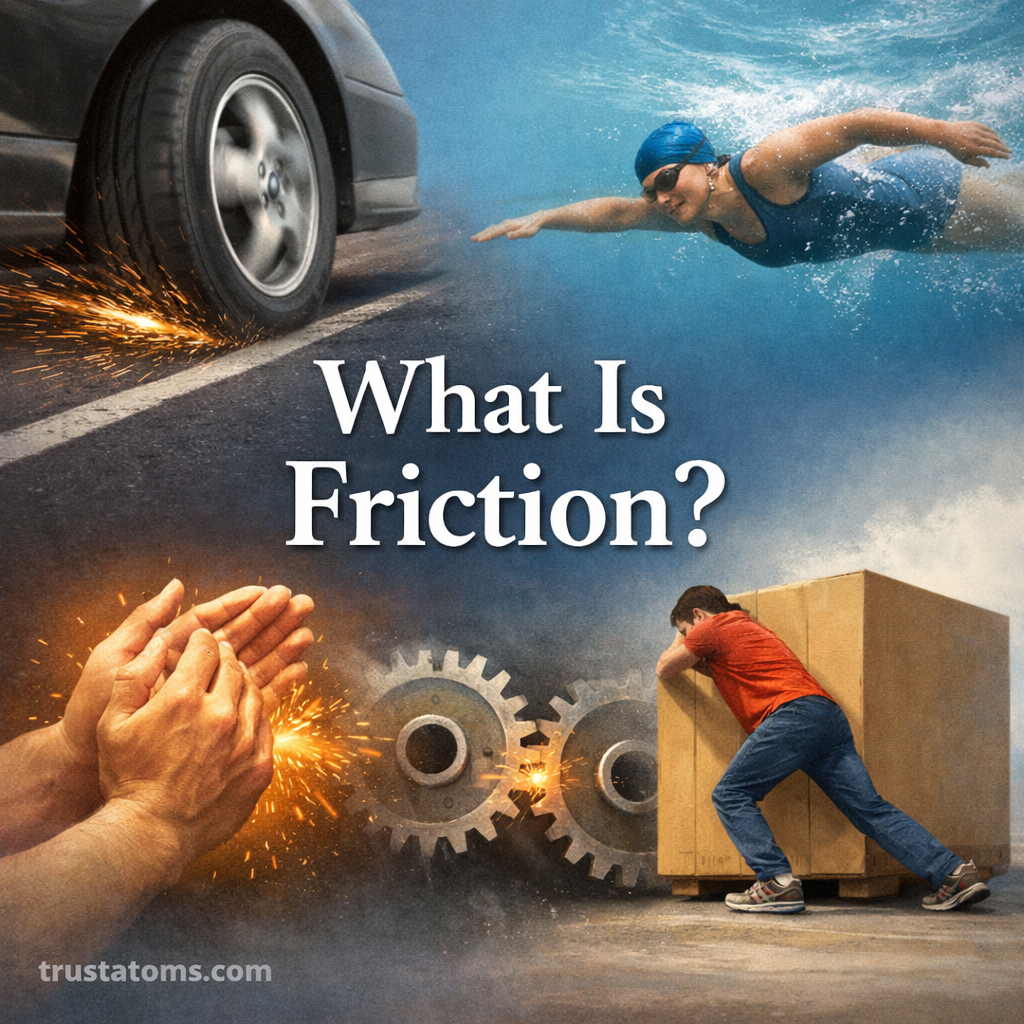
Friction is a force that resists motion when two surfaces come into contact.
Any time you slide a book across a table, walk across the floor, or drive a car down the road, friction is involved. Without friction, movement would be nearly impossible to control.
In this guide, you’ll learn:
- What friction is
- Why friction happens
- The different types of friction
- The friction formula
- Real-world examples
- Why friction is both useful and problematic
What Is Friction in Physics?
Friction is a contact force that opposes motion between two surfaces touching each other.
It always acts in the opposite direction of movement (or attempted movement).
If you try to push a heavy couch and it doesn’t move, friction is stopping it.
If you slide across ice and keep moving, that’s because friction is low.
In simple terms:
No friction = endless sliding
More friction = harder to move
Why Does Friction Happen?
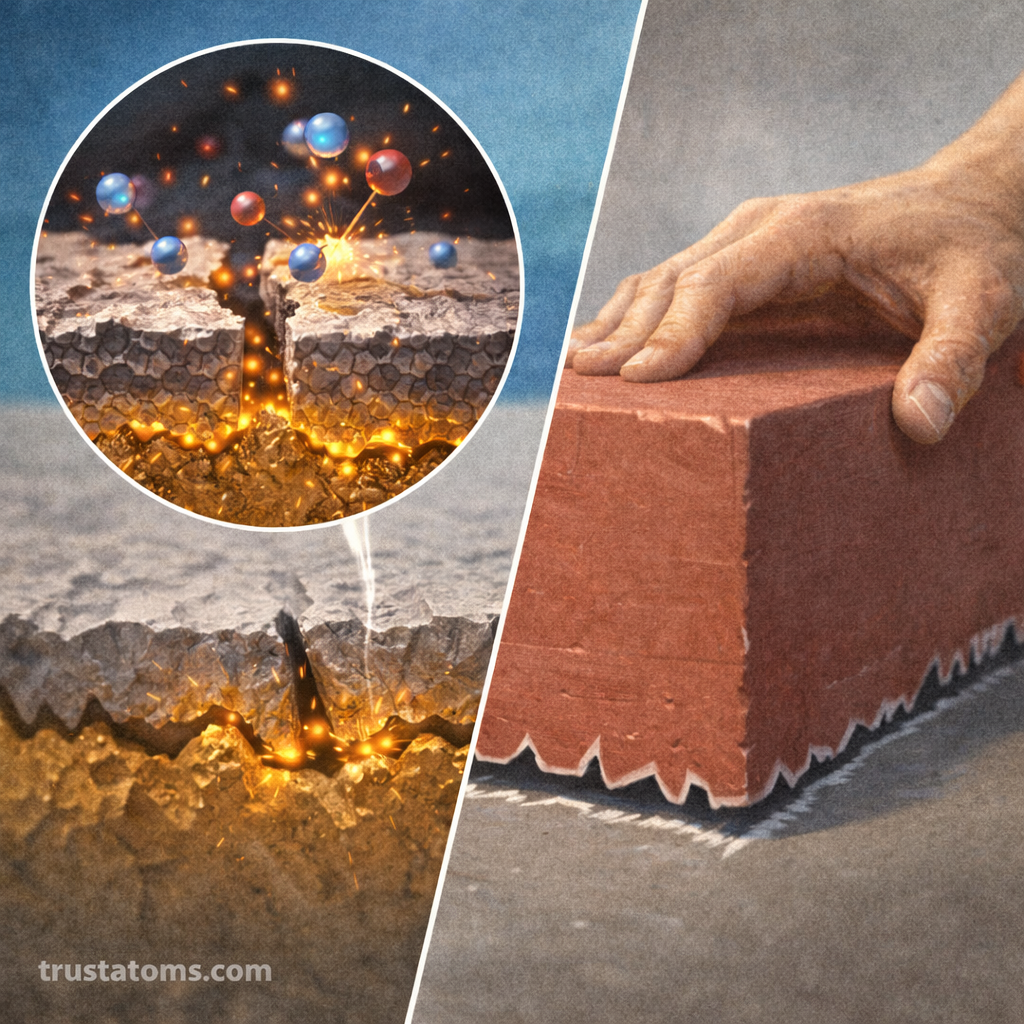
Even surfaces that look smooth under a microscope are rough.
When two surfaces touch:
- Tiny bumps and irregularities catch on each other
- Molecules from each surface attract slightly
- Energy is lost as heat
These microscopic interactions create resistance — and that resistance is friction.
The Friction Formula
The basic formula for friction is:
F = μN
Where:
- F = friction force (in newtons)
- μ (mu) = coefficient of friction
- N = normal force (the force pressing the surfaces together)
What Is the Coefficient of Friction?
The coefficient of friction (μ):
- Has no units
- Depends on the materials involved
- Changes based on surface texture
For example:
- Rubber on dry pavement → high friction
- Ice on ice → very low friction
Types of Friction
There are four main types of friction.
1. Static Friction
Static friction acts on objects that are not moving.
It prevents motion from starting.
Example:
Pushing a heavy box that doesn’t budge.
Static friction is usually stronger than sliding friction.
2. Kinetic (Sliding) Friction
Kinetic friction occurs when objects are already moving past each other.
Example:
A sled sliding down a snowy hill.
This friction is usually slightly weaker than static friction.
3. Rolling Friction
Rolling friction happens when an object rolls over a surface.
Example:
Car tires rolling on the road.
Rolling friction is much smaller than sliding friction — which is why wheels make transportation efficient.
4. Fluid Friction (Drag)
Fluid friction occurs when an object moves through a liquid or gas.
Example:
- Air resistance on a moving car
- Water resistance on a swimmer
This type of friction increases with speed.
Real-Life Examples of Friction
Friction affects nearly everything we do.
Everyday Examples
- Walking (shoes grip the ground)
- Writing with a pencil
- Braking a car
- Climbing stairs
- Lighting a match
Without friction, you would slip constantly.
Why Friction Is Important
Friction is essential for:
- Traction in vehicles
- Stability when walking
- Holding objects
- Mechanical systems working properly
If Earth had zero friction:
- Cars couldn’t stop
- You couldn’t walk
- Objects would slide forever
When Friction Becomes a Problem
Although friction is useful, it also has downsides.
Problems Caused by Friction
- Wears down machine parts
- Produces unwanted heat
- Reduces efficiency
- Increases fuel consumption
Engineers often try to reduce friction using:
- Lubricants (like oil)
- Ball bearings
- Smoother materials
Friction and Heat
When friction occurs, mechanical energy converts into heat energy.
For example:
- Rubbing your hands together makes them warm
- Car brakes heat up when stopping
- Machinery can overheat due to friction
This energy transformation follows the Law of Conservation of Energy.
How Surface Area Affects Friction
Interestingly, for most solid surfaces, friction does not strongly depend on surface area.
Instead, friction mainly depends on:
- The normal force
- The materials in contact
This surprises many students because larger contact areas seem like they should create more friction — but microscopic interactions tell a different story.
Key Takeaways
- Friction is a force that opposes motion.
- It occurs whenever two surfaces touch.
- The formula is F = μN.
- There are four main types: static, kinetic, rolling, and fluid friction.
- Friction can be both helpful and harmful.
- It converts motion energy into heat.
Friction is one of the most important forces in physics — and one of the most noticeable in everyday life.
Understanding friction helps explain how vehicles move, why machines wear down, and how we’re able to walk without slipping.