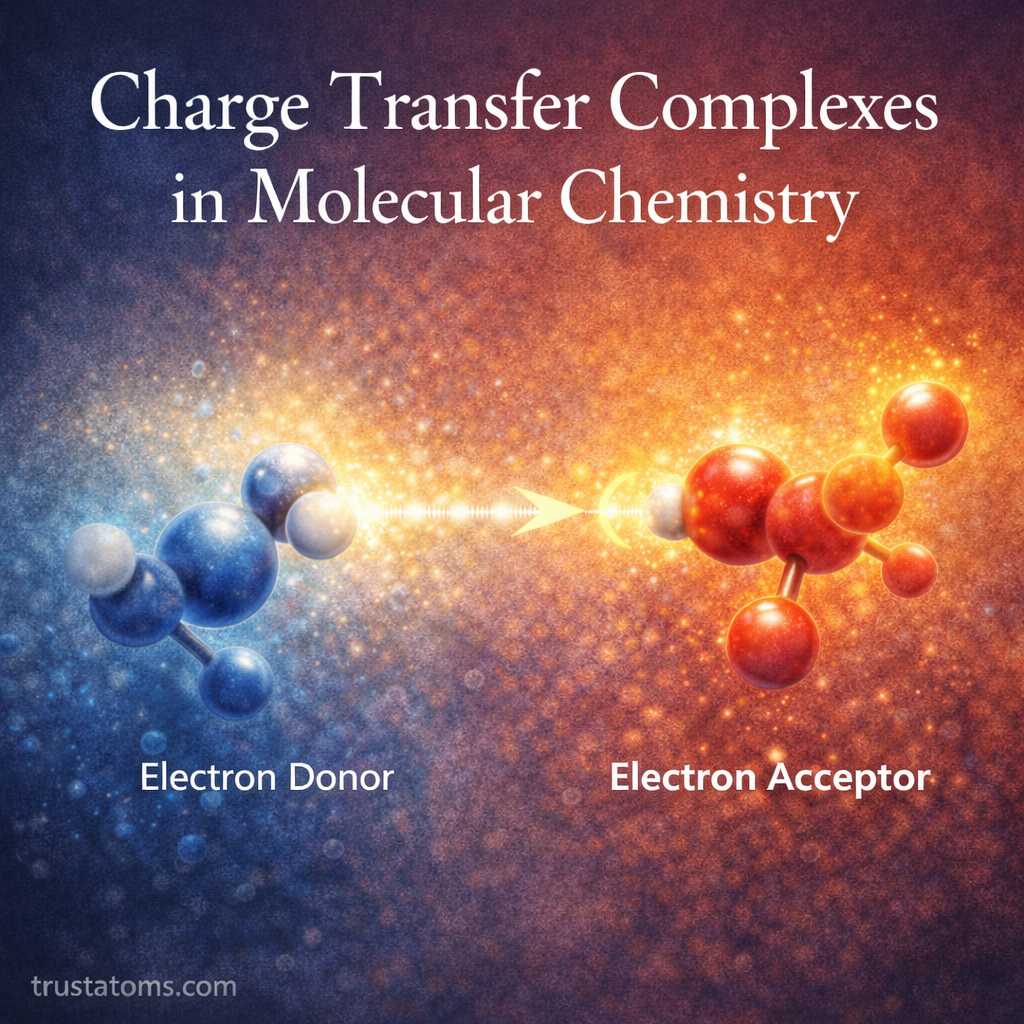
In molecular chemistry, many reactions involve the movement of electrons between molecules. One interesting phenomenon that occurs during these interactions is the formation of charge transfer complexes. These complexes arise when one molecule donates a small amount of electron density to another molecule without forming a fully stable chemical bond.
Charge transfer complexes play an important role in fields such as organic chemistry, materials science, spectroscopy, and molecular electronics. They help explain how molecules interact, how certain reactions occur, and why some compounds exhibit unusual optical or electrical properties.
Understanding charge transfer interactions allows chemists to predict molecular behavior and design new functional materials.
What Are Charge Transfer Complexes?
A charge transfer complex forms when two molecules interact through partial electron transfer.
One molecule acts as an electron donor, while the other acts as an electron acceptor. Instead of a full transfer of electrons like in ionic bonding, only a small amount of electron density moves between the two molecules.
This interaction results in a weakly bound complex where:
- The donor molecule has slightly reduced electron density
- The acceptor molecule has slightly increased electron density
- The molecules remain distinct rather than forming a new compound
Charge transfer complexes are often written as:
Donor + Acceptor ⇌ Charge Transfer Complex
Because the interaction is relatively weak, these complexes are often temporary and exist in equilibrium with the separate molecules.
Electron Donors and Electron Acceptors
Charge transfer interactions depend on the electronic properties of the molecules involved.
Electron Donors
Electron donors are molecules that have high electron density or easily available electrons.
Common characteristics include:
- Lone electron pairs
- π-electron systems
- Low ionization energy
Examples of electron donors include:
- Aromatic hydrocarbons
- Amines
- Sulfur-containing compounds
Electron Acceptors
Electron acceptors are molecules that can accept electron density from other molecules.
Typical features include:
- Electron-deficient structures
- Electronegative atoms
- Strong electron-withdrawing groups
Examples of electron acceptors include:
- Halogens
- Quinones
- Nitro compounds
When donors and acceptors interact, a charge transfer complex may form if the interaction stabilizes the system.
How Charge Transfer Complexes Form
The formation of a charge transfer complex occurs through non-covalent molecular interactions.
The process typically follows these steps:
- The donor and acceptor molecules approach each other.
- Their electron clouds begin to interact.
- Partial electron transfer occurs from the donor to the acceptor.
- A weakly bound complex forms.
Unlike covalent bonds, these interactions do not involve full sharing of electrons. Instead, the complex is stabilized through electrostatic attraction and orbital interactions.
Because the interaction is relatively weak, environmental conditions such as solvent and temperature can strongly influence the stability of the complex.
Molecular Orbital Explanation
Charge transfer complexes can be understood using molecular orbital theory.
In this model:
- The highest occupied molecular orbital (HOMO) of the donor interacts with
- The lowest unoccupied molecular orbital (LUMO) of the acceptor.
When these orbitals interact, partial electron density shifts from the donor’s HOMO into the acceptor’s LUMO.
This interaction produces:
- A stabilized molecular complex
- New electronic energy states
- Unique spectroscopic properties
The strength of the charge transfer interaction depends largely on the energy difference between the donor HOMO and acceptor LUMO.
Optical Properties of Charge Transfer Complexes
One of the most noticeable features of charge transfer complexes is their distinctive color.
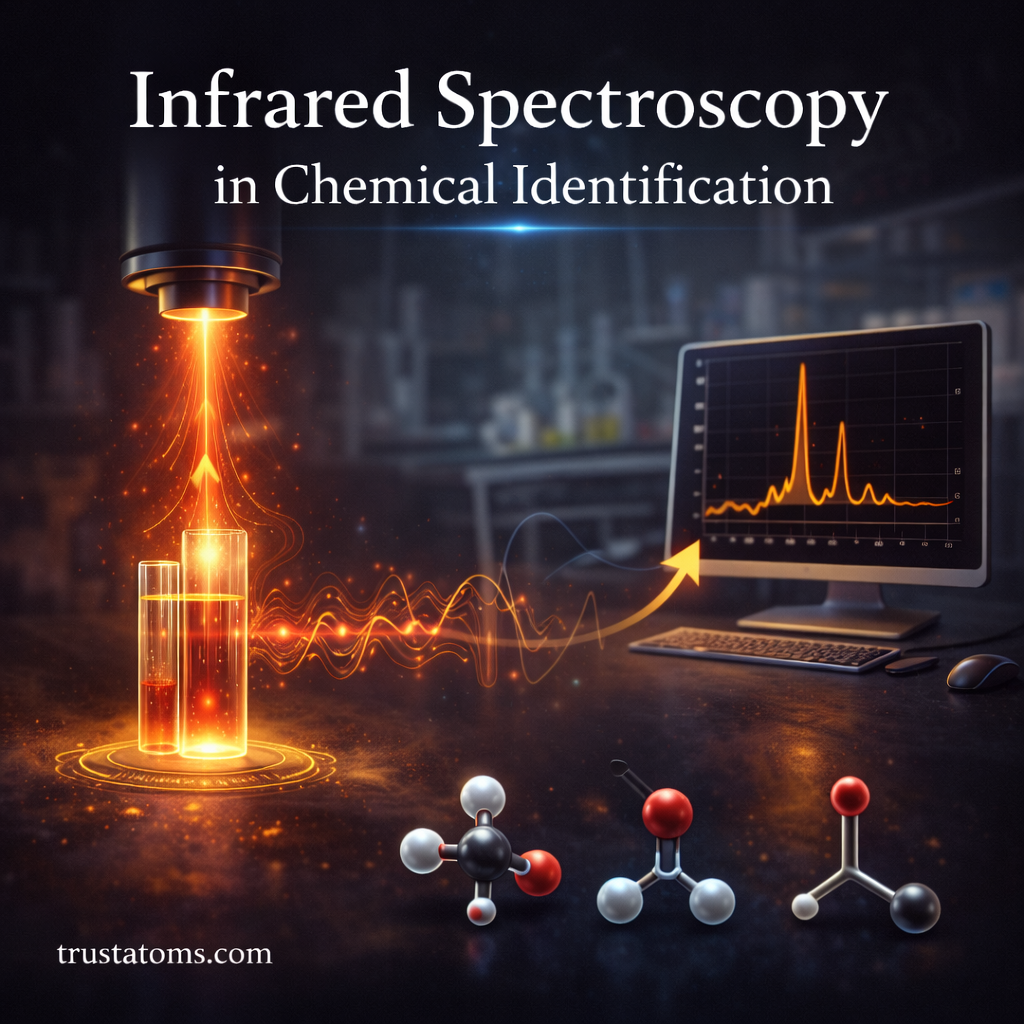
When light interacts with these complexes, electrons can be temporarily excited from the donor molecule to the acceptor molecule. This process is known as charge transfer absorption.
As a result:
- Many charge transfer complexes appear intensely colored
- Their color depends on the energy required for electron transfer
- Different donor–acceptor pairs produce different absorption wavelengths
This phenomenon is widely used in spectroscopy to detect and study molecular interactions.
Types of Charge Transfer Interactions
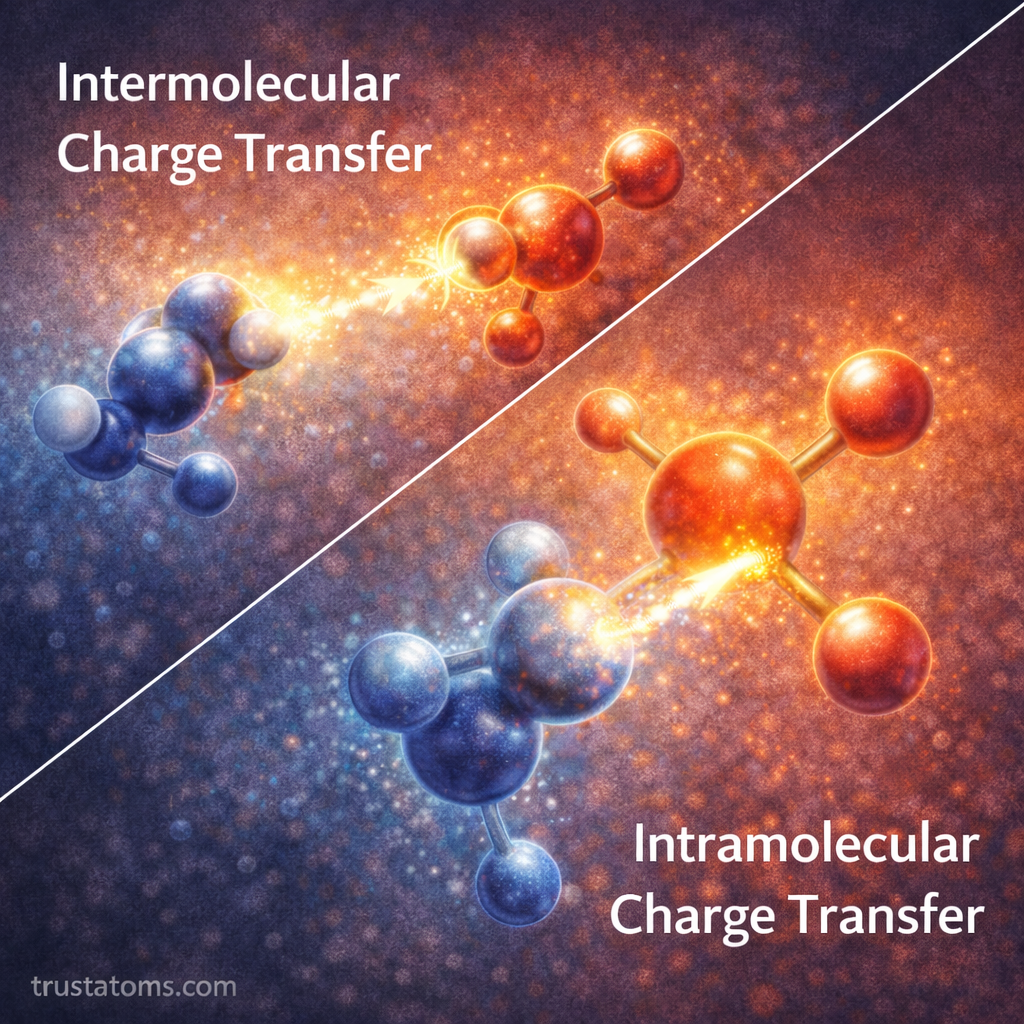
Charge transfer complexes can occur in several different forms depending on the molecular structures involved.
Intermolecular Charge Transfer
This occurs between two separate molecules, such as an aromatic compound interacting with a halogen molecule.
Intramolecular Charge Transfer
In some molecules, donor and acceptor groups exist within the same molecule. Electron transfer can occur internally, producing unique electronic properties.
Solid-State Charge Transfer
In certain crystalline materials, charge transfer interactions between molecules can influence electrical conductivity and optical behavior.
These interactions are important in the development of organic electronic materials.
Examples of Charge Transfer Complexes
Many well-known molecular systems involve charge transfer interactions.
Examples include:
- Iodine interacting with aromatic hydrocarbons
- Quinones forming complexes with electron-rich molecules
- Organic donor–acceptor systems used in semiconductors
In biological systems, charge transfer interactions also play roles in:
- Photosynthesis
- Enzyme activity
- Electron transport chains
These processes rely on controlled electron movement between molecules.
Applications in Chemistry and Materials Science
Charge transfer complexes have many practical applications in modern science and technology.
Organic Electronics
Donor–acceptor interactions are essential for organic semiconductors used in flexible electronics and displays.
Solar Cells
Charge transfer mechanisms help convert light energy into electrical energy in photovoltaic materials.
Chemical Sensors
Many sensors detect molecules by observing changes in charge transfer interactions.
Molecular Recognition
Charge transfer interactions help stabilize complexes in supramolecular chemistry and molecular self-assembly.
Factors Affecting Charge Transfer Complex Stability
Several factors influence how stable a charge transfer complex becomes.
Important factors include:
- Strength of donor and acceptor molecules
- Distance between molecules
- Solvent environment
- Temperature
- Molecular orientation
Small changes in these variables can significantly affect how strongly the donor and acceptor interact.
Why Charge Transfer Complexes Matter
Charge transfer complexes reveal how molecules interact through subtle electron movements rather than traditional chemical bonds. These interactions help explain many chemical behaviors, including reaction mechanisms, molecular recognition, and the optical properties of materials.
As research in molecular electronics, renewable energy, and materials science continues to expand, understanding charge transfer complexes becomes increasingly important. By studying these interactions, chemists can design new molecules with tailored electrical, optical, and chemical properties.