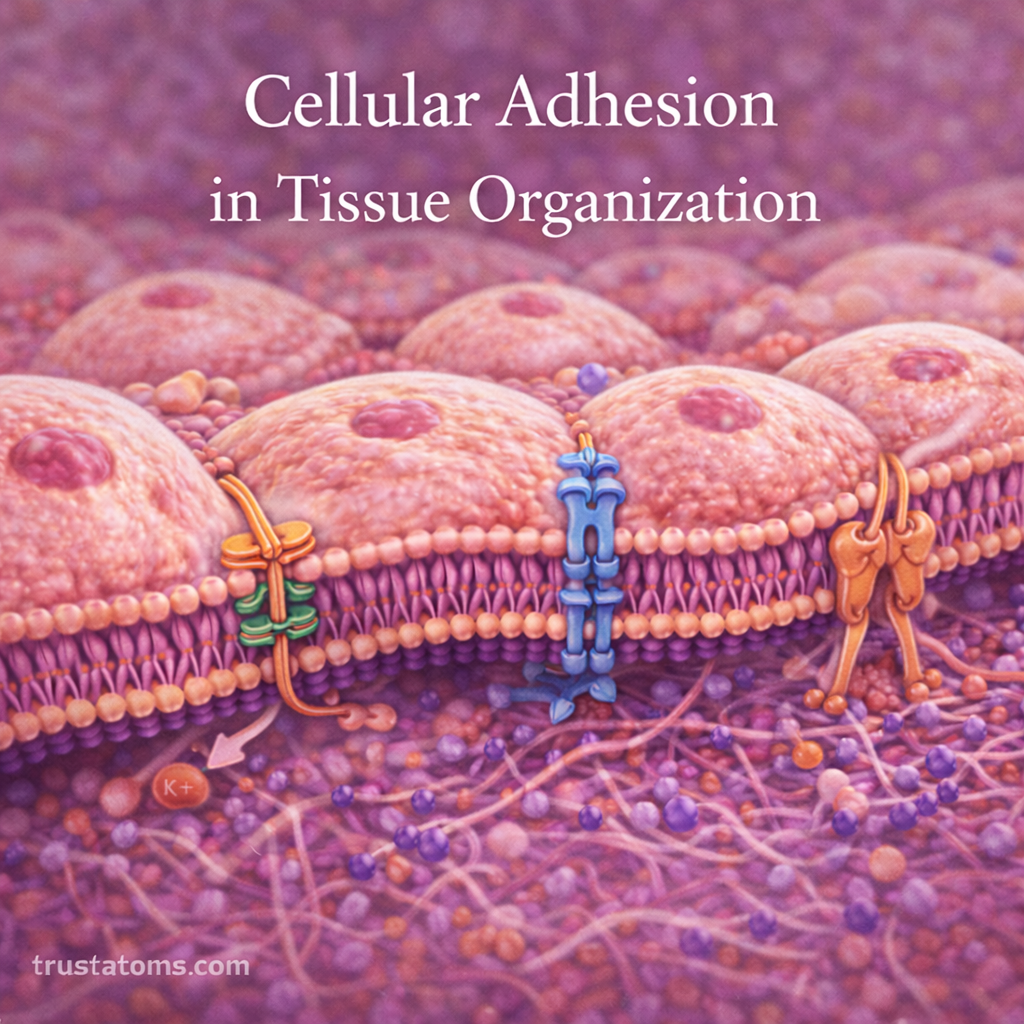
Cells rarely function in isolation. In multicellular organisms, cells must attach to one another and to surrounding structures in order to form tissues and organs. This attachment process is known as cellular adhesion.
Cellular adhesion allows cells to maintain stable physical connections while also coordinating communication, growth, and repair. These interactions help tissues maintain structure and function properly throughout the body.
Without cellular adhesion, tissues would lose their organization, and many biological processes—such as wound healing and immune defense—would not occur efficiently.
What Is Cellular Adhesion?
Cellular adhesion refers to the ability of cells to attach to neighboring cells or to the extracellular matrix (ECM).
This process relies on specialized molecules called cell adhesion molecules (CAMs) that extend from the cell membrane and bind to other proteins.
Cellular adhesion performs several essential functions:
- Maintaining tissue structure
- Coordinating cell communication
- Supporting tissue development
- Regulating cell migration
- Enabling immune responses
These connections allow cells to function as coordinated systems rather than independent units.
Cell Adhesion Molecules (CAMs)
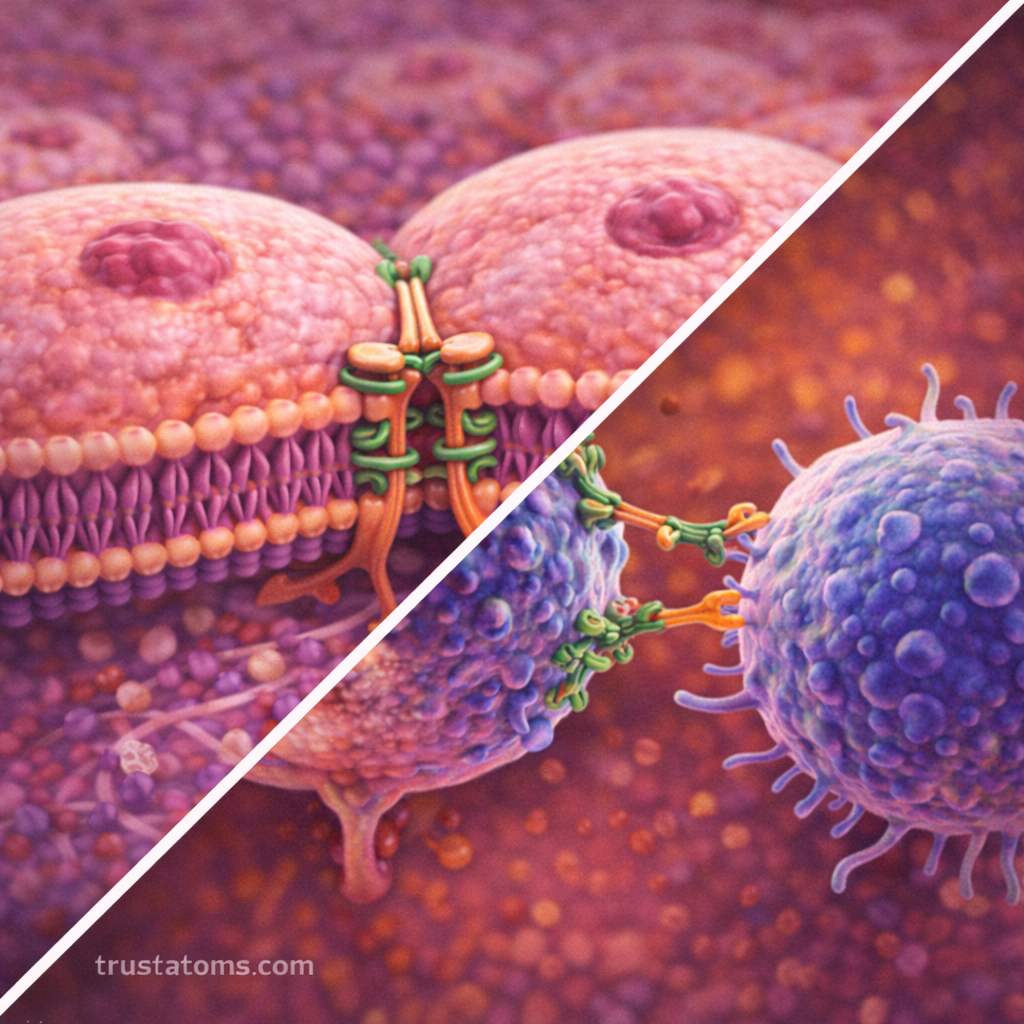
Cell adhesion molecules are proteins located on the cell surface that allow cells to bind to each other or to surrounding structures.
Different types of CAMs perform specialized roles in adhesion and signaling.
Major categories include:
- Cadherins
- Integrins
- Selectins
- Immunoglobulin superfamily CAMs
Each group contributes to tissue organization in distinct ways.
Cadherins
Cadherins are a group of adhesion molecules that help cells bind to other cells of the same type.
Key features of cadherins include:
- Calcium-dependent binding
- Strong cell-to-cell connections
- Important roles in tissue development
Cadherins help maintain the structure of tissues such as:
- Skin
- Epithelial layers
- Heart tissue
By forming stable connections between cells, cadherins help maintain tissue integrity.
Integrins
Integrins connect cells to the extracellular matrix, which is the network of proteins and fibers surrounding cells.
Functions of integrins include:
- Anchoring cells to structural proteins
- Transmitting mechanical signals
- Supporting cell movement
Integrins interact with ECM components such as:
- Collagen
- Fibronectin
- Laminin
These connections help tissues maintain both structural strength and flexibility.
Selectins
Selectins play an important role in immune system function.
These adhesion molecules allow white blood cells to interact with blood vessel walls during immune responses.
Selectins help control processes such as:
- Inflammation
- Immune cell migration
- Pathogen defense
During infection, selectins help guide immune cells to areas where they are needed.
Immunoglobulin Superfamily CAMs
The immunoglobulin superfamily includes adhesion molecules that assist in cell recognition and communication.
These molecules are involved in:
- Immune system interactions
- Nervous system development
- Cell signaling processes
They often work together with other adhesion molecules to strengthen cellular connections.
Types of Cellular Junctions
Cells in tissues are connected by specialized structures called cell junctions. These junctions provide stability and allow cells to communicate.
Three major types of cellular junctions are commonly found in animal tissues.
Tight Junctions
Tight junctions form seals between neighboring cells, preventing molecules from passing freely between them.
These junctions are especially important in tissues that require strong barriers, such as:
- Intestinal lining
- Blood-brain barrier
- Kidney tubules
Tight junctions help regulate the movement of substances between cells.
Adherens Junctions
Adherens junctions connect the cytoskeletons of neighboring cells.
They are primarily formed by cadherin proteins.
Functions include:
- Strengthening cell-to-cell adhesion
- Maintaining tissue shape
- Supporting coordinated cell movement
These junctions are particularly important in epithelial tissues.
Desmosomes
Desmosomes are strong adhesion structures that anchor cells together.
They provide resistance to mechanical stress in tissues that experience frequent movement.
Examples include:
- Skin
- Heart muscle
- Certain epithelial tissues
Desmosomes help tissues remain intact even under physical strain.
Gap Junctions
Gap junctions allow direct communication between cells.
They form channels that enable small molecules and ions to pass between neighboring cells.
These junctions are important for:
- Coordinating electrical signals
- Synchronizing cellular activity
- Maintaining tissue communication
Gap junctions are especially important in heart and muscle tissue.
Cellular Adhesion in Tissue Development
During development, cells must organize themselves into complex tissues and organs.
Cellular adhesion helps guide this process by allowing cells to:
- Recognize neighboring cells
- Sort into organized layers
- Form functional structures
Adhesion molecules help determine which cells bind together, contributing to the formation of specialized tissues.
Cellular Adhesion and Cell Migration
Although adhesion stabilizes tissues, cells sometimes need to move.
This movement is essential for processes such as:
- Wound healing
- Immune responses
- Embryonic development
Cells temporarily adjust their adhesion molecules to detach, migrate, and reconnect with new surroundings.
This balance between adhesion and mobility allows tissues to adapt and repair themselves.
Cellular Adhesion and Disease
Disruptions in cellular adhesion can contribute to various diseases.
Examples include:
- Cancer, where reduced adhesion allows tumor cells to spread
- Autoimmune diseases, involving abnormal immune cell interactions
- Skin disorders, caused by weakened adhesion between cells
- Heart diseases, linked to defects in desmosomes
Because adhesion molecules influence tissue stability and communication, they are important targets for medical research.
Why Cellular Adhesion Matters in Biology
Cellular adhesion is essential for maintaining the structure and function of tissues.
Through adhesion systems, cells can:
- Form organized tissues
- Maintain structural stability
- Communicate with neighboring cells
- Coordinate biological responses
- Repair damaged tissue
These interactions ensure that cells operate as part of larger biological systems.
For scientists studying biology and medicine, cellular adhesion provides key insight into how tissues develop, function, and respond to injury or disease.