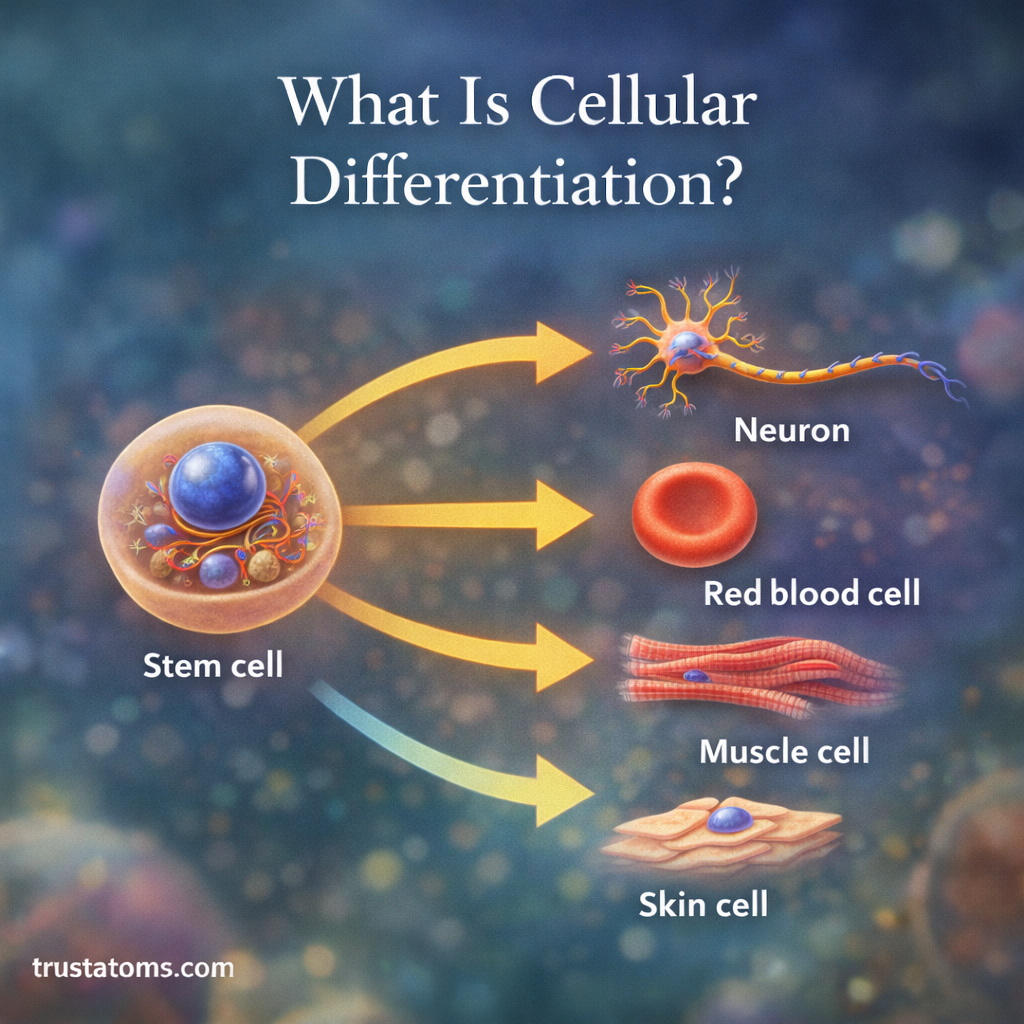
Cellular differentiation is the biological process through which unspecialized cells develop into specialized cells with specific structures and functions. This process allows a single fertilized egg to eventually form the many different types of cells that make up tissues and organs in living organisms.
In humans and other multicellular organisms, cells become specialized for tasks such as carrying oxygen, transmitting nerve signals, or contracting muscles. Cellular differentiation is essential for development, growth, and maintaining healthy body systems.
Understanding how cells differentiate helps scientists explain how organisms form during development and how certain diseases occur when these processes go wrong.
Definition of Cellular Differentiation
Cellular differentiation refers to the process by which a cell changes from a general or unspecialized state into a specialized cell type with distinct functions.
Although most cells in the body contain the same DNA, they do not use all of the genetic information. Instead, different genes are activated or turned off depending on the cell’s role.
As a result, cells can develop unique characteristics such as:
- Specific shapes
- Specialized internal structures
- Unique proteins and enzymes
- Distinct biological functions
This selective use of genetic information allows organisms to develop complex tissues and organ systems.
Why Cellular Differentiation Is Important
Cellular differentiation is critical for the development and survival of multicellular organisms.
Without differentiation, the body would consist only of identical cells that could not perform specialized tasks.
Key roles of cellular differentiation include:
- Formation of tissues and organs
- Development of the nervous, muscular, and circulatory systems
- Replacement of damaged or aging cells
- Proper functioning of body systems
Through differentiation, cells become part of organized biological systems that support life.
The Role of Stem Cells
Stem cells play a central role in cellular differentiation.
Stem cells are unique because they have two important abilities:
- They can divide and produce more stem cells.
- They can differentiate into specialized cell types.
There are several types of stem cells involved in differentiation.
Embryonic Stem Cells
Embryonic stem cells are found in early-stage embryos and can develop into nearly any cell type in the body.
Because of this flexibility, they are often described as pluripotent, meaning they can give rise to many different specialized cells.
Adult Stem Cells
Adult stem cells are found in specific tissues throughout the body.
They typically produce a limited range of specialized cells related to the tissue where they reside.
Examples include:
- Blood stem cells in bone marrow
- Skin stem cells responsible for regeneration
- Intestinal stem cells that replace digestive tract cells
These cells help maintain and repair tissues throughout life.
How Cellular Differentiation Happens
Cellular differentiation occurs through changes in gene expression, meaning certain genes are activated while others remain inactive.
Several factors influence this process.
Gene Regulation
Proteins known as transcription factors control which genes are turned on or off.
By activating specific sets of genes, these proteins guide a cell toward a particular identity.
For example, a developing nerve cell activates genes involved in signal transmission.
Chemical Signals
Cells communicate with each other through chemical signals.
These signals help guide differentiation by instructing nearby cells to develop into certain types.
Common signaling molecules include:
- Growth factors
- Hormones
- Cytokines
These molecules help coordinate development across tissues.
Environmental Influences
External factors in a cell’s environment can also influence differentiation.
These factors include:
- Nutrient availability
- Physical contact with neighboring cells
- Temperature or stress conditions
Together, these signals help determine the developmental pathway a cell follows.
Examples of Differentiated Cells
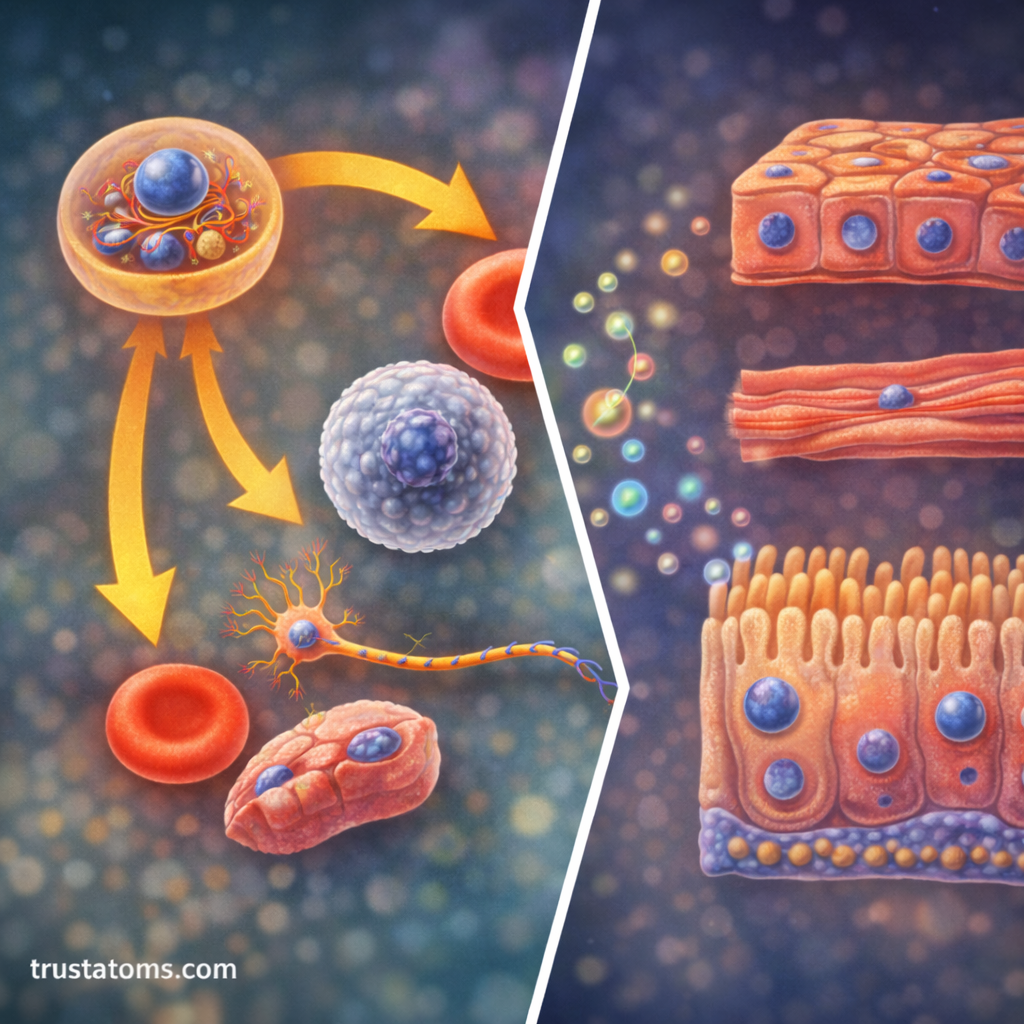
During development, cells specialize into many different forms, each adapted for a specific function.
Examples of differentiated cells include:
Nerve Cells (Neurons)
Neurons are specialized for transmitting electrical signals throughout the nervous system.
They develop long extensions called axons and dendrites that allow communication between cells.
Muscle Cells
Muscle cells specialize in contraction.
Their internal structure contains proteins that allow them to shorten and produce movement.
Red Blood Cells
Red blood cells carry oxygen throughout the body.
Their shape and lack of a nucleus allow them to transport oxygen efficiently through blood vessels.
Skin Cells
Skin cells form protective layers that shield the body from environmental damage.
These cells are continuously replaced as older cells are shed.
Cellular Differentiation During Development
Cellular differentiation begins early in embryonic development.
After fertilization, a single cell divides repeatedly to form a cluster of identical cells. As development continues, these cells begin receiving signals that guide them toward specific roles.
Major steps in developmental differentiation include:
- Rapid cell division in early embryos
- Activation of different gene programs
- Formation of specialized tissues
- Development of organs and body systems
By the time development is complete, trillions of specialized cells work together to maintain the organism.
Differentiation and Gene Expression
A key concept in cellular differentiation is gene expression.
All cells in an organism generally contain the same genetic code, but different genes are used in different cell types.
For example:
- Muscle cells express genes related to contraction.
- Neurons express genes related to signal transmission.
- Immune cells express genes related to defense.
Gene regulation mechanisms ensure that each cell type performs its specific role effectively.
When Cellular Differentiation Goes Wrong
Problems with cellular differentiation can lead to developmental disorders and diseases.
For example:
- Cancer can occur when cells lose their specialized characteristics and divide uncontrollably.
- Developmental abnormalities may arise if cells fail to differentiate properly during early growth.
- Some genetic diseases affect the signals that guide cell specialization.
Researchers study differentiation to better understand these conditions and develop potential treatments.
Cellular Differentiation in Modern Research
Cellular differentiation is a major focus of biological and medical research.
Scientists study this process to explore areas such as:
- Regenerative medicine
- Tissue engineering
- Stem cell therapy
- Organ development
By understanding how cells become specialized, researchers hope to develop new treatments that repair or replace damaged tissues.
Final Thoughts
Cellular differentiation is the process that transforms unspecialized cells into specialized cells that perform specific tasks within the body. Through carefully controlled gene expression and signaling pathways, cells develop unique structures and functions that support complex biological systems.
From early embryonic development to tissue repair later in life, cellular differentiation allows organisms to grow, adapt, and maintain healthy tissues.
As research advances, understanding this process continues to play an important role in medicine, biotechnology, and developmental biology.