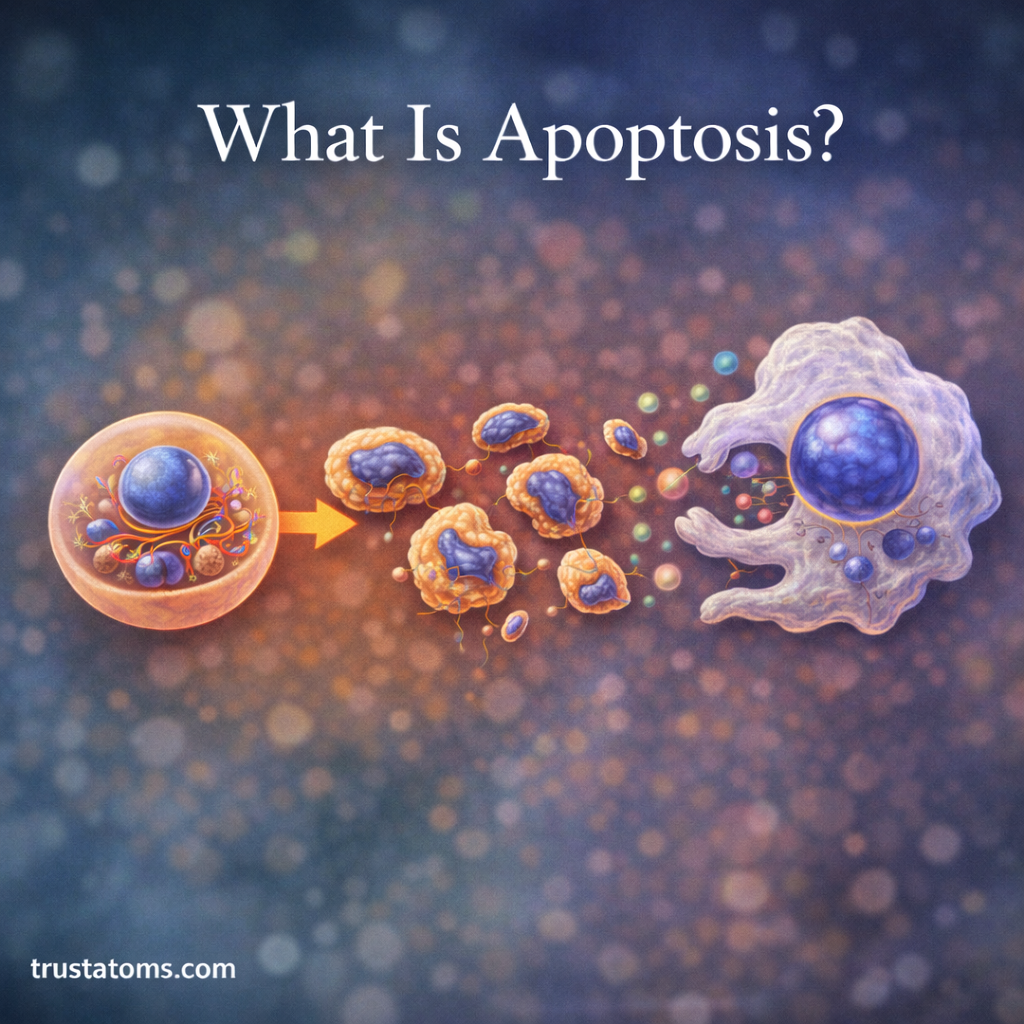
Apoptosis is a natural biological process in which cells deliberately and safely destroy themselves when they are no longer needed or become damaged. Often called programmed cell death, apoptosis is an essential mechanism that helps maintain balance and health in living organisms.
Unlike accidental cell death caused by injury or disease, apoptosis is a controlled and highly organized process. It allows the body to remove old, damaged, or potentially harmful cells without harming surrounding tissues.
Apoptosis plays a vital role in development, immune system function, and disease prevention. By eliminating unnecessary or defective cells, organisms can maintain proper tissue structure and function.
Definition of Apoptosis
Apoptosis is a genetically regulated process that causes a cell to break down and be removed in a controlled way.
During apoptosis, the cell activates internal signals that trigger a series of biochemical steps. These steps gradually dismantle the cell while keeping surrounding tissues safe from damage.
Key features of apoptosis include:
- Shrinking of the cell
- Breakdown of internal structures
- Fragmentation of DNA
- Formation of small membrane-bound pieces called apoptotic bodies
- Removal of these fragments by immune cells
This process prevents the release of harmful substances into surrounding tissues.
Why Apoptosis Is Important
Apoptosis is essential for maintaining normal biological function in multicellular organisms.
Without programmed cell death, cells could accumulate uncontrollably, leading to developmental problems or diseases.
Important roles of apoptosis include:
- Removing damaged or defective cells
- Shaping tissues during development
- Preventing cancer by eliminating abnormal cells
- Supporting immune system regulation
- Maintaining healthy cell populations
Through apoptosis, the body ensures that only functional and necessary cells remain.
Apoptosis During Development
Apoptosis plays a critical role during early development.
As embryos grow, cells must be removed in specific areas to shape tissues and organs properly.
Examples include:
- Separation of fingers and toes during fetal development
- Removal of unnecessary neurons in the developing brain
- Elimination of temporary embryonic structures
Without apoptosis, many structures in the body would not form correctly.
How Apoptosis Works
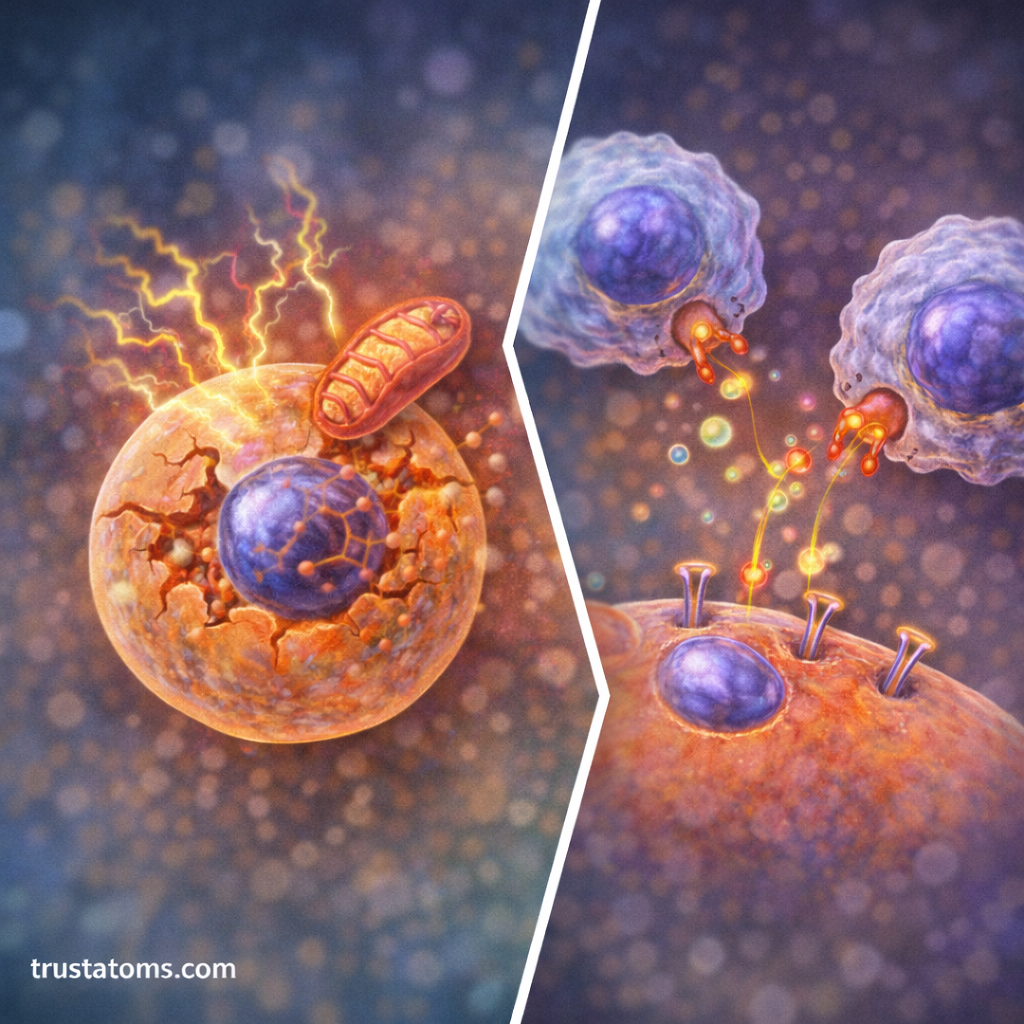
Apoptosis occurs through a series of biochemical steps that are carefully regulated by proteins inside the cell.
Two main signaling pathways can trigger apoptosis.
Intrinsic Pathway (Internal Signals)
The intrinsic pathway begins inside the cell when internal stress or damage occurs.
Common triggers include:
- DNA damage
- Lack of nutrients
- Cellular stress
- Oxidative damage
In response, mitochondria release proteins that activate enzymes responsible for dismantling the cell.
Extrinsic Pathway (External Signals)
The extrinsic pathway begins when signals from outside the cell activate special receptors on the cell surface.
These signals often come from immune system cells that detect abnormal or infected cells.
When these receptors are activated, they start a chain reaction that leads to apoptosis.
The Role of Caspases
Caspases are specialized enzymes that play a central role in apoptosis.
Once activated, these enzymes break down important cellular components.
Caspases perform tasks such as:
- Cutting structural proteins
- Breaking down DNA repair enzymes
- Activating other caspases in a cascade
This enzyme cascade ensures that the apoptotic process proceeds efficiently and irreversibly.
Stages of Apoptosis
Although apoptosis occurs rapidly, it follows a clear sequence of events.
1. Signal Activation
The process begins when internal or external signals trigger apoptosis pathways.
2. Enzyme Activation
Caspases and other enzymes become active and start dismantling cellular structures.
3. Cellular Breakdown
The cell shrinks and its internal components begin to fragment.
DNA is broken into smaller pieces.
4. Formation of Apoptotic Bodies
The cell divides into small membrane-bound fragments called apoptotic bodies.
5. Removal by Immune Cells
Nearby immune cells, such as macrophages, quickly remove and recycle these fragments.
This cleanup prevents inflammation or tissue damage.
Apoptosis vs. Necrosis
Apoptosis differs significantly from another form of cell death known as necrosis.
Necrosis occurs when cells die unexpectedly due to injury, toxins, or infection.
Key differences include:
| Feature | Apoptosis | Necrosis |
|---|---|---|
| Process | Controlled and programmed | Uncontrolled |
| Cell behavior | Shrinks and fragments | Swells and bursts |
| Effect on surrounding tissue | Minimal damage | Often causes inflammation |
| Purpose | Normal biological regulation | Result of injury or disease |
Because apoptosis is controlled, it protects nearby cells and tissues.
Apoptosis and Disease
Problems with apoptosis can contribute to a variety of diseases.
If apoptosis occurs too little or too often, it can disrupt normal tissue balance.
Examples include:
Cancer
Cancer cells often avoid apoptosis, allowing them to grow and divide uncontrollably.
Many cancer treatments aim to reactivate apoptosis in these cells.
Neurodegenerative Diseases
Excessive apoptosis in nerve cells may contribute to diseases such as:
- Alzheimer’s disease
- Parkinson’s disease
- Huntington’s disease
Autoimmune Disorders
If apoptosis fails to remove harmful immune cells, the immune system may attack healthy tissues.
Apoptosis in Medical Research
Scientists study apoptosis to better understand disease and develop treatments.
Research into apoptosis has helped lead to advances in:
- Cancer therapies
- Drug development
- Immune system treatments
- Regenerative medicine
By learning how cells control their own death, researchers can design treatments that restore normal cellular balance.
Final Thoughts
Apoptosis is a crucial biological process that allows organisms to safely remove damaged, unnecessary, or dangerous cells. Through a carefully regulated series of biochemical steps, cells can dismantle themselves without harming surrounding tissues.
This process supports normal development, maintains tissue health, and protects the body from disease.
Understanding apoptosis has become one of the most important areas of research in modern biology, helping scientists develop new treatments for cancer, neurodegenerative diseases, and other health conditions.