Viral replication is the process by which viruses reproduce inside the cells of a host organism. Unlike bacteria or other living cells, viruses cannot reproduce on their own. Instead, they must infect a host cell and use its biological machinery to create new virus particles.
Understanding viral replication is essential in microbiology, medicine, and virology. By studying how viruses replicate, scientists can develop vaccines, antiviral medications, and strategies to control infectious diseases.
What Is Viral Replication?
Viral replication refers to the series of steps through which a virus enters a host cell, copies its genetic material, and produces new virus particles.
Since viruses lack cellular structures such as ribosomes and metabolic systems, they rely entirely on host cells to carry out the processes needed for reproduction.
The general viral replication cycle includes several stages:
- Attachment
- Entry
- Uncoating
- Replication of viral genetic material
- Assembly of new viruses
- Release from the host cell
Each step allows the virus to hijack the host cell’s functions to produce more viruses.
The Viral Replication Cycle
Although details vary between virus types, most viruses follow a similar replication cycle.
1. Attachment
The replication process begins when a virus attaches to the surface of a host cell.
Viruses recognize specific receptors on the cell membrane. These receptors act like molecular “locks,” while viral surface proteins act as “keys.”
Because viruses can only bind to certain receptors, they often infect specific cell types or species.
Examples include:
- Respiratory viruses targeting lung cells
- Hepatitis viruses targeting liver cells
- HIV targeting immune cells
2. Entry Into the Host Cell
After attachment, the virus enters the host cell.
Different viruses use different entry methods, such as:
- Membrane fusion – the viral envelope merges with the host cell membrane
- Endocytosis – the cell engulfs the virus in a membrane-bound vesicle
- Direct injection – some viruses inject genetic material directly into the cell
Once inside, the virus prepares to release its genetic material.
3. Uncoating
During uncoating, the viral capsid (protein coat) is removed.
This step releases the viral genetic material into the host cell’s interior.
Depending on the virus, the genetic material may move to:
- The cytoplasm
- The cell nucleus
This location determines how the virus will replicate its genes.
4. Replication of Viral Genetic Material
Once the viral genome is released, the virus takes control of the host cell’s machinery.
The host cell begins producing:
- Copies of viral genetic material
- Viral proteins needed to build new viruses
Different viruses replicate in different ways depending on whether their genome is:
- DNA
- RNA
For example:
- DNA viruses often replicate in the cell nucleus
- RNA viruses usually replicate in the cytoplasm
Some viruses also produce enzymes that help copy their genetic material.
5. Assembly of New Virus Particles
After viral components are produced, the cell begins assembling new virus particles.
This stage is known as viral assembly.
During assembly:
- Viral genomes are packaged into capsids
- Structural proteins form the outer virus shell
- Envelopes may form around some viruses
The result is the creation of complete virus particles called virions.
6. Release of New Viruses
The final step is the release of newly formed viruses from the host cell.
This can occur in several ways.
Cell Lysis
Some viruses cause the host cell to burst open, releasing viruses into the surrounding environment.
This process is called lysis, and it often kills the host cell.
Budding
Enveloped viruses often exit the cell through budding.
During budding:
- New viruses push through the host cell membrane
- They acquire a lipid envelope from the host cell
This process may not immediately kill the cell.
The Lytic and Lysogenic Cycles
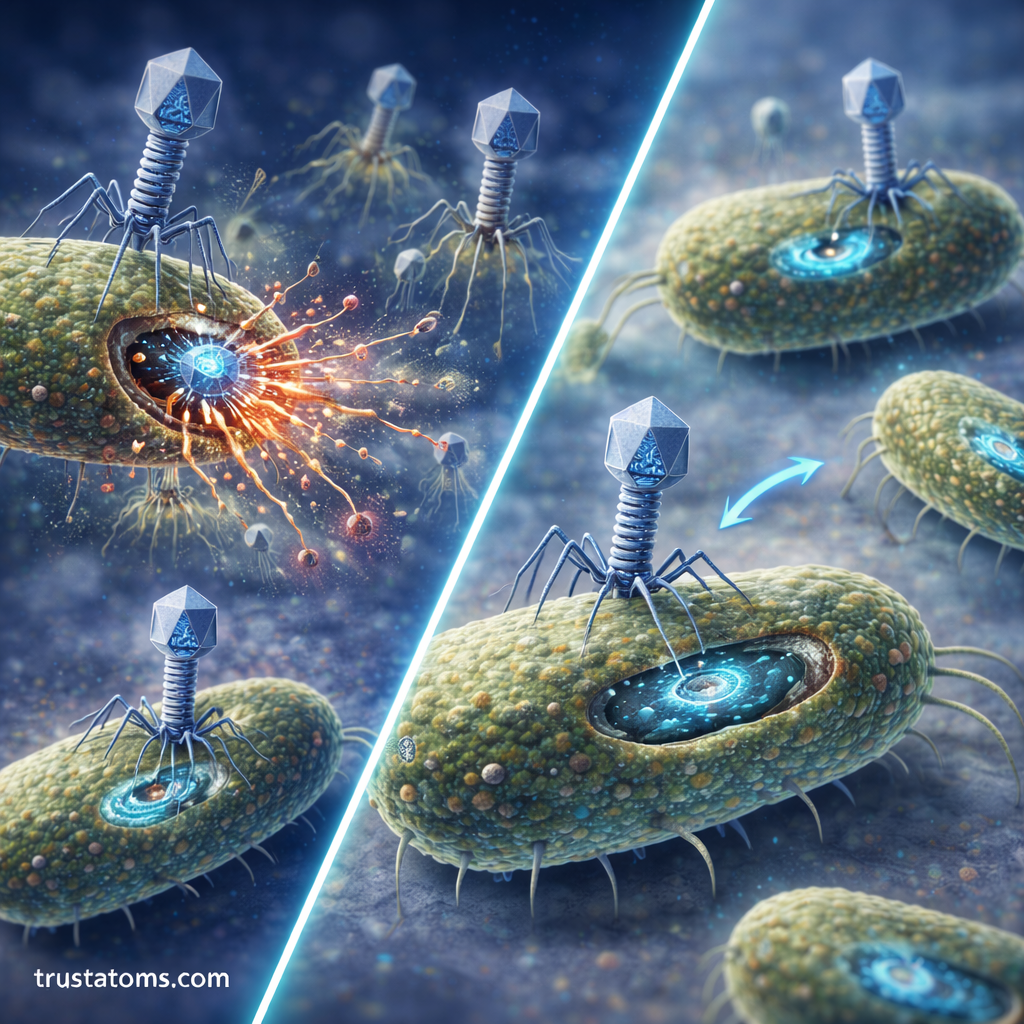
Certain viruses, particularly bacteriophages (viruses that infect bacteria), can follow different replication strategies.
Lytic Cycle
In the lytic cycle, the virus rapidly replicates and destroys the host cell.
Steps include:
- Infection
- Replication
- Assembly
- Cell lysis
The host cell is destroyed, releasing many new viruses.
Lysogenic Cycle
In the lysogenic cycle, the viral DNA integrates into the host cell’s genome.
The viral genetic material can remain dormant for long periods.
During this phase:
- The host cell continues normal functions
- Viral DNA is copied when the cell divides
Later, environmental triggers can activate the virus, causing it to enter the lytic cycle.
Factors That Influence Viral Replication
Several factors can affect how quickly and efficiently viruses replicate.
These include:
- Type of virus (DNA or RNA)
- Host cell type
- Immune system response
- Temperature and environmental conditions
- Availability of cellular resources
The interaction between viruses and host cells determines how infections develop.
Why Understanding Viral Replication Matters
Studying viral replication helps scientists improve treatments and prevent disease.
Vaccine Development
Vaccines train the immune system to recognize viruses before infection occurs.
Understanding replication helps researchers design effective vaccines.
Antiviral Medications
Many antiviral drugs target specific steps in the viral replication cycle, such as:
- Blocking viral entry
- Preventing genome replication
- Inhibiting viral assembly
By interrupting replication, these medications can reduce viral infections.
Disease Control
Knowledge of viral replication helps scientists:
- Predict outbreaks
- Develop diagnostic tests
- Design public health strategies
Understanding how viruses spread and reproduce is essential for controlling infectious diseases.
Final Thoughts
Viral replication in host cells is a complex process that allows viruses to multiply and spread. Because viruses lack the ability to reproduce independently, they must rely on host cells to carry out the steps needed to create new virus particles.
By studying the stages of viral replication, scientists gain valuable insights into how infections occur and how they can be prevented or treated. This knowledge is fundamental to virology, medicine, and public health.