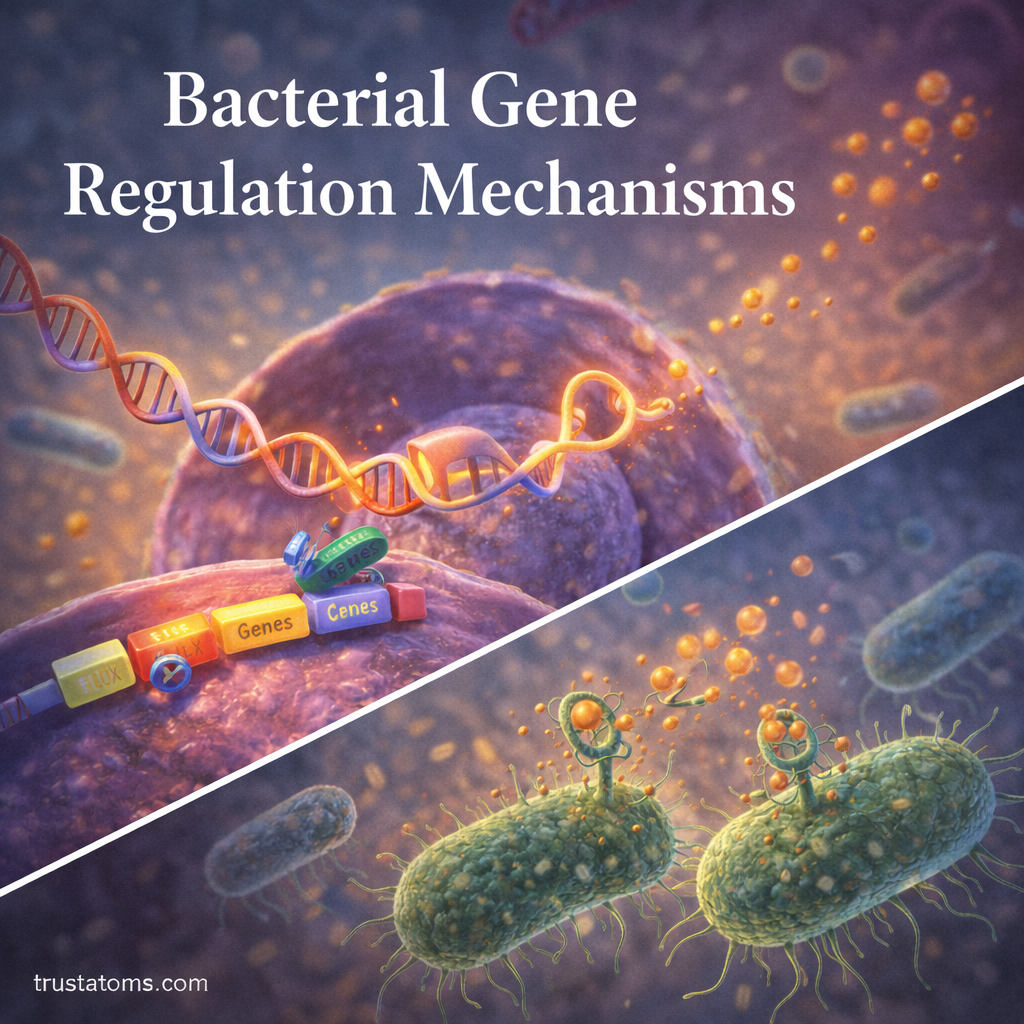
Bacteria live in constantly changing environments. To survive and thrive, they must respond quickly to shifts in nutrients, temperature, toxins, and other environmental conditions. One of the key ways bacteria adapt is through gene regulation, the process of controlling when and how genes are expressed.
Unlike more complex organisms, bacteria often regulate genes in highly efficient and coordinated ways. These regulatory mechanisms allow bacterial cells to conserve energy, adapt to new environments, and respond rapidly to stress.
Understanding bacterial gene regulation mechanisms helps scientists learn how microbes function, evolve, and interact with their surroundings.
What Is Gene Regulation in Bacteria?
Gene regulation refers to the control of gene expression, meaning the process by which genetic information is used to produce proteins.
In bacteria, genes are not always active. Instead, cells turn genes on or off depending on environmental conditions.
For example, bacteria may activate certain genes when:
- A new nutrient becomes available
- Environmental stress occurs
- Oxygen levels change
- Antibiotics are present
By regulating gene expression, bacteria can produce only the proteins they need at a given time.
Why Gene Regulation Is Important for Bacteria
Efficient gene regulation is essential for bacterial survival.
Key benefits include:
Energy Conservation
Producing proteins requires significant cellular energy. Gene regulation ensures that bacteria only synthesize proteins when necessary.
Environmental Adaptation
Bacteria can rapidly adjust gene expression in response to environmental changes.
Coordinated Cellular Processes
Multiple genes can be regulated together to control complex biological functions such as metabolism or stress responses.
Survival Under Stress
Gene regulation enables bacteria to activate protective mechanisms when exposed to harmful conditions.
Levels of Gene Regulation in Bacteria
Gene expression can be controlled at several stages of the genetic process.
These include:
- Transcriptional regulation
- Post-transcriptional regulation
- Translational regulation
- Post-translational regulation
Each level affects how genetic information ultimately produces functional proteins.
Transcriptional Regulation
The most common form of gene regulation in bacteria occurs during transcription, the process in which DNA is copied into messenger RNA (mRNA).
Controlling transcription determines whether a gene will be expressed.
Role of Promoters
Promoters are DNA sequences located near genes that act as binding sites for RNA polymerase.
RNA polymerase must bind to the promoter before transcription can begin.
If regulatory proteins block or enhance this binding, gene expression changes.
Transcription Factors
Specialized proteins called transcription factors regulate gene expression by interacting with DNA.
These proteins can function as:
- Activators, which increase transcription
- Repressors, which decrease transcription
By binding to specific DNA regions, transcription factors control whether genes are transcribed.
Operons: Coordinated Gene Regulation
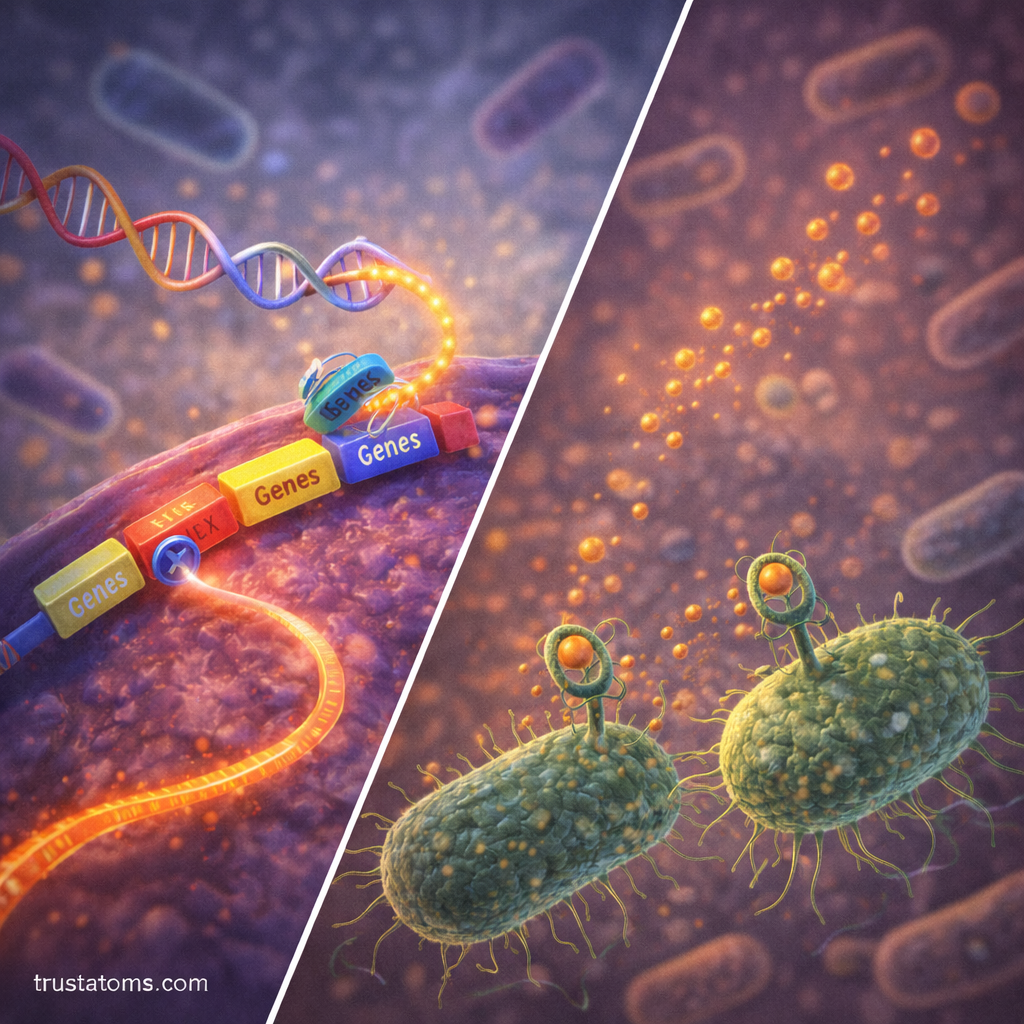
Many bacterial genes are organized into structures called operons.
An operon is a group of related genes that are controlled by a single promoter and regulatory system.
This arrangement allows bacteria to regulate multiple genes simultaneously.
Components of an Operon
A typical operon contains:
- A promoter where RNA polymerase binds
- An operator region where regulatory proteins attach
- Structural genes that encode proteins
- Regulatory genes that produce repressors or activators
This structure ensures coordinated expression of genes involved in the same biological process.
The Lac Operon: A Classic Example
One of the most studied examples of bacterial gene regulation is the lac operon in Escherichia coli.
The lac operon controls genes responsible for lactose metabolism.
How the Lac Operon Works
When lactose is absent:
- A repressor protein binds to the operator region
- Transcription of lactose metabolism genes is blocked
When lactose is present:
- Lactose molecules bind to the repressor
- The repressor detaches from the operator
- RNA polymerase transcribes the genes needed to metabolize lactose
This system ensures that bacteria only produce lactose-digesting enzymes when lactose is available.
The Trp Operon: Repressible Gene Regulation
Another important regulatory system is the trp operon, which controls the production of the amino acid tryptophan.
Unlike the lac operon, the trp operon is normally active.
How the Trp Operon Works
When tryptophan levels are low:
- The operon remains active
- Genes for tryptophan synthesis are transcribed
When tryptophan levels are high:
- Tryptophan molecules activate a repressor protein
- The repressor binds to the operator
- Transcription stops
This system prevents bacteria from producing tryptophan when it is already abundant.
Post-Transcriptional Regulation
Gene expression can also be controlled after mRNA is produced.
Post-transcriptional regulation influences how mRNA molecules are processed, stabilized, or degraded.
mRNA Stability
Some bacterial mRNA molecules are quickly degraded, while others remain stable for longer periods.
The stability of mRNA affects how much protein is produced.
Small Regulatory RNAs
Bacteria produce small regulatory RNAs (sRNAs) that can bind to mRNA molecules and affect their translation.
These molecules can:
- Block translation
- Promote mRNA degradation
- Enhance protein production
This type of regulation allows bacteria to rapidly adjust protein synthesis.
Translational Regulation
Translation is the process by which ribosomes convert mRNA into proteins.
Bacteria can regulate translation by controlling ribosome access to mRNA.
This can occur through:
- RNA structures that block ribosome binding
- Regulatory proteins that bind to mRNA
- Environmental signals that alter translation efficiency
These mechanisms allow bacteria to fine-tune protein production.
Post-Translational Regulation
After proteins are produced, bacteria can regulate their activity through post-translational modifications.
These modifications can include:
- Protein folding
- Chemical modification
- Protein degradation
By modifying proteins after synthesis, bacteria can rapidly control enzyme activity without altering gene expression.
Environmental Signals and Gene Regulation
Bacterial gene regulation is closely linked to environmental signals.
Cells constantly monitor their surroundings and adjust gene expression accordingly.
Examples of environmental signals include:
- Nutrient availability
- Temperature changes
- Oxygen levels
- pH conditions
- Presence of toxins or antibiotics
Specialized signaling pathways detect these conditions and trigger regulatory responses.
Quorum Sensing and Population-Level Regulation
Bacteria can also regulate gene expression collectively through a process known as quorum sensing.
Quorum sensing allows bacterial cells to communicate using chemical signals.
As bacterial populations grow, signaling molecules accumulate in the environment.
When these signals reach a certain threshold, bacteria activate specific genes.
Quorum sensing controls processes such as:
- Biofilm formation
- Virulence factor production
- Bioluminescence in some marine bacteria
This mechanism enables coordinated behavior within bacterial populations.
Applications of Gene Regulation Research
Understanding bacterial gene regulation has important scientific and medical applications.
Antibiotic Development
Studying regulatory pathways may help scientists identify new targets for antibiotics.
Biotechnology
Engineered bacteria can be designed with controlled gene expression for:
- Drug production
- Industrial enzymes
- Biofuel synthesis
Microbiome Research
Gene regulation studies help scientists understand how microbial communities interact with hosts and environments.
Final Thoughts
Bacterial gene regulation mechanisms allow microorganisms to respond quickly and efficiently to environmental changes. By controlling when and how genes are expressed, bacteria conserve energy, adapt to new conditions, and coordinate complex biological processes.
From operons and transcription factors to quorum sensing and regulatory RNA molecules, these systems demonstrate the remarkable efficiency of microbial life.
Continued research into bacterial gene regulation not only deepens our understanding of microbial biology but also opens new opportunities in medicine, biotechnology, and environmental science.