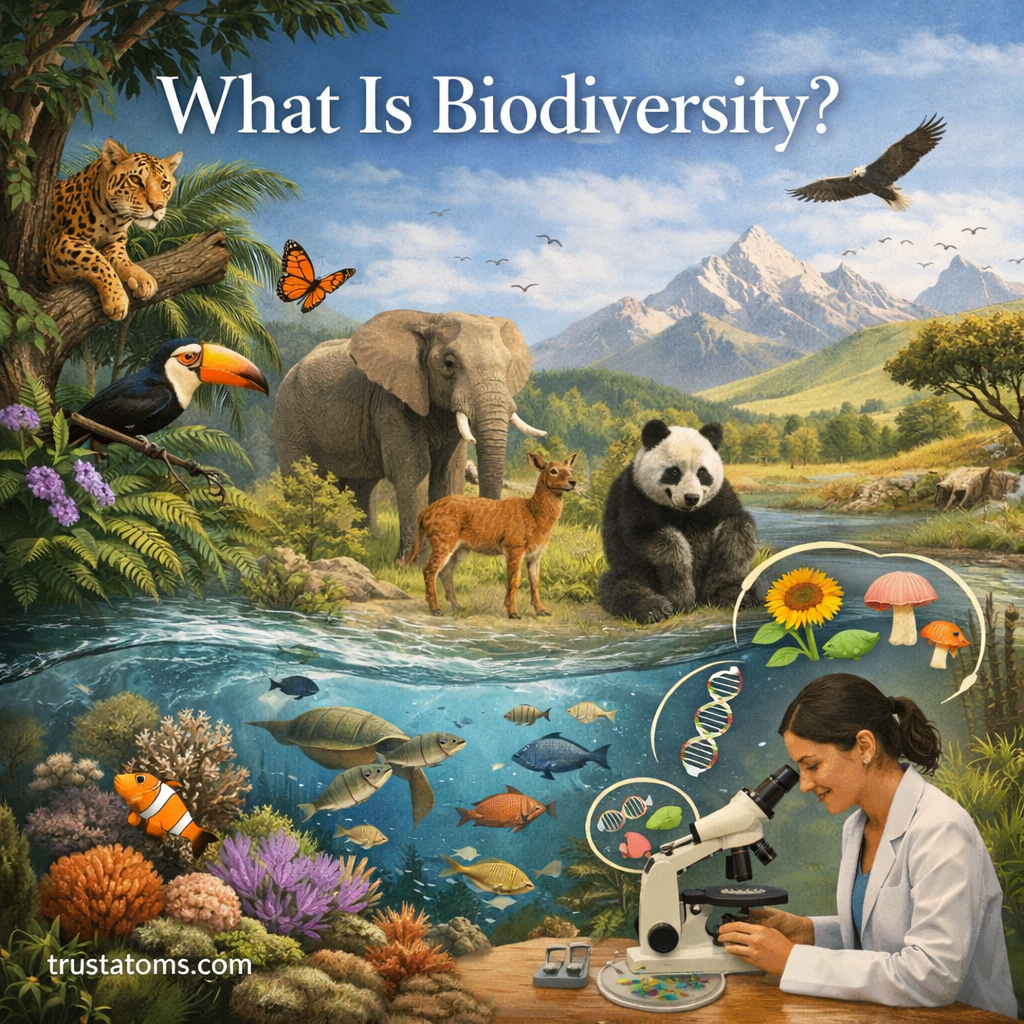
Biodiversity refers to the variety of life on Earth. It includes the different species of plants, animals, fungi, and microorganisms, as well as the ecosystems they form and the genetic differences within each species.
Scientists consider biodiversity one of the most important indicators of a healthy planet. From tropical rainforests to deep ocean ecosystems, biodiversity supports ecological balance, food systems, medicine development, and climate stability.
Understanding biodiversity helps explain how life evolves, how ecosystems function, and why protecting nature is critical for the survival of both wildlife and humans.
The Basic Definition of Biodiversity
The term biodiversity is short for biological diversity. It describes the enormous variety of living organisms and the complex interactions between them.
Biodiversity can be observed at three main levels:
Genetic Diversity
Genetic diversity refers to differences in DNA among individuals of the same species.
For example:
- Different dog breeds share the same species but have varied genetic traits.
- Some plants may be more resistant to drought or disease due to genetic variation.
High genetic diversity allows species to adapt to environmental changes and survive challenges such as climate shifts or new diseases.
Species Diversity
Species diversity describes the number of different species living in a particular area.
Examples include:
- Coral reefs containing thousands of fish and marine species
- Tropical rainforests hosting millions of plant and animal species
- Grasslands supporting insects, mammals, birds, and microbes
Regions with high species diversity often support more stable ecosystems.
Ecosystem Diversity
Ecosystem diversity refers to the variety of ecosystems found across the planet.
Examples include:
- Forest ecosystems
- Wetlands
- Deserts
- Oceans
- Grasslands
- Tundra environments
Each ecosystem has its own environmental conditions and supports unique communities of living organisms.
Why Biodiversity Is Important
Biodiversity supports many essential processes that sustain life on Earth.
These benefits are often referred to as ecosystem services.
Ecological Stability
Ecosystems with many species tend to be more resilient.
For example:
- If one species declines, others can fill similar roles.
- Diverse food webs maintain balance between predators and prey.
- Plant diversity helps ecosystems recover from disturbances such as fires or storms.
Food Security
Biodiversity plays a major role in global food systems.
Many crops depend on biodiversity through:
- Pollinators such as bees and butterflies
- Soil microorganisms that support plant growth
- Wild relatives of crops used in agricultural breeding
Genetic diversity within crops also helps farmers develop varieties that resist pests, disease, and climate stress.
Medicine and Scientific Discovery
Many modern medicines originate from natural compounds found in plants, animals, and microbes.
Examples include:
- Antibiotics derived from fungi and bacteria
- Cancer treatments developed from plant compounds
- Pain medications originally discovered in natural sources
Scientists continue to study biodiversity to find new treatments and medical breakthroughs.
Climate Regulation
Healthy ecosystems help regulate Earth’s climate.
Examples include:
- Forests absorbing carbon dioxide
- Wetlands storing carbon in soil
- Oceans regulating global temperature and weather patterns
Biodiversity supports these systems by maintaining ecological balance.
Where Biodiversity Is Highest on Earth
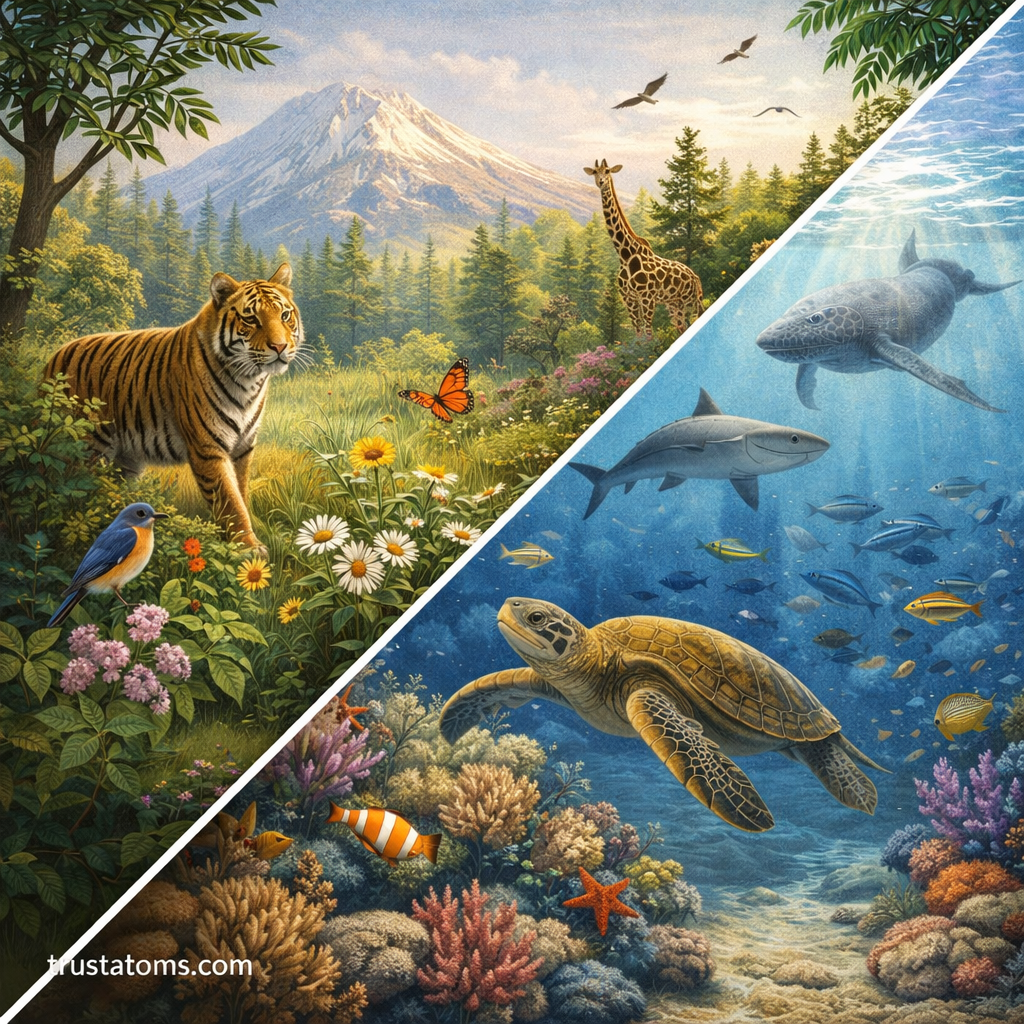
Some regions contain significantly higher biodiversity than others. These areas are often called biodiversity hotspots.
Hotspots usually have two characteristics:
- Extremely high numbers of species
- Significant threats from human activity
Examples of biodiversity hotspots include:
- The Amazon Rainforest
- Madagascar
- Southeast Asian tropical forests
- The Coral Triangle in the Pacific Ocean
- The Mediterranean Basin
Protecting these areas helps preserve large portions of Earth’s biodiversity.
Major Threats to Biodiversity
Despite its importance, biodiversity is declining worldwide due to several human-driven factors.
Habitat Destruction
Habitat loss is the largest threat to biodiversity.
Common causes include:
- Deforestation
- Urban development
- Agricultural expansion
- Infrastructure construction
When habitats disappear, species lose the environments they depend on to survive.
Climate Change
Changing global temperatures affect species distributions and ecosystem stability.
Impacts include:
- Coral bleaching in warming oceans
- Shifting migration patterns
- Loss of polar habitats
- Increased drought and wildfires
Some species may struggle to adapt quickly enough to rapid environmental changes.
Pollution
Pollution can damage ecosystems and harm wildlife.
Examples include:
- Plastic waste in oceans
- Chemical runoff from agriculture
- Air pollution affecting forests and lakes
- Oil spills damaging marine habitats
Even small pollutants can disrupt delicate ecological systems.
Overexploitation
Overuse of natural resources can reduce populations of many species.
Examples include:
- Overfishing
- Illegal wildlife trade
- Excessive hunting
- Unsustainable logging
When species are harvested faster than they can reproduce, populations decline.
How Biodiversity Is Protected
Scientists, governments, and conservation organizations work to protect biodiversity through several strategies.
Protected Areas
Many countries establish protected zones such as:
- National parks
- Wildlife reserves
- Marine protected areas
These areas help preserve habitats and prevent destructive human activities.
Conservation Programs
Conservation efforts may include:
- Breeding endangered species
- Restoring damaged ecosystems
- Reintroducing species into their natural habitats
- Monitoring wildlife populations
These programs aim to stabilize or increase species numbers.
Sustainable Resource Use
Sustainable practices allow humans to use natural resources while protecting ecosystems.
Examples include:
- Sustainable forestry
- Responsible fishing limits
- Wildlife protection laws
- Habitat restoration
Balancing human needs with environmental protection is key to long-term biodiversity conservation.
Biodiversity and the Future of Life on Earth
Biodiversity represents billions of years of evolution and adaptation. Every species plays a role in maintaining the balance of ecosystems that support life.
Protecting biodiversity helps ensure:
- stable ecosystems
- reliable food systems
- new scientific discoveries
- climate resilience
As human populations grow and environmental pressures increase, preserving biodiversity becomes even more important.
By understanding how biodiversity works and why it matters, societies can make better decisions that protect the natural world for future generations.