A food chain is a sequence that shows how energy and nutrients move through living organisms in an ecosystem. It describes who eats whom in nature, starting with producers such as plants and ending with top predators.
Food chains illustrate the flow of energy from one organism to another. Plants capture energy from the sun, herbivores eat plants, and predators consume other animals. This transfer of energy connects all living things within an ecosystem.
Understanding food chains helps scientists study ecosystems, biodiversity, and how environmental changes affect the balance of life on Earth.
The Basic Definition of a Food Chain
In biology, a food chain is a linear pathway of energy transfer between organisms.
Each organism in the chain occupies a specific position known as a trophic level, which describes how it obtains energy.
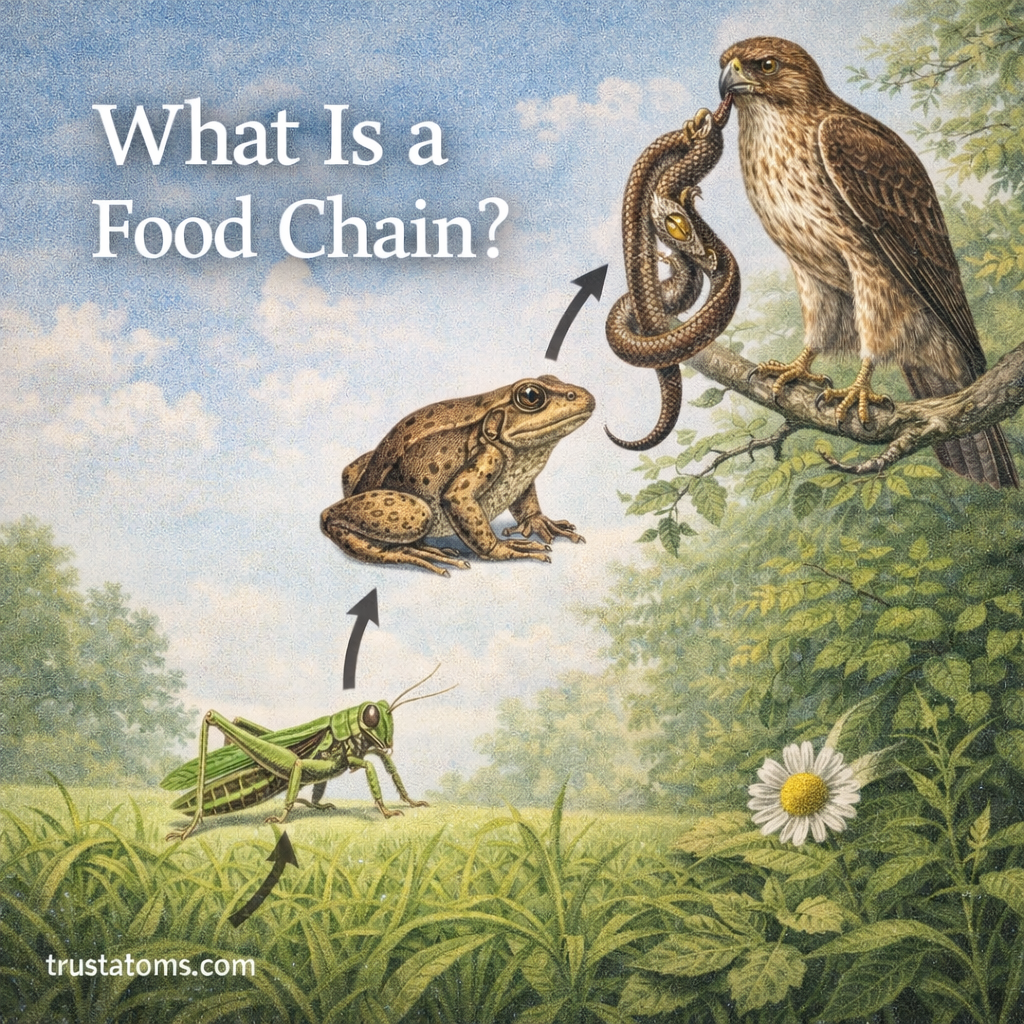
A simple food chain might look like this:
- Grass
- Grasshopper
- Frog
- Snake
- Hawk
In this example:
- Grass produces energy through photosynthesis.
- Grasshoppers eat the grass.
- Frogs eat the grasshoppers.
- Snakes eat frogs.
- Hawks act as top predators.
Energy moves upward through each step in the chain.
The Main Components of a Food Chain
Every food chain contains several key types of organisms that play different roles in energy transfer.
Producers
Producers are organisms that create their own food using sunlight through photosynthesis.
Examples of producers include:
- Plants
- Algae
- Phytoplankton
Producers form the base of every food chain because they convert solar energy into chemical energy that other organisms can use.
Primary Consumers
Primary consumers are herbivores that eat producers.
These animals rely directly on plants or algae for energy.
Examples include:
- Rabbits
- Deer
- Grasshoppers
- Zooplankton
Primary consumers form the second level of the food chain.
Secondary Consumers
Secondary consumers are animals that eat herbivores.
These organisms are usually carnivores or omnivores.
Examples include:
- Frogs
- Small fish
- Birds that eat insects
- Lizards
Secondary consumers obtain energy by feeding on primary consumers.
Tertiary Consumers
Tertiary consumers are higher-level predators that eat other carnivores.
Examples include:
- Snakes
- Larger fish
- Owls
- Foxes
These animals are typically near the top of the food chain.
Apex Predators
Apex predators sit at the very top of a food chain and have no natural predators.
Examples include:
- Lions
- Sharks
- Eagles
- Wolves
Apex predators help regulate populations of other species, maintaining ecosystem balance.
The Role of Decomposers
At the end of every food chain are decomposers, organisms that break down dead plants and animals.
Examples include:
- Bacteria
- Fungi
- Certain insects
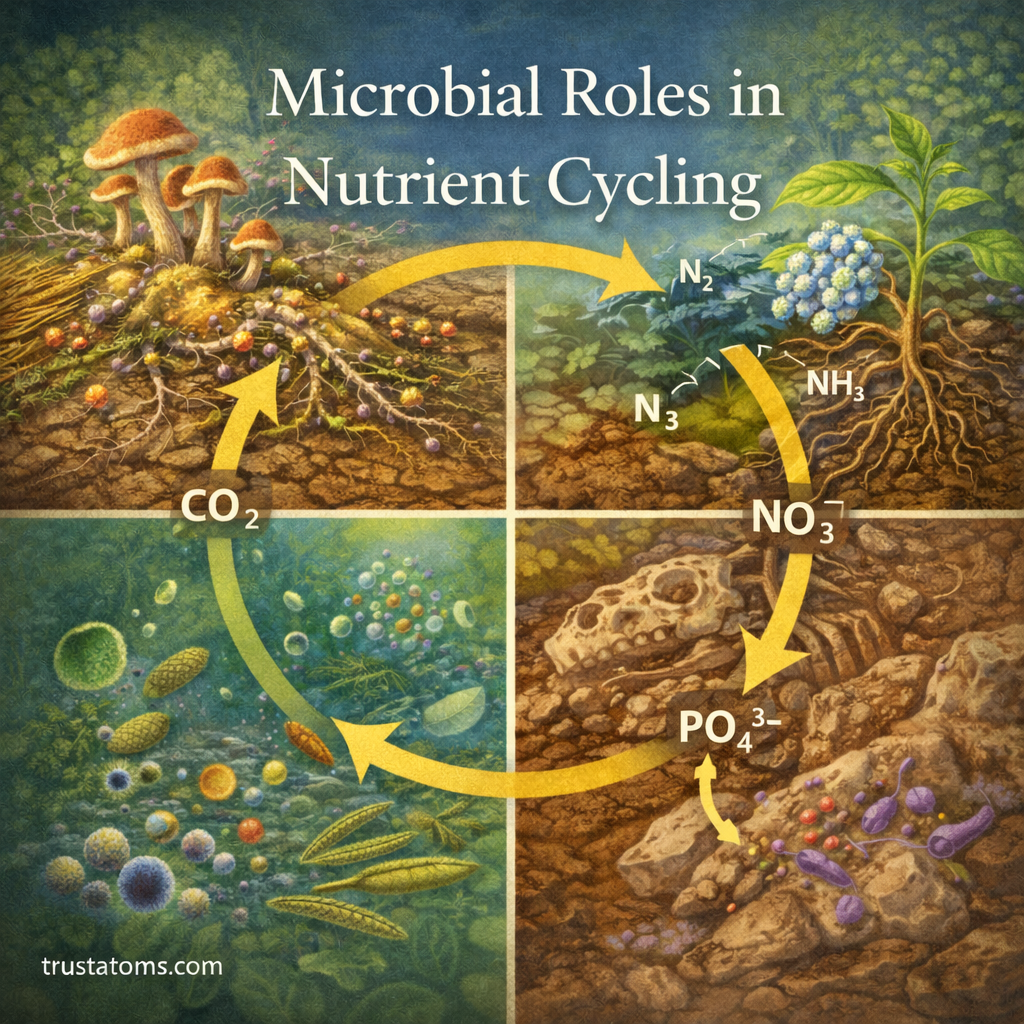
Decomposers recycle nutrients back into the soil or water so producers can use them again.
This recycling process is essential for maintaining healthy ecosystems.
Food Chains in Different Ecosystems
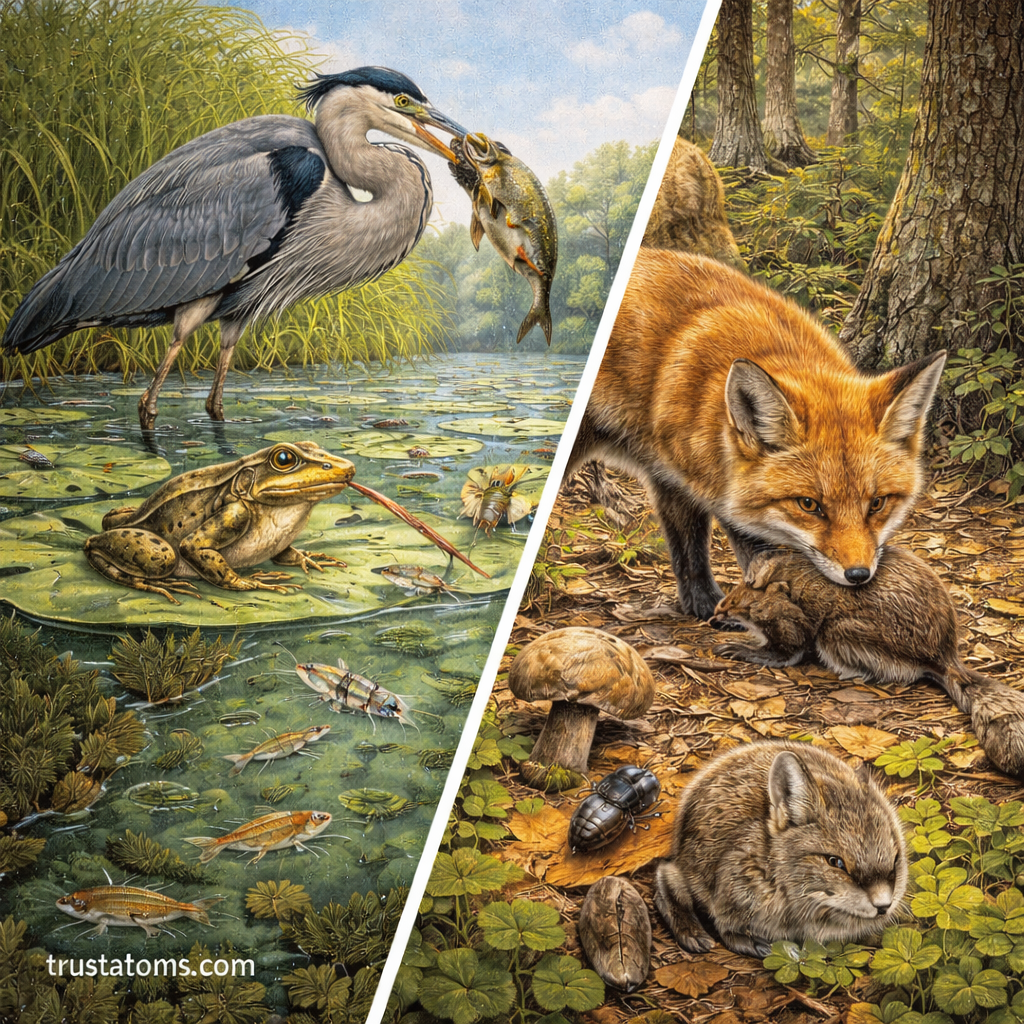
Food chains vary depending on the environment in which they occur.
Terrestrial Food Chain Example
A land-based food chain might include:
- Grass
- Grasshopper
- Frog
- Snake
- Hawk
Each organism depends on the previous one for energy.
Marine Food Chain Example
In ocean ecosystems, food chains may look different:
- Phytoplankton
- Zooplankton
- Small fish
- Larger fish
- Shark
Marine ecosystems often begin with microscopic producers that support large populations of marine life.
Food Chain vs Food Web
Although food chains show a simple energy pathway, real ecosystems are more complex.
Most organisms participate in multiple feeding relationships.
A food web represents the interconnected network of many food chains within an ecosystem.
Food webs show:
- Multiple predator–prey relationships
- Complex feeding interactions
- Greater ecosystem stability
Food webs provide a more accurate picture of how energy flows through nature.
Energy Loss in Food Chains
Energy decreases as it moves up a food chain.
Only a small portion of energy passes from one trophic level to the next.
Scientists often estimate that about 10% of energy transfers to the next level, while the rest is lost as heat or used for biological processes such as movement and growth.
Because of this energy loss:
- Food chains usually contain only a few levels
- Top predators are fewer in number
- Large ecosystems support fewer apex predators
Why Food Chains Are Important
Food chains help scientists understand how ecosystems function.
They show how energy flows through biological systems and how species depend on one another for survival.
Food chains are important because they:
- Explain relationships between organisms
- Help scientists study ecosystem balance
- Reveal how environmental changes affect species
- Support conservation and wildlife management efforts
Disruptions to food chains—such as habitat loss or species extinction—can affect entire ecosystems.
Human Impact on Food Chains
Human activities can disrupt natural food chains in many ways.
Examples include:
- Overfishing removing key species from marine food chains
- Pollution harming organisms at lower trophic levels
- Habitat destruction reducing food sources
- Climate change altering ecosystems
When one species disappears, it can cause ripple effects throughout the entire food chain.
Protecting ecosystems helps maintain the delicate balance of energy flow in nature.
Food Chains and Ecosystem Balance
Food chains illustrate the interconnected nature of life on Earth. Every organism plays a role in maintaining ecological balance.
From microscopic algae to large predators, each species contributes to the flow of energy within ecosystems.
By studying food chains, scientists gain valuable insight into biodiversity, ecosystem health, and the complex relationships that support life on our planet.