In biology, a predator is an organism that hunts, kills, and eats another organism called its prey. This interaction is known as predation, one of the most important ecological relationships in nature.
Predators exist across nearly every ecosystem on Earth—from oceans and forests to grasslands and deserts. They include animals such as lions, wolves, sharks, spiders, and birds of prey, as well as some plants and microscopic organisms.
Predation helps maintain balance in ecosystems by controlling prey populations and shaping the evolution of species.
The Biological Definition of a Predator
A predator is an organism that:
- Hunts or captures another organism
- Kills the organism
- Consumes it for energy and nutrients
The organism that is hunted is called prey.
Unlike parasites, which live on or inside their hosts, predators usually kill their prey relatively quickly and consume it as a food source.
Predation is a direct interaction that transfers energy from one organism to another in the food chain.
Predators and Prey in Ecosystems
Predators and prey are connected through food webs that move energy through ecosystems.
When predators consume prey, they gain:
- Nutrients
- Energy for movement and growth
- Resources needed for reproduction
At the same time, prey populations are regulated by predator pressure.
If predator populations decline, prey numbers may increase rapidly, which can disrupt ecosystems by:
- Overgrazing vegetation
- Depleting resources
- Altering habitats
Because of this, predators often act as key regulators of ecological balance.
Types of Predators
Predators vary widely depending on their hunting strategies and ecological roles.
Carnivorous Predators
These predators feed primarily on other animals.
Examples include:
- Lions
- Wolves
- Sharks
- Eagles
Carnivores typically possess specialized adaptations for hunting, such as sharp teeth, claws, and keen senses.
Insect Predators
Many insects are highly effective predators.
Examples include:
- Praying mantises
- Dragonflies
- Ladybugs (which eat aphids)
These predators help regulate insect populations in ecosystems and agricultural environments.
Aquatic Predators
Predators in aquatic ecosystems include fish, marine mammals, and invertebrates.
Examples include:
- Sharks
- Octopuses
- Barracudas
Aquatic predators often rely on speed, camouflage, or specialized hunting techniques.
Apex Predators
Apex predators sit at the top of the food chain and have few or no natural predators themselves.
Examples include:
- Tigers
- Orcas
- Great white sharks
- Eagles
These predators play a crucial role in maintaining ecosystem stability.
Hunting Strategies Used by Predators
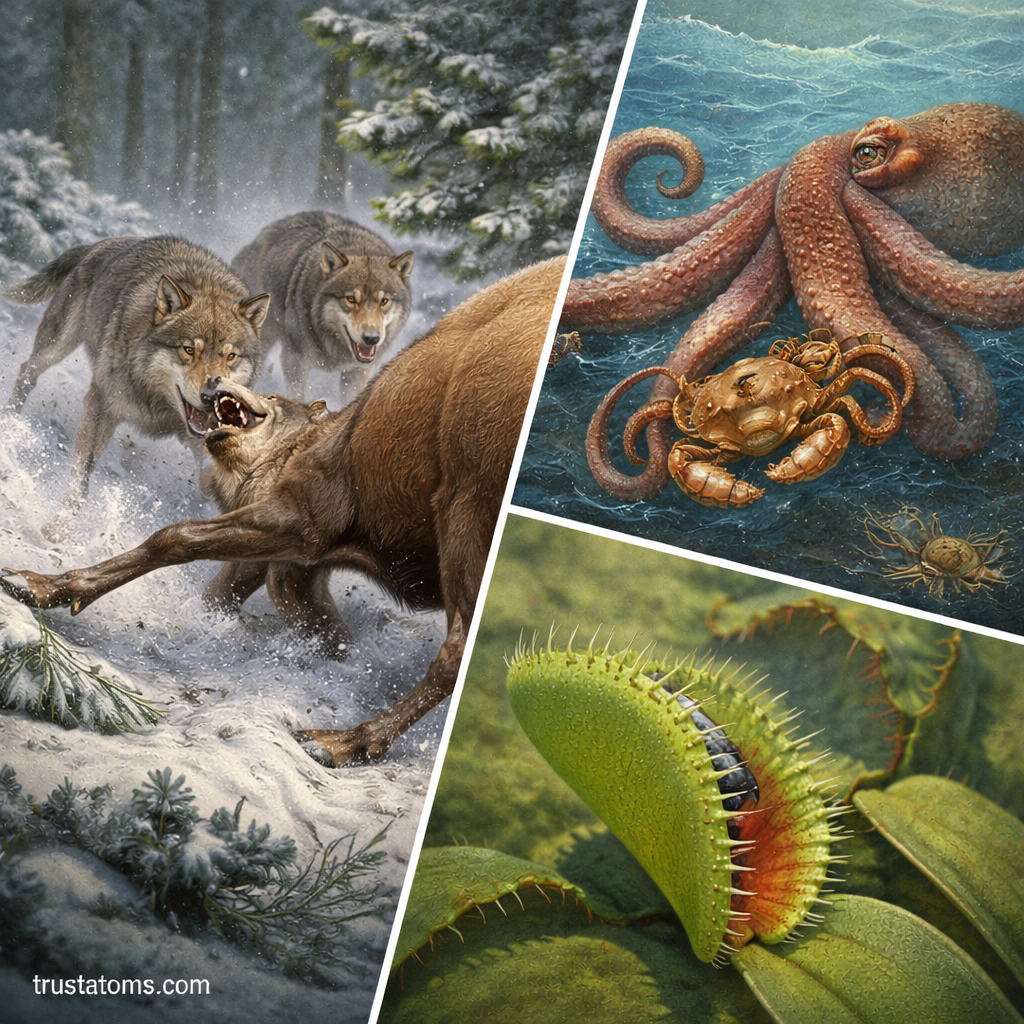
Predators have evolved a wide range of strategies to capture prey successfully.
Pursuit Hunting
Some predators chase their prey over distances until they capture it.
Examples:
- Wolves
- Cheetahs
- Dolphins
These predators rely on speed, endurance, and coordination.
Ambush Hunting
Ambush predators hide and wait for prey to come close before attacking.
Examples:
- Crocodiles
- Tigers
- Praying mantises
Camouflage and patience are key adaptations for ambush predators.
Cooperative Hunting
Some predators hunt in groups to capture larger or more difficult prey.
Examples:
- Wolves
- Lions
- Orcas
Working together allows predators to increase hunting success.
Trap-Based Hunting
Certain predators create traps to capture prey.
Examples:
- Spiders using webs
- Antlions digging pit traps
These strategies reduce the energy required for active hunting.
Adaptations That Help Predators Hunt
Predators possess specialized traits that improve their hunting ability.
Common adaptations include:
- Sharp teeth and claws for capturing prey
- Forward-facing eyes for depth perception
- Speed and agility for pursuit
- Camouflage for stealth
- Strong jaws or venom for subduing prey
Some predators also use advanced senses such as:
- Excellent night vision
- Sensitive hearing
- Chemical detection (smell or taste)
- Echolocation in aquatic predators
These features increase hunting efficiency and survival.
The Predator–Prey Relationship
Predators and prey are connected through an ongoing evolutionary process.
As predators become more effective hunters, prey species evolve defenses to survive.
Common prey defenses include:
- Camouflage
- Speed and agility
- Defensive structures such as shells or spines
- Group behavior to reduce risk
This interaction creates a biological “arms race” where both predator and prey continue to evolve new strategies.
Examples of Predation in Nature
Predation occurs in nearly every ecosystem.
Some well-known examples include:
- A hawk capturing a mouse
- A spider trapping insects in its web
- A shark hunting fish
- A lion chasing a gazelle
- A praying mantis capturing flies
Even microscopic organisms can act as predators by consuming bacteria or other microorganisms.
Why Predators Are Important in Ecosystems
Predators help maintain healthy ecosystems by controlling prey populations and preventing overpopulation.
Their ecological roles include:
- Regulating species populations
- Maintaining biodiversity
- Preventing habitat damage caused by overgrazing
- Removing weak or diseased animals
In many ecosystems, removing top predators can lead to trophic cascades, where the absence of predators causes dramatic changes throughout the food web.
Predators in the Food Chain
Predators occupy different levels within food chains.
Typical trophic levels include:
- Producers (plants and algae)
- Herbivores that eat producers
- Carnivores that eat herbivores
- Apex predators that eat other carnivores
Energy moves through these levels as organisms consume one another.
Because energy decreases at each step, predator populations are usually smaller than prey populations.
Final Thoughts
A predator is an organism that hunts, kills, and consumes other organisms for food. Predation plays a vital role in ecosystems by regulating populations, maintaining biodiversity, and driving evolutionary adaptations.
From large carnivores like lions and sharks to tiny predatory insects and microorganisms, predators exist across every environment on Earth. By studying predator–prey relationships, scientists gain valuable insight into how ecosystems function and remain balanced.