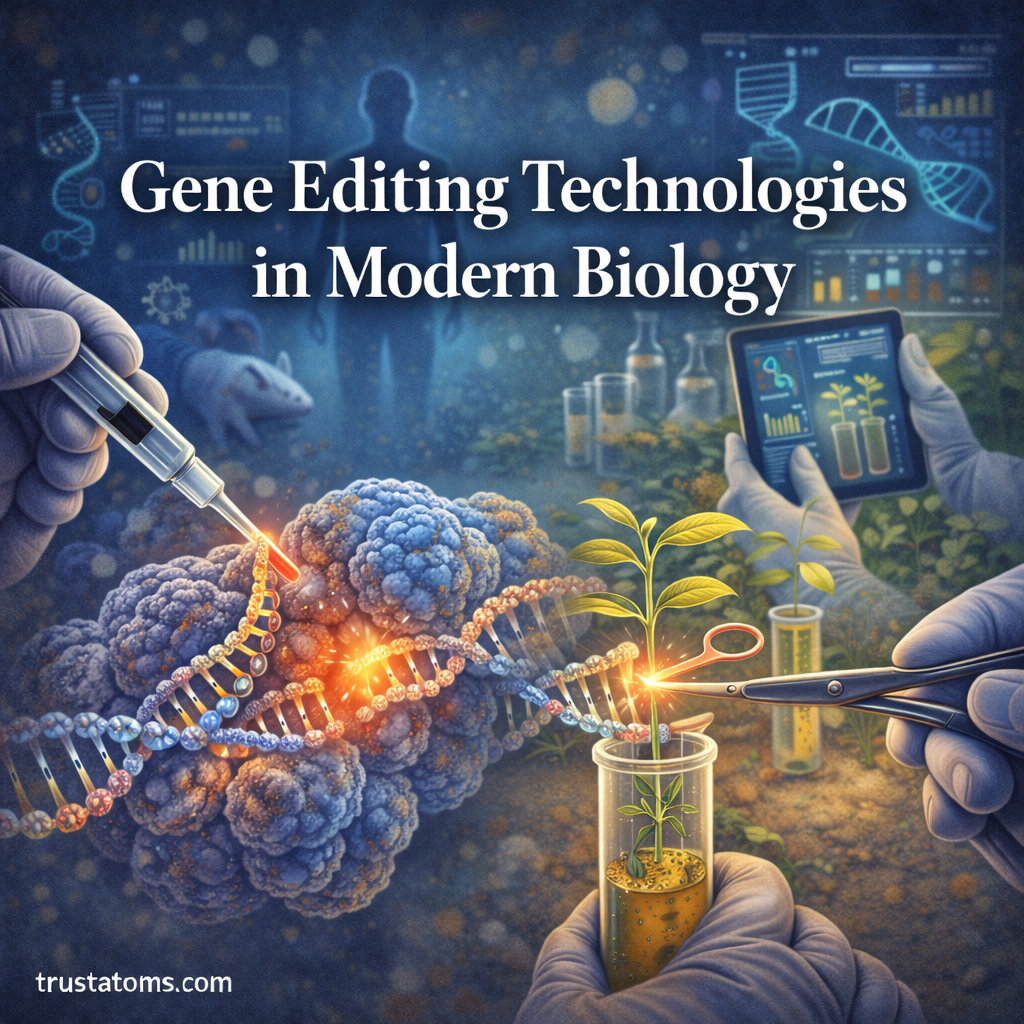
Gene editing technologies allow scientists to precisely modify the DNA of living organisms. By changing genetic sequences, researchers can study how genes work, develop treatments for diseases, improve crops, and explore new biological discoveries.
In the past, altering genes was extremely difficult and time-consuming. Today, powerful gene editing tools allow scientists to cut, replace, or deactivate specific genes with remarkable accuracy.
These technologies have transformed modern biology, medicine, agriculture, and biotechnology.
What Is Gene Editing?
Gene editing is the process of making targeted changes to an organism’s DNA.
DNA contains the instructions that control how organisms grow, develop, and function. By modifying DNA, scientists can change how cells behave or correct genetic problems.
Gene editing can be used to:
- Remove harmful mutations
- Insert beneficial genes
- Turn specific genes on or off
- Study how genes influence biological processes
Unlike traditional breeding or genetic modification methods, gene editing focuses on precise DNA changes at specific locations in the genome.
Why Gene Editing Matters
Gene editing technologies are important because they allow scientists to better understand and manipulate biological systems.
Some of the major goals of gene editing include:
- Treating genetic diseases
- Improving agricultural productivity
- Studying gene function
- Developing new medical therapies
- Creating environmentally sustainable solutions
Because genes control many biological traits, editing them opens new possibilities across multiple scientific fields.
Major Gene Editing Technologies
Several gene editing tools have been developed over the past few decades. Each technology allows scientists to target and modify DNA in different ways.
CRISPR-Cas Systems
CRISPR is currently the most widely used gene editing technology.
It works using a combination of:
- A guide RNA, which identifies the target DNA sequence
- A Cas protein (often Cas9), which cuts the DNA
Once the DNA is cut, the cell repairs the break. During this repair process, scientists can introduce genetic changes.
CRISPR is popular because it is:
- Highly precise
- Relatively inexpensive
- Easy to program for different genes
- Efficient for many organisms
CRISPR has quickly become the dominant tool in gene editing research.
TALENs (Transcription Activator-Like Effector Nucleases)
TALENs are another gene editing technology used to modify DNA.
They consist of two main components:
- DNA-binding proteins that recognize specific genetic sequences
- Enzymes that cut the DNA at the targeted location
Once the DNA is cut, cells repair the break and the gene can be modified.
TALENs are known for:
- High specificity
- Low off-target effects
- Effectiveness in certain types of cells
Although CRISPR is more commonly used today, TALENs are still valuable for certain research applications.
Zinc Finger Nucleases (ZFNs)
Zinc finger nucleases were one of the earliest gene editing technologies developed.
These tools combine:
- Zinc finger DNA-binding domains
- A DNA-cutting enzyme called a nuclease
The zinc finger proteins recognize specific DNA sequences, allowing scientists to target precise regions of the genome.
ZFNs helped pave the way for modern gene editing but are more complex and difficult to design compared to newer technologies.
How Gene Editing Works
Although different tools are used, most gene editing technologies follow a similar process.
Step 1: Identify the Target Gene
Scientists first determine which gene they want to modify.
This might be a gene linked to a disease or a trait researchers want to study.
Step 2: Design the Editing Tool
Researchers design a molecular tool capable of locating and cutting the specific DNA sequence.
Step 3: Deliver the Tool Into Cells
The editing system must be delivered into the target cells.
Common delivery methods include:
- Viral vectors
- Lipid nanoparticles
- Electroporation
- Microinjection
Step 4: Cut the DNA
The editing tool cuts the DNA at the selected location.
Step 5: DNA Repair and Modification
Cells naturally repair DNA breaks. During this process, scientists can introduce desired genetic changes.
Applications of Gene Editing
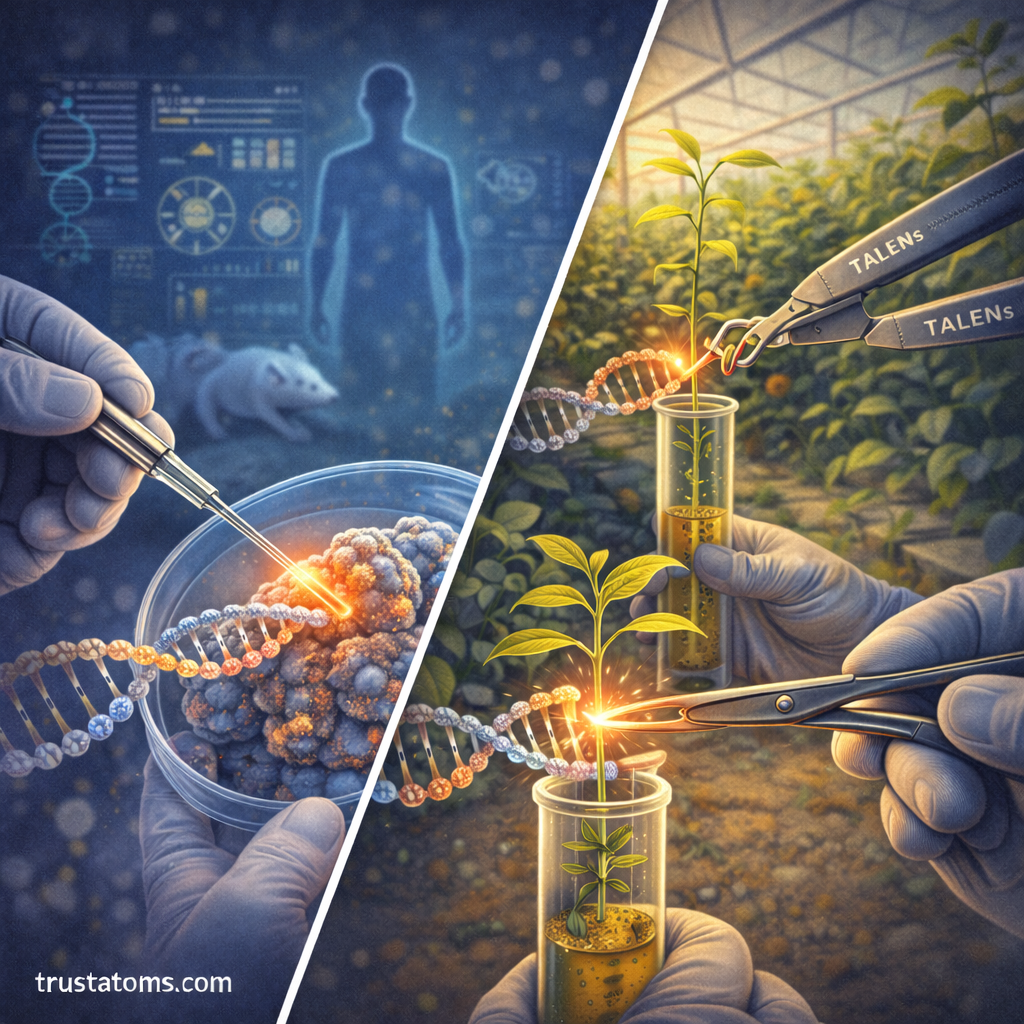
Gene editing technologies are used in many areas of modern biology.
Medicine
Gene editing holds enormous promise for treating genetic diseases.
Researchers are exploring therapies for conditions such as:
- Sickle cell disease
- Muscular dystrophy
- Cystic fibrosis
- Certain types of cancer
Gene editing may allow doctors to correct harmful mutations directly within a patient’s DNA.
Agriculture
Gene editing is also improving agriculture and food production.
Scientists are developing crops that are:
- Resistant to pests
- More tolerant of drought
- More nutritious
- Higher yielding
These improvements can help address global food security challenges.
Biomedical Research
Researchers use gene editing to better understand how genes function.
Applications include:
- Creating disease models in animals
- Studying gene regulation
- Testing drug responses
- Investigating developmental biology
Gene editing allows scientists to explore biological processes at the genetic level.
Environmental Science
Gene editing technologies may also help address environmental problems.
Examples include:
- Engineering bacteria that break down pollutants
- Developing climate-resistant crops
- Controlling disease-carrying insects
These applications are still being studied but show promising potential.
Advantages of Modern Gene Editing Tools
Modern gene editing technologies offer several major advantages compared to older genetic modification techniques.
Key benefits include:
- Greater precision when modifying DNA
- Faster experimental timelines
- Reduced research costs
- Ability to edit multiple genes simultaneously
- Increased efficiency in genetic research
These advantages have accelerated progress in biology and biotechnology.
Challenges and Ethical Considerations
Despite their potential benefits, gene editing technologies also raise ethical and scientific concerns.
Some important issues include:
- Editing genes in human embryos
- Long-term effects of genetic changes
- Environmental risks from modified organisms
- Regulation of biotechnology research
Scientists, governments, and ethicists continue to discuss how gene editing should be used responsibly.
The Future of Gene Editing
Gene editing technologies are evolving rapidly, and new innovations are expanding what scientists can accomplish.
Future developments may include:
- Precise correction of genetic diseases
- Personalized medicine based on an individual’s DNA
- Sustainable agricultural systems
- Advanced gene therapies for complex diseases
Researchers are also developing new tools that improve editing accuracy and reduce unintended genetic changes.
Final Thoughts
Gene editing technologies are among the most powerful tools in modern biology. By allowing scientists to precisely modify DNA, these technologies are transforming research in medicine, agriculture, and biotechnology.
As new discoveries continue to emerge, gene editing will likely play an increasingly important role in understanding life at the molecular level and solving many global scientific challenges.