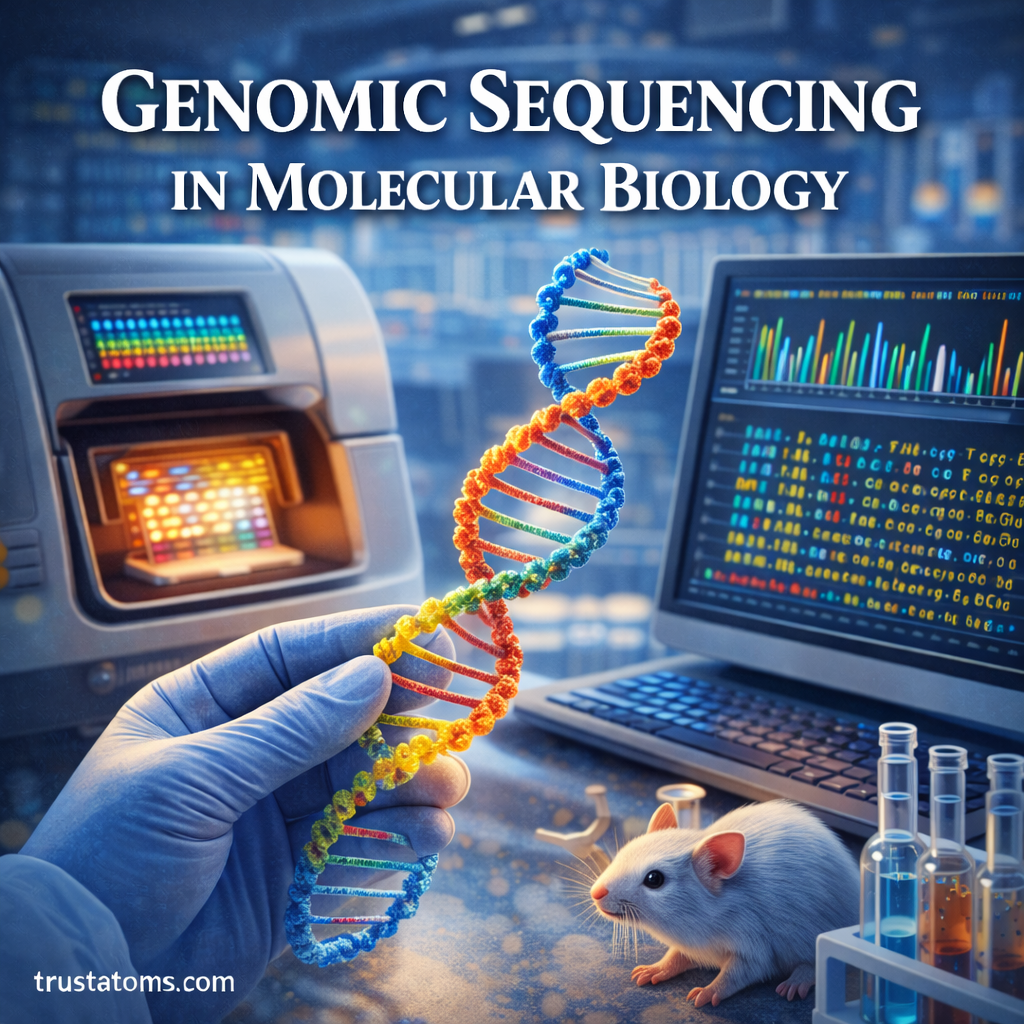
Genomic sequencing is a powerful technique used in molecular biology to determine the complete DNA sequence of an organism’s genome. By identifying the exact order of nucleotides within DNA, scientists can study how genes function, how diseases develop, and how organisms evolve.
Over the past few decades, genomic sequencing technologies have transformed biological research. What once took years and enormous resources can now be accomplished much faster and at a significantly lower cost.
Today, genomic sequencing plays a critical role in medicine, genetics, biotechnology, agriculture, and evolutionary biology.
What Is Genomic Sequencing?
Genomic sequencing is the process of determining the exact order of DNA bases within an organism’s genome.
DNA is composed of four chemical bases:
- Adenine (A)
- Thymine (T)
- Cytosine (C)
- Guanine (G)
These bases form the genetic code that carries instructions for building and maintaining living organisms.
Genomic sequencing allows scientists to read this code and understand how genes influence biological traits, disease risk, and cellular processes.
What Is a Genome?
A genome is the complete set of genetic material in an organism.
It includes:
- All genes that code for proteins
- Regulatory DNA that controls gene activity
- Non-coding DNA sequences
Genomes vary widely in size depending on the organism. For example:
- The human genome contains about 3 billion DNA base pairs
- Many bacteria have genomes containing only a few million base pairs
Sequencing a genome provides a detailed map of an organism’s genetic blueprint.
Why Genomic Sequencing Is Important
Genomic sequencing has become essential for many areas of biological research.
Key benefits include:
- Understanding genetic diseases
- Identifying mutations linked to disorders
- Studying evolution and biodiversity
- Developing new medical treatments
- Improving crop breeding and agriculture
By analyzing genetic sequences, scientists can uncover how genes influence biological systems.
How Genomic Sequencing Works
Although sequencing technologies differ, most genomic sequencing methods follow several general steps.
1. DNA Extraction
Scientists begin by extracting DNA from cells or tissues.
This DNA may come from:
- Blood samples
- Plant tissues
- Bacteria or viruses
- Animal cells
Once extracted, the DNA is purified and prepared for sequencing.
2. DNA Fragmentation
The DNA is broken into smaller fragments.
Because genomes can be extremely large, breaking DNA into manageable pieces makes sequencing easier.
3. DNA Sequencing
Sequencing machines determine the order of DNA bases in each fragment.
Modern sequencing technologies can analyze millions of DNA fragments simultaneously.
4. Sequence Assembly
Specialized computer software assembles the fragments into the correct order.
This process reconstructs the full genome sequence.
5. Data Analysis
Researchers analyze the completed genome to identify genes, mutations, and other genetic features.
Bioinformatics tools help interpret the large amounts of sequencing data generated.
Types of Genomic Sequencing
Different sequencing methods are used depending on the research goal.
Whole Genome Sequencing
Whole genome sequencing determines the complete DNA sequence of an organism.
This method provides the most comprehensive genetic information.
Exome Sequencing
Exome sequencing focuses only on the protein-coding regions of DNA, known as exons.
Although these regions make up only a small portion of the genome, they contain many disease-related mutations.
Targeted Gene Sequencing
Targeted sequencing analyzes specific genes associated with certain diseases or biological traits.
This method is often used in medical diagnostics and research studies.
Technologies Used in Genomic Sequencing
Several advanced technologies are used to perform genomic sequencing.
Sanger Sequencing
Sanger sequencing was one of the earliest DNA sequencing methods.
It is highly accurate but relatively slow compared to modern technologies.
Sanger sequencing is still used for smaller DNA sequencing tasks.
Next-Generation Sequencing (NGS)
Next-generation sequencing allows scientists to sequence millions of DNA fragments simultaneously.
NGS has dramatically increased sequencing speed and reduced costs.
It is now widely used in:
- Human genomics
- Cancer research
- Microbiology
- Evolutionary studies
Third-Generation Sequencing
Third-generation sequencing technologies analyze long DNA molecules in real time.
Examples include nanopore sequencing and single-molecule sequencing.
These technologies allow researchers to study complex genomic regions more easily.
Applications of Genomic Sequencing
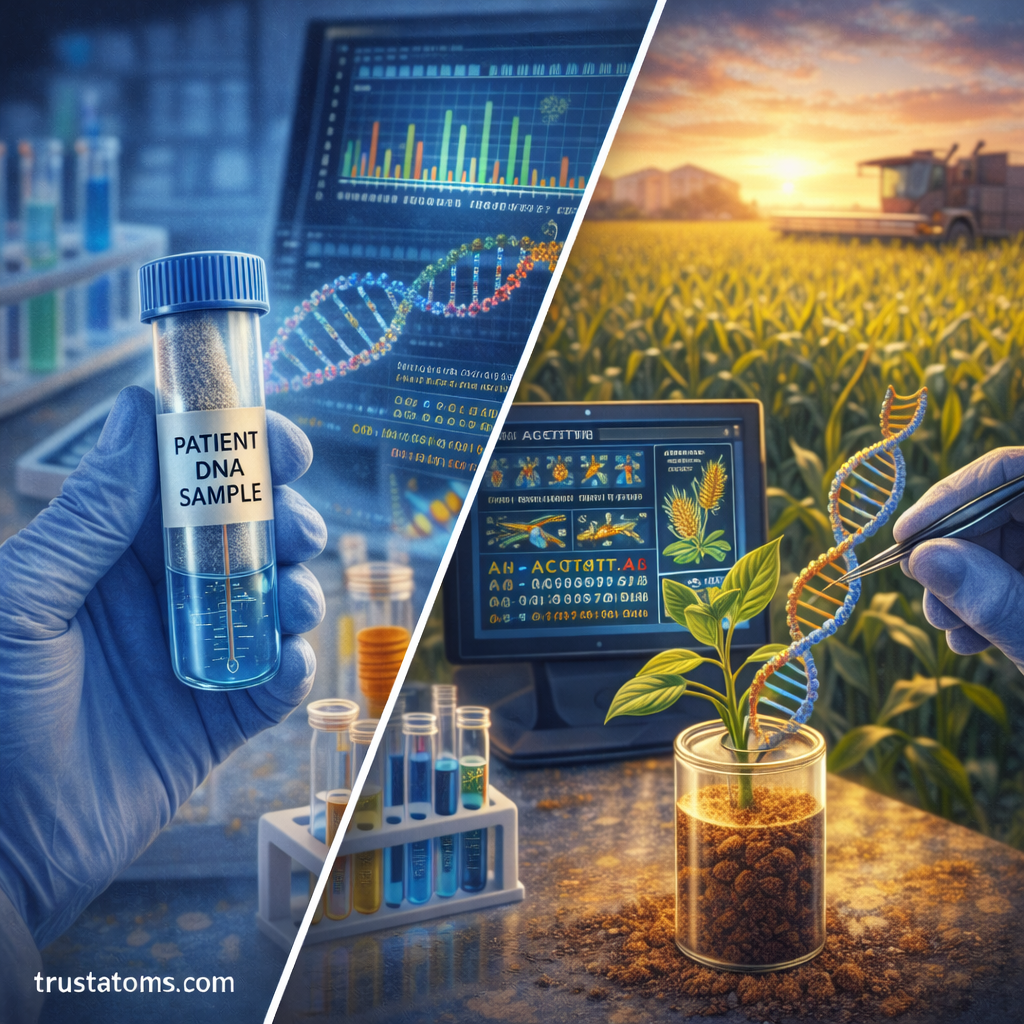
Genomic sequencing has many important applications across scientific disciplines.
Medical Research and Disease Diagnosis
Genomic sequencing has revolutionized modern medicine.
Doctors can now analyze a patient’s genome to identify genetic mutations linked to disease.
Applications include:
- Diagnosing rare genetic disorders
- Identifying cancer mutations
- Studying infectious diseases
- Developing targeted therapies
Genomic data allows doctors to design more precise treatments.
Personalized Medicine
Genomic sequencing supports personalized medicine by tailoring treatments to an individual’s genetic profile.
Doctors can use genomic information to:
- Predict how patients respond to medications
- Identify disease risks early
- Choose the most effective treatment
This approach improves patient outcomes and reduces unnecessary treatments.
Evolutionary Biology
Genomic sequencing helps scientists study how species evolve.
By comparing genomes across organisms, researchers can:
- Trace evolutionary relationships
- Study species adaptation
- Identify genetic changes over time
This research provides insight into biodiversity and the history of life on Earth.
Agriculture and Crop Improvement
Genomic sequencing is also transforming agriculture.
Scientists use genomic data to:
- Identify beneficial crop traits
- Develop disease-resistant plants
- Improve crop yield and quality
- Study plant genetics
These advancements help support global food security.
Microbiology and Infectious Disease Tracking
Sequencing technologies allow scientists to track the spread and evolution of pathogens.
Researchers can sequence bacterial or viral genomes to:
- Identify outbreaks
- Monitor mutations
- Track transmission patterns
This information is essential for public health and disease prevention.
Advantages of Genomic Sequencing
Genomic sequencing offers many scientific advantages.
Key benefits include:
- Comprehensive analysis of genetic information
- Improved disease diagnosis
- Faster scientific discovery
- Enhanced understanding of biological systems
- Support for precision medicine
These advantages make genomic sequencing one of the most important tools in molecular biology.
Challenges and Limitations
Despite its benefits, genomic sequencing also presents challenges.
Some limitations include:
- Large amounts of data requiring complex analysis
- Ethical concerns regarding genetic privacy
- High costs for certain sequencing technologies
- Interpretation of genetic variants that are not yet understood
Scientists continue developing better analytical tools to address these challenges.
The Future of Genomic Sequencing
Genomic sequencing technologies are advancing rapidly.
Future developments may include:
- Faster and cheaper genome sequencing
- Portable sequencing devices for field research
- Improved analysis of complex genomes
- Expanded use in clinical medicine
As sequencing technologies improve, genomic research will continue to expand our understanding of biology and disease.
Final Thoughts
Genomic sequencing is a cornerstone of modern molecular biology. By revealing the complete genetic code of organisms, it allows scientists to explore how genes function, how diseases develop, and how life evolves.
From personalized medicine to agricultural innovation, genomic sequencing continues to drive major scientific discoveries. As technology advances, it will remain one of the most powerful tools for understanding the genetic foundations of life.