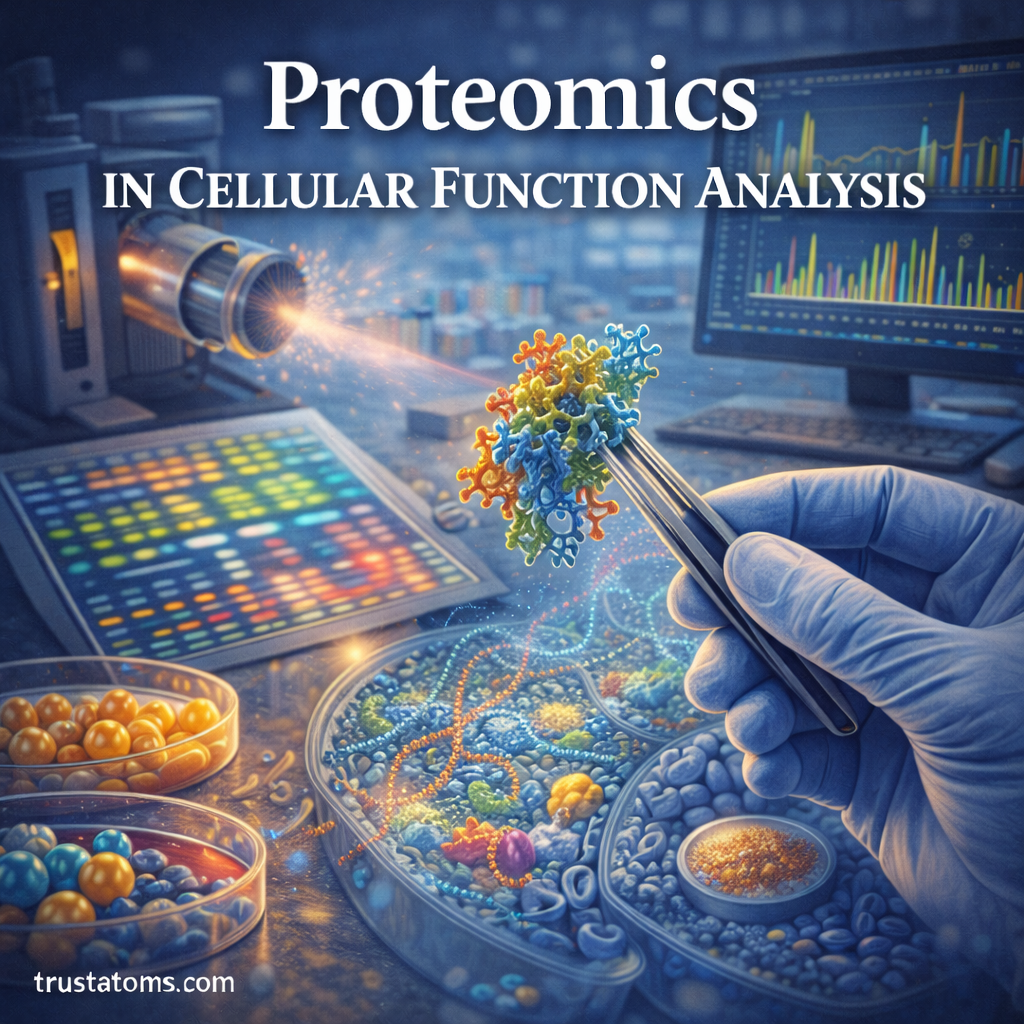
Proteomics is the large-scale study of proteins within cells, tissues, or organisms. Because proteins carry out most biological activities in cells, understanding how they function is essential for studying life at the molecular level.
While genomics focuses on DNA and genes, proteomics examines the proteins that genes produce. These proteins control cellular processes such as metabolism, communication between cells, immune responses, and structural support.
Proteomics has become an important field in molecular biology because it helps scientists understand how cells function, how diseases develop, and how new medical treatments can be created.
What Is Proteomics?
Proteomics is the scientific study of the proteome, which is the complete set of proteins produced by a cell, tissue, or organism at a given time.
Unlike the genome, which remains relatively stable, the proteome changes constantly depending on:
- Cell type
- Environmental conditions
- Developmental stage
- Disease state
- Cellular signals
Because proteins respond dynamically to biological conditions, proteomics provides valuable insight into how cells behave under different circumstances.
Why Proteins Are Important in Cells
Proteins perform many critical functions that keep cells alive and functioning properly.
Some key roles of proteins include:
- Enzymes that speed up chemical reactions
- Structural components that support cell shape
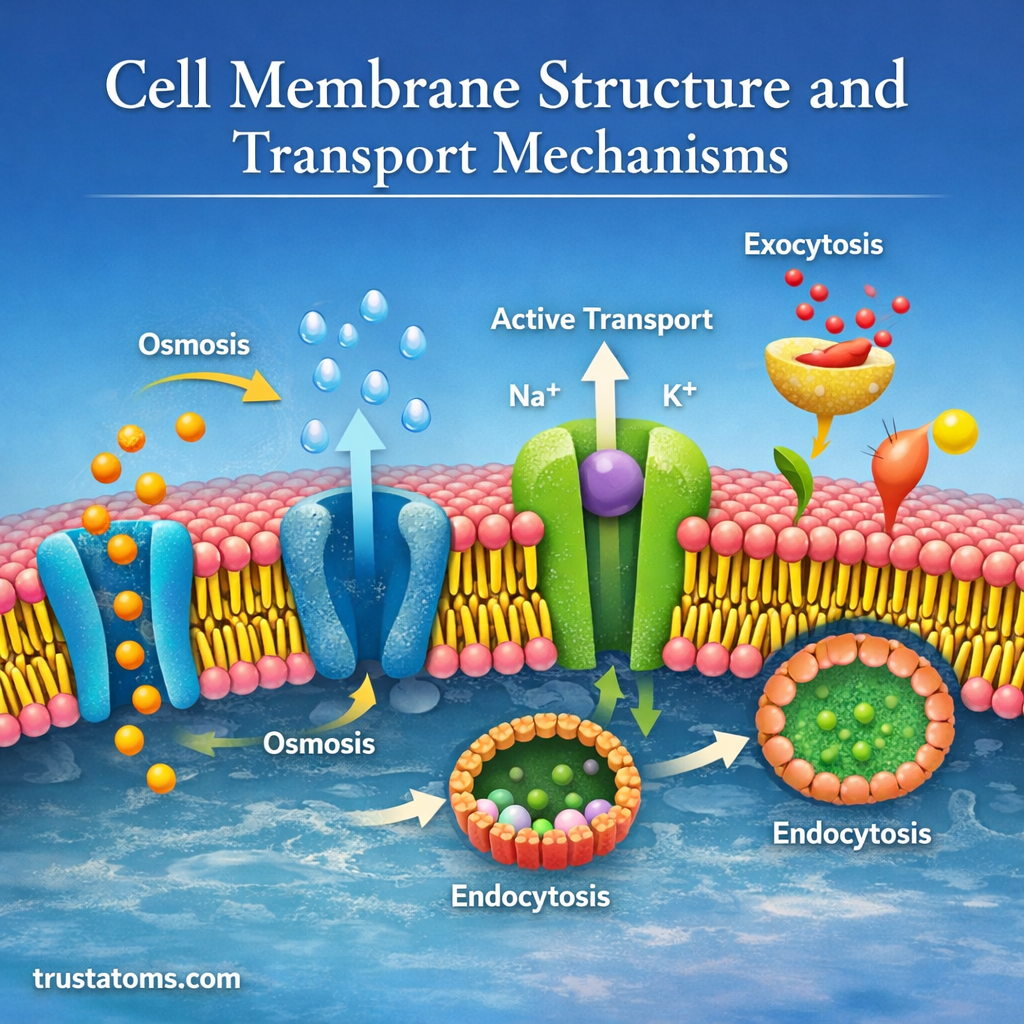
- Transport proteins that move molecules across membranes
- Signaling molecules that allow cells to communicate
- Immune proteins that protect against pathogens
Studying proteins helps scientists understand how these processes work at the molecular level.
The Relationship Between Genes and Proteins
Genes contain instructions for producing proteins, but the relationship between genes and proteins is complex.
A single gene can produce multiple proteins through processes such as:
- Alternative RNA splicing
- Post-translational modifications
- Protein folding variations
Because of this complexity, analyzing DNA alone does not fully explain how cells function. Proteomics helps bridge the gap between genetic information and cellular activity.
How Proteomics Works
Proteomics research involves identifying and analyzing large numbers of proteins within biological samples.
Most proteomics studies follow several major steps.
1. Protein Extraction
Scientists begin by extracting proteins from cells or tissues.
Samples may come from:
- Cultured cells
- Animal tissues
- Blood or biological fluids
- Microorganisms
The extracted proteins are then purified for analysis.
2. Protein Separation
Because cells contain thousands of different proteins, researchers must separate them before analysis.
Common separation methods include:
- Gel electrophoresis
- Liquid chromatography
- Capillary electrophoresis
These techniques sort proteins based on properties such as size, charge, or structure.
3. Protein Identification
After separation, scientists identify proteins using advanced analytical techniques.
One of the most important tools in proteomics is mass spectrometry, which measures the mass of protein fragments to determine their identity.
Mass spectrometry allows researchers to analyze complex protein mixtures quickly and accurately.
4. Data Analysis
Proteomics experiments generate large amounts of data.
Researchers use specialized software and bioinformatics tools to:
- Identify proteins
- Measure protein abundance
- Analyze protein interactions
- Detect structural changes
These analyses help scientists understand how proteins influence cellular processes.
Key Technologies Used in Proteomics
Several technologies support proteomics research.
Mass Spectrometry
Mass spectrometry is one of the most important tools in proteomics.
It allows scientists to:
- Identify proteins in complex mixtures
- Determine protein structure
- Measure protein quantities
- Detect protein modifications
Two-Dimensional Gel Electrophoresis
This technique separates proteins based on both size and electrical charge.
It helps researchers visualize large numbers of proteins in a single experiment.
Protein Microarrays
Protein microarrays allow scientists to study thousands of proteins simultaneously.
These arrays help identify protein interactions and measure biological activity.
Bioinformatics Tools
Proteomics generates large datasets that require computational analysis.
Bioinformatics tools help researchers:
- Analyze protein structures
- Predict protein interactions
- Compare proteomes across organisms
Applications of Proteomics in Cellular Function
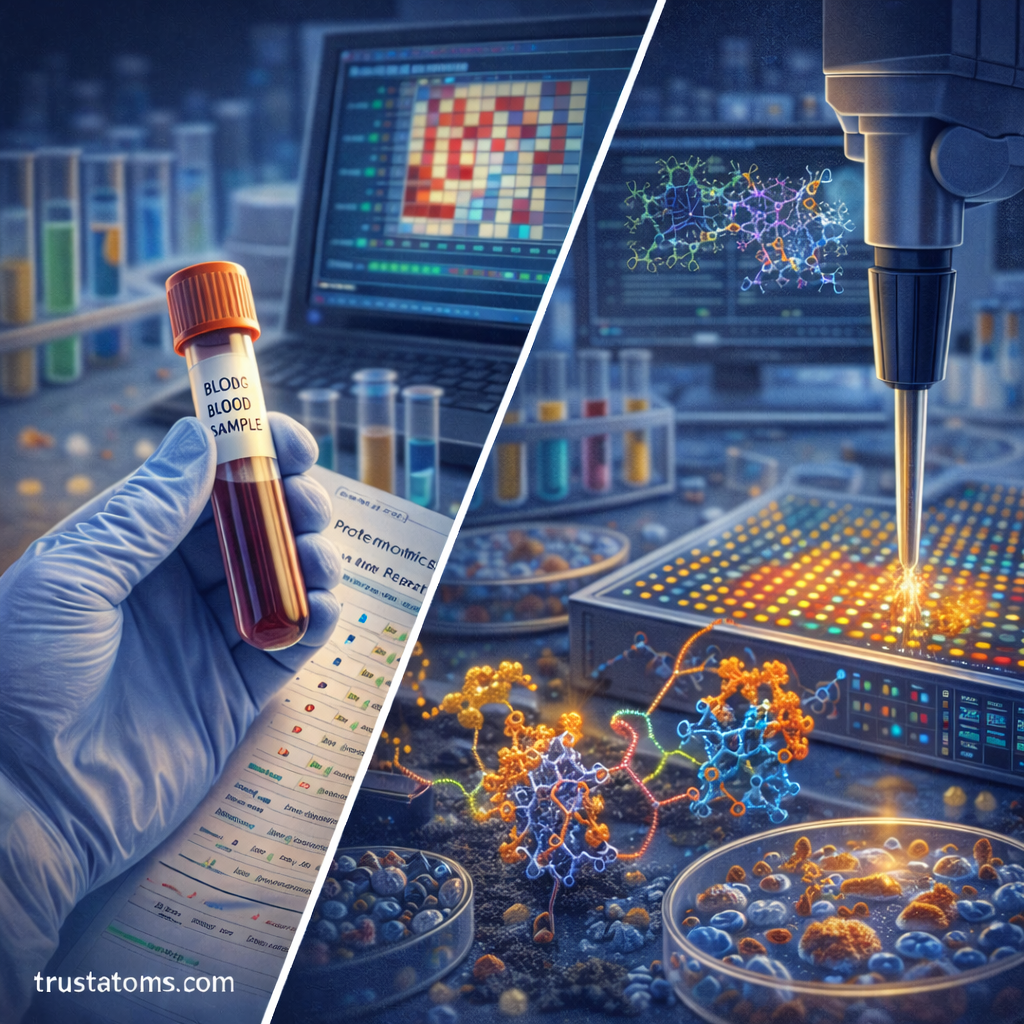
Proteomics has many important applications in biological research and medicine.
Understanding Cellular Processes
Proteomics helps scientists investigate how proteins control cellular functions.
Researchers study proteins involved in processes such as:
- Cell division
- Energy metabolism
- Cell signaling pathways
- Protein transport
This research helps explain how cells maintain stability and respond to environmental changes.
Disease Research
Proteomics plays an important role in studying diseases.
Changes in protein levels or structure can indicate disease processes.
Proteomics research helps scientists:
- Identify disease biomarkers
- Understand molecular mechanisms of illness
- Develop new diagnostic tools
This approach is widely used in cancer research, neurodegenerative diseases, and infectious diseases.
Drug Development
Proteomics helps pharmaceutical researchers identify potential drug targets.
By studying proteins involved in disease pathways, scientists can design drugs that specifically interact with those proteins.
This process improves the effectiveness and safety of new medicines.
Personalized Medicine
Proteomics may support personalized medicine by analyzing how individuals respond to diseases or treatments at the protein level.
Doctors may eventually use proteomic data to:
- Predict treatment responses
- Select optimal therapies
- Monitor disease progression
This approach could improve treatment outcomes for many conditions.
Advantages of Proteomics Research
Proteomics offers several advantages in studying biological systems.
Key benefits include:
- Direct analysis of functional molecules in cells
- Ability to study dynamic biological processes
- Identification of disease biomarkers
- Improved understanding of protein networks
These advantages make proteomics an essential tool in modern molecular biology.
Challenges in Proteomics
Despite its benefits, proteomics research also presents challenges.
Some difficulties include:
- Complexity of protein structures
- Large numbers of proteins in cells
- Rapid changes in protein expression
- High costs of advanced analytical equipment
Scientists continue developing improved technologies to overcome these challenges.
The Future of Proteomics
Proteomics research continues to expand as technologies improve.
Future developments may include:
- Faster protein identification methods
- Integration with genomics and transcriptomics data
- Improved disease diagnostics
- Advanced protein-based therapies
These advances will deepen our understanding of cellular biology and disease mechanisms.
Final Thoughts
Proteomics is a critical field in molecular biology that focuses on understanding proteins and their roles in cellular function. By studying how proteins interact, change, and regulate biological processes, scientists gain valuable insights into how cells operate and how diseases develop.
As proteomics technologies continue to evolve, they will play an increasingly important role in advancing medicine, biotechnology, and biological research.