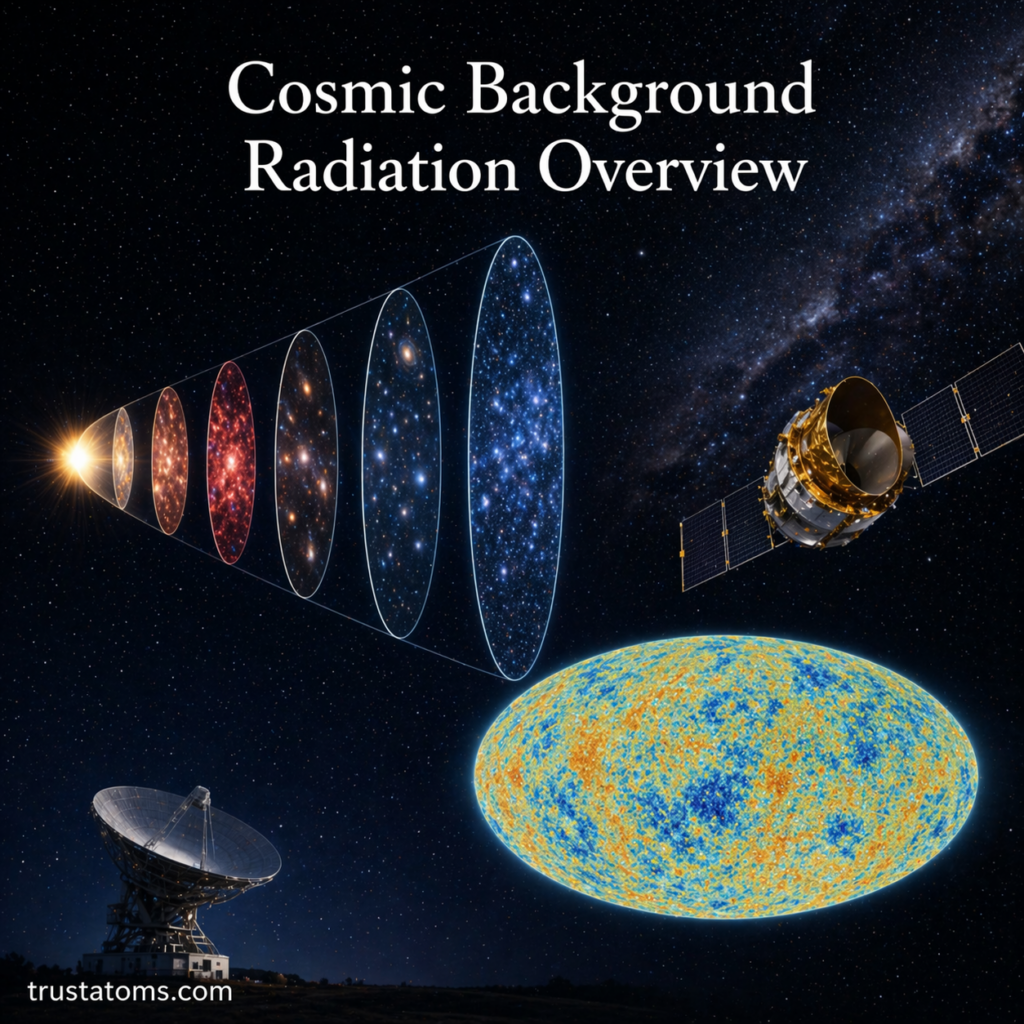
Cosmic background radiation is one of the most important discoveries in modern astronomy. It provides a snapshot of the early universe and offers strong evidence for how everything began.
Often referred to as the Cosmic Microwave Background (CMB), this faint radiation fills all of space and can be detected in every direction. It is essentially the leftover heat from the birth of the universe.
What Is Cosmic Background Radiation?
Cosmic background radiation is the afterglow of the Big Bang—the event that marked the beginning of the universe.
Key Characteristics
- Present everywhere in space
- Extremely faint but measurable
- Uniform in all directions (with slight variations)
- Exists in the microwave region of the electromagnetic spectrum
This radiation is not coming from a specific object. Instead, it is a background signal that surrounds us at all times.
The Origin of the Cosmic Microwave Background
To understand the CMB, we need to look back to the early universe.
The Early Universe
Shortly after the Big Bang:
- The universe was extremely hot and dense
- Matter and radiation were tightly coupled
- Light could not travel freely
As the universe expanded and cooled:
- Electrons and protons combined to form atoms
- Light was finally able to move freely through space
- This moment is known as recombination
The light released at that time is what we now detect as cosmic background radiation.
Why the CMB Is in the Microwave Range
Originally, this radiation was extremely hot and energetic.
Over billions of years:
- The universe expanded
- Wavelengths of light stretched
- Energy decreased
As a result, the radiation cooled and shifted into the microwave region of the spectrum.
Today, the CMB has a temperature of about 2.7 Kelvin, just above absolute zero.
How Cosmic Background Radiation Was Discovered
The discovery of the CMB was accidental but groundbreaking.
The Discovery
In 1965, two radio astronomers detected a persistent signal they couldn’t explain. No matter where they pointed their instrument, the noise remained.
After ruling out all other sources, they realized they had detected the cosmic microwave background.
Why It Was Important
- Provided strong evidence for the Big Bang theory
- Replaced competing models like the steady-state theory
- Opened a new field of observational cosmology
What the CMB Reveals About the Universe
Cosmic background radiation is more than just leftover energy—it’s a powerful tool for understanding the universe.
Information It Provides
- The age of the universe
- Its overall shape and geometry
- The distribution of matter and energy
- Early density fluctuations that led to galaxies
Tiny temperature variations in the CMB map show how matter was distributed in the early universe.
Temperature Fluctuations and Anisotropies
Although the CMB is nearly uniform, it contains small variations called anisotropies.
Why These Matter
- Represent slight differences in density in the early universe
- Act as “seeds” for galaxy formation
- Help scientists understand how structure developed over time
These fluctuations are incredibly small—just a few millionths of a degree—but they hold critical information.
How Astronomers Study the CMB
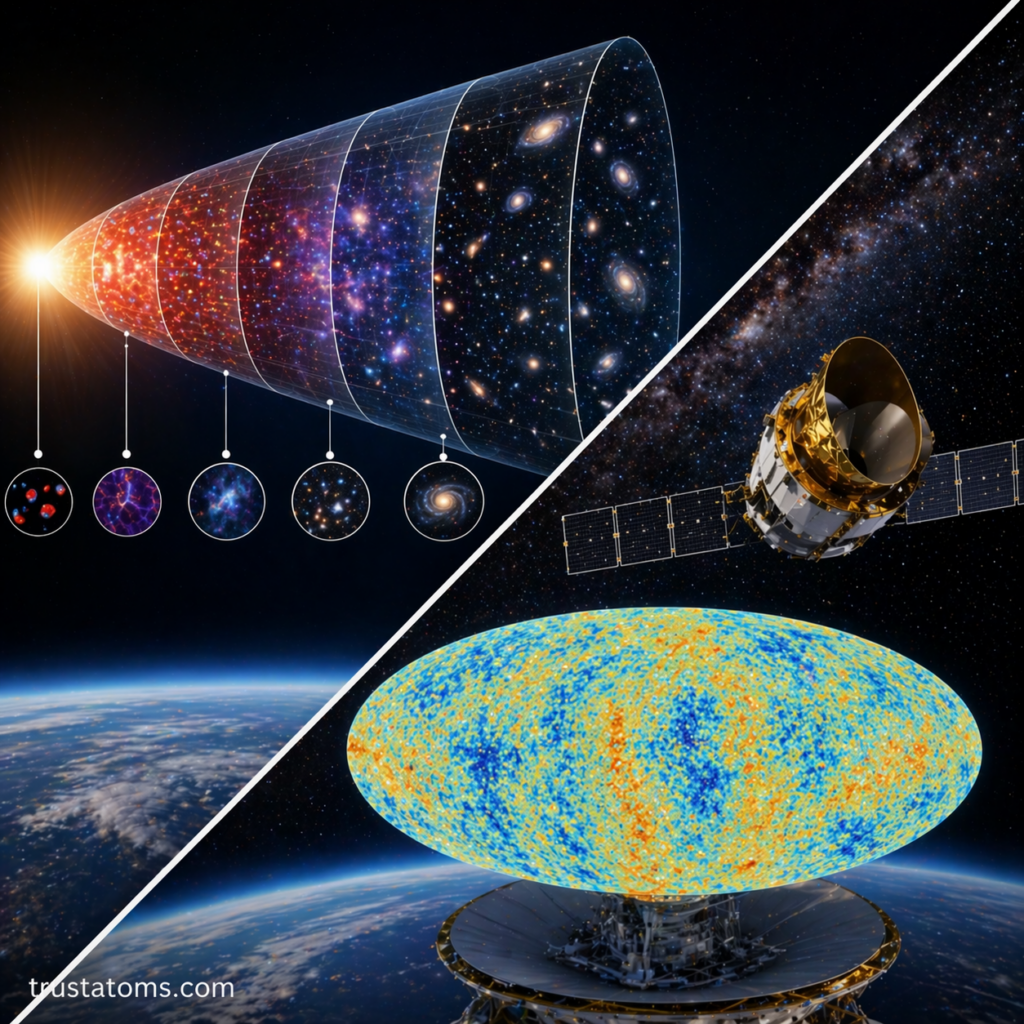
Modern technology allows scientists to map the CMB in great detail.
Tools and Methods
- Space-based observatories
- Microwave detectors
- Full-sky mapping techniques
These tools create detailed images showing temperature variations across the entire sky.
Cosmic Background Radiation and the Big Bang
The CMB is one of the strongest pieces of evidence supporting the Big Bang theory.
Why It Matters
- Predicted by early Big Bang models
- Matches observed data precisely
- Confirms the universe was once hot and dense
Without the discovery of the CMB, our understanding of the universe’s origin would be far less certain.
Common Misconceptions
There are a few misunderstandings about cosmic background radiation.
Clarifications
- It is not coming from a single direction
- It is not “noise” or interference
- It is not visible light
Instead, it is a uniform background signal that fills all space.
Why Cosmic Background Radiation Is Important
The CMB is essential for modern cosmology.
It helps scientists:
- Study the earliest moments of the universe
- Understand how galaxies formed
- Measure cosmic expansion
- Test theories about dark matter and dark energy
It serves as a kind of “fossil record” of the universe’s infancy.
The Future of CMB Research
Research into cosmic background radiation is ongoing.
Future Goals
- More precise measurements of temperature variations
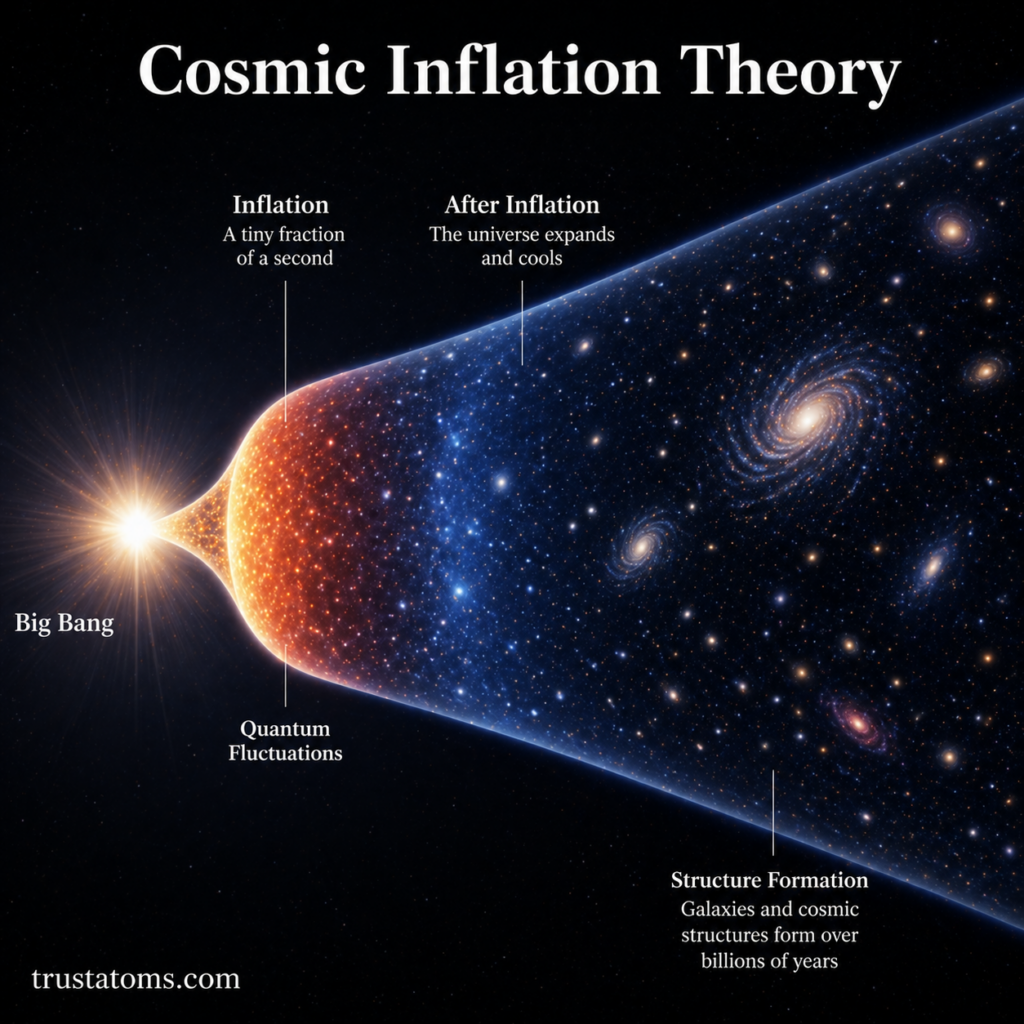
- Better understanding of early cosmic inflation
- Deeper insights into the structure of the universe
As technology improves, scientists will continue uncovering new details about the universe’s origins.
Final Thoughts
Cosmic background radiation offers a unique window into the past. It allows astronomers to look back billions of years to a time when the universe was just beginning to take shape.
By studying this faint signal, we gain a deeper understanding of where everything came from—and how the universe evolved into what we see today.