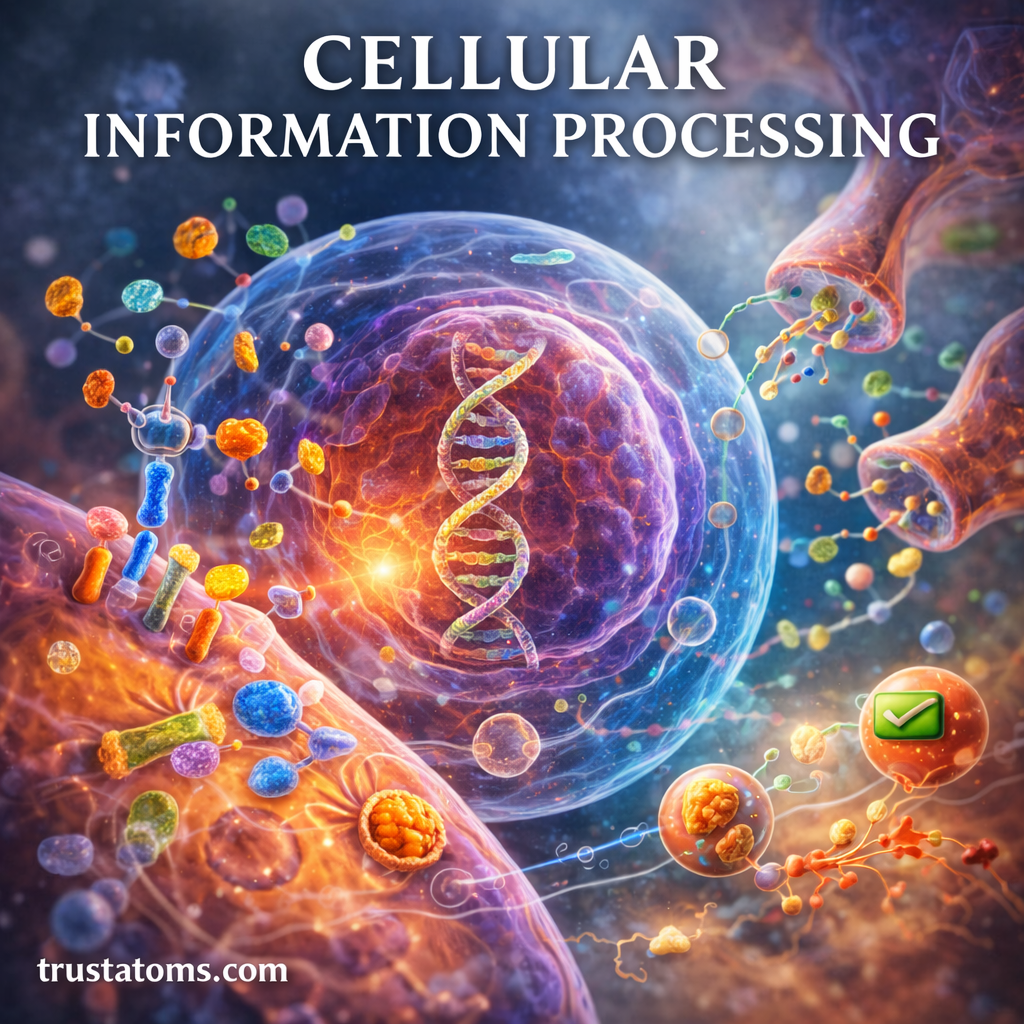
Living cells constantly receive, interpret, and respond to information from their environment. This ability—known as cellular information processing—allows cells to detect signals, make decisions, and coordinate biological functions necessary for survival.
From bacteria sensing nutrients to human immune cells responding to infection, cells rely on complex molecular systems that convert signals into actions. These systems operate through networks of receptors, signaling molecules, gene regulation mechanisms, and feedback loops.
Understanding cellular information processing helps scientists explain how organisms grow, adapt to environmental changes, and maintain internal balance.
What Is Cellular Information Processing?
Cellular information processing refers to the mechanisms cells use to detect signals, interpret them, and generate appropriate responses.
These signals can originate from:
- The external environment
- Neighboring cells
- Internal cellular conditions
- Chemical gradients
- Mechanical forces
Once detected, signals are converted into biochemical responses that regulate cellular activities such as metabolism, movement, growth, or gene expression.
In many ways, cells function like tiny information-processing systems—similar to computers—receiving inputs, processing data, and producing outputs.
The Three Stages of Cellular Information Processing
Most cellular signaling systems follow three general steps:
- Signal reception
- Signal transduction
- Cellular response
Each stage involves specialized molecules that work together to ensure accurate communication.
Signal Reception
Signal reception begins when a receptor molecule detects a signal, often called a ligand.
Common ligands include:
- Hormones
- Neurotransmitters
- Growth factors
- Nutrients
- Environmental chemicals
Receptors are usually located on the cell membrane, though some are found inside the cell.
When a ligand binds to its receptor, the receptor changes shape. This structural change activates the next stage of signaling.
Signal Transduction
Signal transduction refers to the series of molecular events that relay and amplify the signal inside the cell.
This stage often involves signaling cascades, where one molecule activates another in a chain reaction.
Key components of signal transduction include:
- Protein kinases
- Second messenger molecules
- G proteins
- Phosphorylation events
These cascades allow cells to amplify signals so that a small external stimulus can produce a large internal response.
Cellular Response
The final stage produces the functional outcome of the signal.
Possible cellular responses include:
- Activation or inhibition of genes
- Changes in enzyme activity
- Alterations in cell movement
- Release of hormones or chemicals
- Cell growth or division
The type of response depends on the cell type and the nature of the signal.
Signal Receptors and Detection Mechanisms
Cells use specialized receptors to detect specific signals. Each receptor is designed to recognize particular molecules.
Major receptor categories include:
Cell Surface Receptors
These receptors sit in the cell membrane and detect signals outside the cell.
Common examples include:
- G-protein coupled receptors (GPCRs)
- Receptor tyrosine kinases
- Ion channel receptors
When activated, these receptors trigger internal signaling pathways.
Intracellular Receptors
Some signals can pass through the cell membrane and bind receptors inside the cell.
Examples include:
- Steroid hormone receptors
- Thyroid hormone receptors
These receptors often directly influence gene expression in the nucleus.
Signal Amplification
One of the most powerful aspects of cellular information processing is signal amplification.
In signaling cascades, a single activated receptor can stimulate many downstream molecules.
For example:
- One receptor activates multiple G proteins
- Each G protein activates enzymes
- Enzymes generate second messengers
- Second messengers activate numerous proteins
This amplification allows cells to respond strongly even when signal molecules are scarce.
Second Messenger Systems
Second messengers are small molecules that carry signals inside the cell after receptor activation.
Common second messengers include:
- Cyclic AMP (cAMP)
- Calcium ions (Ca²⁺)
- Inositol triphosphate (IP3)
- Diacylglycerol (DAG)
These molecules rapidly spread signals throughout the cell and activate specific proteins that regulate cellular functions.
Second messenger systems are particularly important in processes like:
- Hormone signaling
- Muscle contraction
- Neuronal communication
Gene Regulation and Information Processing
Many cellular signals ultimately affect gene expression.
When signaling pathways reach the nucleus, they activate transcription factors that regulate genes.
These changes can lead to:
- Production of new proteins
- Suppression of certain genes
- Long-term changes in cellular behavior
Gene regulation allows cells to adjust their internal machinery based on environmental conditions.
For example, immune cells activate specific genes when pathogens are detected.
Feedback Loops in Cellular Signaling
To maintain stability and prevent overactivation, cellular signaling networks use feedback mechanisms.
Negative Feedback
Negative feedback slows or stops signaling once the response has been achieved.
Examples include:
- Hormone systems regulating metabolism
- Enzyme pathways controlling biochemical reactions
Negative feedback helps maintain homeostasis, the stable internal conditions required for life.
Positive Feedback
Positive feedback amplifies signals and reinforces responses.
This type of regulation occurs in processes such as:
- Blood clotting
- Cell differentiation
- Certain immune responses
Although powerful, positive feedback systems are usually tightly controlled to prevent runaway effects.
Cellular Communication Between Cells
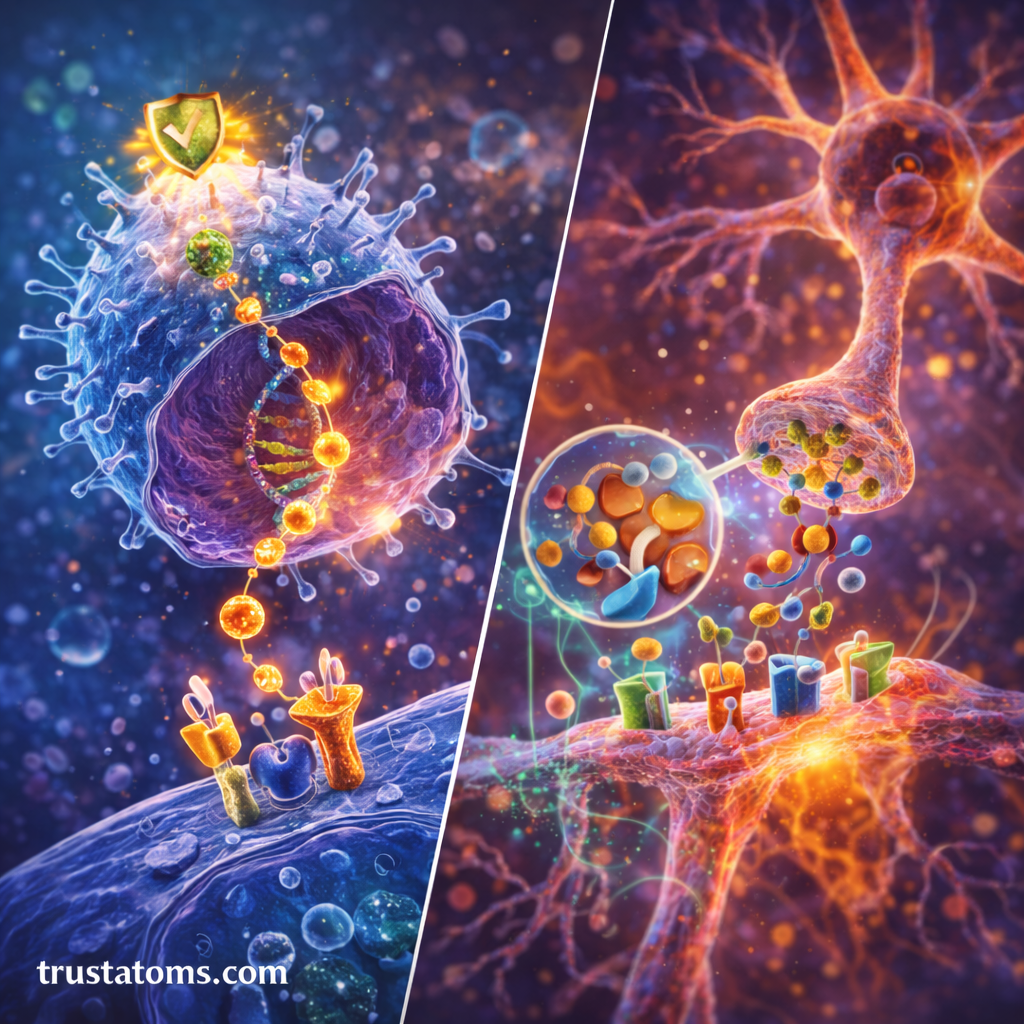
Cells rarely act alone. Multicellular organisms rely on cell-to-cell communication to coordinate complex biological processes.
Important communication methods include:
Paracrine Signaling
Cells release molecules that affect nearby cells.
This form of signaling is common in:
- Immune responses
- Tissue repair
- Developmental biology
Endocrine Signaling
Endocrine signaling uses hormones released into the bloodstream to reach distant target cells.
Examples include:
- Insulin regulating blood sugar
- Adrenaline preparing the body for stress
Synaptic Signaling
Neurons communicate through synapses using neurotransmitters.
This process allows rapid communication across the nervous system.
Information Processing in Microorganisms
Even single-celled organisms possess sophisticated information-processing systems.
Bacteria, for example, use chemical sensing systems to navigate their environment.
Chemotaxis
Chemotaxis allows bacteria to move toward beneficial chemicals and away from harmful ones.
This process involves:
- Surface receptors detecting chemical gradients
- Signaling proteins controlling flagella movement
- Continuous feedback to adjust direction
Through chemotaxis, bacteria can efficiently locate nutrients.
Computational Principles of Cellular Networks
Scientists increasingly view cellular signaling networks as biological information-processing systems.
These networks share characteristics with computational systems, including:
- Signal detection
- Data integration
- Noise filtering
- Decision-making processes
Cells integrate multiple signals simultaneously and determine the most appropriate response.
This complexity allows cells to adapt to constantly changing environments.
Applications in Medicine and Biotechnology
Understanding cellular information processing has important applications in several fields.
Medicine
Many diseases occur when signaling pathways malfunction.
Examples include:
- Cancer caused by uncontrolled growth signals
- Diabetes involving impaired insulin signaling
- Autoimmune diseases triggered by abnormal immune signaling
Targeted therapies often focus on blocking or modifying signaling pathways.
Drug Development
Many pharmaceutical drugs are designed to interact with cellular receptors.
Examples include:
- Antihistamines blocking allergy signals
- Beta blockers regulating heart signaling pathways
- Cancer drugs targeting abnormal signaling proteins
Synthetic Biology
Scientists are now designing artificial genetic circuits that mimic cellular information processing.
These engineered systems may one day help create:
- Smart drug delivery systems
- Biosensors detecting toxins
- Programmable therapeutic cells
Key Takeaways
Cellular information processing allows cells to detect signals, interpret environmental changes, and generate appropriate responses.
Key components include:
- Signal receptors that detect external molecules
- Transduction pathways that relay information
- Second messengers that amplify signals
- Gene regulation mechanisms that control cellular behavior
- Feedback loops that maintain stability
Together, these systems enable cells to operate as dynamic biological information processors capable of responding to complex environments.
Understanding these mechanisms continues to advance fields such as medicine, biotechnology, and systems biology.