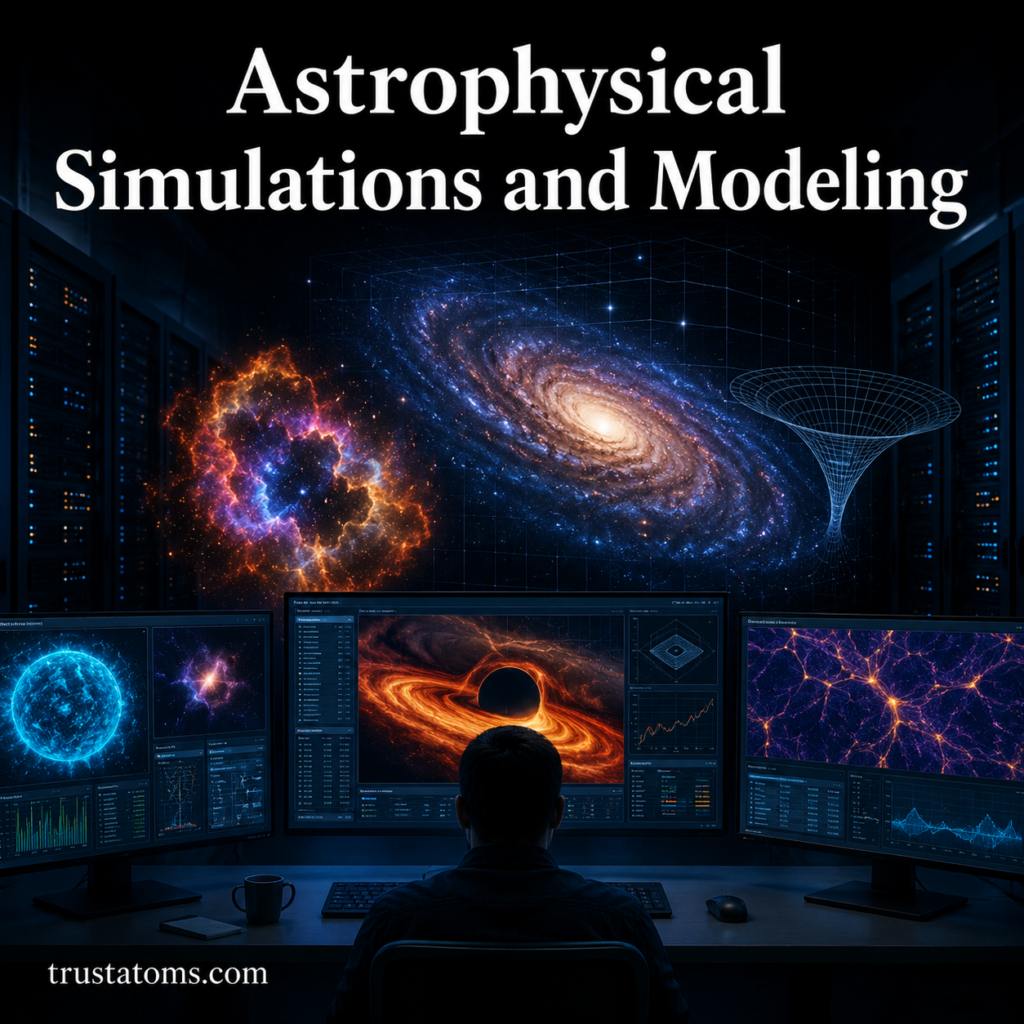
Modern astronomy studies objects and events occurring across enormous distances, extreme temperatures, and timescales far beyond direct human experience. Because scientists cannot physically manipulate stars, galaxies, or black holes in laboratories, researchers often rely on astrophysical simulations and computational modeling to better understand how the universe works.
Astrophysical simulations use mathematics, physics, and advanced computing to recreate cosmic processes digitally. These models help scientists test theories, predict behavior, and interpret astronomical observations.
From galaxy formation and black hole collisions to planetary climates and supernova explosions, simulations have become essential tools in modern astrophysics.
This guide explores how astrophysical simulations work, what scientists model, and why computational astronomy plays such an important role in understanding the universe.
What Are Astrophysical Simulations?
Astrophysical simulations are computer-generated models designed to represent physical processes occurring in space.
These simulations combine:
- Physics equations
- Observational data
- Mathematical algorithms
- Computational techniques
Scientists use simulations to study systems that are:
- Too large
- Too distant
- Too energetic
- Too slow
- Too dangerous
to investigate directly.
Simulations allow researchers to explore how cosmic systems may evolve under different conditions.
Why Simulations Matter in Astronomy
Many astrophysical events occur over millions or billions of years.
Examples include:
- Galaxy evolution
- Star formation
- Planetary system development
- Black hole mergers
Because humans cannot directly observe these entire processes in real time, simulations help reconstruct likely scenarios.
Models also help scientists:
- Test theoretical predictions
- Compare with telescope observations
- Investigate hidden processes
- Predict future cosmic behavior
- Analyze extreme environments
Computational simulations bridge the gap between theory and observation.
How Astrophysical Simulations Work
Most simulations begin with known physical laws.
These may include:
- Gravity
- Fluid dynamics
- Electromagnetism
- Nuclear physics
- Thermodynamics
- Relativity
Scientists input:
- Initial conditions
- Physical parameters
- Environmental variables
The computer then calculates how the system changes over time.
Many simulations divide space into:
- Grids
- Cells
- Particles
- Mathematical meshes
The computer repeatedly updates conditions step-by-step to model cosmic evolution.
Types of Astrophysical Simulations
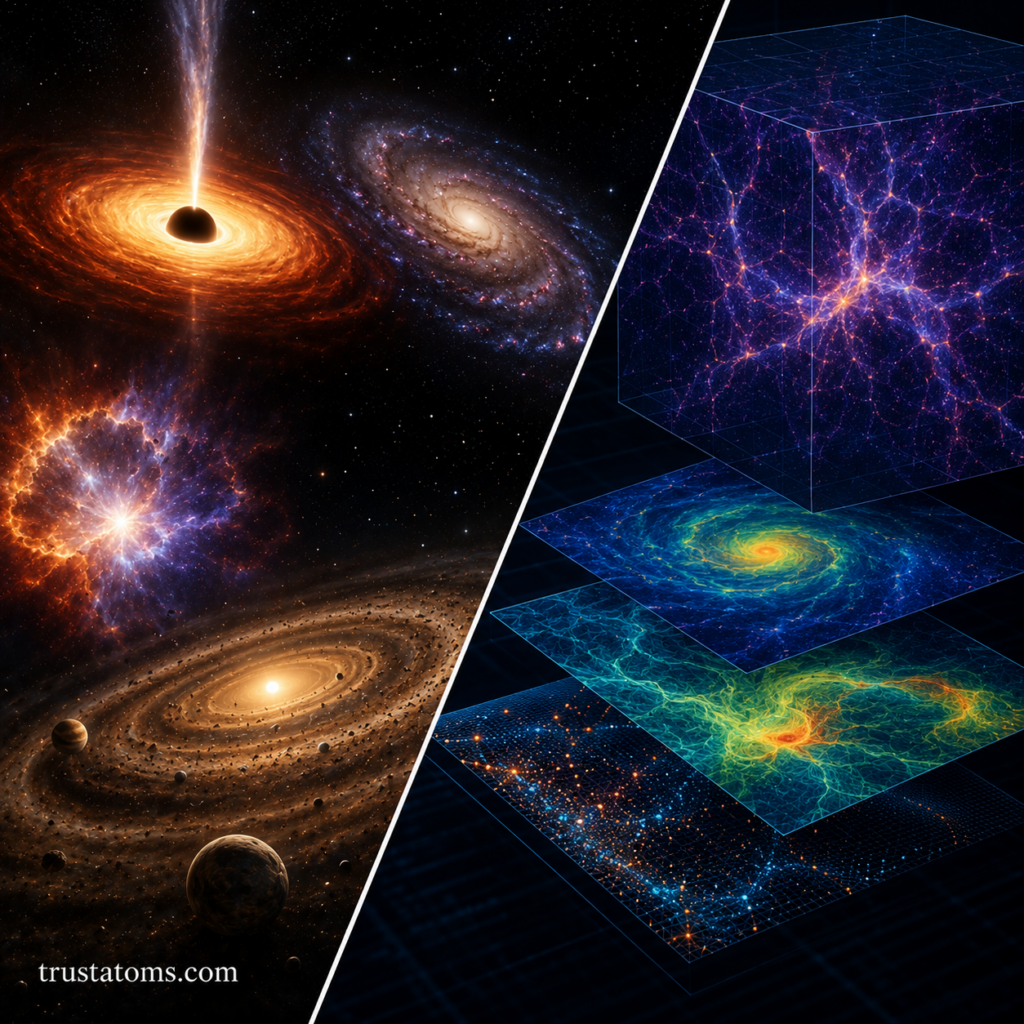
Astronomy uses many different kinds of simulations depending on the object or process being studied.
N-Body Simulations
N-body simulations model gravitational interactions between multiple objects.
These simulations help study:
- Galaxy formation
- Star clusters
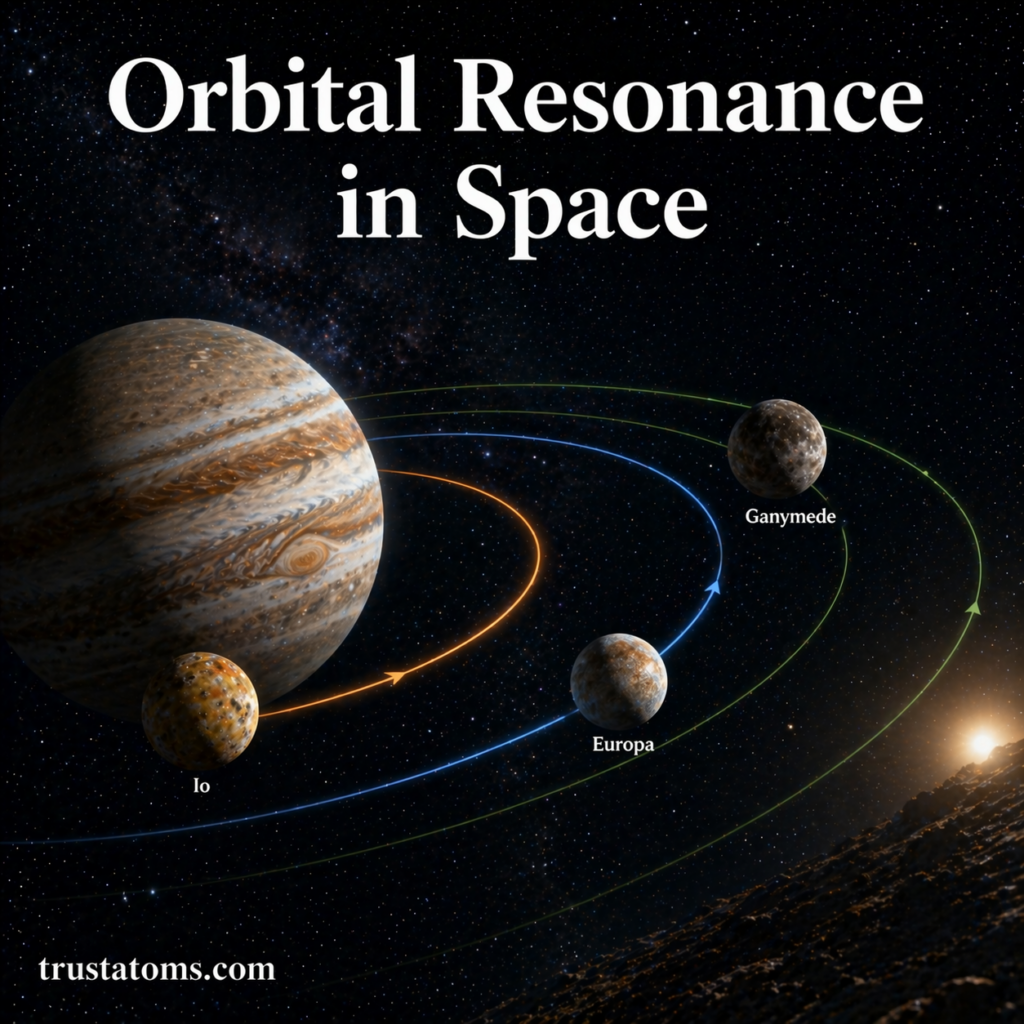
- Planetary orbits
- Dark matter structure
Each object influences the motion of others through gravity.
Large N-body simulations may involve millions or billions of particles.
Hydrodynamic Simulations
Hydrodynamic models study the motion of gases and fluids in space.
They are important for understanding:
- Nebulae
- Star formation clouds
- Supernova remnants
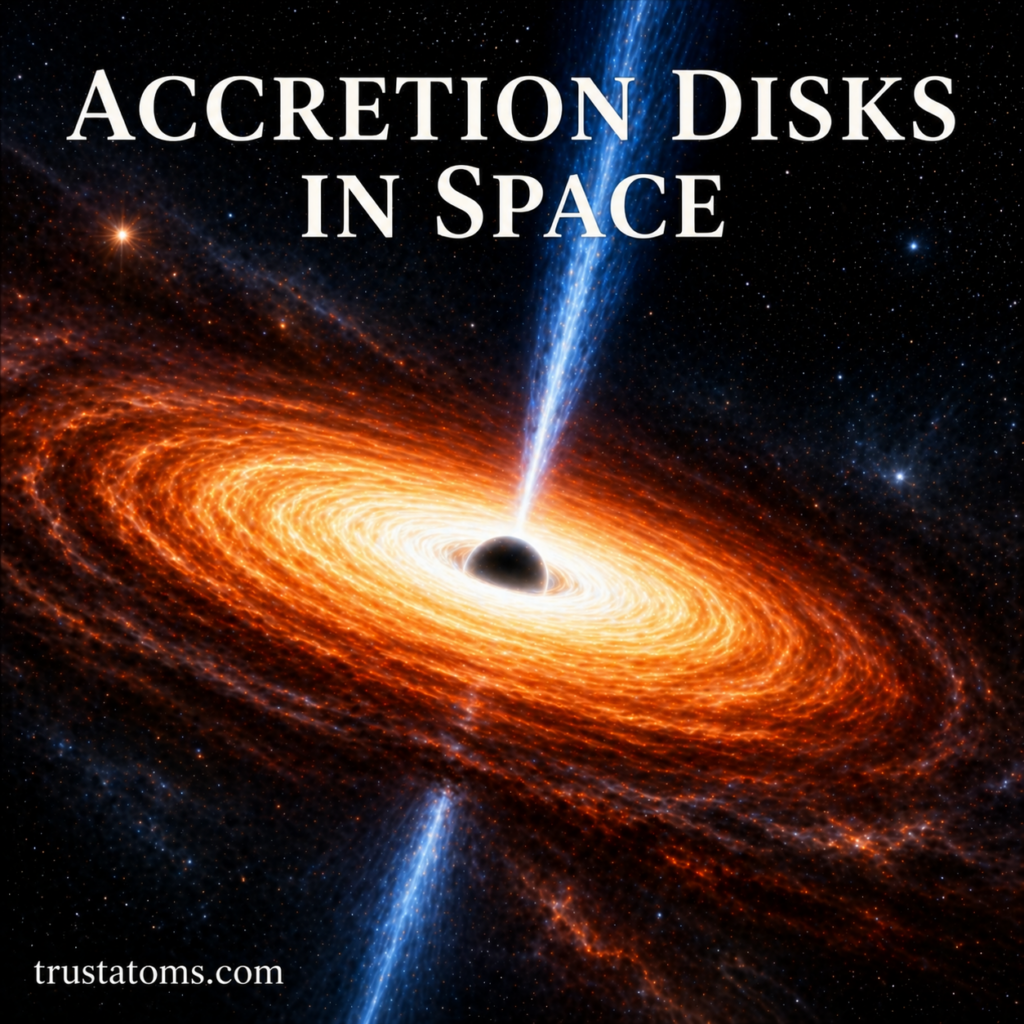
- Accretion disks
- Galactic gas flows
These simulations often include:
- Pressure
- Temperature
- Turbulence
- Shock waves
Hydrodynamics is essential because much of the visible universe contains plasma and gas.
Magnetohydrodynamic (MHD) Simulations
MHD simulations combine:
- Fluid dynamics
- Magnetic fields
- Plasma physics
These models are used to study:
- Solar flares
- Stellar atmospheres
- Black hole jets
- Magnetospheres
- Interstellar plasma
Magnetic fields strongly affect the behavior of charged particles throughout space.
Cosmological Simulations
Cosmological simulations model the large-scale structure of the universe.
Researchers use them to investigate:
- Galaxy distribution
- Dark matter behavior
- Cosmic web formation
- Expansion of the universe
These simulations may cover regions spanning billions of light-years.
Famous cosmological projects include:
- Millennium Simulation
- Illustris
- Eagle Simulation
Such models help scientists compare theoretical predictions with observed galaxy surveys.
Star Formation Simulations
Stars form within giant molecular clouds composed of gas and dust.
Simulations help scientists study:
- Cloud collapse
- Fragmentation
- Protostar development
- Stellar feedback
- Turbulence effects
Star formation models are extremely complex because many physical processes occur simultaneously.
Researchers investigate how:
- Gravity compresses material
- Magnetic fields resist collapse
- Radiation influences nearby gas
These simulations improve understanding of stellar evolution.
Planetary System Modeling
Scientists also simulate the formation and evolution of planetary systems.
These models examine:
- Protoplanetary disks
- Planet migration
- Orbital stability
- Asteroid collisions
- Moon formation
Simulations help explain how:
- Rocky planets form
- Gas giants develop
- Planetary orbits change over time
Researchers compare simulations with observed exoplanet systems.
Black Hole Simulations
Black holes create some of the most extreme environments in astrophysics.
Simulations help model:
- Accretion disks
- Gravitational lensing
- Relativistic jets
- Event horizon behavior
- Black hole mergers
General relativity plays a major role in these models.
Black hole merger simulations became especially important after gravitational wave detections by observatories such as LIGO.
Supernova Simulations
Supernova explosions involve highly energetic physical processes.
Scientists simulate:
- Stellar core collapse
- Shock wave formation
- Neutrino interactions
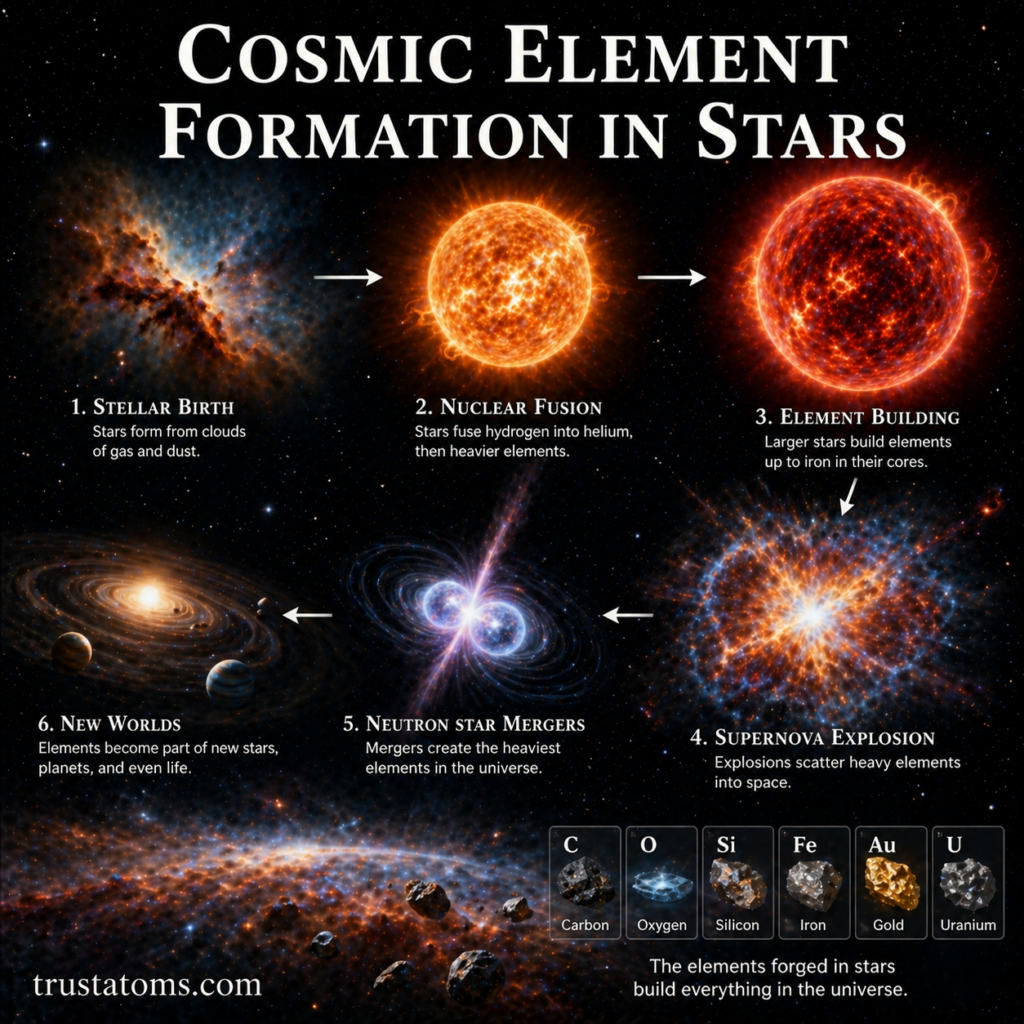
- Heavy element production
- Expanding debris clouds
These models help researchers understand:
- Chemical enrichment of galaxies
- Formation of neutron stars
- Black hole creation
Supernova simulations require enormous computing power because many variables interact simultaneously.
Climate and Habitability Modeling
Planetary climate simulations are used in:
- Earth science
- Exoplanet research
- Habitability studies
Researchers model:
- Atmospheric circulation
- Greenhouse effects
- Ocean interactions
- Cloud systems
- Radiation balance
These models help estimate whether certain exoplanets may support stable surface conditions.
Dark Matter Simulations
Dark matter cannot be observed directly through ordinary light.
Scientists infer its presence through gravitational effects.
Simulations help researchers investigate:
- Dark matter halos
- Galaxy clustering
- Cosmic structure formation
- Gravitational lensing
Many cosmological models depend heavily on dark matter simulations.
Computational Challenges
Astrophysical simulations are computationally demanding.
Challenges include:
- Massive data requirements
- Complex equations
- Long timescales
- High spatial resolution
- Numerical instability
Researchers often use:
- Supercomputers
- Parallel processing
- Artificial intelligence tools
- Specialized algorithms
Large simulations may require weeks or months of computation.
Supercomputers in Astronomy
Many modern simulations rely on powerful supercomputers.
These systems process enormous calculations simultaneously.
Supercomputers help model:
- Entire galaxies
- Cosmic structure evolution
- Black hole dynamics
- Plasma interactions
As computing power increases, simulations become:
- More detailed
- More realistic
- Higher resolution
Future computing advances may significantly expand astrophysical modeling capabilities.
Simulations and Telescope Observations
Simulations are closely connected to observational astronomy.
Researchers compare simulated results with:
- Telescope images
- Spectroscopy data
- Gravitational wave signals
- Cosmic microwave background observations
If simulations match observations, confidence in the models increases.
If they differ, scientists may:
- Refine theories
- Adjust parameters
- Reconsider assumptions
This process helps improve understanding of cosmic phenomena.
Artificial Intelligence in Astrophysics
Artificial intelligence and machine learning are increasingly used in simulations.
AI assists with:
- Data analysis
- Pattern recognition
- Simulation optimization
- Galaxy classification
- Predictive modeling
Machine learning can help researchers process enormous astronomical datasets more efficiently.
AI may become even more important as observatories generate larger volumes of data.
Limitations of Astrophysical Models
Despite their usefulness, simulations have limitations.
Models depend on:
- Available data
- Computational limits
- Simplifying assumptions
- Resolution constraints
Some processes remain poorly understood or difficult to model accurately.
Simulations therefore represent approximations rather than perfect recreations of reality.
Scientists continuously refine models as new observations become available.
Future of Astrophysical Simulations
The future of computational astronomy is rapidly advancing.
Upcoming developments may include:
- More realistic galaxy simulations
- Improved black hole modeling
- Better exoplanet climate analysis
- Advanced plasma simulations
- Quantum computing applications
Future observatories and supercomputers may dramatically improve astrophysical modeling over the coming decades.
Why Astrophysical Simulations Matter
Simulations allow scientists to investigate questions that cannot be answered through direct experimentation alone.
They help researchers:
- Explore cosmic evolution
- Understand hidden physical processes
- Predict astronomical behavior
- Test theoretical ideas
- Interpret observational data
Without simulations, many areas of modern astrophysics would remain difficult to study in detail.
Computational modeling has become one of the foundational tools of astronomy.
Final Thoughts
Astrophysical simulations and modeling have transformed how scientists study the universe. By combining physics, mathematics, and advanced computing, researchers can recreate complex cosmic processes ranging from star formation to galaxy evolution and black hole mergers.
These simulations provide valuable insight into environments that are too distant, extreme, or long-lasting to observe directly in full.
As computational technology continues improving, astrophysical models will likely become even more detailed and accurate, helping scientists uncover deeper understanding of the cosmos and its many mysteries.