Magnets are commonly associated with permanent materials such as iron magnets on refrigerators. However, some magnets only produce magnetic fields when electricity flows through them. These are known as electromagnets.
Electromagnets are an essential part of modern technology. They power motors, enable data storage, operate industrial machines, and even help doctors create detailed medical images. Unlike permanent magnets, electromagnets can be turned on or off simply by controlling the flow of electricity.
Understanding electromagnets helps explain how electricity and magnetism are connected and how many everyday technologies work.
What Is an Electromagnet?
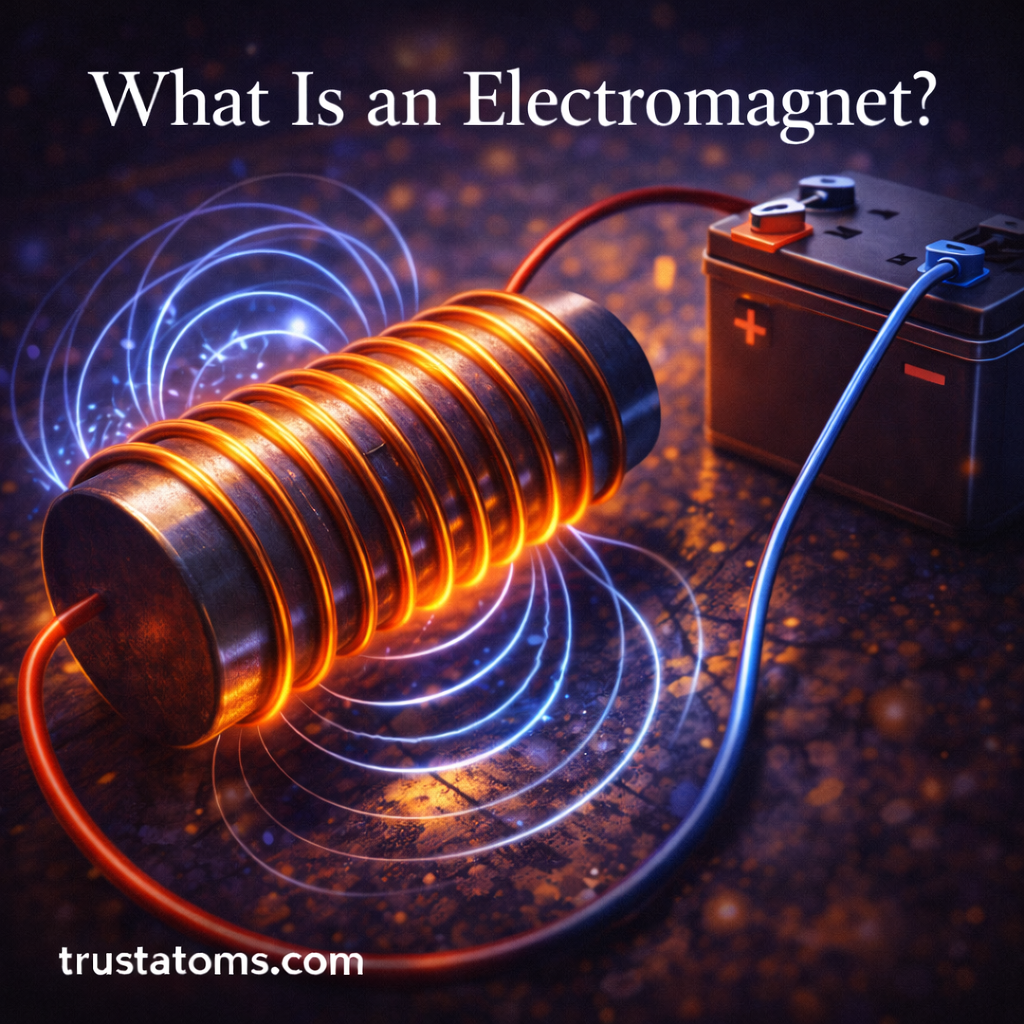
An electromagnet is a magnet created by an electric current flowing through a conductor, typically a wire.
When electricity moves through the wire, it generates a magnetic field around it. If the wire is wrapped into a coil and combined with a magnetic material such as iron, the magnetic field becomes much stronger.
Key features of electromagnets include:
- They produce magnetism using electric current
- Their strength can be controlled
- They can be turned on or off
- They can be made stronger or weaker by adjusting the current
Because of these properties, electromagnets are extremely useful in engineering and electronics.
How Electromagnets Work
Electromagnets operate based on the relationship between electricity and magnetism, a field of physics known as electromagnetism.
When an electric current flows through a wire:
- The moving electric charges create a magnetic field around the wire.
- Wrapping the wire into a coil concentrates the magnetic field.
- Placing an iron core inside the coil strengthens the magnetic effect.
The iron core becomes temporarily magnetized when the current flows through the wire.
When the electric current stops, the magnetic field disappears.
This ability to control magnetism is what makes electromagnets so useful.
Parts of a Simple Electromagnet
A basic electromagnet typically contains three main components.
1. Power Source
The power source provides electrical energy. Examples include:
- Batteries
- Power supplies
- Electrical circuits
Without electricity, the electromagnet will not produce a magnetic field.
2. Coiled Wire (Solenoid)
The wire is usually wrapped into a coil, called a solenoid.
Coiling the wire increases the strength of the magnetic field because the magnetic fields from each loop combine together.
The more loops in the coil, the stronger the magnetic field can become.
3. Magnetic Core
A magnetic material—usually iron—is placed inside the coil.
The core strengthens the magnetic field because iron atoms align with the field produced by the current.
Common core materials include:
- Soft iron
- Steel
- Ferromagnetic alloys
What Affects the Strength of an Electromagnet?
Several factors influence how strong an electromagnet becomes.
Electric Current
Increasing the electric current increases the magnetic field strength.
More moving charges create a stronger magnetic effect.
Number of Wire Loops
More loops in the coil produce stronger magnetic fields because the magnetic effects add together.
Core Material
Using a ferromagnetic core such as iron greatly increases the magnet’s strength.
Without a core, the electromagnet will still work, but it will be much weaker.
Size of the Coil
Larger coils can generate larger magnetic fields depending on their design and the amount of current supplied.
Electromagnets vs Permanent Magnets
Electromagnets and permanent magnets both create magnetic fields, but they behave differently.
Electromagnets
- Require electricity to operate
- Can be turned on and off
- Strength can be adjusted
- Often used in machines and electronics
Permanent Magnets
- Do not require electricity
- Produce constant magnetic fields
- Cannot easily change strength
- Used in simple applications like refrigerator magnets
Because electromagnets are controllable, they are more versatile for technological uses.
Real-World Uses of Electromagnets

Electromagnets are found in many devices and systems used in daily life.
Electric Motors
Electric motors convert electrical energy into mechanical motion using electromagnets.
They are used in:
- Fans
- Washing machines
- Electric vehicles
- Power tools
Generators
Generators work in the opposite way of motors. They use magnetic fields and motion to produce electricity.
Electromagnets are essential components in many generators.
Magnetic Cranes
Industrial cranes often use powerful electromagnets to lift heavy metal objects.
Examples include:
- Scrap metal yards
- Recycling centers
- Manufacturing plants
When the electricity turns off, the metal objects are released.
Relays and Switches
Electromagnets are used in electrical switches called relays.
Relays allow small electrical signals to control larger electrical systems.
They are commonly used in:
- Automotive electronics
- Industrial control systems
- Power distribution networks
MRI Machines
Medical imaging devices such as Magnetic Resonance Imaging (MRI) machines rely on extremely powerful electromagnets.
These machines create strong magnetic fields to produce detailed images of the human body.
Electromagnets in Scientific Research
Electromagnets are also essential in scientific experiments and advanced technologies.
Scientists use them in:
- Particle accelerators
- Magnetic levitation trains
- Plasma confinement in fusion research
- Advanced laboratory instruments
Because electromagnets can generate extremely strong magnetic fields, they are useful for studying the behavior of matter and energy.
Why Electromagnets Matter
Electromagnets demonstrate one of the most important principles in physics: the connection between electricity and magnetism.
This connection forms the basis of electromagnetism, one of the four fundamental forces of nature.
Electromagnets allow engineers to:
- Control magnetic forces
- Convert electrical energy into motion
- Design complex electrical systems
- Develop powerful medical and industrial technologies
Without electromagnets, many modern devices would not exist.
Final Thoughts
An electromagnet is a magnet created by the flow of electric current through a wire. By using coils of wire and magnetic cores, electromagnets can produce strong magnetic fields that can be switched on, off, or adjusted as needed.
These controllable magnetic fields make electromagnets essential in countless technologies, including motors, generators, medical imaging devices, and industrial machines. Understanding electromagnets helps reveal how electricity and magnetism work together to power much of the modern world.