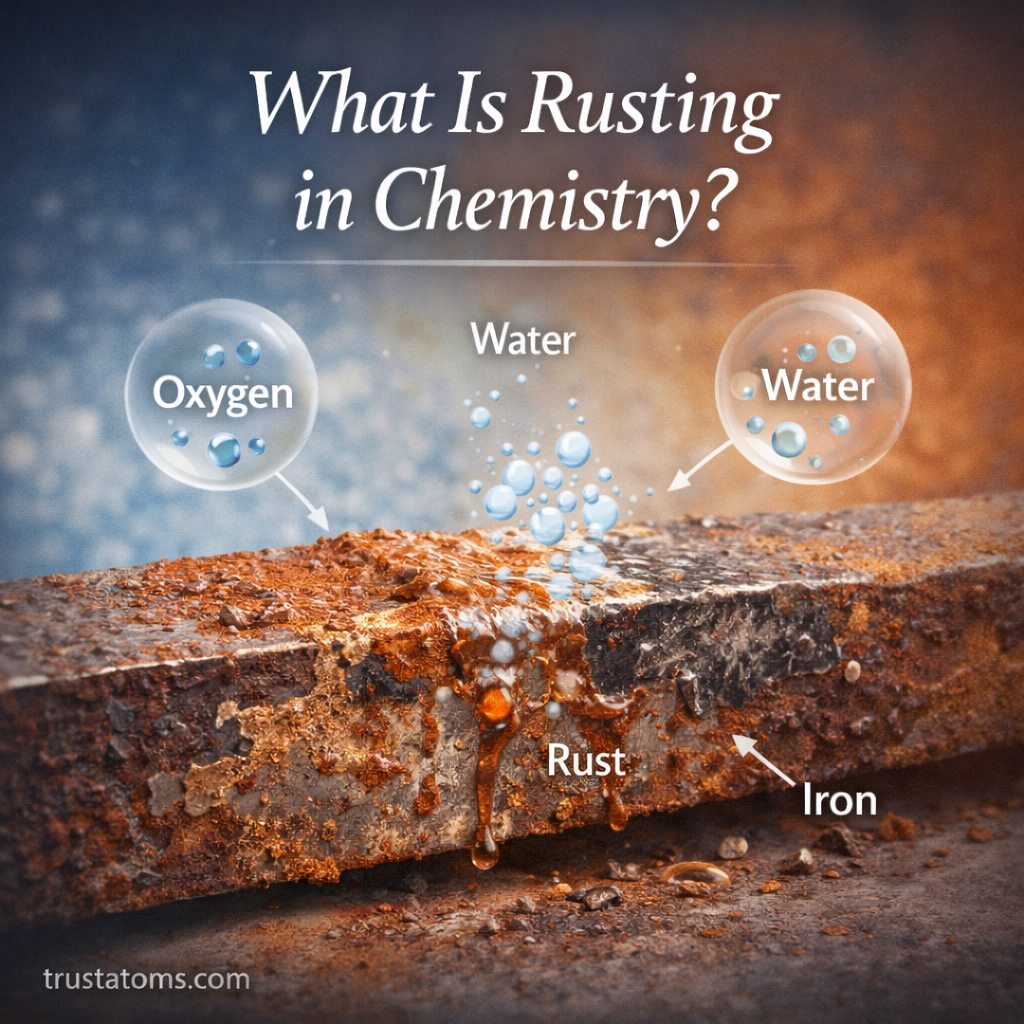
Rusting is a common chemical process that affects iron and materials made from iron, such as steel. It occurs when iron reacts with oxygen and water in the environment, forming a reddish-brown compound known as rust.
In chemistry, rusting is considered a type of corrosion, which refers to the gradual destruction of metals through chemical reactions with their surroundings. Rusting weakens metal structures over time and is responsible for significant damage to buildings, vehicles, tools, and infrastructure.
Understanding rusting helps explain why metals deteriorate and how scientists and engineers work to prevent corrosion.
Definition of Rusting
Rusting is the chemical reaction between iron, oxygen, and water that produces hydrated iron(III) oxide, commonly known as rust.
This reaction occurs when iron is exposed to moist air or water for extended periods.
Rust typically appears as:
- Reddish-brown flakes or powder
- Rough or crumbly deposits on metal surfaces
- Gradual surface deterioration
Over time, rust can spread deeper into the metal, weakening its structure.
The Chemical Process Behind Rusting
Rusting is an oxidation reaction, meaning iron loses electrons during the process.
The reaction involves several steps and occurs through an electrochemical process.
Step-by-Step Rusting Process
- Iron atoms on the surface lose electrons and form iron ions.
- Oxygen in the air reacts with water to form hydroxide ions.
- Iron ions combine with oxygen and hydroxide ions.
- Hydrated iron oxide forms, which we recognize as rust.
The overall process requires three key elements:
- Iron
- Oxygen
- Water
If any of these components are missing, rusting cannot occur.
Why Water Is Important for Rusting
Water plays a crucial role in the rusting process because it acts as an electrolyte, allowing ions and electrons to move between different parts of the metal surface.
Moisture allows tiny electrochemical reactions to occur across the metal.
This means rusting happens more quickly in environments with:
- High humidity
- Rain exposure
- Saltwater
- Condensation
Saltwater is particularly damaging because dissolved salts increase the conductivity of water, accelerating corrosion.
Everyday Examples of Rusting
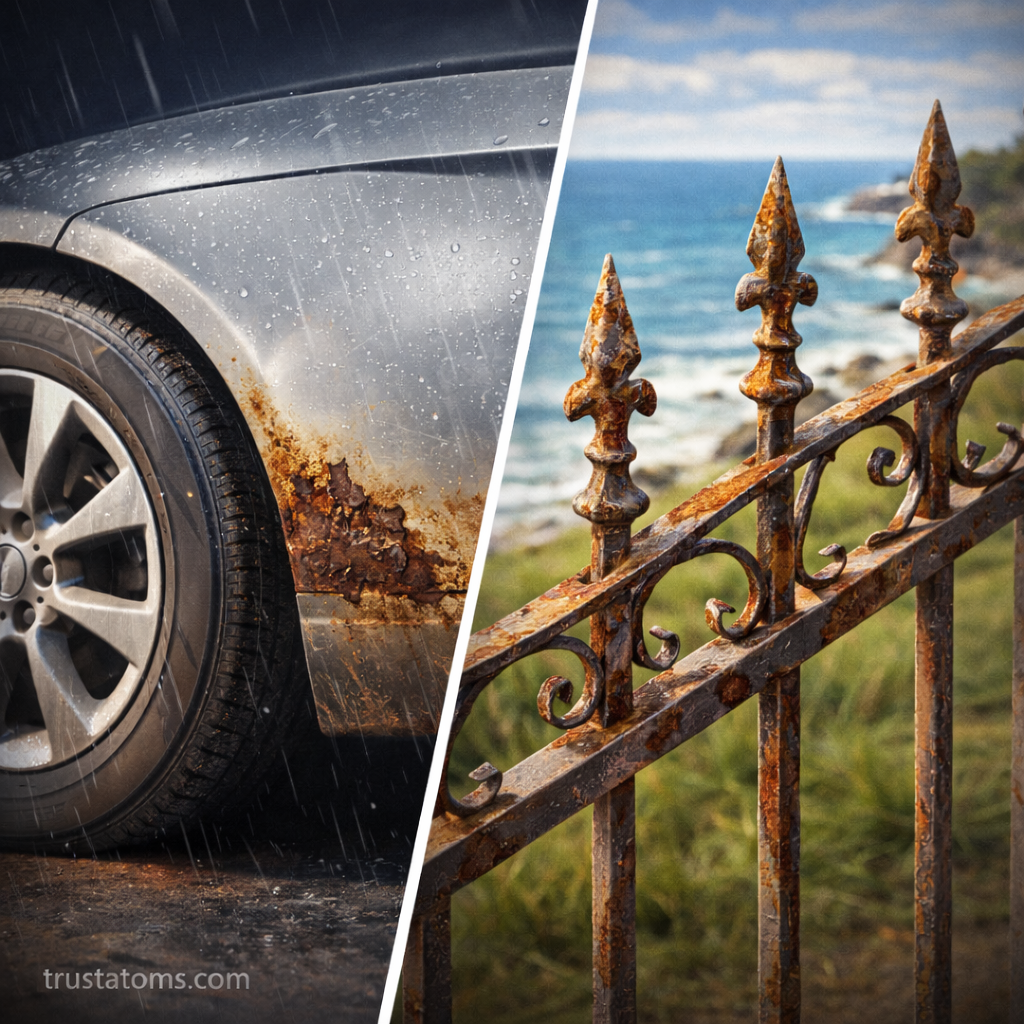
Rusting occurs frequently in everyday environments wherever iron is exposed to air and moisture.
Common examples include:
- Rust forming on outdoor metal fences
- Corrosion on cars exposed to rain or snow
- Rusty nails and screws
- Deteriorating bridges and metal infrastructure
- Rust spots on tools stored in damp environments
Even small amounts of moisture in the air can gradually cause rust over time.
Why Rust Weakens Metal
Unlike some forms of corrosion that create protective layers, rust does not protect the metal underneath.
Rust is:
- Porous
- Flaky
- Structurally weak
Because rust flakes off easily, fresh iron beneath the surface becomes exposed to oxygen and water, allowing corrosion to continue.
This is why rust can eventually cause metal structures to:
- Crack
- Lose strength
- Collapse if left untreated
Rust damage is a major concern in engineering and construction.
Factors That Speed Up Rusting
Several environmental factors can increase the rate of rust formation.
Moisture
More moisture means faster electrochemical reactions.
Salt
Salt increases the conductivity of water, accelerating corrosion.
Acids
Acidic environments speed up chemical reactions with metal.
Temperature
Higher temperatures often increase reaction rates.
Because of these factors, rusting tends to occur more quickly in:
- Coastal regions
- Industrial environments
- Humid climates
How Rusting Can Be Prevented
Scientists and engineers use several methods to protect iron from rust.
Painting or Coating
Paint or protective coatings block oxygen and water from reaching the metal surface.
Examples include:
- Paint on bridges
- Protective coatings on vehicles
- Sealants on metal tools
Galvanization
Galvanization involves coating iron or steel with zinc, which protects the metal from corrosion.
Even if the zinc layer is scratched, zinc corrodes first, protecting the iron underneath.
Oil and Grease
Lubricants create a barrier that prevents moisture from reaching the metal surface.
This method is commonly used for:
- Tools
- Machinery
- Metal parts in storage
Stainless Steel
Some metals are alloyed with chromium to create stainless steel, which forms a protective oxide layer that resists rust.
Rusting vs. Other Types of Corrosion
Rusting specifically refers to corrosion of iron and iron-containing metals.
Other metals corrode in different ways.
Examples include:
- Copper forming green patina
- Aluminum forming a protective oxide layer
- Silver tarnishing when exposed to sulfur compounds
These corrosion products may protect the metal underneath, unlike rust.
Why Rusting Matters in Science and Engineering
Rusting is not just a simple chemical reaction—it has major real-world implications.
Globally, corrosion causes billions of dollars in damage every year.
Engineers must carefully design materials and protective coatings to prevent rust in structures such as:
- Bridges
- Ships
- Pipelines
- Vehicles
- Industrial machinery
Understanding rusting allows scientists to develop better corrosion-resistant materials and improve the durability of metal infrastructure.
Final Thoughts
Rusting is a chemical reaction in which iron reacts with oxygen and water to form hydrated iron oxide. This process gradually weakens metal and is one of the most common forms of corrosion found in everyday life.
Because rust does not protect the metal beneath it, corrosion can continue until the structure becomes damaged or unsafe.
By understanding how rust forms and what conditions accelerate it, scientists and engineers can design better materials, coatings, and maintenance strategies to protect metal structures from corrosion.