The human body constantly receives information from the environment and from within itself. Whether feeling heat from a stove, hearing a sound, or sensing body position while walking, the nervous system relies on specialized cells called sensory neurons to detect and transmit these signals.
Sensory neurons act as the body’s detection system. They convert physical or chemical stimuli into electrical signals that travel to the brain and spinal cord. These signals allow the nervous system to interpret what is happening around and inside the body.
Without sensory neurons, the brain would have no information about temperature, pressure, light, sound, or pain. These cells are essential for awareness, coordination, reflexes, and survival.
What Are Sensory Neurons?
Sensory neurons are specialized nerve cells responsible for detecting stimuli and sending that information to the central nervous system (CNS).
They are sometimes called afferent neurons, meaning they carry signals toward the brain and spinal cord.
Their primary roles include:
- Detecting environmental stimuli
- Monitoring internal body conditions
- Converting stimuli into electrical nerve impulses
- Sending signals to the brain for interpretation
These neurons form the first step in the nervous system’s communication pathway.
How Sensory Neurons Work
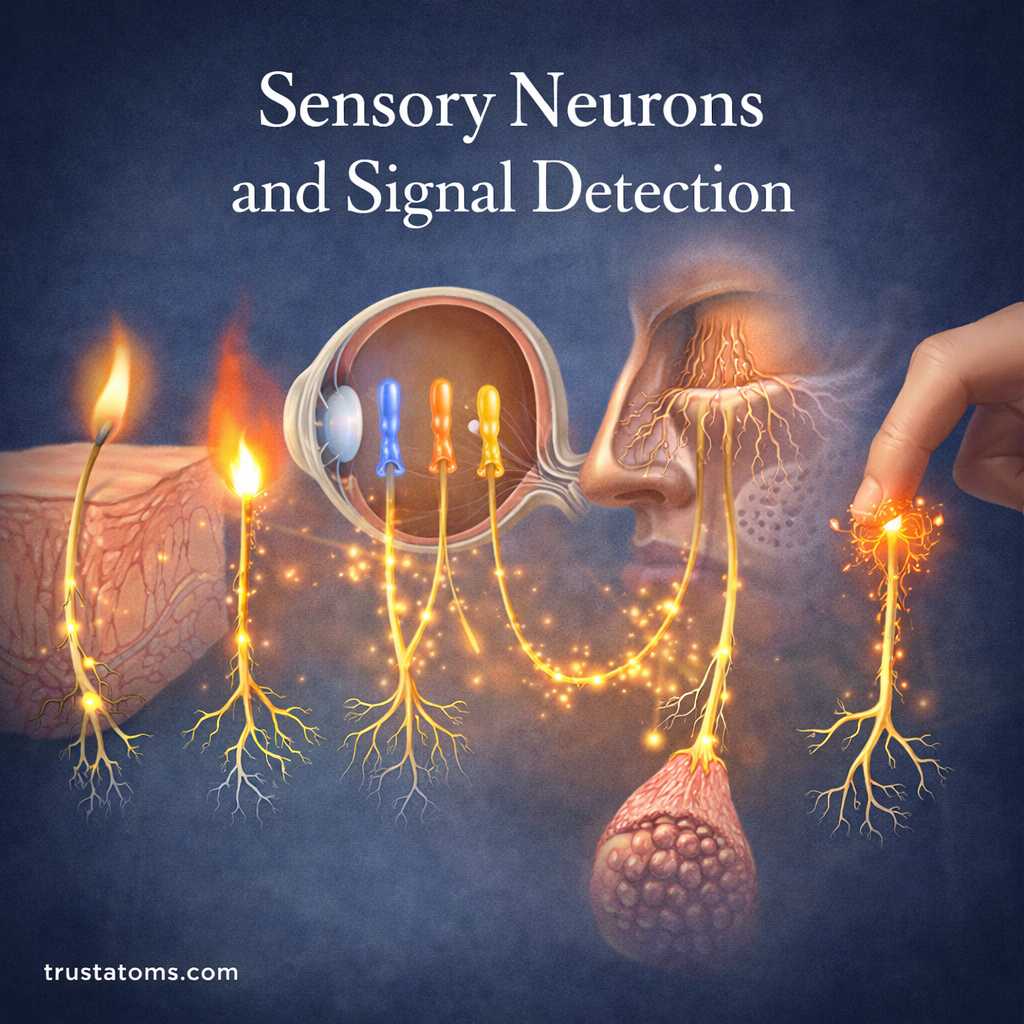
Sensory neurons detect changes in the environment using specialized receptors located in sensory organs or tissues.
The process generally occurs in several steps:
- A sensory receptor detects a stimulus (heat, pressure, light, or sound).
- The receptor converts the stimulus into an electrical signal.
- The sensory neuron carries the signal to the spinal cord or brain.
- The brain processes the information and produces perception or a response.
This process is called sensory transduction, where physical energy is transformed into neural signals.
Structure of a Sensory Neuron
Sensory neurons share many structural features with other neurons but have unique characteristics suited for signal detection.
Receptor Endings
The receptor endings are specialized structures that detect stimuli.
Examples include:
- Touch receptors in the skin
- Light receptors in the eyes
- Sound receptors in the inner ear
- Chemical receptors in the nose and tongue
These receptors initiate electrical signals when stimulated.
Cell Body
The cell body of a sensory neuron contains the nucleus and maintains the neuron’s metabolic functions.
Many sensory neuron cell bodies are located in sensory ganglia, clusters of neurons found near the spinal cord.
Axon
The axon carries the electrical impulse from the receptor area toward the spinal cord or brain.
In many sensory neurons, the axon can be very long, transmitting signals across large distances in the body.
Types of Sensory Receptors
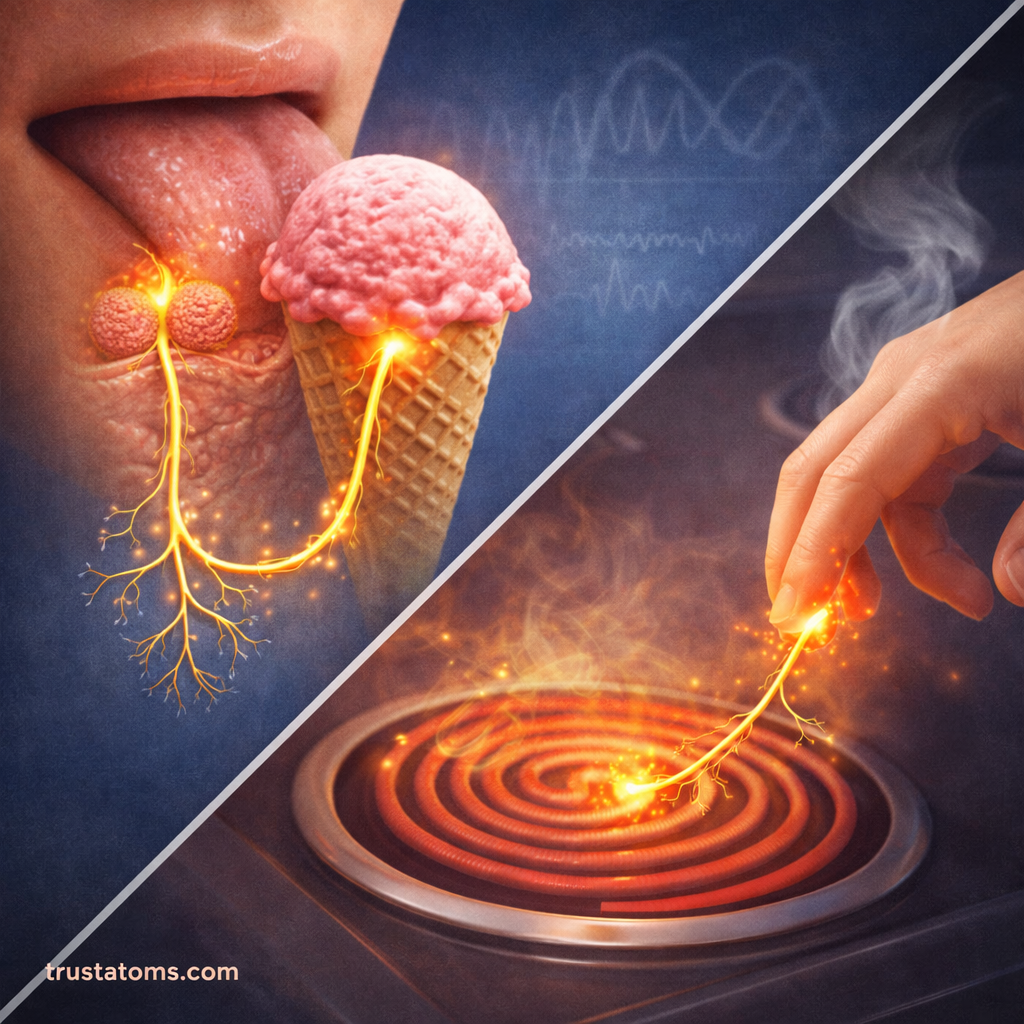
Sensory neurons detect many different types of stimuli through specialized receptor types.
Mechanoreceptors
Mechanoreceptors detect physical forces such as pressure, touch, and vibration.
Examples include:
- Skin receptors that detect touch
- Inner ear receptors responsible for hearing
- Receptors that detect body position
Thermoreceptors
Thermoreceptors respond to temperature changes.
They allow the body to detect:
- Heat
- Cold
- Changes in environmental temperature
Photoreceptors
Photoreceptors are specialized cells found in the retina of the eye.
They detect light energy, enabling vision.
Two primary photoreceptors include:
- Rods, which detect low-light conditions
- Cones, which detect color and fine detail
Chemoreceptors
Chemoreceptors detect chemical signals.
They are responsible for:
- Taste on the tongue
- Smell in the nasal cavity
- Monitoring oxygen and carbon dioxide levels in the blood
Nociceptors
Nociceptors detect pain or tissue damage.
They respond to harmful stimuli such as:
- Extreme heat or cold
- Chemical irritation
- Physical injury
Pain signals play a protective role by warning the body about potential danger.
The Sensory Pathway
Sensory information follows a structured pathway from the point of detection to the brain.
This pathway generally involves three stages:
1. Detection
Sensory receptors detect a stimulus such as pressure, sound, or light.
2. Transmission
The sensory neuron transmits the electrical signal through peripheral nerves to the spinal cord.
3. Processing
The brain receives and interprets the signal, creating a sensory experience.
For example, touching a hot object follows this sequence:
- Heat receptors in the skin detect the temperature.
- Sensory neurons send signals to the spinal cord.
- The brain interprets the signal as heat or pain.
In some cases, reflex responses can occur before the brain fully processes the stimulus.
Sensory Neurons and Reflexes
Sensory neurons play a major role in reflex actions.
Reflexes are rapid, automatic responses to stimuli that help protect the body.
A typical reflex pathway includes:
- A sensory neuron detecting the stimulus
- The spinal cord processing the signal
- A motor neuron activating a muscle response
For example, when touching a hot surface:
- Sensory neurons detect the heat
- The spinal cord processes the signal
- Motor neurons trigger the hand to pull away
This rapid response occurs within milliseconds.
Sensory Integration in the Brain
Once sensory signals reach the brain, several regions work together to interpret the information.
Thalamus
The thalamus acts as a sensory relay station, directing incoming signals to appropriate areas of the brain.
Somatosensory Cortex
Located in the parietal lobe, the somatosensory cortex processes signals related to:
- Touch
- Temperature
- Pain
- Body position
Different areas of this cortex correspond to different parts of the body.
Visual and Auditory Cortices
Specialized brain regions interpret signals related to sight and sound.
These areas transform electrical signals into meaningful sensory experiences.
Sensory Neurons and Body Awareness
Sensory neurons also help the body maintain proprioception, the sense of body position and movement.
Proprioceptors are specialized receptors located in:
- Muscles
- Tendons
- Joints
They allow the brain to monitor body position without needing visual input.
This ability helps with activities such as:
- Walking
- Balancing
- Typing
- Coordinating movement
Without proprioception, everyday tasks would become extremely difficult.
Disorders Affecting Sensory Neurons
Damage to sensory neurons can affect the body’s ability to detect stimuli.
Some common conditions include:
Peripheral Neuropathy
Peripheral neuropathy involves damage to nerves outside the brain and spinal cord.
Symptoms may include:
- Numbness
- Tingling sensations
- Reduced sensitivity to touch
- Pain or burning sensations
Diabetic Neuropathy
High blood sugar levels can damage sensory nerves over time.
This condition often affects the feet and legs first.
Sensory Processing Disorders
In some neurological conditions, the brain may have difficulty interpreting sensory signals.
This can lead to hypersensitivity or reduced sensitivity to stimuli.
Why Sensory Neurons Are Essential
Sensory neurons allow humans to interact safely and effectively with the environment.
They provide the brain with information about:
- Temperature
- Pain
- Touch
- Body position
- Light and sound
- Chemical signals such as taste and smell
This information enables the body to make decisions, adjust movements, and respond to potential dangers.
Final Thoughts
Sensory neurons form the foundation of the body’s detection system. By converting physical and chemical stimuli into electrical signals, they allow the nervous system to gather information about both the external world and internal conditions.
Through complex networks involving receptors, peripheral nerves, the spinal cord, and the brain, sensory neurons help humans perceive, react, and adapt to their environment. Their ability to detect and transmit signals is essential for awareness, coordination, and survival.