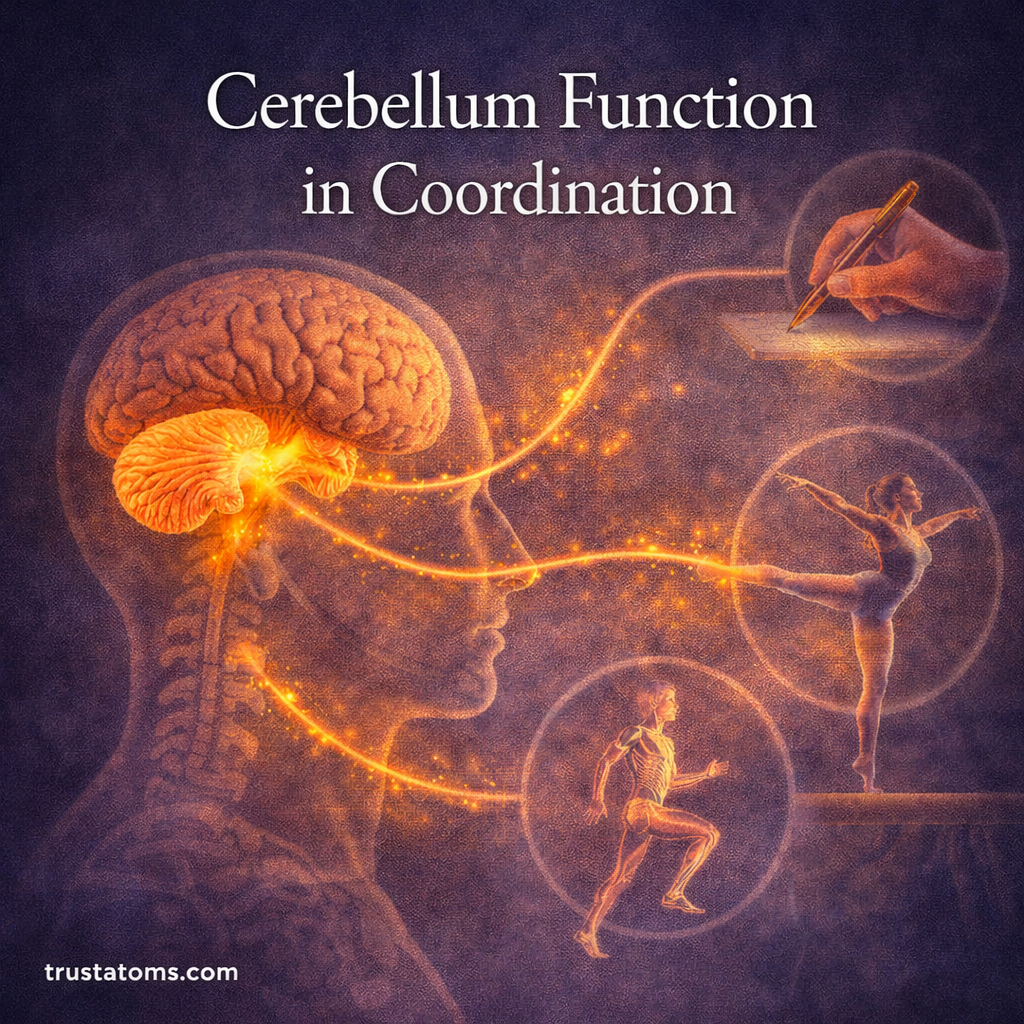
The cerebellum is a vital part of the brain responsible for coordinating movement, maintaining balance, and refining motor activity. Although it makes up only about 10% of the brain’s volume, it contains more than half of the brain’s neurons, highlighting its importance in neural processing.
Located at the back of the brain beneath the cerebrum, the cerebellum plays a key role in ensuring that movements are smooth, accurate, and well-timed. Without it, even simple tasks such as walking, reaching for objects, or maintaining posture would become difficult and uncoordinated.
By integrating sensory information with motor signals, the cerebellum allows the body to perform complex movements efficiently and maintain stability during motion.
What Is the Cerebellum?
The cerebellum is a major structure of the brain located in the posterior cranial cavity, just below the occipital lobes of the cerebrum and behind the brainstem.
The word cerebellum comes from Latin and means “little brain.”
Despite its smaller size compared to the cerebrum, the cerebellum is responsible for essential functions such as:
- Coordinating voluntary movements
- Maintaining balance and posture
- Regulating muscle tone
- Supporting motor learning
- Refining movement accuracy
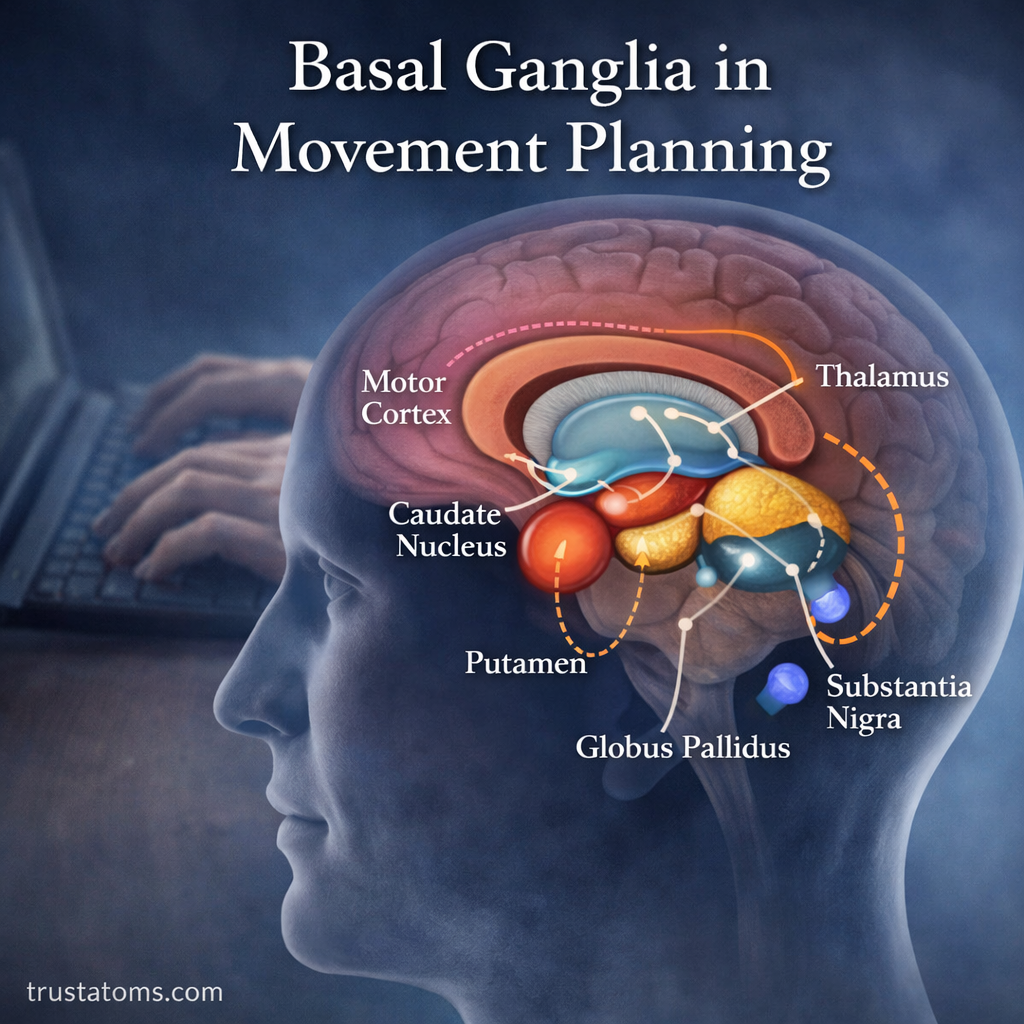
Rather than initiating movement, the cerebellum fine-tunes actions that originate in other parts of the brain.
Location and Structure of the Cerebellum
The cerebellum sits behind the brainstem and beneath the cerebral hemispheres.
It consists of two hemispheres connected by a central region called the vermis. The outer surface is highly folded, forming ridges called folia, which increase the surface area available for neural processing.
Internally, the cerebellum contains:
- Cerebellar cortex – the outer layer of gray matter responsible for processing information
- White matter – internal nerve fibers that transmit signals
- Deep cerebellar nuclei – clusters of neurons that send output signals to other brain regions
This layered structure allows the cerebellum to process large amounts of information quickly.
How the Cerebellum Coordinates Movement
The cerebellum functions by comparing intended movements with actual movements. It receives information from multiple sources, including the brain, spinal cord, and sensory receptors.
When movement occurs, the cerebellum performs several tasks:
- Receives motor commands from the cerebral cortex.
- Receives sensory feedback from muscles and joints.
- Compares the intended action with the body’s current position.
- Adjusts signals to improve accuracy and smoothness.
This process allows the cerebellum to correct errors in movement in real time.
For example, when reaching for a cup, the cerebellum helps ensure the hand moves in the correct direction with the right amount of force.
The Cerebellum and Balance
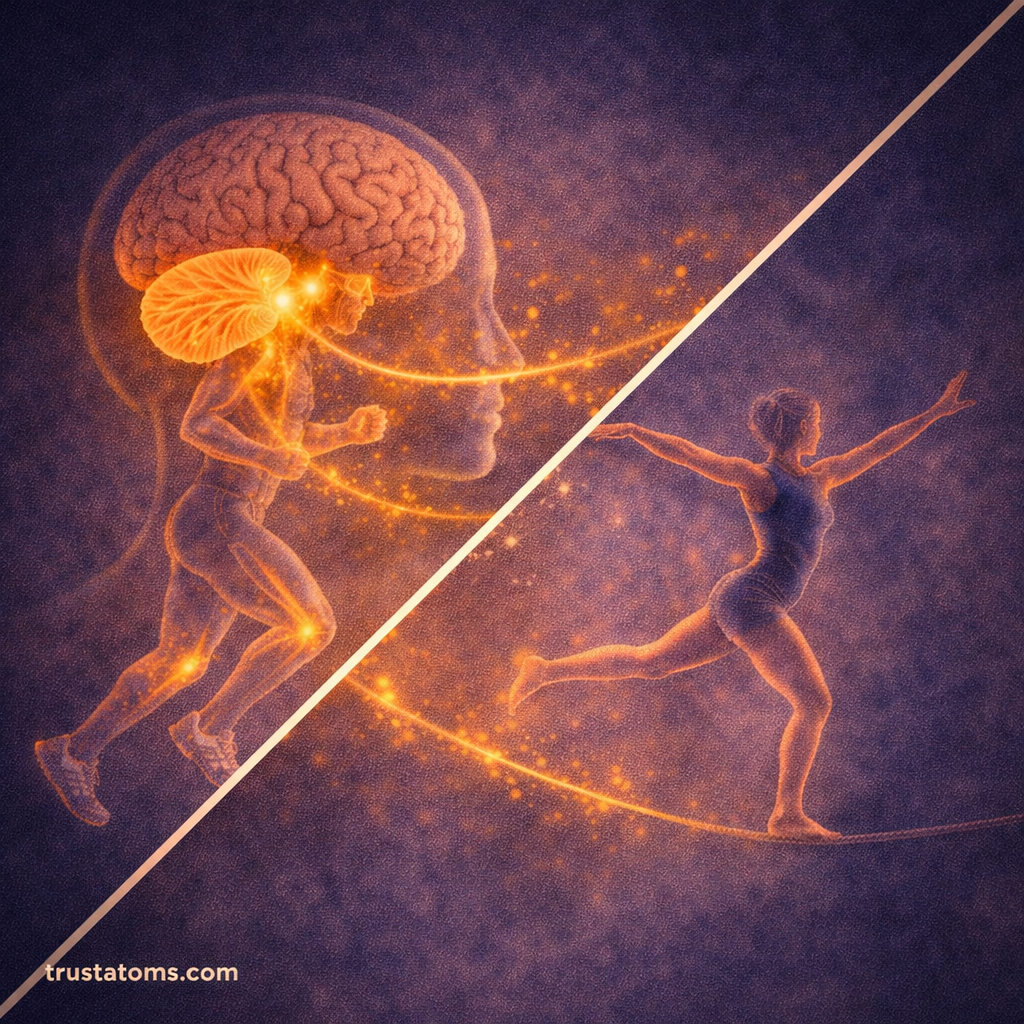
Maintaining balance requires continuous communication between the brain, muscles, and sensory systems.
The cerebellum receives input from:
- The vestibular system in the inner ear, which detects head movement and spatial orientation
- Proprioceptors in muscles and joints that sense body position
- Visual input that helps guide movement
By integrating these signals, the cerebellum helps maintain equilibrium while standing, walking, or performing physical activities.
Without cerebellar coordination, movements would appear unstable or unsteady.
The Role of the Cerebellum in Motor Learning
The cerebellum plays a major role in motor learning, which involves improving movements through practice and repetition.
Activities that rely heavily on cerebellar function include:
- Learning to ride a bicycle
- Practicing musical instruments
- Developing athletic skills
- Improving handwriting or fine motor control
Through repeated practice, the cerebellum adjusts neural circuits to make movements more efficient and automatic.
This process allows complex skills to become smoother and more precise over time.
Cerebellum and Muscle Tone
Muscle tone refers to the slight, continuous tension present in muscles even when they are at rest.
The cerebellum helps regulate this baseline muscle activity by adjusting signals sent to motor neurons.
Proper muscle tone allows the body to:
- Maintain posture
- Stabilize joints
- Prepare muscles for movement
If cerebellar function is disrupted, muscle tone may become abnormal, leading to difficulty controlling movement.
Communication Between the Cerebellum and Other Brain Regions
The cerebellum communicates extensively with other parts of the nervous system.
Major connections include:
- Cerebral cortex – coordinates voluntary movement planning
- Brainstem – regulates posture and reflexes
- Spinal cord – provides sensory feedback from the body
- Vestibular nuclei – assist in balance control
Signals travel between these regions through nerve pathways known as cerebellar peduncles, which act as communication bridges.
These connections allow the cerebellum to continuously monitor and adjust movement.
Signs of Cerebellar Dysfunction
Damage to the cerebellum can significantly affect coordination and movement.
Common symptoms of cerebellar dysfunction include:
- Loss of balance or unsteady walking (ataxia)
- Difficulty coordinating movements
- Tremors during voluntary motion
- Slurred speech
- Problems with precise hand movements
Because the cerebellum is involved in refining movement rather than initiating it, individuals with cerebellar damage can still move but may struggle with accuracy and control.
Conditions That Affect the Cerebellum
Several neurological conditions can impact cerebellar function.
Examples include:
- Stroke affecting cerebellar blood supply
- Traumatic brain injury
- Multiple sclerosis
- Cerebellar tumors
- Degenerative disorders such as spinocerebellar ataxia
Medical imaging and neurological tests help doctors evaluate cerebellar function and diagnose these conditions.
Why the Cerebellum Is Essential for Movement
The cerebellum ensures that movements are coordinated, balanced, and efficient.
Its contributions include:
- Fine-tuning voluntary motor activity
- Maintaining balance and posture
- Regulating muscle tone
- Supporting motor skill development
- Integrating sensory feedback during motion
Without the cerebellum, the nervous system would struggle to produce controlled and stable movements.
Final Thoughts
The cerebellum plays a crucial role in coordinating movement and maintaining balance throughout the body. By integrating sensory information with motor signals, it ensures that actions are smooth, precise, and well-timed.
Although it does not initiate movement directly, the cerebellum continuously refines and adjusts motor activity to improve accuracy and stability. Its ability to monitor body position, regulate muscle tone, and support motor learning makes it essential for everyday tasks ranging from walking and writing to complex athletic performance.