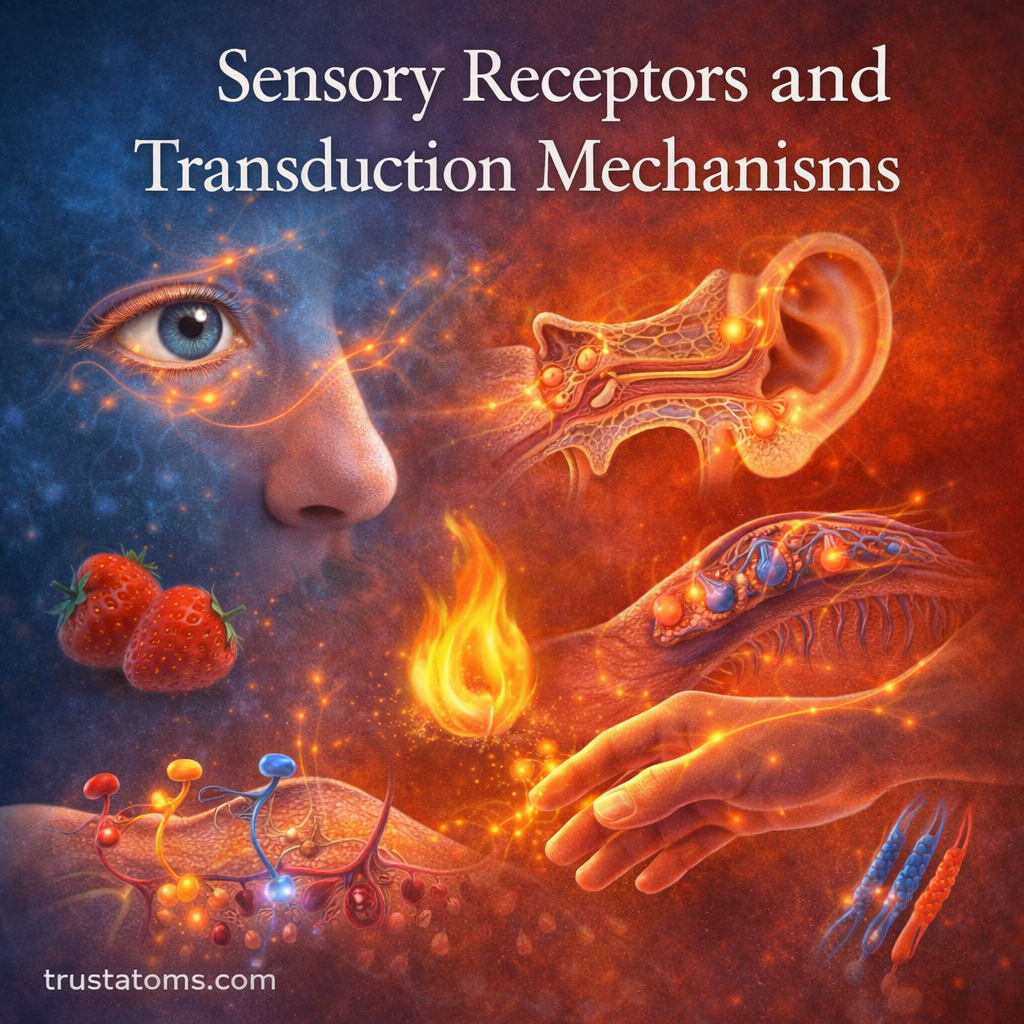
The human body constantly gathers information about its surroundings and internal conditions. Every sight, sound, touch, taste, and smell begins with specialized structures known as sensory receptors. These receptors detect physical or chemical stimuli and convert them into electrical signals that the nervous system can interpret.
This process of converting environmental signals into neural impulses is called sensory transduction. It forms the foundation of perception, allowing the brain to interpret the world and respond appropriately.
Understanding sensory receptors and transduction mechanisms reveals how the nervous system translates external stimuli into meaningful sensory experiences.
What Are Sensory Receptors?
Sensory receptors are specialized cells or nerve endings designed to detect specific types of stimuli. They are located throughout the body, including the skin, eyes, ears, nose, muscles, and internal organs.
Each receptor is sensitive to a particular form of energy or environmental change.
Examples of stimuli detected by sensory receptors include:
- Light
- Sound vibrations
- Temperature changes
- Pressure and touch
- Chemical molecules (taste and smell)
- Body position and movement
When a receptor detects a stimulus, it triggers electrical activity in sensory neurons, which transmit information to the brain.
The Process of Sensory Transduction
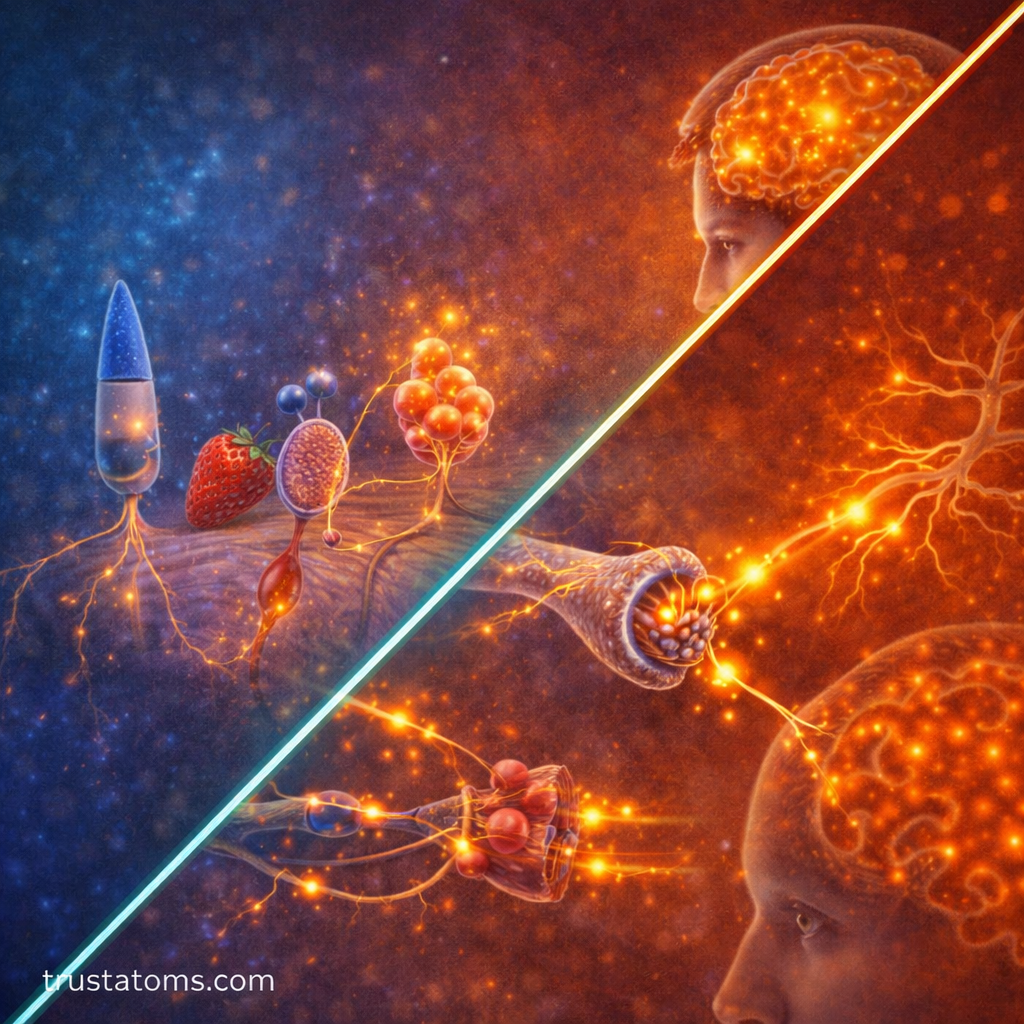
Sensory transduction is the biological mechanism that converts physical or chemical stimuli into electrical signals within the nervous system.
Although the details vary between sensory systems, the general process follows a similar sequence.
1. Stimulus Detection
A receptor first detects a specific type of stimulus from the environment or body.
Examples include:
- Photoreceptors detecting light in the eyes
- Mechanoreceptors detecting pressure in the skin
- Chemoreceptors detecting odor molecules in the nose
Each receptor type is highly specialized for its stimulus.
2. Conversion to Electrical Signals
Once the receptor is activated, the stimulus causes changes in the receptor cell membrane. These changes alter the flow of ions across the membrane.
This produces a receptor potential, a small electrical signal within the sensory cell.
If the receptor potential reaches a certain threshold, it triggers action potentials in nearby sensory neurons.
3. Transmission to the Nervous System
The generated electrical impulses travel along sensory neurons toward the central nervous system.
Signals typically move through:
- Peripheral sensory nerves
- The spinal cord or brainstem
- Higher processing areas of the brain
Once the brain receives the signal, it interprets the information as a sensory experience.
Major Types of Sensory Receptors
Sensory receptors are often classified according to the type of stimulus they detect.
Mechanoreceptors
Mechanoreceptors respond to physical forces such as pressure, stretch, vibration, and movement.
They are involved in sensations such as:
- Touch
- Pressure
- Hearing
- Balance
- Body position
Examples include receptors in the skin that detect pressure and specialized structures in the inner ear that detect sound vibrations.
Thermoreceptors
Thermoreceptors detect temperature changes in the environment and within the body.
Two primary types exist:
- Warm receptors
- Cold receptors
These receptors help regulate body temperature and contribute to the perception of heat and cold.
Photoreceptors
Photoreceptors respond to light energy and are found in the retina of the eye.
Two main photoreceptor types are responsible for vision:
- Rod cells, which detect low light levels
- Cone cells, which detect color and fine detail
Photoreceptors convert light into electrical signals that travel to the visual centers of the brain.
Chemoreceptors
Chemoreceptors detect chemical substances in the environment or body fluids.
They are responsible for:
- Taste perception in the tongue
- Smell detection in the nose
- Monitoring oxygen and carbon dioxide levels in the blood
These receptors allow the nervous system to interpret chemical information important for survival.
Nociceptors
Nociceptors detect potentially harmful stimuli that may cause tissue damage.
They respond to:
- Extreme temperature
- Mechanical injury
- Chemical irritation
Activation of nociceptors produces the sensation of pain, which serves as a protective warning signal.
Receptor Adaptation
Many sensory receptors exhibit adaptation, meaning their response decreases when a stimulus remains constant over time.
This helps the nervous system prioritize new or changing information.
Two main adaptation patterns exist:
Rapidly Adapting Receptors
These receptors respond strongly at the beginning of a stimulus but quickly reduce their activity.
Examples include receptors that detect:
- Vibration
- Sudden touch
They are useful for detecting changes in the environment.
Slowly Adapting Receptors
These receptors continue to respond while the stimulus remains present.
Examples include receptors involved in:
- Pressure
- Pain
- Body position
Slow adaptation allows the nervous system to monitor continuous conditions.
Sensory Coding and Signal Interpretation
Once sensory signals reach the brain, the nervous system must interpret the information accurately. This involves a process known as sensory coding.
Sensory coding determines:
- The type of stimulus detected
- The location of the stimulus
- The intensity of the stimulus
- The duration of the stimulus
Different neural pathways carry specific types of sensory information, allowing the brain to process multiple sensations simultaneously.
For example:
- Visual signals travel through the optic pathways
- Auditory signals travel through hearing pathways
- Touch and pressure signals travel through spinal sensory tracts
The brain integrates this information to create coherent perceptions.
Importance of Sensory Receptors
Sensory receptors allow the body to interact with both the external environment and internal physiological conditions.
Their functions include:
- Detecting environmental changes
- Supporting balance and movement coordination
- Protecting the body from harmful stimuli
- Guiding behavioral responses
Without sensory receptors, the nervous system would not be able to interpret or respond to its surroundings.
Sensory Receptors and Nervous System Health
Healthy sensory receptors and neural pathways are essential for normal perception. Damage or dysfunction in these systems can disrupt sensory processing.
Possible effects include:
- Loss of sensation
- Reduced vision or hearing
- Altered pain perception
- Impaired balance
Sensory disorders may arise from nerve injuries, neurological diseases, or damage to receptor cells themselves.
Ongoing research continues to explore how sensory systems function and how they can be restored when damaged.
Final Thoughts
Sensory receptors and transduction mechanisms form the gateway between the physical world and the nervous system. By detecting stimuli and converting them into electrical signals, these specialized cells enable the brain to interpret light, sound, touch, temperature, and chemical signals.
Through complex neural pathways and sensory coding processes, the nervous system transforms raw environmental information into meaningful perceptions. This ability allows humans to navigate their surroundings, maintain internal balance, and respond effectively to changing conditions.