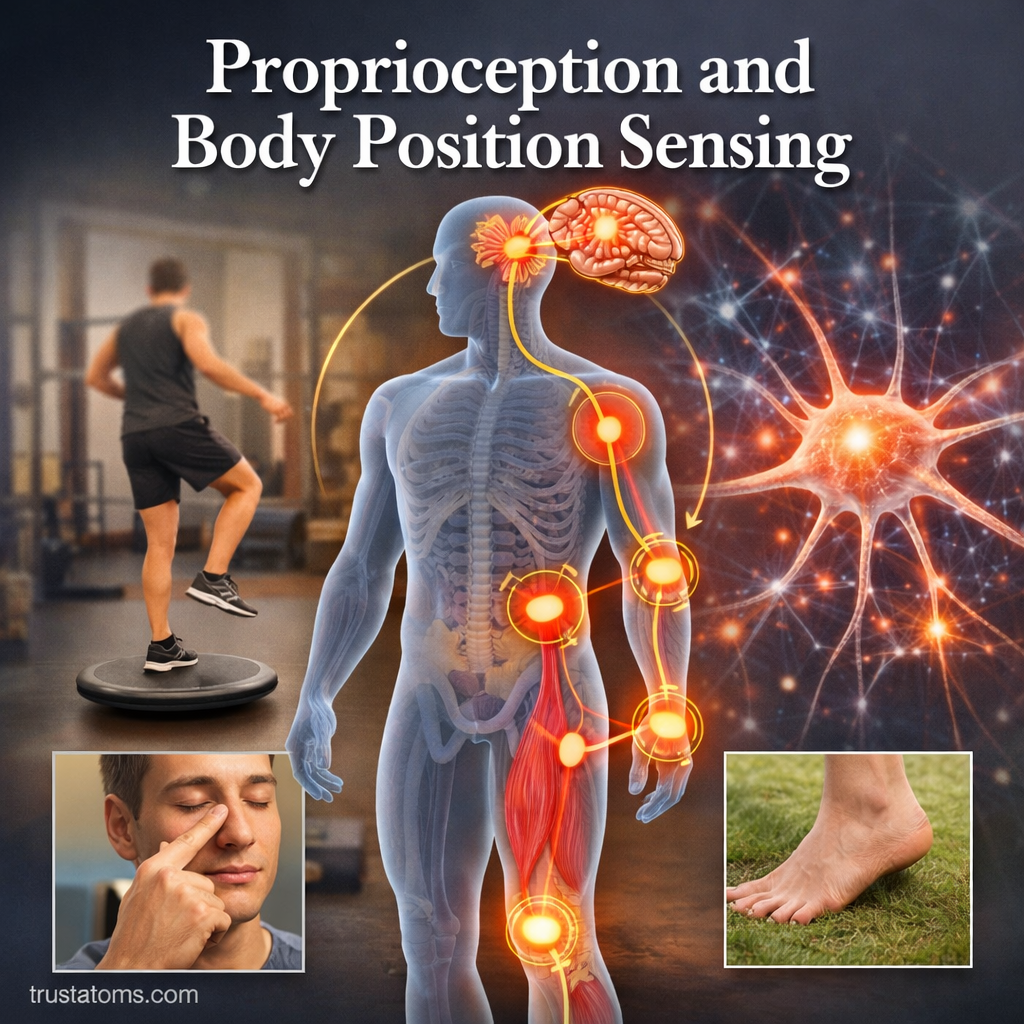
Proprioception is the body’s ability to sense its own position, movement, and balance without needing to look. It allows you to walk without watching your feet, reach for objects accurately, and maintain posture automatically.
Often called the “sixth sense,” proprioception works through a network of sensory receptors in muscles, joints, and tendons that constantly send information to the brain about body position and movement.
This system operates continuously and mostly unconsciously, helping the brain coordinate movement, maintain balance, and prevent injury.
What Is Proprioception?
Proprioception is a sensory system that informs the brain about:
- Joint position
- Muscle stretch and tension
- Limb movement
- Body orientation in space
Unlike vision or hearing, proprioception works internally. The brain receives signals from specialized receptors throughout the body that monitor mechanical changes during movement.
These signals allow the nervous system to create a real-time map of body position, even when the eyes are closed.
Key Sensory Receptors Involved in Proprioception
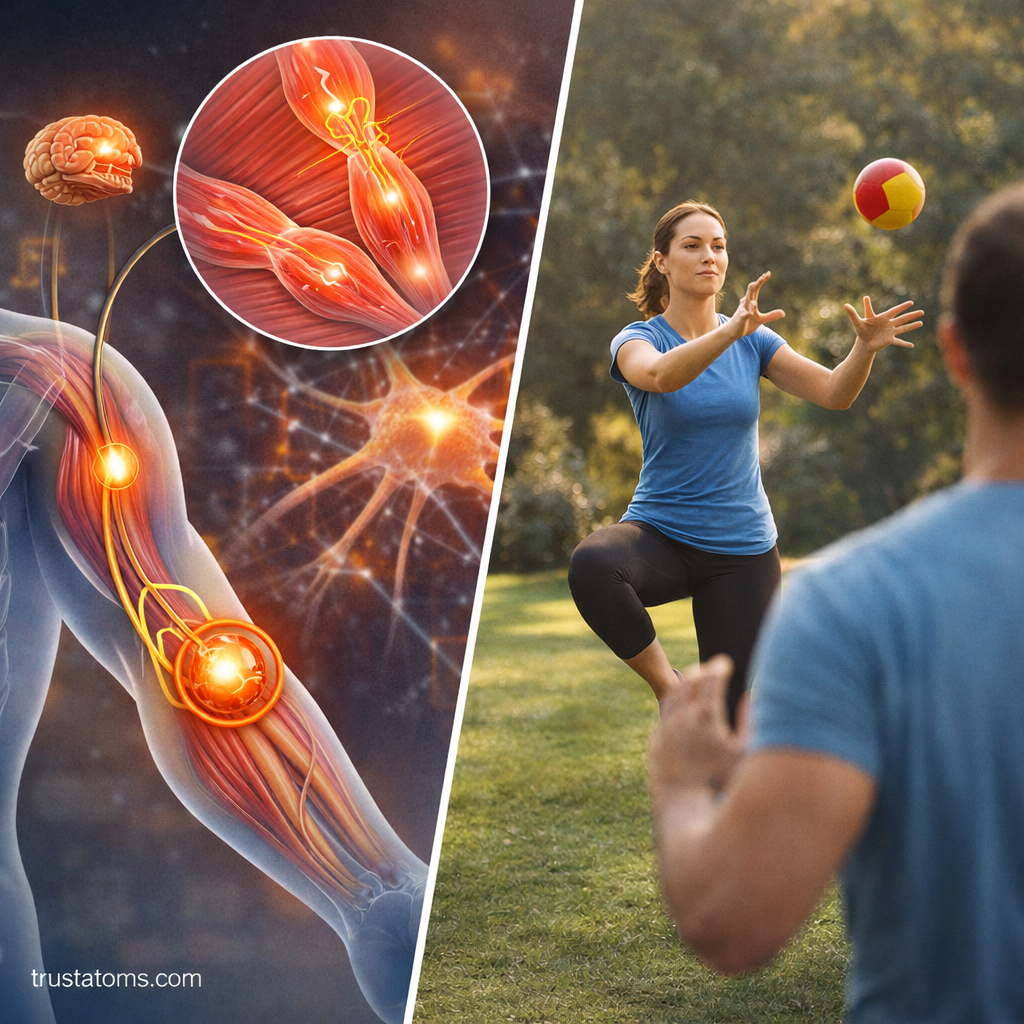
Several specialized receptors provide the information needed for body position sensing.
Muscle Spindles
Muscle spindles are sensory receptors embedded within skeletal muscles.
They detect:
- Muscle length
- Rate of muscle stretching
- Changes during movement
When a muscle stretches, muscle spindles send signals to the spinal cord and brain so the body can adjust muscle contraction and maintain stability.
Golgi Tendon Organs
Golgi tendon organs are located where muscles attach to tendons.
They monitor:
- Muscle tension
- Force produced during contraction
If tension becomes too high, these receptors help trigger protective reflexes that reduce muscle contraction and prevent damage.
Joint Receptors
Joint receptors are found in ligaments and joint capsules.
They detect:
- Joint angle
- Movement direction
- Pressure within the joint
These receptors help the brain determine the exact position of limbs relative to the body.
Skin Mechanoreceptors
Receptors in the skin also contribute to proprioception.
They detect:
- Pressure
- Stretching of the skin
- Contact with surfaces
This information improves body awareness and fine motor control.
How the Brain Processes Proprioceptive Signals
Signals from proprioceptors travel through sensory neurons to the spinal cord and brain.
The main brain regions involved include:
Spinal Cord
The spinal cord processes some proprioceptive signals locally, producing reflexes that maintain posture and stability without conscious thought.
Cerebellum
The cerebellum is critical for:
- Coordinating movement
- Maintaining balance
- Adjusting muscle activity
It constantly compares intended movement with actual movement and corrects errors in real time.
Somatosensory Cortex
The somatosensory cortex in the parietal lobe interprets sensory information about body position.
This region helps create conscious awareness of where body parts are located.
Examples of Proprioception in Everyday Life
Proprioception plays a role in nearly every movement.
Common examples include:
- Walking without watching your feet
- Touching your nose with your eyes closed
- Typing on a keyboard without looking
- Maintaining balance while standing
- Catching a ball
- Adjusting posture while sitting
Athletes rely heavily on proprioception for precise movements, coordination, and reaction time.
Proprioception and Balance
Proprioception works alongside two other sensory systems to maintain balance:
- Vision – provides spatial information about surroundings
- Vestibular system – located in the inner ear, detects head movement and gravity
- Proprioception – senses body position and joint movement
Together, these systems allow the brain to coordinate stable posture and smooth movement.
If one system becomes less reliable (such as in darkness), the others compensate.
What Happens When Proprioception Is Impaired?
Damage or dysfunction in proprioceptive pathways can lead to significant movement difficulties.
Common symptoms include:
- Poor coordination
- Difficulty maintaining balance
- Clumsy or unsteady walking
- Trouble performing precise movements
- Increased risk of falls
People with impaired proprioception may rely heavily on visual cues to control movement.
Conditions That Can Affect Proprioception
Several neurological and musculoskeletal conditions may disrupt proprioceptive signaling.
Examples include:
- Peripheral neuropathy
- Stroke
- Multiple sclerosis
- Parkinson’s disease
- Joint injuries
- Ligament damage
- Aging-related sensory decline
Loss of proprioceptive feedback can significantly affect mobility and independence.
Can Proprioception Be Improved?
Yes. Proprioception can often be improved through targeted training and rehabilitation.
Common methods include:
- Balance exercises
- Stability training
- Strength training
- Physical therapy
- Sport-specific coordination drills
Examples of exercises that strengthen proprioception include:
- Standing on one leg
- Balance board training
- Yoga and Pilates
- Agility drills
These activities challenge the body’s position-sensing system and improve coordination over time.
Why Proprioception Is Essential for Movement
Proprioception is fundamental to safe and efficient movement.
Without it, even simple tasks like walking or reaching would require constant visual attention and conscious effort.
By continuously monitoring muscle activity, joint angles, and body orientation, the proprioceptive system allows the nervous system to:
- Coordinate complex movements
- Maintain posture and balance
- Protect joints and muscles
- Adapt movements to changing environments
This silent sensory system operates constantly, ensuring that the body moves smoothly and efficiently throughout daily life.
Final Thoughts
Proprioception is one of the body’s most important but often overlooked sensory systems. It provides the brain with a continuous stream of information about body position and movement, enabling balance, coordination, and controlled motion.
Through specialized receptors in muscles, tendons, joints, and skin, the nervous system maintains a precise internal awareness of the body’s location in space. This ability allows humans to move confidently and efficiently, whether performing everyday tasks or complex athletic activities.
Understanding proprioception highlights how deeply interconnected the sensory and motor systems are in supporting human movement.