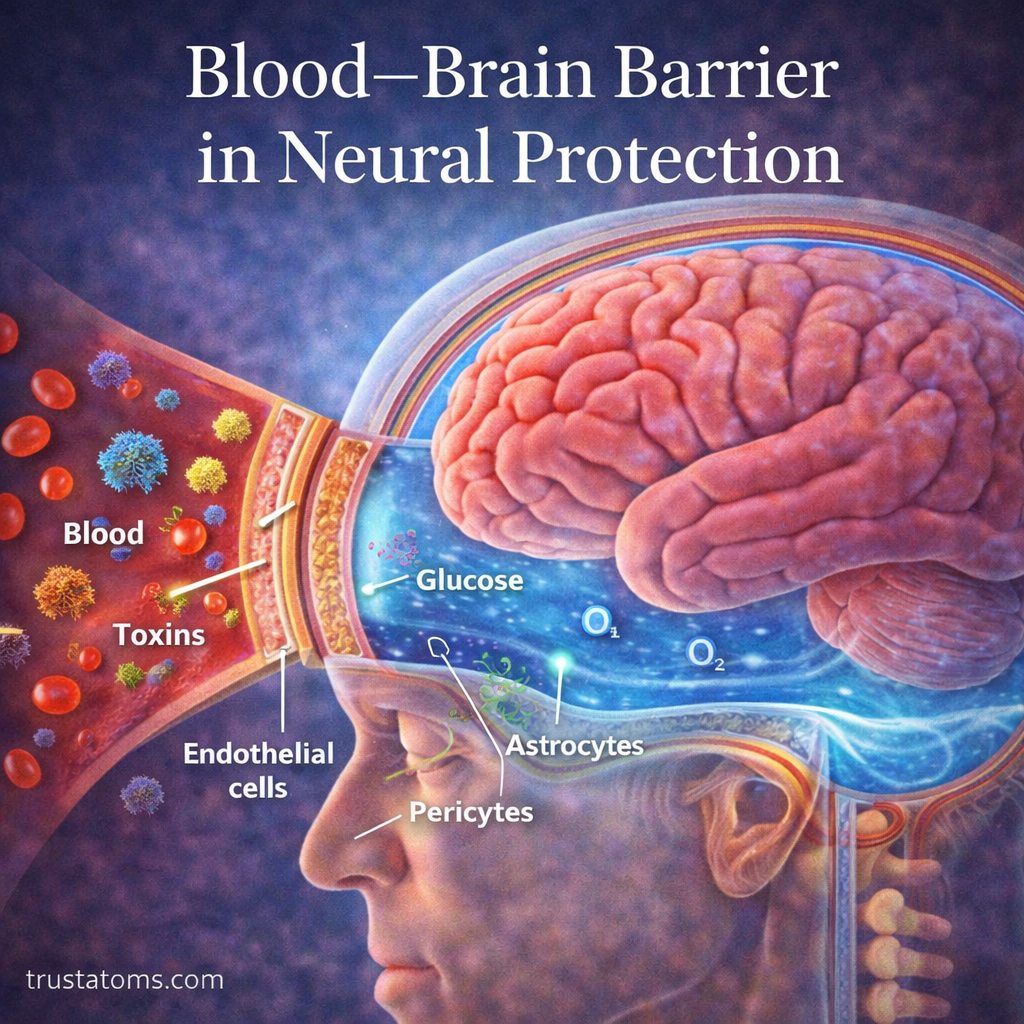
The blood–brain barrier (BBB) is a selective boundary between circulating blood and brain tissue that controls which substances can enter the brain. It protects neurons by limiting the passage of many harmful compounds while allowing essential materials, including oxygen and glucose, to reach neural cells.
In human anatomy, the BBB is an example of how specialized blood vessels support an organ’s particular needs. Its structure helps maintain the stable chemical environment required for electrical signaling, communication between neurons, and normal brain function.
What Is the Blood–Brain Barrier?
The blood–brain barrier is formed primarily by specialized endothelial cells lining most blood vessels within the brain. Unlike many capillaries elsewhere in the body, these cells are connected by tight junctions that greatly restrict movement between neighboring cells.
The BBB is one of several systems that protect the central nervous system. CNS protection through the meninges and cerebrospinal fluid explains how surrounding membranes and fluid provide additional physical support.
The body uses different barriers for different purposes. For comparison, skin barrier function and protection describes how the outer layers of skin limit water loss and exposure to environmental hazards.
The BBB is not completely impermeable. It selectively regulates transport, and certain specialized brain regions have more permeable capillaries that support functions such as monitoring blood composition.
Structure of the Blood–Brain Barrier
The BBB depends on several interacting cell types and structures, often described collectively as part of the neurovascular unit.
Endothelial Cells and Tight Junctions
Brain capillary endothelial cells form the main physical barrier. Their tight junctions restrict the passage of water-soluble substances through spaces between cells, while specialized transport proteins control movement across the cells themselves.
These endothelial cells also have relatively low rates of nonspecific vesicular transport compared with many other capillaries. Together, these properties help prevent uncontrolled leakage into brain tissue.
Astrocytes Support Barrier Function
Astrocytes are star-shaped glial cells that support the BBB. Their extensions, called endfeet, surround much of the outer surface of brain capillaries and help regulate the local environment.
Astrocytes communicate with blood vessels and neurons, contributing to barrier maintenance and the matching of local blood supply with neural activity. They support the barrier but do not form its principal tight junctions.
Pericytes and the Basement Membrane
Pericytes are cells associated with the outer surfaces of small blood vessels. They contribute to vascular stability, endothelial function, and the maintenance of normal barrier properties.
A surrounding basement membrane provides structural support and helps organize interactions among endothelial cells, pericytes, and astrocytes.
Selective exchange also occurs at other specialized interfaces in the body. Placenta structure and nutrient exchange provides a useful comparison, although the placental barrier has a different cellular organization and function.
How Substances Cross the Blood–Brain Barrier
Different molecules cross the BBB through different mechanisms. Whether a substance enters the brain depends on its chemical properties and the transport systems available.
| Transport mechanism | How it works | Example |
|---|---|---|
| Passive diffusion | Suitable molecules move across cell membranes | Oxygen and carbon dioxide |
| Carrier-mediated transport | Specific proteins move required substances | Glucose through GLUT1 |
| Receptor-mediated transport | Selected molecules bind receptors involved in transport | Some peptide hormones and proteins |
| Active efflux | Transport proteins move certain substances out of endothelial cells | Removal of some drugs and foreign compounds |
Glucose illustrates why selective transport is necessary. Brain cells require a continuous energy supply, but glucose does not freely cross lipid membranes in sufficient amounts. GLUT1 transporters in brain endothelial cells help move glucose from the bloodstream toward brain tissue.
Some small, lipid-soluble molecules can cross more readily by diffusion. However, lipid solubility alone does not guarantee entry because efflux pumps and other barriers can limit their accumulation.
How the BBB Protects Neurons
Neurons depend on carefully controlled concentrations of ions and signaling chemicals. Even relatively small changes in the surrounding fluid can alter electrical activity and communication between cells.
The BBB helps protect this environment in several ways:
- Chemical stability: Restricts rapid changes in the composition of brain extracellular fluid.
- Selective nutrient delivery: Provides regulated pathways for glucose and other required substances.
- Protection from foreign compounds: Limits the entry of many toxins and circulating chemicals.
- Controlled immune access: Regulates movement of immune cells and inflammatory substances under normal conditions.
The barrier is not an absolute defense against infection or toxins. Certain pathogens and harmful substances can cross it or disrupt its normal function.
What Happens When the Blood–Brain Barrier Is Damaged?
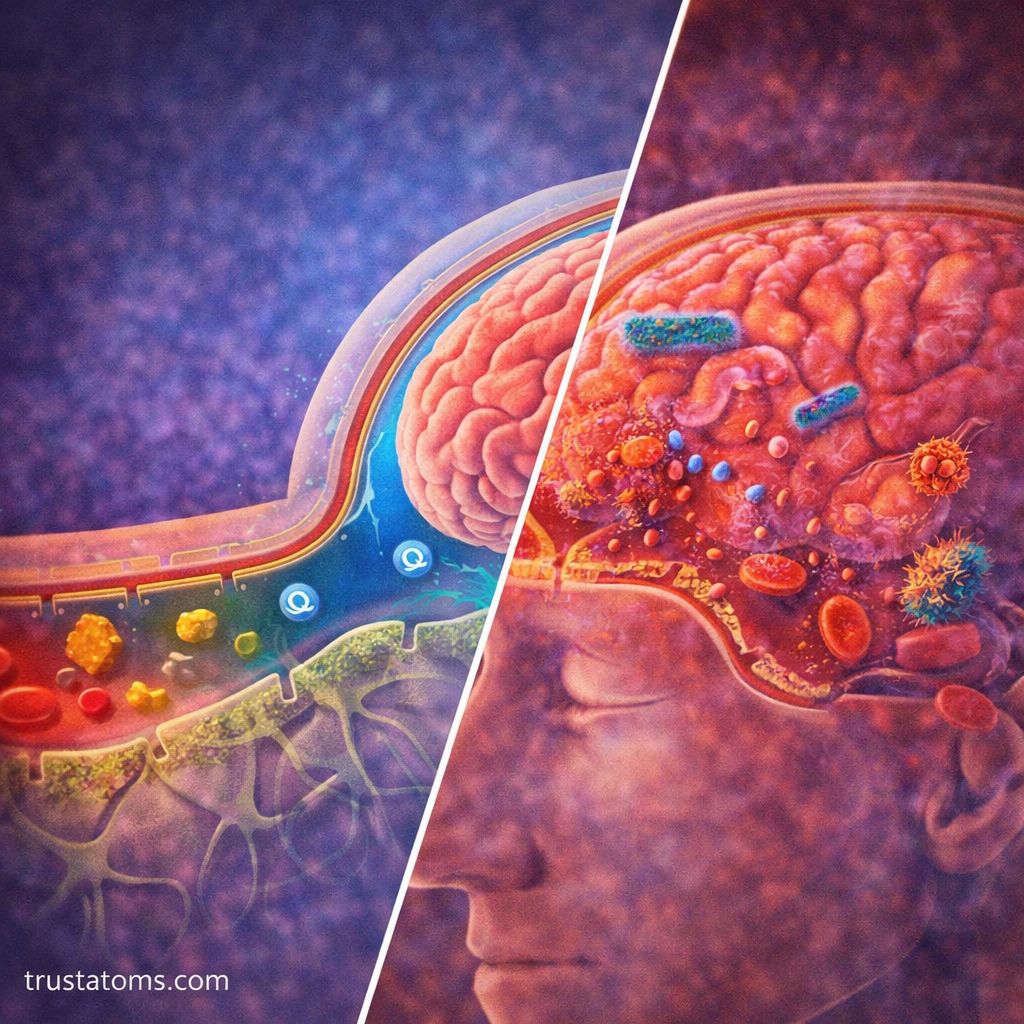
BBB dysfunction occurs when the normal regulation of substances between blood and brain tissue becomes impaired. Inflammation, vascular injury, or changes in endothelial junctions may increase permeability.
Greater permeability can allow plasma proteins, fluid, and inflammatory molecules to enter surrounding tissue more readily. This may contribute to swelling, altered neural signaling, and additional tissue injury.
BBB changes have been observed in conditions including stroke, traumatic brain injury, multiple sclerosis, and Alzheimer’s disease. The extent and consequences vary, and barrier dysfunction is not necessarily the original cause of each disorder.
Why Some Medicines Cannot Easily Reach the Brain
The BBB creates a challenge for treating diseases inside the central nervous system because many medications do not cross it efficiently.
Consider two medicines circulating in the bloodstream. One has chemical properties that permit passage through brain endothelial cells, while the other is highly water-soluble and lacks a suitable transporter. Even if both reach brain capillaries, the second medicine may enter brain tissue only in very small amounts.
This distinction helps explain why drug developers must evaluate brain penetration separately from a medicine’s concentration in blood. Researchers investigate specialized delivery systems, transport pathways, and controlled methods of temporarily increasing barrier permeability, but each approach requires careful safety testing.
How the BBB Works with Other Protective Systems
The blood–brain barrier protects the brain chemically, while the skull, meninges, and cerebrospinal fluid provide additional mechanical and physiological protection.
The BBB also functions within the brain’s extensive capillary network. Microcirculation in tissue systems explains how small blood vessels support oxygen delivery, nutrient exchange, and local blood flow regulation.
Brain capillaries must supply oxygen and nutrients continuously while maintaining selective permeability. This combination distinguishes cerebral circulation from many other tissue vascular networks.
Frequently Asked Questions
What is the main function of the blood–brain barrier?
Its main function is to regulate the movement of substances between circulating blood and brain tissue. This helps maintain a stable environment for neurons while permitting controlled delivery of essential nutrients.
Can bacteria and viruses cross the blood–brain barrier?
Some pathogens can cross or disrupt the BBB through specialized mechanisms. The barrier reduces exposure to many circulating threats but does not completely prevent infections of the central nervous system.
Does the blood–brain barrier block all medications?
No. Some medications cross the BBB through diffusion or specific transport pathways, while others enter poorly. Drug penetration depends on molecular properties, transporter activity, and the condition of the barrier.
The blood–brain barrier protects neural tissue through specialized endothelial cells, tight junctions, and regulated transport pathways. Its selective permeability allows essential nutrients to reach the brain while limiting exposure to many unwanted substances. Understanding this balance helps explain both neurological protection and the difficulties of delivering certain treatments to brain tissue.
This article is for general education and is not medical advice. Talk to a qualified health professional about any medical concern.
Sources: Kandel et al., Principles of Neural Science; Boron and Boulpaep Medical Physiology; National Institute of Neurological Disorders and Stroke.