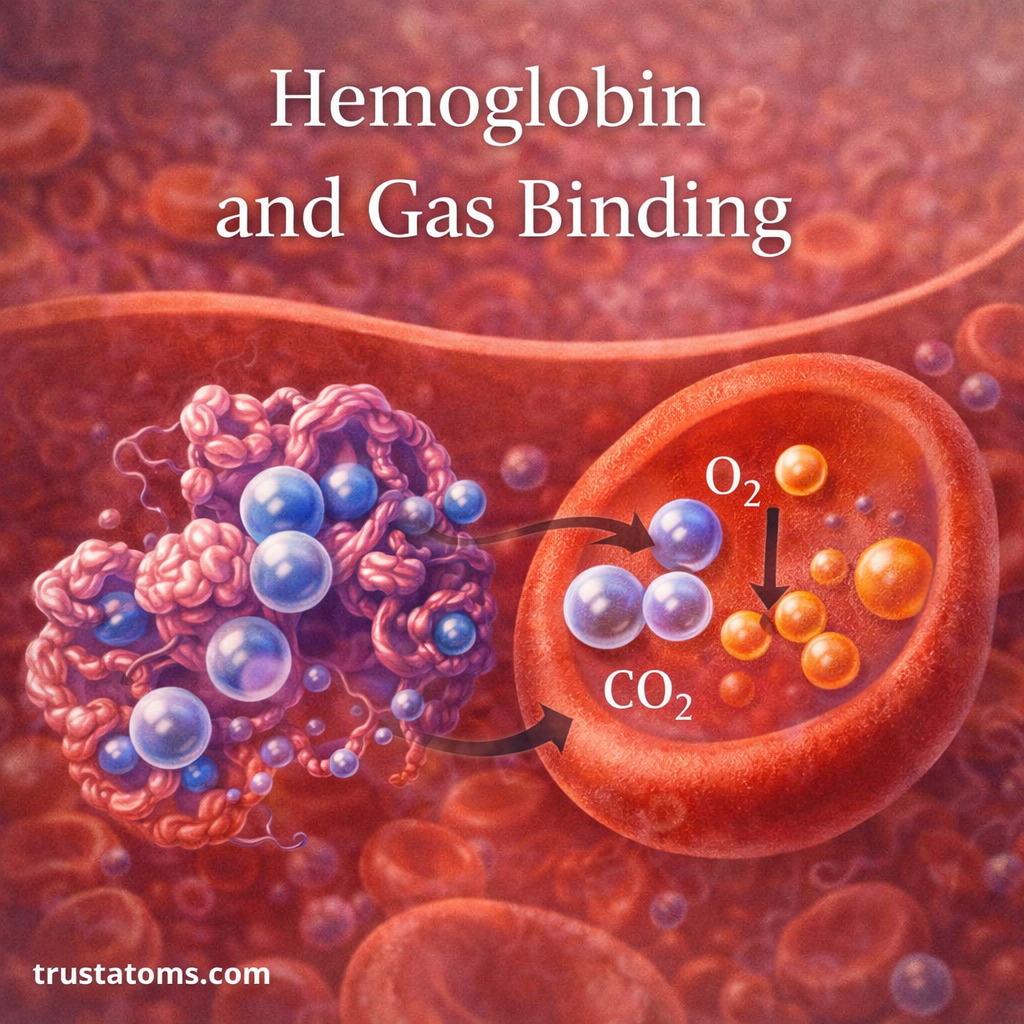
Hemoglobin is a vital protein found in red blood cells that enables the transport of oxygen and carbon dioxide throughout the body. Without it, the bloodstream would not be able to carry enough oxygen to support life.
This protein’s ability to bind and release gases efficiently is central to respiration and cellular function.
What Is Hemoglobin?
Hemoglobin is a complex protein located inside red blood cells (erythrocytes). It gives blood its red color and plays a direct role in gas transport.
Key Features
- Contains iron, which binds oxygen
- Made up of four subunits (globin chains)
- Each subunit can carry one oxygen molecule
- Can reversibly bind gases
This structure allows hemoglobin to carry up to four oxygen molecules at once.
How Hemoglobin Binds Oxygen
Hemoglobin’s primary function is to bind oxygen in the lungs and release it in body tissues.
Oxygen Binding in the Lungs
- Oxygen levels are high in the lungs
- Hemoglobin binds oxygen molecules easily
- Forms oxyhemoglobin
Oxygen Release in Tissues
- Oxygen levels are lower in body tissues
- Hemoglobin releases oxygen
- Oxygen diffuses into cells for energy production
This process is reversible and continuous, adapting to the body’s needs.
The Role of Iron in Gas Binding
Iron is essential for hemoglobin’s ability to bind oxygen.
Why Iron Matters
- Each heme group contains one iron atom
- Iron directly binds oxygen molecules
- Without iron, oxygen transport would not occur
This is why iron deficiency can lead to reduced oxygen-carrying capacity.
Cooperative Binding Explained
Hemoglobin exhibits a property called cooperative binding, which increases its efficiency.
How It Works
- Binding of one oxygen molecule makes it easier for others to bind
- Releasing one oxygen molecule makes it easier for others to detach
Why This Is Important
- Allows rapid oxygen loading in the lungs
- Enables efficient oxygen unloading in tissues
This mechanism helps hemoglobin respond quickly to changing oxygen demands.
Carbon Dioxide Binding and Transport
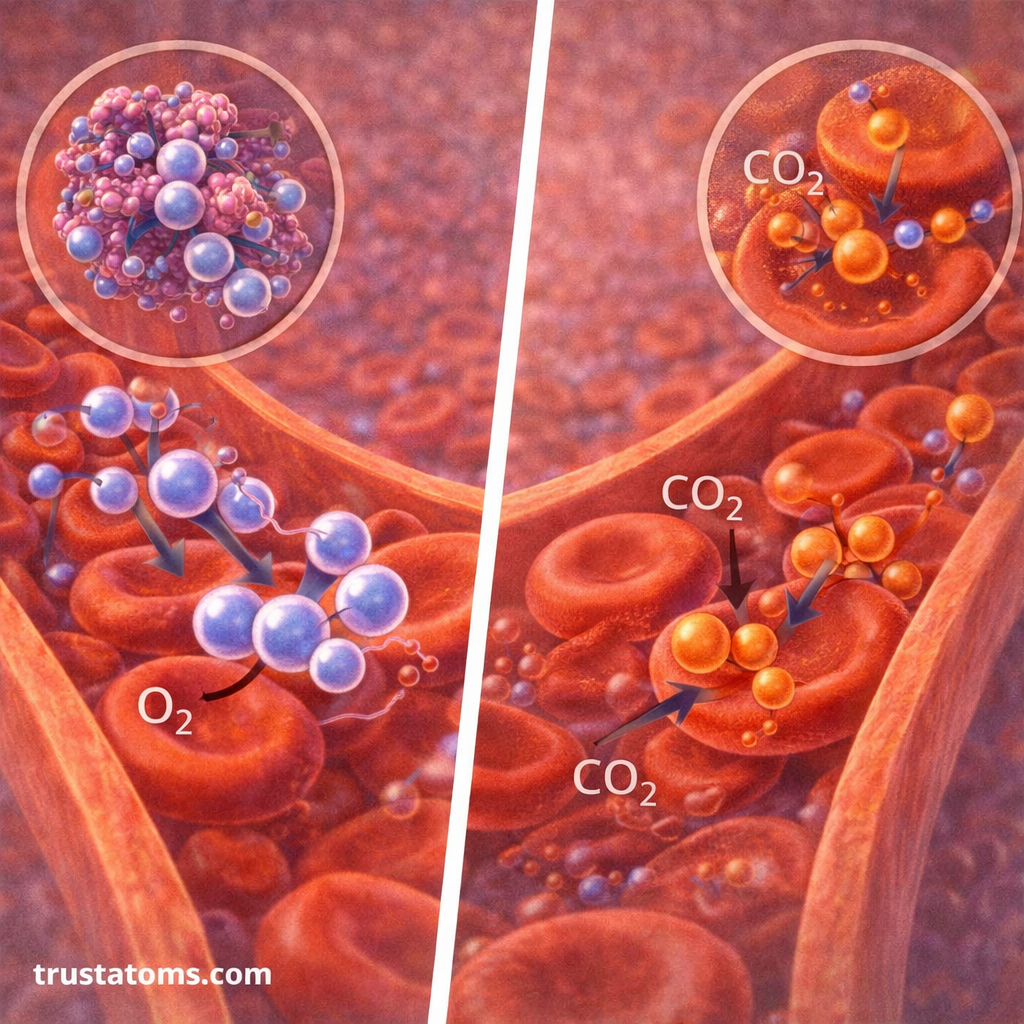
Hemoglobin also plays a role in transporting carbon dioxide, a waste product of metabolism.
How Carbon Dioxide Is Carried
- Some CO₂ binds directly to hemoglobin (forming carbaminohemoglobin)
- Most CO₂ is converted into bicarbonate ions in red blood cells
- A small amount dissolves in plasma
Function
- Transports CO₂ from tissues to the lungs
- Helps maintain acid-base balance (pH) in the blood
Factors That Affect Hemoglobin Binding
Hemoglobin’s ability to bind and release oxygen can change based on several conditions.
Oxygen Levels
- High oxygen → increased binding
- Low oxygen → increased release
pH Levels (Bohr Effect)
- Lower pH (more acidic) → hemoglobin releases oxygen more easily
- Higher pH → hemoglobin holds onto oxygen
Temperature
- Higher temperature → promotes oxygen release
- Lower temperature → promotes oxygen binding
Carbon Dioxide Levels
- Increased CO₂ → encourages oxygen release
- Decreased CO₂ → encourages oxygen binding
These factors help the body deliver oxygen where it is needed most.
Why Hemoglobin Function Matters
Efficient gas binding is essential for survival. Any disruption in hemoglobin function can affect oxygen delivery.
Common Issues
- Anemia – reduced hemoglobin levels
- Carbon monoxide poisoning – CO binds strongly to hemoglobin, blocking oxygen
- Genetic disorders (e.g., sickle cell disease) – affect hemoglobin structure and function
These conditions highlight the importance of proper hemoglobin activity.
Key Takeaways
- Hemoglobin is a protein that carries oxygen and carbon dioxide
- Each molecule can bind up to four oxygen molecules
- Binding is reversible and highly efficient
- Cooperative binding enhances oxygen transport
- Multiple factors influence how hemoglobin binds gases
Final Thoughts
Hemoglobin is one of the most important proteins in the human body. Its ability to bind and release gases ensures that oxygen reaches every cell while waste gases are removed efficiently.
By understanding hemoglobin and gas binding, you gain insight into how the body sustains energy production and maintains balance at a cellular level.