Introduction
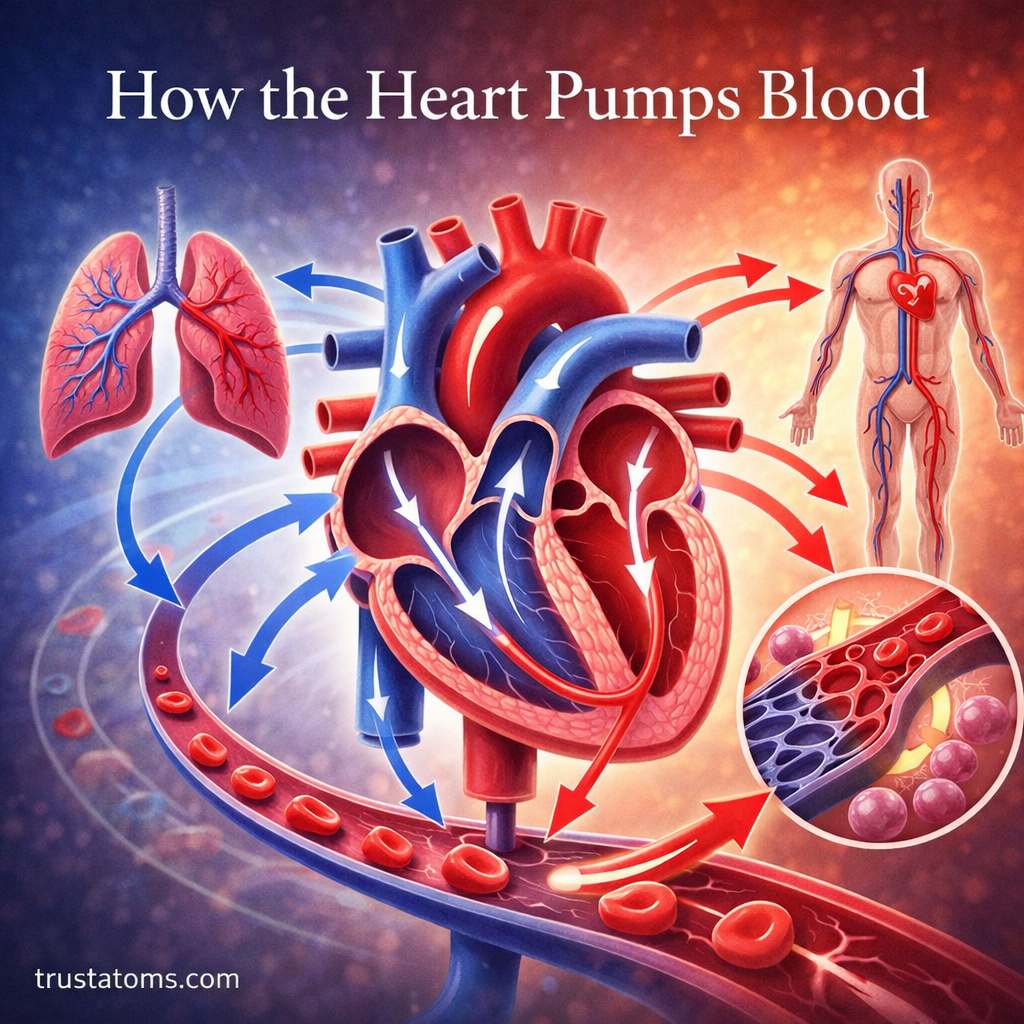
After delivering oxygen and nutrients to tissues, blood must return to the heart to be reoxygenated and circulated again. This process is known as venous return, and it plays a critical role in maintaining efficient circulation.
Unlike arteries, veins operate under lower pressure, meaning they rely on additional mechanisms—such as valves and muscle contractions—to keep blood moving in the right direction. Understanding venous return and valve function helps explain how your body prevents blood pooling and maintains steady blood flow.
What Is Venous Return?
Venous return refers to the flow of blood back to the heart through the veins.
This process is essential for:
- Maintaining cardiac output
- Supporting blood circulation
- Ensuring oxygen delivery continues
If venous return decreases, the heart receives less blood to pump, which can affect overall circulation.
Why Venous Return Is Challenging
Returning blood to the heart is not as simple as it sounds, especially from the lower body.
Key Challenges
- Low pressure in veins
- Gravity pulling blood downward (especially when standing)
- Long distance from extremities to the heart
To overcome these challenges, the body uses several built-in mechanisms.
The Role of Veins in Circulation
Veins are specialized blood vessels designed to return blood to the heart.
Key Features of Veins
- Thinner walls than arteries
- Larger internal diameter
- Ability to stretch and hold more blood
Veins act as capacitance vessels, meaning they can store large volumes of blood when needed.
Venous Valves: Preventing Backflow
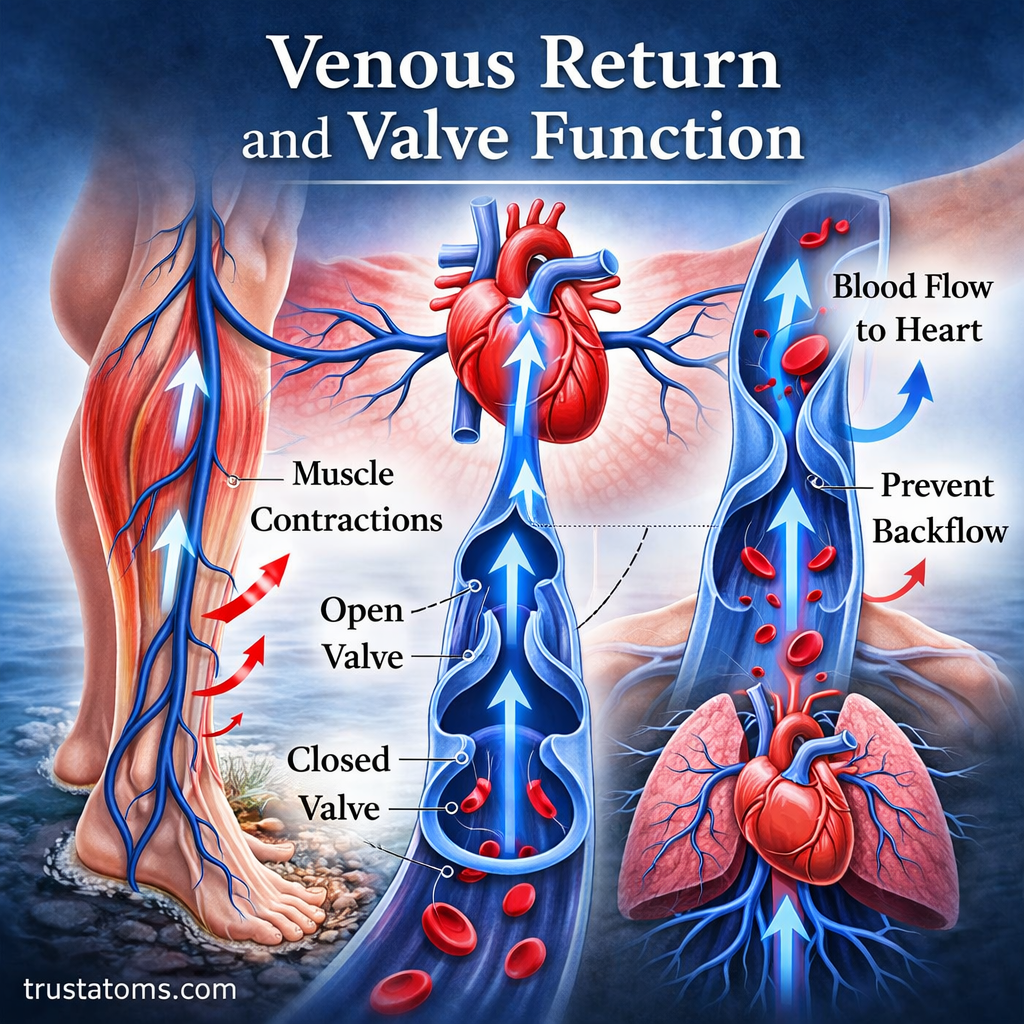
One of the most important features of veins is the presence of one-way valves.
How Venous Valves Work
- Open to allow blood to flow toward the heart
- Close to prevent blood from flowing backward
These valves are especially important in the legs, where blood must move upward against gravity.
Why Valves Matter
Without valves:
- Blood would pool in the lower limbs
- Circulation would become inefficient
- Risk of swelling and vein disorders would increase
The Skeletal Muscle Pump
Movement plays a major role in helping blood return to the heart.
How It Works
- Muscles contract during movement
- Veins are compressed
- Blood is pushed forward
- Valves prevent backward flow
This mechanism is known as the skeletal muscle pump.
Example
- Walking or running significantly improves venous return
- Prolonged sitting or standing reduces it
The Respiratory Pump
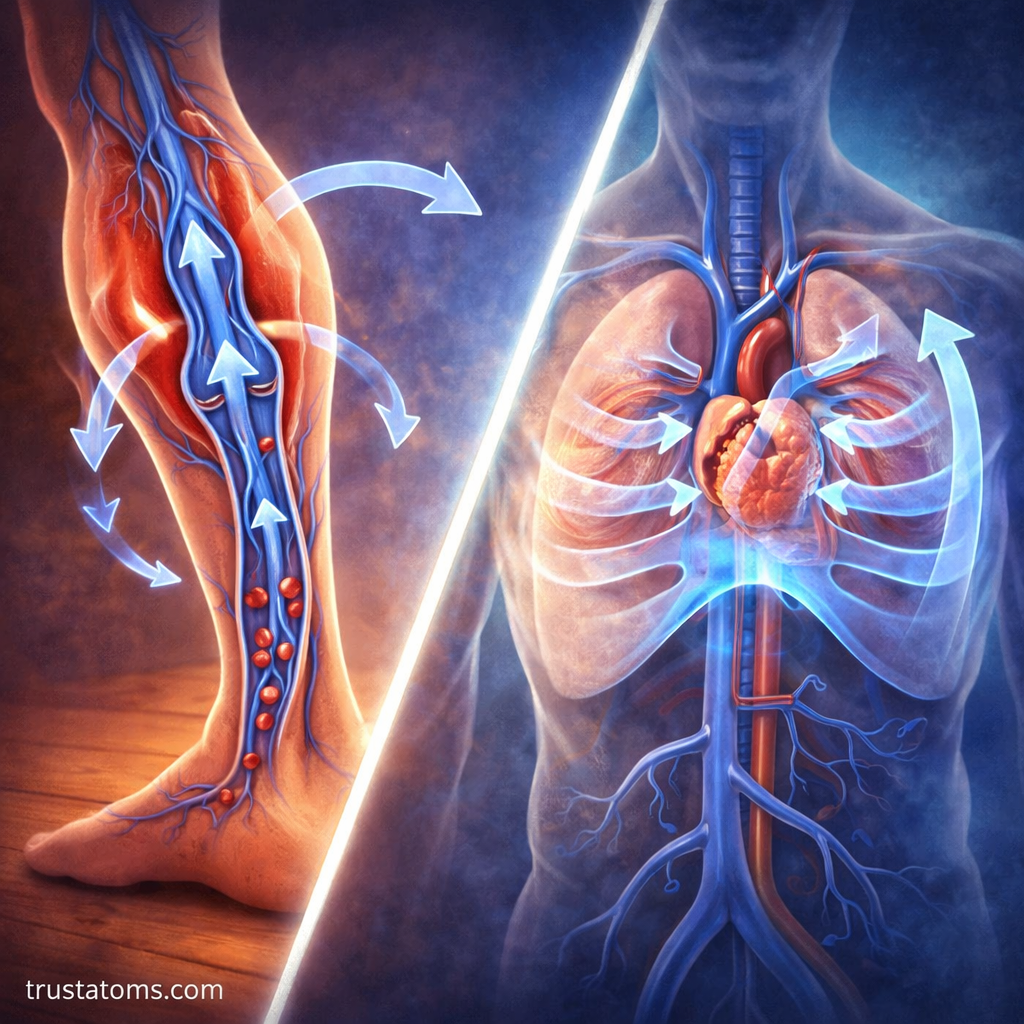
Breathing also supports venous return.
What Happens During Inhalation
- Pressure in the chest decreases
- Pressure in the abdomen increases
- Blood is drawn toward the heart
This creates a pressure gradient that helps move blood through the veins.
Factors That Influence Venous Return
Several factors affect how efficiently blood returns to the heart:
Physical Activity
- Movement increases muscle pump activity
- Improves circulation
Blood Volume
- Higher volume → greater return
- Low volume (dehydration) reduces return
Body Position
- Standing can slow venous return
- Lying down improves it
Venous Tone
- Constriction of veins increases return
- Controlled by the nervous system
Common Problems with Venous Return
When venous return is impaired, several issues can occur:
Varicose Veins
- Caused by weakened or damaged valves
- Blood pools in veins, causing swelling and visible veins
Edema
- Fluid buildup in tissues
- Often due to poor venous return
Deep Vein Thrombosis (DVT)
- Blood clot in deep veins
- Can block blood flow and become life-threatening
Why Venous Return Matters
Efficient venous return is essential for:
- Maintaining blood circulation
- Supporting heart function
- Preventing blood pooling
- Ensuring proper oxygen delivery
It directly impacts how well your cardiovascular system performs.
Tips to Support Healthy Venous Return
Simple habits can improve circulation and prevent issues:
- Stay physically active
- Avoid prolonged sitting or standing
- Elevate legs when resting
- Stay hydrated
- Wear compression garments if needed
Final Thoughts
Venous return and valve function are vital components of the circulatory system that ensure blood flows efficiently back to the heart. Through the combined action of valves, muscle contractions, and breathing, your body overcomes gravity and low pressure to maintain continuous circulation.
By understanding these mechanisms, you can better appreciate how movement, posture, and overall health influence your cardiovascular system.