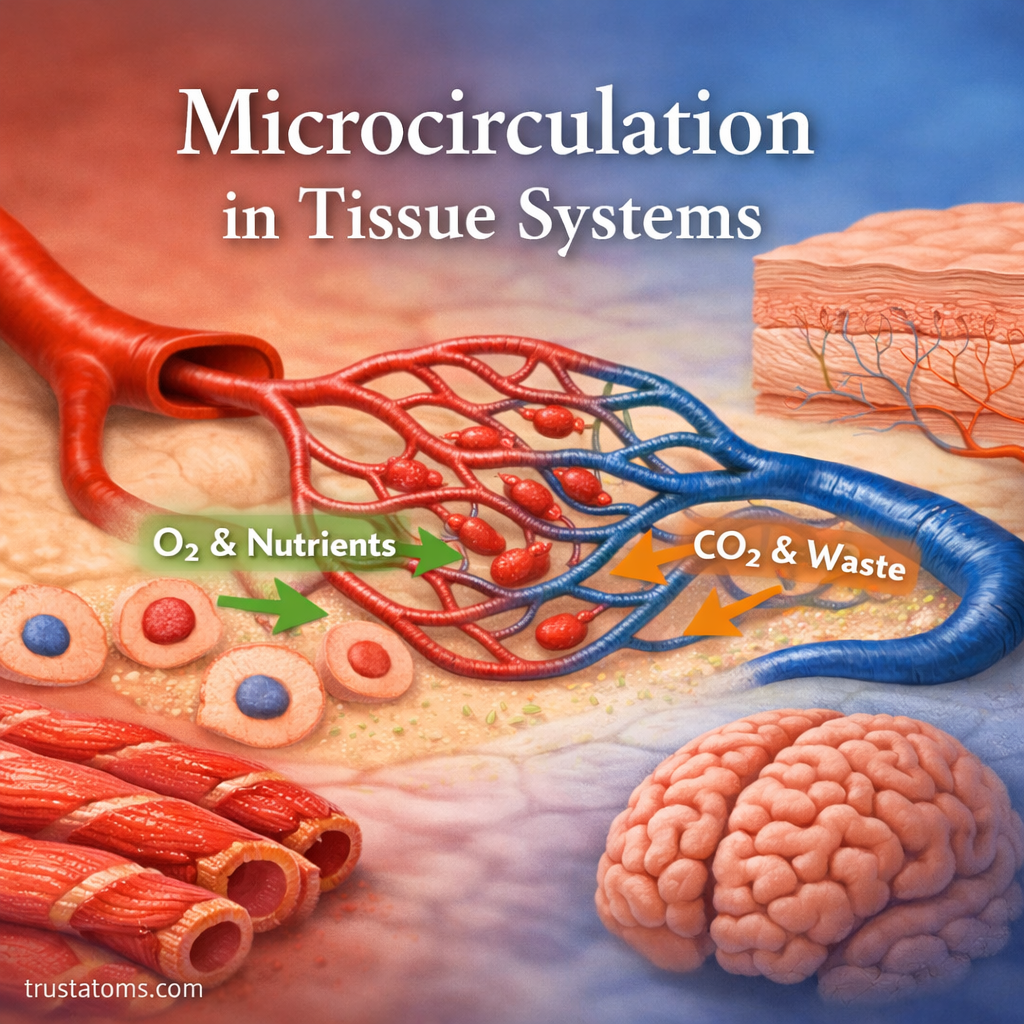
Microcirculation is the foundation of how oxygen, nutrients, and waste products move between the bloodstream and body tissues. While large arteries and veins handle bulk blood flow, it is the smallest vessels—capillaries, arterioles, and venules—that determine how effectively tissues are nourished and maintained.
Understanding microcirculation helps explain everything from wound healing and exercise performance to chronic disease progression.
What Is Microcirculation?
Microcirculation refers to blood flow through the smallest vessels in the circulatory system, typically those less than 100 micrometers in diameter.
These include:
- Arterioles (small branches of arteries)
- Capillaries (exchange vessels)
- Venules (small veins that collect blood from capillaries)
This system is where the most critical exchanges occur between blood and tissues.
Structure of the Microcirculatory Network
The microcirculatory system is highly organized to optimize efficiency and adaptability.
Arterioles
Arterioles regulate blood flow into capillary beds through:
- Smooth muscle contraction (vasoconstriction)
- Smooth muscle relaxation (vasodilation)
They act as the primary control points for local blood distribution.
Capillaries
Capillaries are the smallest blood vessels and have extremely thin walls—just one cell thick.
Their main functions include:
- Oxygen delivery to tissues
- Nutrient exchange (glucose, amino acids)
- Removal of waste products (carbon dioxide, metabolites)
There are three main types of capillaries:
- Continuous capillaries – found in muscle, skin, and the brain
- Fenestrated capillaries – found in kidneys and endocrine glands
- Sinusoidal capillaries – found in the liver, spleen, and bone marrow
Venules
Venules collect blood from capillaries and begin the return journey to the heart.
They also play a role in:
- Immune responses
- Inflammation (allowing white blood cells to exit circulation)
Functions of Microcirculation in Tissue Systems
Microcirculation is essential for maintaining tissue health and function.
Oxygen and Nutrient Delivery
Capillaries supply oxygen and nutrients directly to cells. Without efficient microcirculation, tissues quickly become deprived, leading to dysfunction or damage.
Waste Removal
Metabolic waste products such as carbon dioxide and lactic acid are transported away from tissues via the microcirculatory network.
Fluid Balance
Microcirculation helps regulate fluid exchange between blood and interstitial spaces through processes like:
- Filtration
- Reabsorption
This balance prevents excessive swelling (edema) or dehydration at the tissue level.
Temperature Regulation
By adjusting blood flow near the skin surface, microcirculation helps regulate body temperature:
- Increased flow → heat loss
- Decreased flow → heat conservation
Regulation of Microcirculation
Microcirculatory flow is tightly controlled to meet the needs of specific tissues.
Local Control Mechanisms
These respond directly to tissue conditions:
- Low oxygen levels → vasodilation
- High carbon dioxide → increased blood flow
- pH changes → vessel adjustment
Neural Regulation
The nervous system influences vessel diameter through:
- Sympathetic stimulation (typically causes vasoconstriction)
- Reflex responses to maintain blood pressure
Hormonal Control
Hormones and signaling molecules also play a role:
- Nitric oxide → vasodilation
- Endothelin → vasoconstriction
- Adrenaline → context-dependent effects
Capillary Exchange Mechanisms
Substances move between blood and tissues through several processes:
Diffusion
The most common method, where molecules move from high to low concentration.
Examples:
- Oxygen diffusing into tissues
- Carbon dioxide diffusing into blood
Filtration
Driven by blood pressure, pushing fluid out of capillaries into tissues.
Reabsorption
Fluid returns to capillaries due to osmotic pressure, primarily influenced by plasma proteins.
Transcytosis
Larger molecules are transported across endothelial cells in vesicles.
Importance in Different Tissue Systems
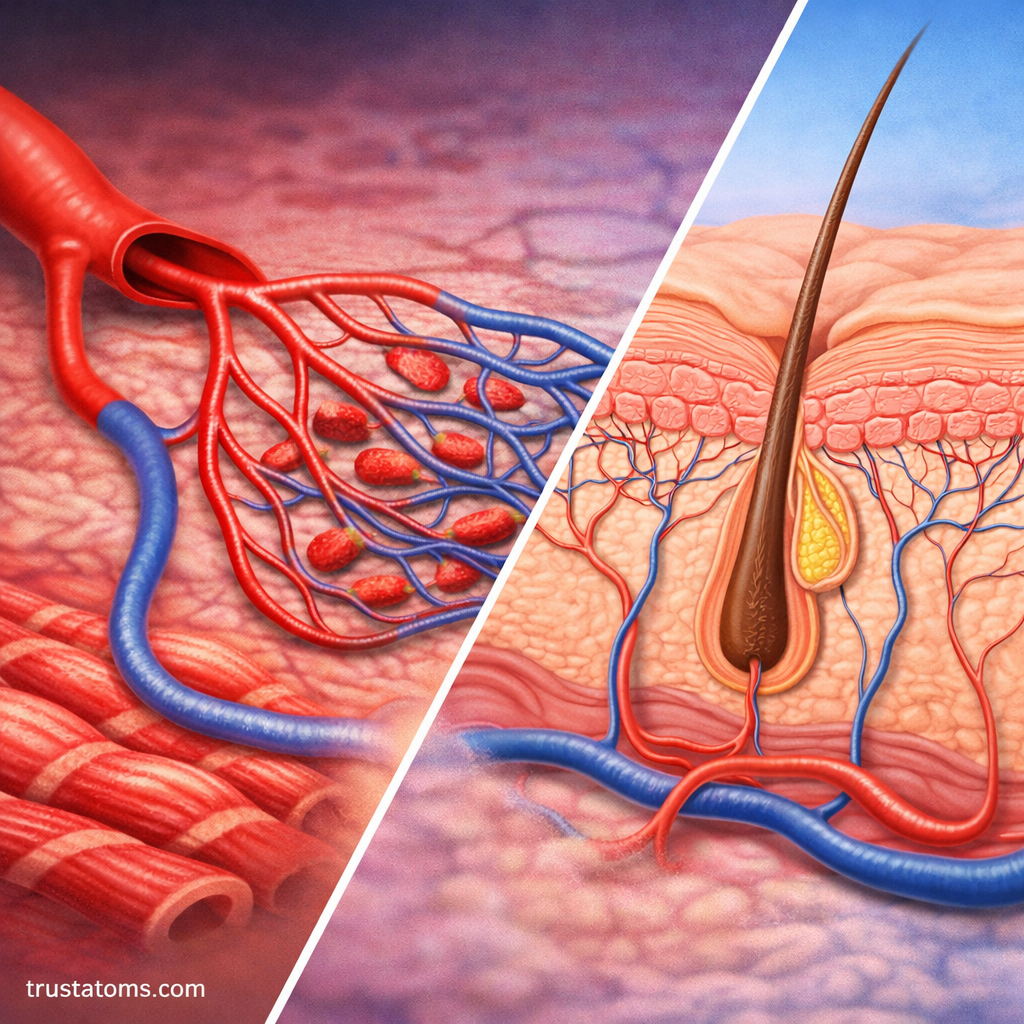
Microcirculation adapts to the unique needs of each tissue.
Muscle Tissue
- Increased blood flow during exercise
- Enhanced oxygen delivery and waste removal
Brain Tissue
- Highly regulated (blood-brain barrier)
- Stable environment for neurons
Skin
- Dynamic blood flow for temperature control
- Supports wound healing
Kidneys
- Specialized capillaries for filtration
- Critical for fluid and electrolyte balance
Microcirculation and Health
Disruptions in microcirculation can lead to serious health issues.
Common Problems
- Reduced blood flow (ischemia)
- Capillary damage (diabetes-related complications)
- Inflammation and edema
Conditions Linked to Microcirculatory Dysfunction
- Diabetes mellitus
- Hypertension
- Peripheral artery disease
- Sepsis
Factors That Affect Microcirculation
Several lifestyle and physiological factors influence microcirculatory efficiency:
- Physical activity (improves flow and vessel health)
- Hydration (affects blood viscosity)
- Diet (impacts vascular function)
- Smoking (damages blood vessels)
- Aging (reduces elasticity and responsiveness)
Final Thoughts
Microcirculation is where the most vital exchanges in the body occur. It ensures that every cell receives the oxygen and nutrients it needs while removing waste efficiently.
Even though these vessels are microscopic, their impact on overall health is enormous. Maintaining healthy microcirculation supports everything from energy levels and organ function to recovery and disease prevention.