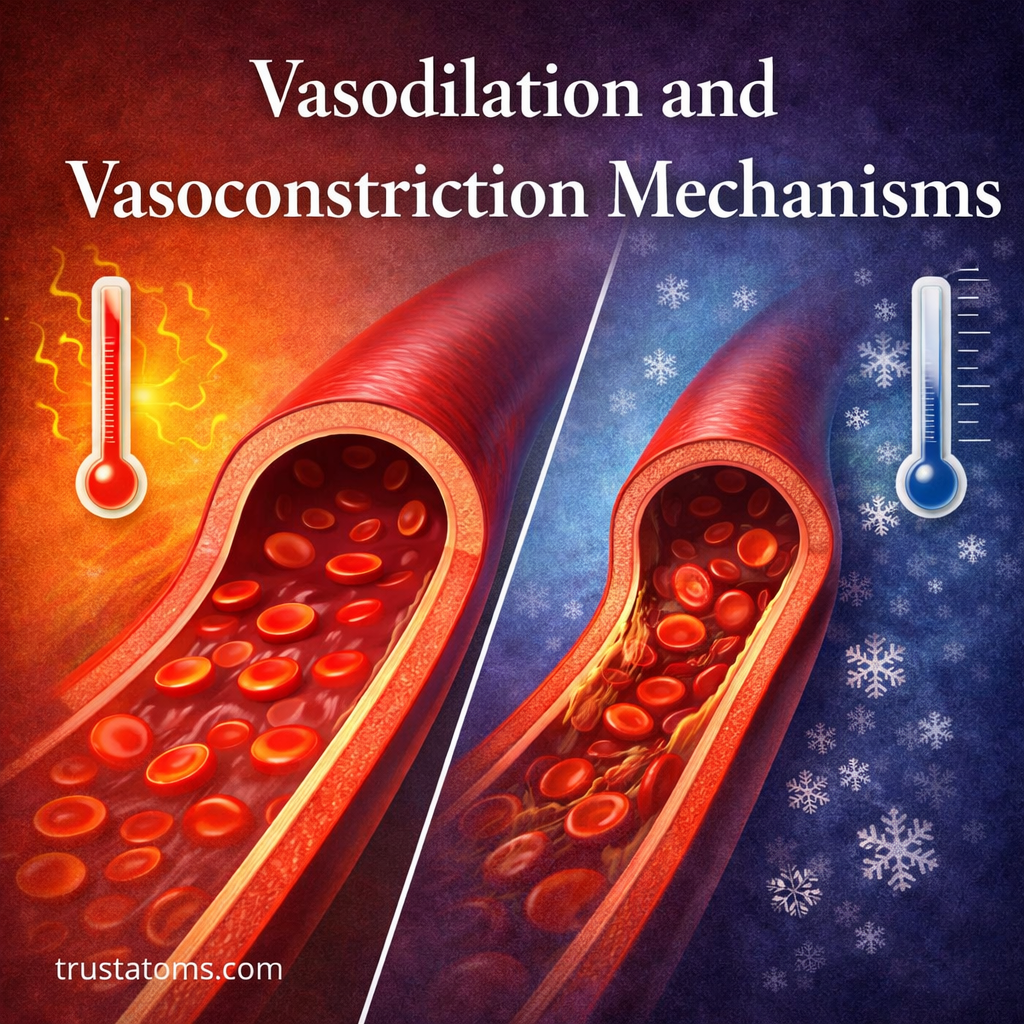
Blood vessels are not static tubes—they actively adjust their diameter to regulate blood flow, pressure, and temperature. Two key processes control this behavior: vasodilation and vasoconstriction.
These mechanisms are essential for maintaining homeostasis, allowing the body to respond quickly to changes such as exercise, stress, or environmental temperature.
What Are Vasodilation and Vasoconstriction?
Vasodilation and vasoconstriction refer to the widening and narrowing of blood vessels, primarily arteries and arterioles.
Vasodilation
- Expansion of blood vessel diameter
- Increases blood flow
- Decreases blood pressure
Vasoconstriction
- Narrowing of blood vessel diameter
- Reduces blood flow
- Increases blood pressure
These processes are controlled by smooth muscle in the vessel walls.
Structure of Blood Vessel Walls
To understand these mechanisms, it helps to know the structure of blood vessels.
Key Layers
- Tunica intima – inner lining made of endothelial cells
- Tunica media – middle layer containing smooth muscle
- Tunica externa – outer supportive layer
The tunica media is responsible for contraction and relaxation, directly controlling vessel diameter.
How Vasodilation Works
Vasodilation occurs when smooth muscle in the vessel wall relaxes, allowing the vessel to widen.
Key Triggers of Vasodilation
- Increased carbon dioxide levels
- Low oxygen levels
- Nitric oxide release from endothelial cells
- Heat exposure
- Physical activity
What Happens in the Body
- Blood flow to tissues increases
- Oxygen and nutrient delivery improves
- Heat is released through the skin
This process is especially important during exercise when muscles demand more oxygen.
How Vasoconstriction Works
Vasoconstriction occurs when smooth muscle contracts, narrowing the vessel.
Key Triggers of Vasoconstriction
- Cold temperatures
- Stress or fear (fight-or-flight response)
- Hormones like adrenaline and norepinephrine
- Blood loss or dehydration
What Happens in the Body
- Blood is redirected to vital organs
- Heat is conserved
- Blood pressure rises
This response helps the body maintain stability in challenging conditions.
Role of the Nervous System
The autonomic nervous system plays a major role in controlling vessel diameter.
Sympathetic Nervous System
- Promotes vasoconstriction
- Increases heart rate and blood pressure
- Activated during stress or activity
Parasympathetic Influence
- Indirectly supports vasodilation
- Helps the body return to a resting state
This balance allows rapid adjustments based on the body’s needs.
Chemical and Hormonal Regulation
In addition to nerve signals, various chemicals regulate vascular tone.
Vasodilators
- Nitric oxide
- Prostacyclin
- Histamine
These substances relax smooth muscle and increase blood flow.
Vasoconstrictors
- Angiotensin II
- Vasopressin
- Endothelin
These chemicals tighten vessels and raise blood pressure.
Local Control of Blood Flow
Tissues can regulate their own blood supply based on metabolic needs.
Examples of Local Regulation
- Active muscles receive more blood during exercise
- Digestive organs receive more blood after eating
- Injured tissues increase blood flow for healing
This process ensures efficient distribution of resources throughout the body.
Importance in Blood Pressure Regulation
Vasodilation and vasoconstriction are key to maintaining stable blood pressure.
How It Works
- Vasoconstriction increases resistance → raises blood pressure
- Vasodilation decreases resistance → lowers blood pressure
The body constantly adjusts vessel diameter to keep pressure within a healthy range.
Temperature Regulation and Blood Vessels
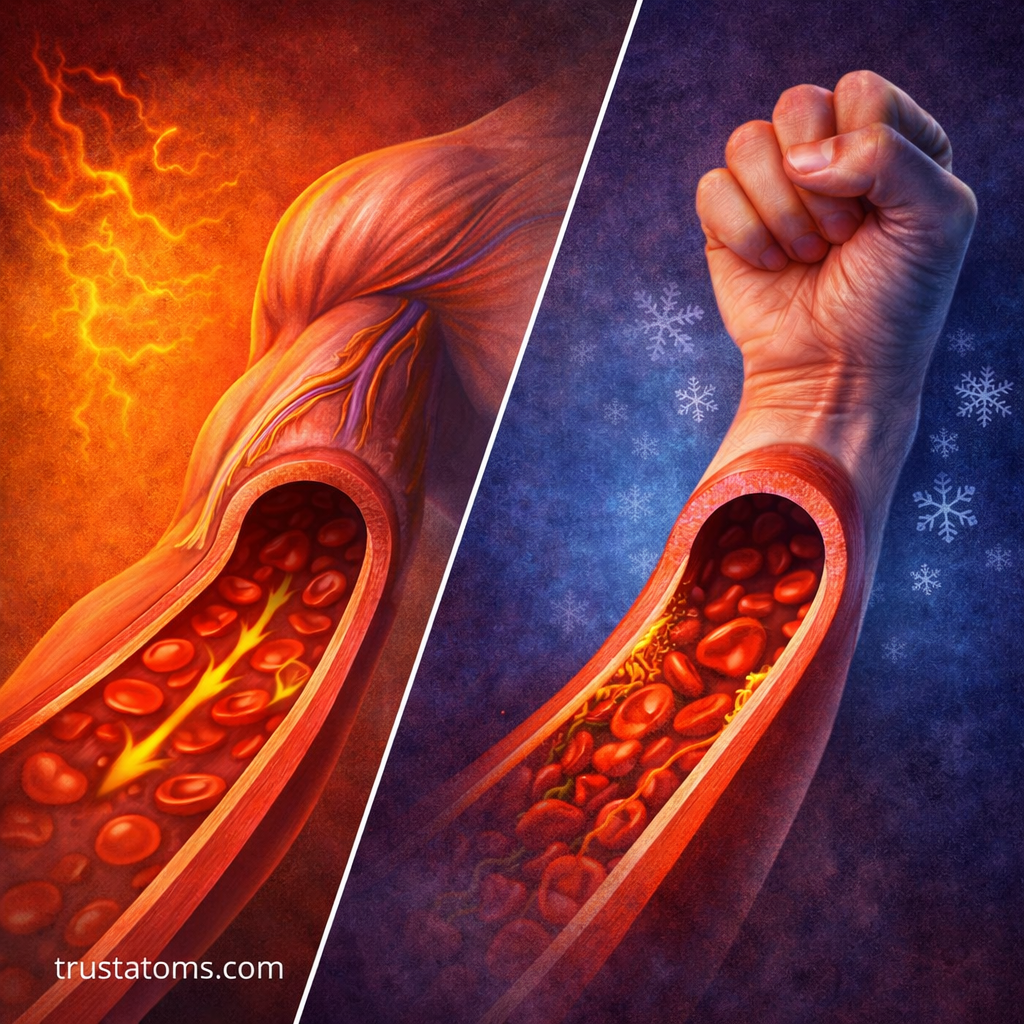
Blood vessels help regulate body temperature through changes in diameter.
In Hot Conditions
- Vasodilation increases blood flow to the skin
- Heat is released into the environment
In Cold Conditions
- Vasoconstriction reduces blood flow to the skin
- Heat is conserved within the body
This system helps maintain a stable internal temperature.
Clinical Significance
Disruptions in these mechanisms can lead to health problems.
Common Conditions
- Hypertension (excessive vasoconstriction)
- Hypotension (excessive vasodilation)
- Raynaud’s phenomenon (extreme vasoconstriction in extremities)
- Shock (widespread vasodilation and low blood pressure)
Medical Applications
- Medications like vasodilators treat high blood pressure
- Vasoconstrictors are used to control bleeding and raise blood pressure
Understanding these mechanisms is essential for diagnosing and treating cardiovascular conditions.
Everyday Factors That Influence Vessel Behavior
Lifestyle choices can significantly affect vascular health.
Positive Influences
- Regular physical activity
- Balanced diet rich in nutrients
- Proper hydration
- Stress management
Negative Influences
- Smoking
- High-sodium diets
- Sedentary lifestyle
- Chronic stress
Maintaining healthy habits supports proper vessel function.
Final Thoughts
Vasodilation and vasoconstriction are vital processes that allow the body to regulate blood flow, pressure, and temperature. Controlled by a combination of nervous signals, chemical messengers, and local tissue needs, these mechanisms ensure that every part of the body receives the right amount of blood at the right time.
A well-functioning vascular system is essential for overall health, making these processes a cornerstone of human physiology.