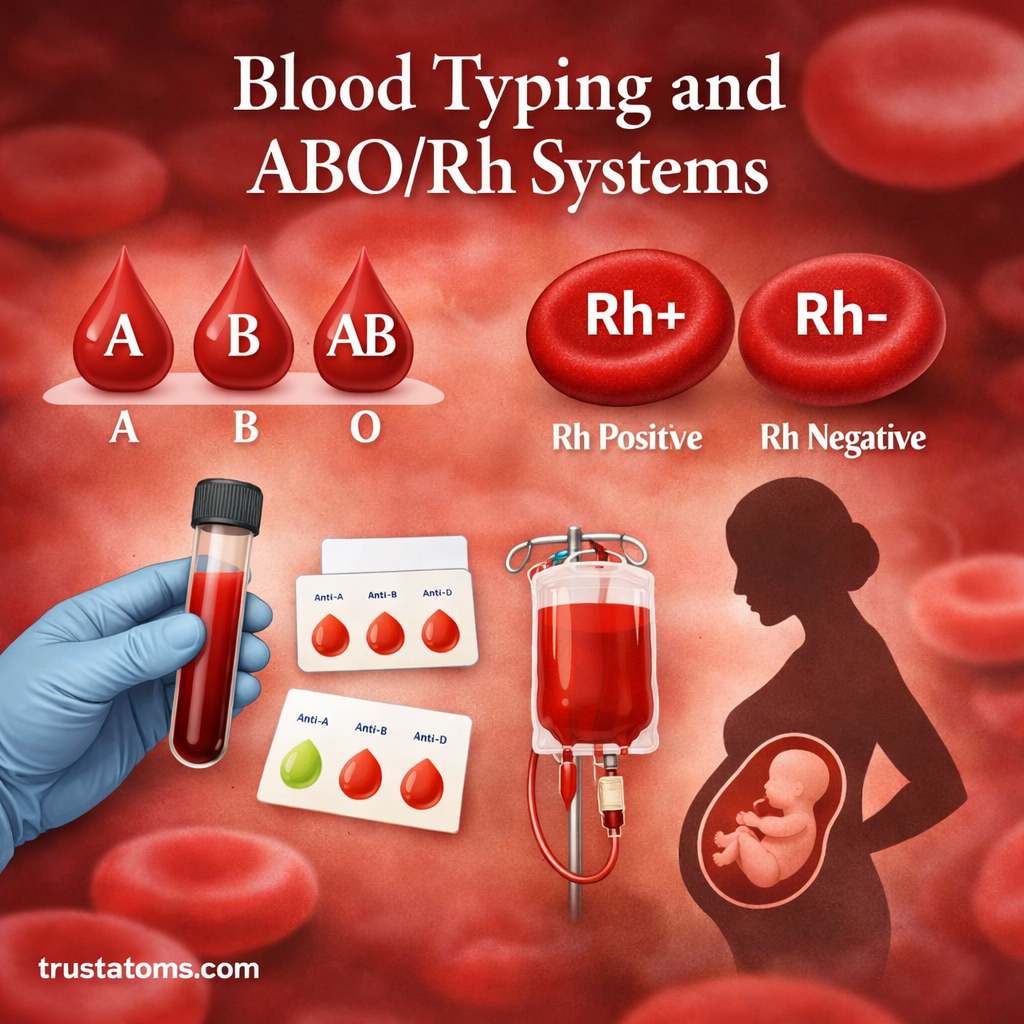
Blood typing is one of the most important concepts in human anatomy and medicine. It determines how blood can be safely transfused, plays a role in pregnancy, and helps doctors prevent life-threatening immune reactions.
In this guide, you’ll learn how the ABO and Rh blood group systems work, why they matter, and how they affect real-world medical decisions.
What Is Blood Typing?
Blood typing is the classification of blood based on specific markers—called antigens—found on the surface of red blood cells.
These antigens signal to the immune system whether blood is “self” or “foreign.”
If incompatible blood is introduced into the body, the immune system can attack it, leading to serious complications.
The ABO Blood Group System
The ABO system is the primary way blood is categorized. It is based on the presence or absence of two antigens:
- A antigen
- B antigen
The Four ABO Blood Types
There are four main blood types:
- Type A
- Has A antigens
- Produces anti-B antibodies
- Type B
- Has B antigens
- Produces anti-A antibodies
- Type AB
- Has both A and B antigens
- Produces no anti-A or anti-B antibodies
- Type O
- Has no A or B antigens
- Produces both anti-A and anti-B antibodies
Why Antibodies Matter
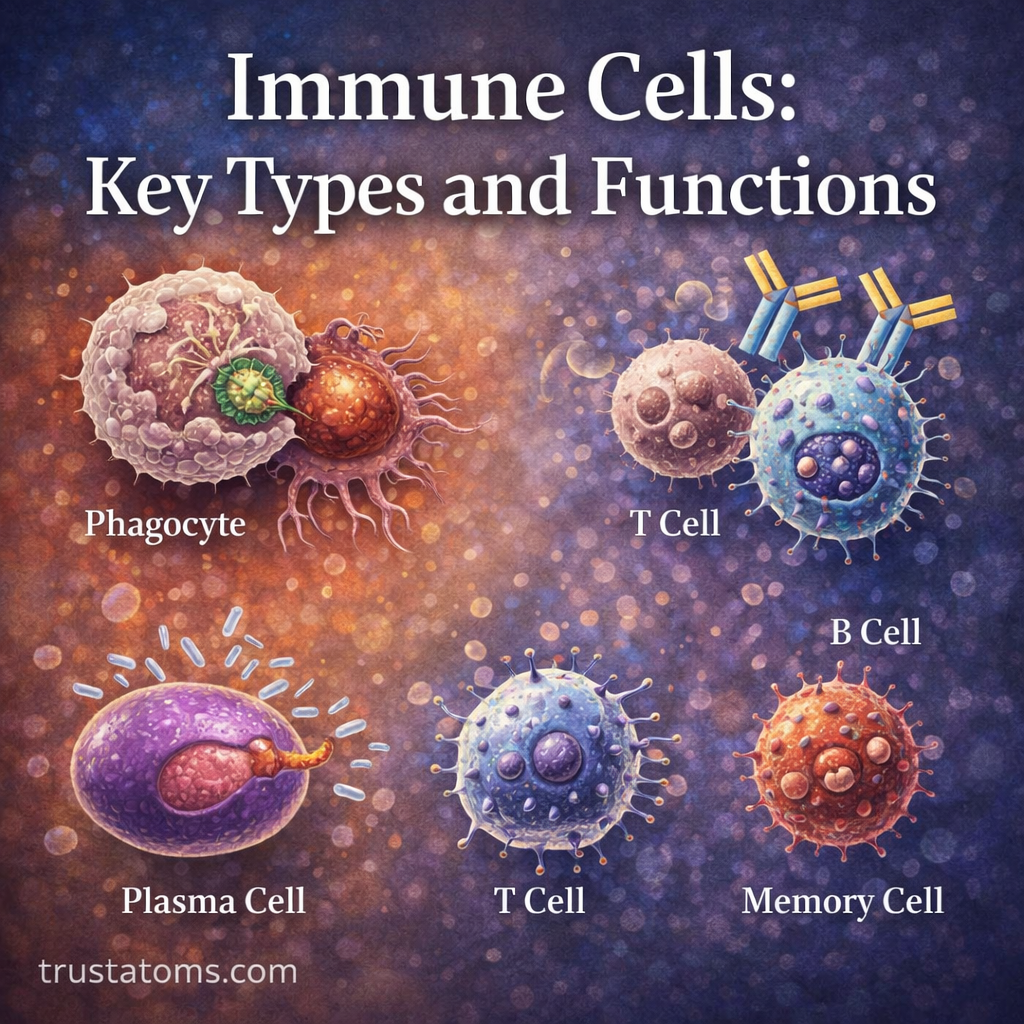
Antibodies are proteins in the plasma that recognize and attack foreign substances.
For example:
- A person with Type A blood cannot receive Type B blood
- A person with Type O blood can only receive Type O blood
If mismatched blood is transfused, the immune system may destroy the donor red blood cells. This can cause:
- Clumping (agglutination)
- Blocked blood vessels
- Organ damage
- Potentially fatal reactions
The Rh Factor Explained
In addition to ABO types, blood is also classified by the Rh factor.
The most important Rh antigen is the D antigen.
Rh Positive vs Rh Negative
- Rh-positive (Rh+)
- Has the D antigen
- Rh-negative (Rh−)
- Does not have the D antigen
So, your full blood type includes both systems:
- A+
- A−
- B+
- B−
- AB+
- AB−
- O+
- O−
Blood Compatibility Basics
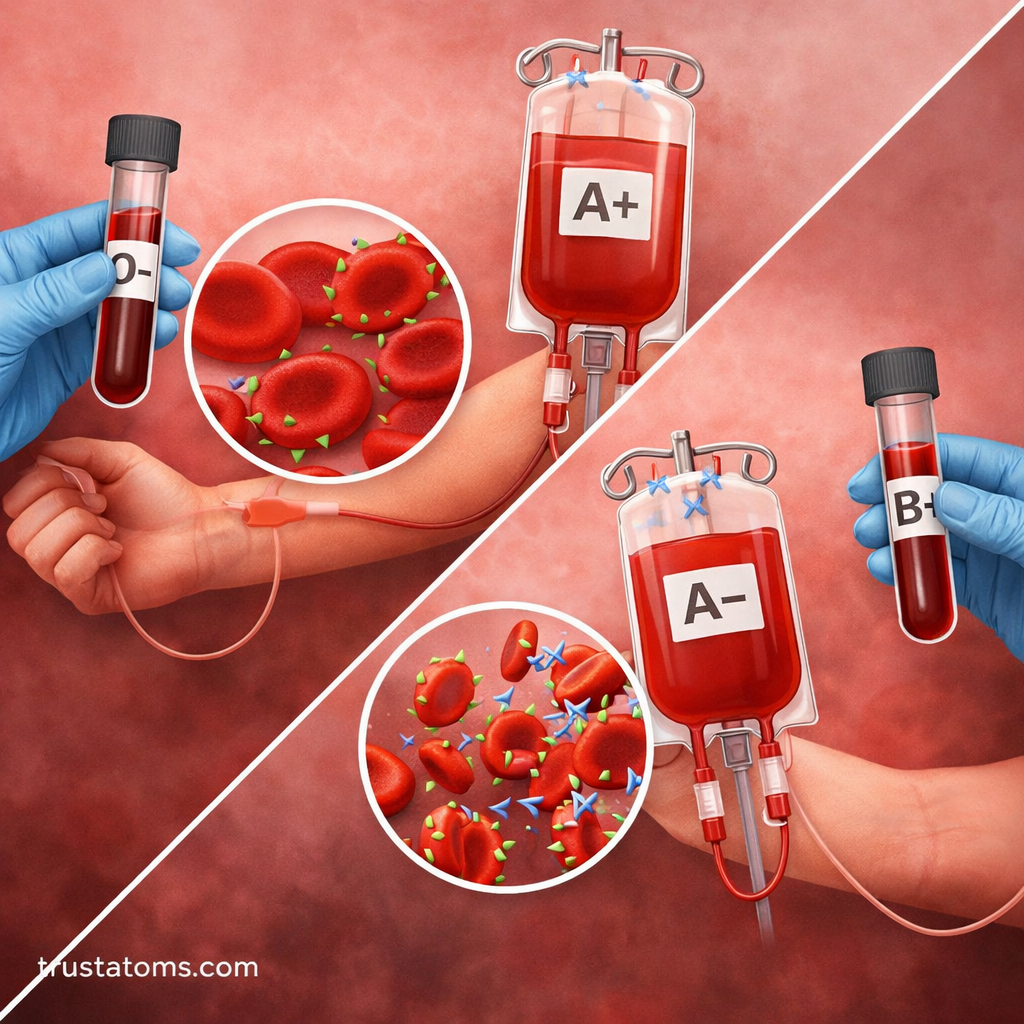
Blood compatibility depends on both ABO and Rh systems.
General Transfusion Rules
- Type O− → Universal donor (can give to almost anyone)
- Type AB+ → Universal recipient (can receive from almost anyone)
Simplified Compatibility Guide
- O− → Can donate to all types
- O+ → Can donate to all Rh+ types
- A → Can donate to A and AB
- B → Can donate to B and AB
- AB → Can donate only to AB
Why Blood Typing Is Important
Blood typing plays a critical role in several medical situations:
1. Blood Transfusions
Matching blood types prevents immune reactions during:
- Surgeries
- Trauma care
- Chronic illness treatments
2. Pregnancy and Rh Incompatibility
Problems can occur when:
- Mother is Rh-negative
- Baby is Rh-positive
The mother’s immune system may produce antibodies against the baby’s blood.
This condition is called hemolytic disease of the newborn (HDN).
Doctors prevent this using a medication called Rh immunoglobulin (RhIg).
3. Organ Transplants
Matching blood types improves transplant success and reduces rejection risk.
4. Emergency Medicine
In urgent situations where blood type is unknown:
- O− blood is often used due to its compatibility
How Blood Typing Is Determined
Blood typing is done through a simple lab test.
Basic Steps
- A blood sample is collected
- It is mixed with antibodies against A, B, and Rh antigens
- The sample is observed for clumping (agglutination)
Interpretation
- Clumping with anti-A → Type A
- Clumping with anti-B → Type B
- Clumping with both → Type AB
- No clumping → Type O
- Clumping with Rh → Rh positive
Common Misconceptions About Blood Types
“O Negative Is Always Best”
While O− is useful in emergencies, it is not “better”—it’s just more universally compatible.
“Blood Type Affects Personality”
There is no scientific evidence linking blood type to personality traits.
“You Can Change Your Blood Type”
Blood type is genetically inherited and does not change naturally.
Key Takeaways
- Blood typing is based on antigens on red blood cells
- The ABO system determines A, B, AB, or O types
- The Rh factor adds positive or negative classification
- Compatibility is essential to avoid immune reactions
- Blood typing is critical in transfusions, pregnancy, and medical care
Final Thoughts
Understanding the ABO and Rh systems is essential for anyone studying human anatomy or healthcare. These classifications are not just labels—they are life-saving tools used every day in medicine.
Whether in an emergency room, operating theater, or prenatal clinic, accurate blood typing ensures safer treatments and better outcomes.