Blood is more than just a red liquid—it’s a dynamic tissue with properties that directly affect how well oxygen and nutrients are delivered throughout the body. Two key factors that influence blood flow are hematocrit and blood viscosity.
In this guide, you’ll learn what these terms mean, how they are connected, and why they matter for overall health and medical care.
What Is Hematocrit?
Hematocrit refers to the percentage of red blood cells (RBCs) in your blood.
Since red blood cells carry oxygen, hematocrit is an important indicator of how efficiently your blood can transport oxygen to tissues.
Example
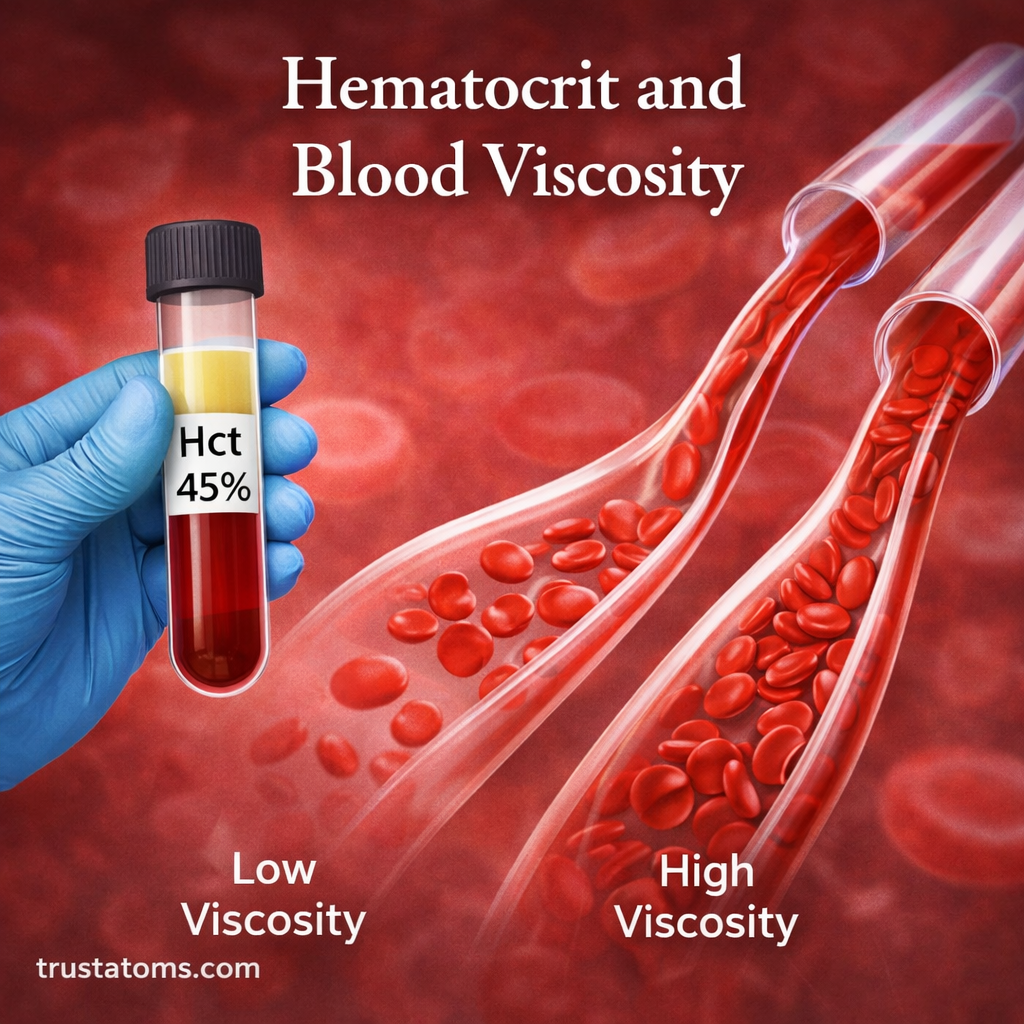
If your hematocrit is 45%, it means:
- 45% of your blood volume is made up of red blood cells
- The remaining 55% consists of plasma and other components
Normal Hematocrit Ranges
Hematocrit levels vary based on age, sex, and health status.
Typical Ranges
- Adult men: ~41% to 50%
- Adult women: ~36% to 44%
- Children: ~32% to 44%
Values outside these ranges may indicate an underlying condition.
What Is Blood Viscosity?
Blood viscosity refers to the thickness and stickiness of blood.
It determines how easily blood flows through blood vessels.
- Low viscosity → blood flows easily
- High viscosity → blood flows more slowly and with more resistance
Think of it like liquids:
- Water = low viscosity
- Honey = high viscosity
How Hematocrit Affects Blood Viscosity
Hematocrit and blood viscosity are closely linked.
Key Relationship
- Higher hematocrit → higher viscosity
- Lower hematocrit → lower viscosity
This happens because:
- More red blood cells increase internal friction
- Blood becomes thicker and harder to pump
Why Blood Viscosity Matters
Blood viscosity directly impacts circulation and cardiovascular health.
Effects of High Viscosity
- Slower blood flow
- Increased strain on the heart
- Higher risk of clot formation
- Reduced oxygen delivery in small vessels
Effects of Low Viscosity
- Faster blood flow
- Reduced oxygen-carrying capacity
- Possible fatigue and weakness
Conditions Related to Hematocrit Levels
High Hematocrit (Polycythemia)
Occurs when there are too many red blood cells.
Possible causes:
- Dehydration
- Living at high altitudes
- Lung disease
- Bone marrow disorders
Symptoms may include:
- Headaches
- Dizziness
- Increased risk of blood clots
Low Hematocrit (Anemia)
Occurs when there are too few red blood cells.
Common causes:
- Iron deficiency
- Vitamin deficiencies (B12 or folate)
- Blood loss
- Chronic disease
Symptoms may include:
- Fatigue
- Shortness of breath
- Pale skin
Factors That Influence Blood Viscosity
Blood viscosity isn’t determined by hematocrit alone.
Other Contributing Factors
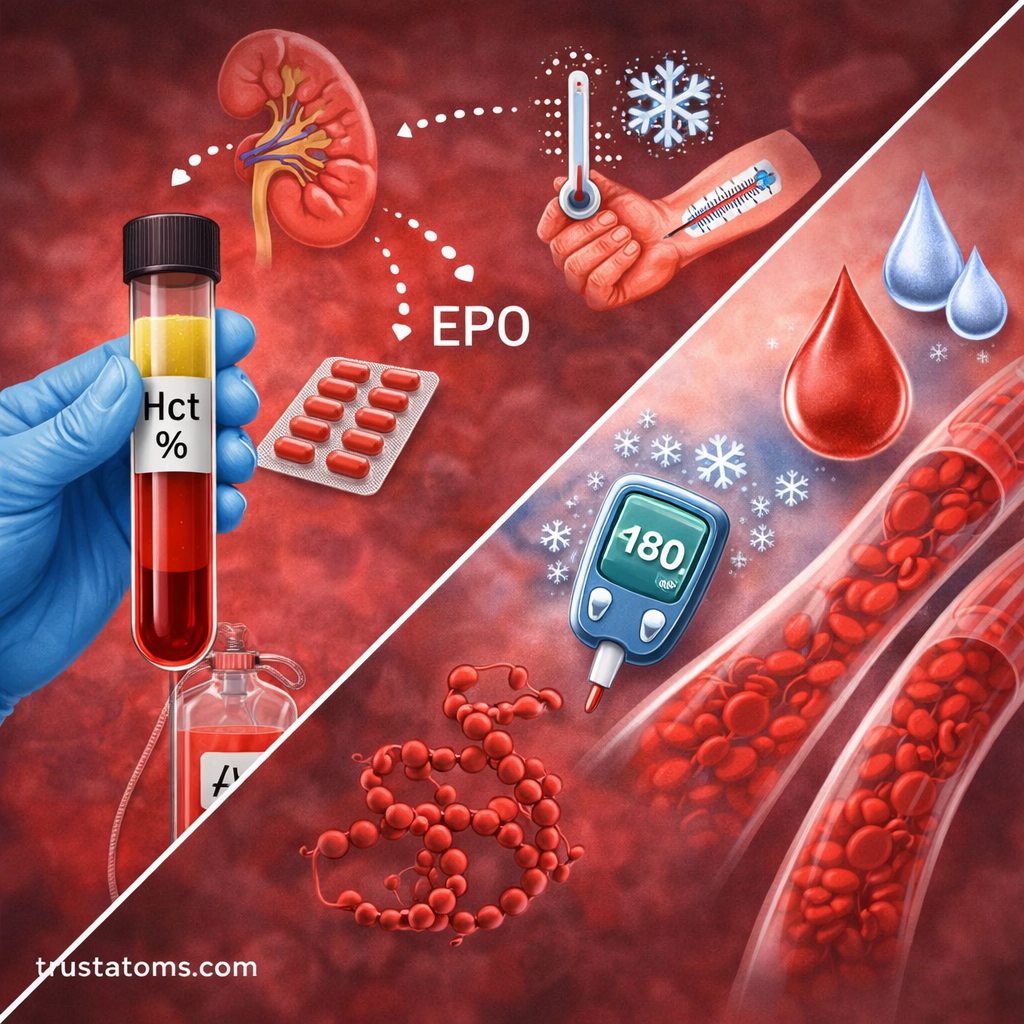
- Plasma proteins (e.g., fibrinogen)
- Temperature (colder blood is thicker)
- Hydration levels
- Red blood cell flexibility
- Blood sugar levels
How the Body Maintains Balance
The body constantly regulates hematocrit and viscosity to maintain proper circulation.
Key Mechanisms
- Kidneys release erythropoietin (EPO)
- Stimulates red blood cell production
- Fluid balance regulation
- Adjusts plasma volume
- Spleen function
- Removes old or damaged red blood cells
Why This Matters in Medicine
Understanding hematocrit and viscosity is critical in clinical settings.
1. Blood Tests and Diagnosis
Hematocrit is part of a standard complete blood count (CBC).
It helps diagnose:
- Anemia
- Dehydration
- Blood disorders
2. Cardiovascular Health
High blood viscosity can:
- Increase blood pressure
- Raise the risk of heart attack or stroke
3. Athletic Performance
Some athletes try to increase hematocrit to improve oxygen delivery.
However:
- Artificially raising hematocrit can be dangerous
- It increases viscosity and clotting risk
4. Critical Care and Surgery
Doctors monitor hematocrit to:
- Manage blood loss
- Determine need for transfusions
- Maintain proper oxygen delivery
Key Takeaways
- Hematocrit measures the percentage of red blood cells in blood
- Blood viscosity describes how thick or resistant blood is to flow
- Higher hematocrit increases viscosity and affects circulation
- Both low and high levels can lead to health problems
- Proper balance is essential for efficient oxygen delivery and cardiovascular function
Final Thoughts
Hematocrit and blood viscosity are fundamental concepts in human anatomy and physiology. Together, they influence how well your blood circulates, how efficiently oxygen is delivered, and how hard your heart must work.
Maintaining the right balance is key—not just for everyday health, but for preventing serious medical conditions and ensuring optimal body function.