Blood plasma is more than just a transport medium—it plays a crucial role in maintaining fluid balance throughout the body. One of the key ways it does this is through plasma proteins and their effect on osmotic pressure.
In this guide, you’ll learn how plasma proteins work, what osmotic pressure is, and why this balance is essential for healthy circulation and tissue function.
What Are Plasma Proteins?
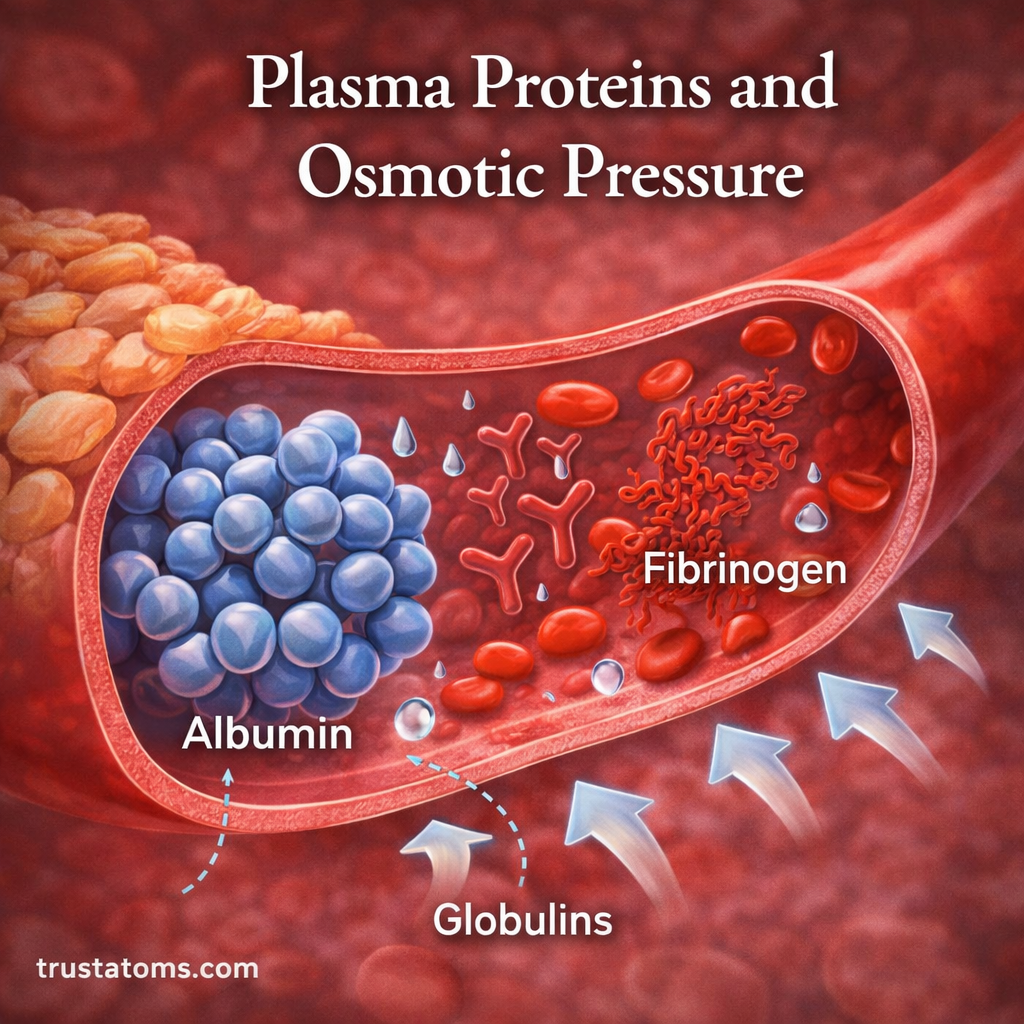
Plasma proteins are proteins dissolved in the liquid portion of blood (plasma). They are produced mainly by the liver and serve several vital functions.
Major Types of Plasma Proteins
- Albumin
- Most abundant plasma protein
- Maintains osmotic pressure
- Transports substances like hormones and drugs
- Globulins
- Include antibodies (immunoglobulins)
- Help fight infections
- Transport lipids and vitamins
- Fibrinogen
- Essential for blood clotting
- Converts to fibrin during injury
What Is Osmotic Pressure?
Osmotic pressure is the force that pulls water across a semipermeable membrane due to differences in solute concentration.
In the bloodstream, this is often called colloid osmotic pressure (oncotic pressure) because it is largely generated by plasma proteins.
Simple Concept
- Water moves toward areas with higher solute concentration
- Plasma proteins act as solutes that draw water into blood vessels
How Plasma Proteins Create Osmotic Pressure
Plasma proteins—especially albumin—cannot easily leave blood vessels. This makes them ideal for regulating fluid movement.
Key Mechanism
- Blood vessels contain high levels of plasma proteins
- Surrounding tissues contain fewer proteins
- Water is pulled into the bloodstream to balance concentrations
This helps maintain:
- Blood volume
- Blood pressure
- Proper circulation
Osmotic Pressure vs Hydrostatic Pressure
Fluid movement in capillaries is controlled by two opposing forces:
Osmotic (Oncotic) Pressure
- Pulls water into blood vessels
- Driven by plasma proteins
Hydrostatic Pressure
- Pushes water out of blood vessels
- Caused by blood pressure
Balance of Forces
- At the arterial end of capillaries → hydrostatic pressure dominates → fluid leaves
- At the venous end → osmotic pressure dominates → fluid returns
This balance ensures that tissues receive nutrients without excessive fluid buildup.
Why Albumin Is So Important
Albumin is responsible for about 70–80% of plasma osmotic pressure.
Functions of Albumin
- Maintains fluid balance
- Prevents swelling (edema)
- Transports molecules like:
- Fatty acids
- Hormones
- Medications
Low albumin levels can disrupt fluid balance significantly.
What Happens When Osmotic Pressure Is Disrupted?
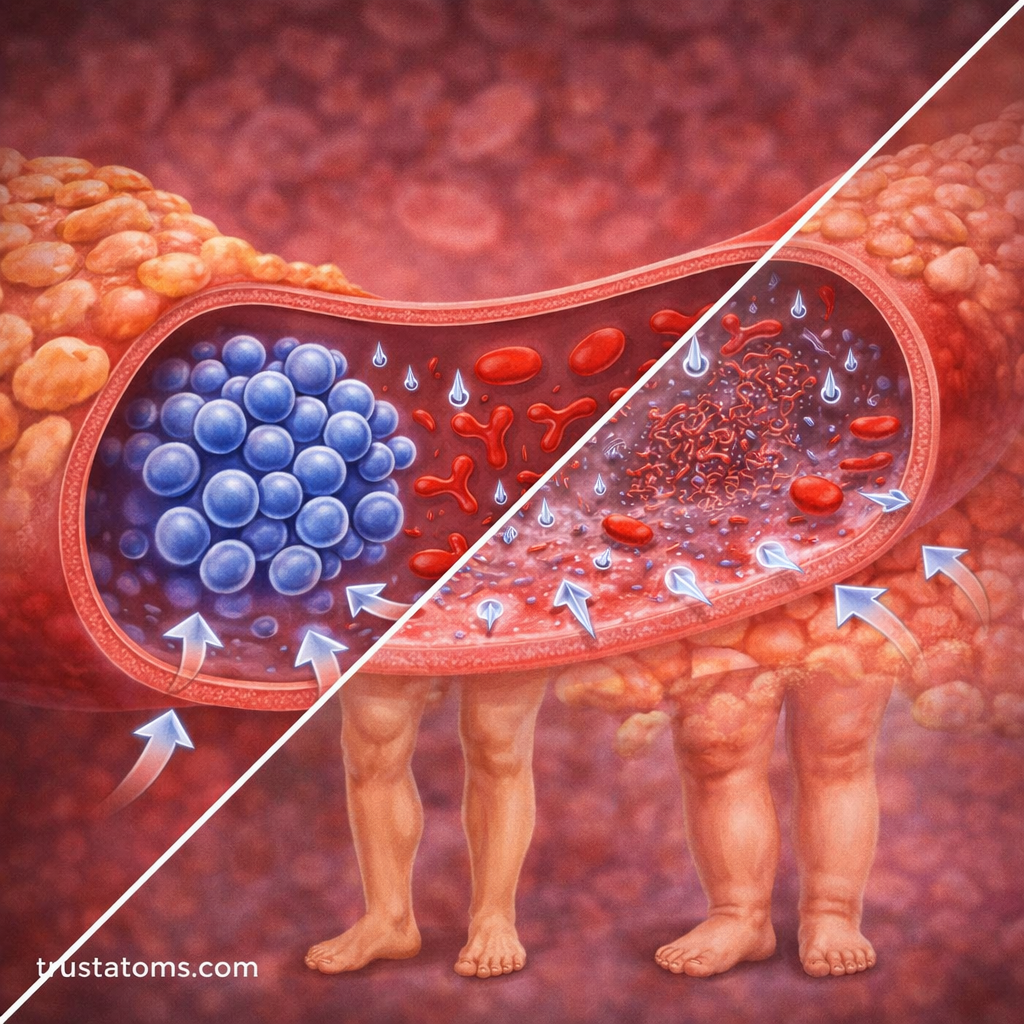
When plasma protein levels drop, osmotic pressure decreases.
Consequences
- Less fluid is pulled back into blood vessels
- Fluid accumulates in tissues
- Swelling (edema) occurs
Conditions Related to Plasma Proteins
1. Hypoalbuminemia (Low Albumin)
Causes:
- Liver disease
- Malnutrition
- Kidney disease (protein loss in urine)
Symptoms:
- Swelling in legs and abdomen
- Fatigue
- Weakness
2. Edema
Edema is fluid buildup in tissues.
Common causes:
- Low plasma proteins
- Heart failure
- Kidney dysfunction
3. Dehydration
When fluid levels drop:
- Plasma becomes more concentrated
- Osmotic pressure may temporarily increase
How the Body Regulates Plasma Proteins
The body carefully controls plasma protein levels through several systems.
Key Regulatory Mechanisms
- Liver Function
- Produces most plasma proteins
- Kidney Filtration
- Prevents excessive protein loss
- Nutritional Intake
- Provides amino acids for protein synthesis
- Hormonal Control
- Influences fluid and protein balance
Why This Matters in Medicine
Understanding plasma proteins and osmotic pressure is essential in healthcare.
Clinical Applications
- IV Fluid Therapy
- Used to restore fluid balance
- Albumin Infusions
- Given in severe protein deficiency
- Monitoring Critical Patients
- Helps manage fluid shifts and swelling
- Diagnosis
- Blood tests measure protein levels to assess liver and kidney health
Key Takeaways
- Plasma proteins are essential for maintaining osmotic pressure
- Albumin plays the largest role in pulling water into blood vessels
- Osmotic pressure balances hydrostatic pressure to regulate fluid movement
- Disruptions can lead to edema and fluid imbalance
- Proper protein levels are critical for circulation and overall health
Final Thoughts
Plasma proteins and osmotic pressure are fundamental to how the body maintains fluid stability. Without this delicate balance, even simple processes like nutrient delivery and waste removal would be compromised.
From preventing swelling to supporting circulation, these invisible forces work continuously to keep your body functioning efficiently.