The human respiratory system is constantly exposed to airborne particles such as dust, bacteria, viruses, and pollutants. Despite this, the lungs remain remarkably protected. One of the most effective defense systems responsible for this protection is the coordinated action of cilia and mucus within the airways.
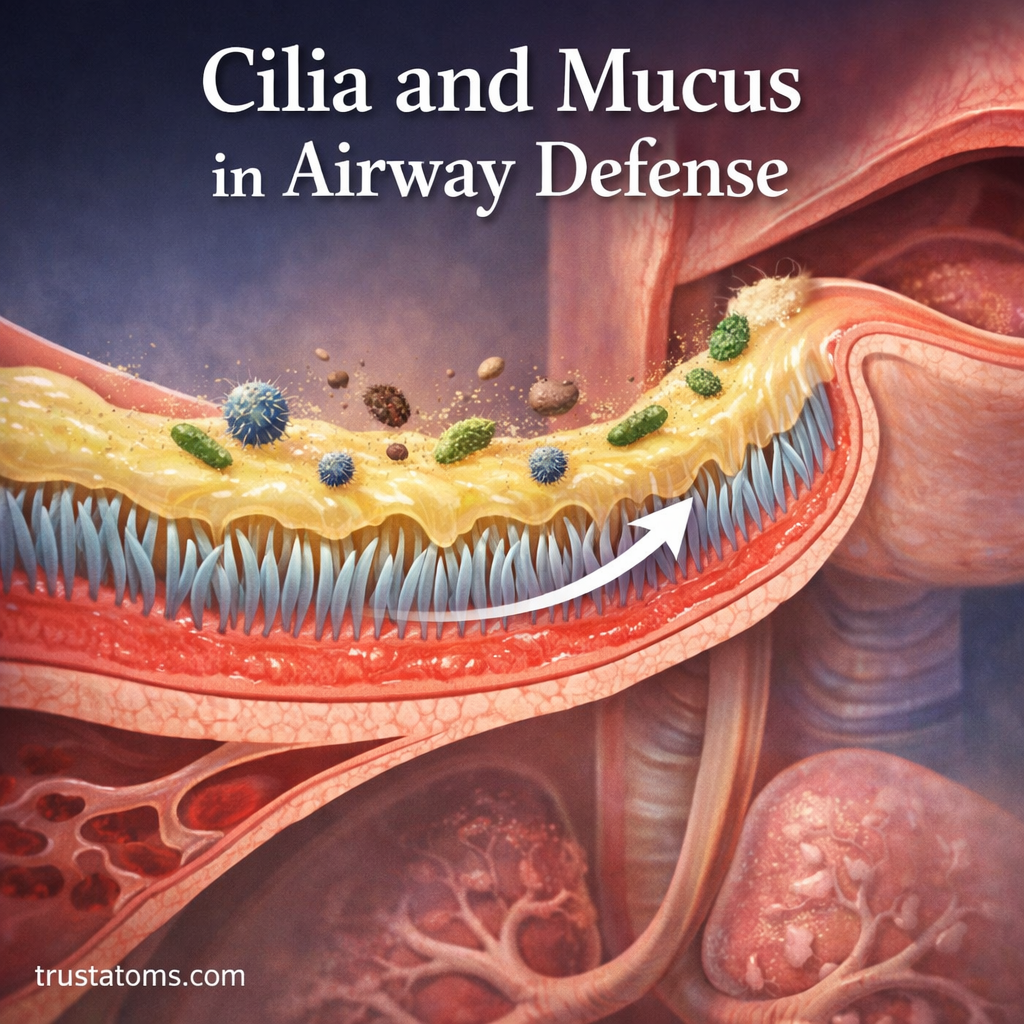
This built-in cleaning mechanism—often called the mucociliary escalator—plays a critical role in keeping the respiratory tract clear and functional.
What Are Cilia?
Cilia are tiny, hair-like structures that line the surface of epithelial cells in the respiratory tract, particularly in the:
- Nasal passages
- Trachea
- Bronchi
These microscopic structures beat in a synchronized, wave-like motion.
Key Functions of Cilia
- Move mucus upward toward the throat
- Trap and remove harmful particles
- Maintain airway cleanliness
- Support immune defense
Cilia are constantly active, beating around 10–20 times per second, ensuring that debris does not accumulate in the lungs.
What Is Mucus?
Mucus is a sticky, gel-like substance produced by specialized cells (goblet cells) and glands in the airway lining.
Composition of Mucus
Mucus is made up of:
- Water (about 95%)
- Mucins (glycoproteins that give mucus its viscosity)
- Antibodies
- Enzymes and antimicrobial substances
Functions of Mucus
- Traps dust, bacteria, and viruses
- Moistens inhaled air
- Protects airway surfaces from irritation
- Acts as a first-line immune barrier
The Mucociliary Escalator
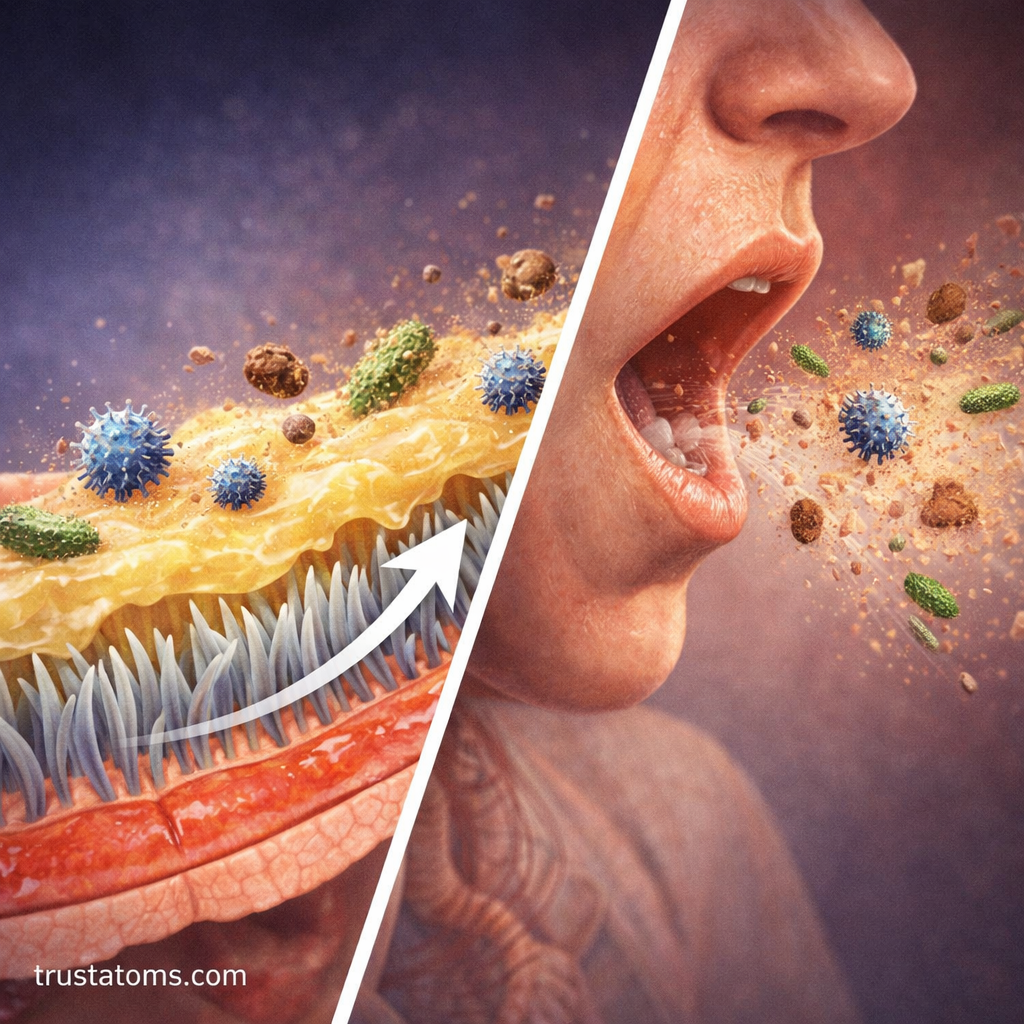
The interaction between cilia and mucus forms a highly efficient clearance system known as the mucociliary escalator.
How It Works
- Inhalation introduces particles into the airway
- Mucus traps these particles before they reach the lungs
- Cilia beat rhythmically, pushing the mucus upward
- Mucus reaches the throat, where it is swallowed or expelled
This continuous process helps prevent infections and keeps the lower respiratory tract sterile.
Why This Defense System Matters
Without proper mucociliary function, harmful particles would accumulate in the lungs, increasing the risk of disease.
Benefits of Effective Airway Defense
- Reduces risk of respiratory infections
- Prevents buildup of debris in the lungs
- Maintains optimal airflow
- Supports overall lung health
Factors That Affect Cilia and Mucus Function
Several environmental and lifestyle factors can impair this defense system.
Common Disruptors
- Smoking
- Damages cilia and slows their movement
- Air pollution
- Overloads mucus production and reduces efficiency
- Dehydration
- Thickens mucus, making it harder to move
- Respiratory infections
- Can temporarily damage cilia
Medical Conditions
- Chronic bronchitis – Excess mucus production
- Cystic fibrosis – Thick, sticky mucus that is difficult to clear
- Primary ciliary dyskinesia – Genetic condition affecting cilia movement
What Happens When the System Fails?
When cilia stop functioning properly or mucus becomes too thick, clearance slows or stops entirely.
Consequences
- Mucus buildup in the airways
- Increased bacterial growth
- Persistent coughing
- Difficulty breathing
- Higher risk of chronic lung disease
This is why conditions affecting cilia or mucus often lead to long-term respiratory complications.
How the Body Maintains Healthy Airway Defense
The body continuously regulates mucus production and cilia activity to maintain balance.
Natural Maintenance Mechanisms
- Constant regeneration of epithelial cells
- Controlled mucus secretion
- Coordinated ciliary beating
- Immune system support
Simple Ways to Support Airway Health
While the body handles most of this process automatically, certain habits can help maintain optimal function.
Healthy Practices
- Stay well-hydrated
- Avoid smoking and secondhand smoke
- Limit exposure to pollutants
- Maintain good indoor air quality
- Practice proper hygiene to reduce infections
Final Thoughts
Cilia and mucus work together as a highly efficient and essential defense system in the respiratory tract. This partnership ensures that harmful particles are trapped, transported, and removed before they can cause damage.
Often overlooked, this microscopic system plays a massive role in protecting lung health and supporting everyday breathing. Understanding how it works highlights just how sophisticated and resilient the human body truly is.