Breathing may seem simple, but not every breath you take contributes equally to oxygen exchange. In fact, a portion of the air you inhale never reaches the areas of the lungs where gas exchange occurs. This concept is known as dead space, and it plays a crucial role in understanding how efficiently your respiratory system works.
In this article, we’ll break down what dead space is, how it affects effective ventilation, and why it matters for both health and performance.
What Is Dead Space?
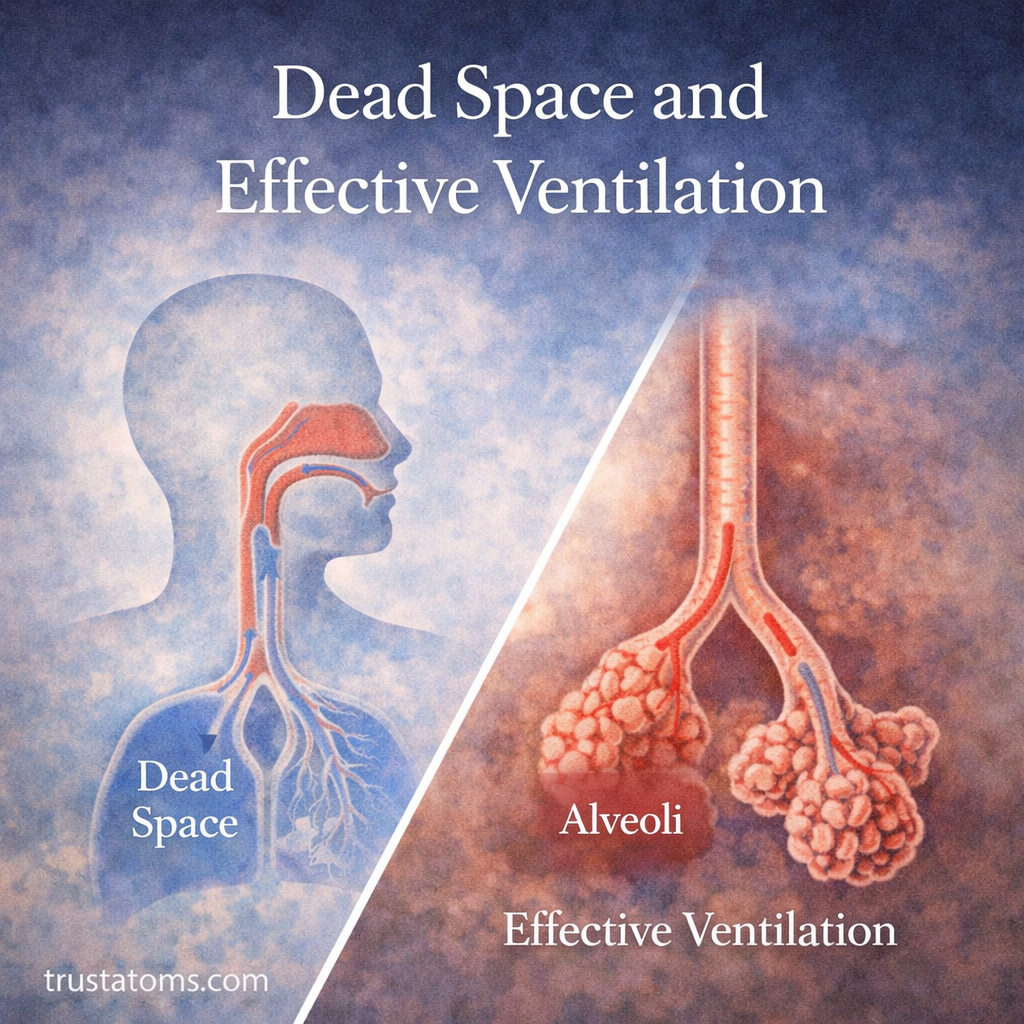
Dead space refers to the volume of air in the respiratory system that does not participate in gas exchange.
In simple terms:
- It is air that is inhaled but not used for oxygen-carbon dioxide exchange
- It remains in areas where no gas exchange occurs
Types of Dead Space
Dead space is not a single concept—it has different forms depending on where the unused air is located.
Anatomical Dead Space
This is the air found in the conducting airways, such as:
- Nose
- Pharynx
- Larynx
- Trachea
- Bronchi
These structures transport air but do not contain alveoli, so no gas exchange occurs here.
Alveolar Dead Space
This occurs when air reaches the alveoli but gas exchange is impaired.
Common causes include:
- Poor blood flow to alveoli
- Lung diseases affecting circulation
- Blocked or damaged capillaries
Physiological Dead Space
This is the total dead space in the respiratory system:
- Anatomical dead space
- Plus alveolar dead space
In healthy individuals, physiological dead space is usually close to anatomical dead space.
What Is Effective Ventilation?
Effective ventilation refers to the portion of breathing that actually participates in gas exchange.
It is often called alveolar ventilation.
Key Idea
- Not all inhaled air is useful
- Only the air reaching functional alveoli contributes to oxygen delivery
Relationship Between Dead Space and Ventilation
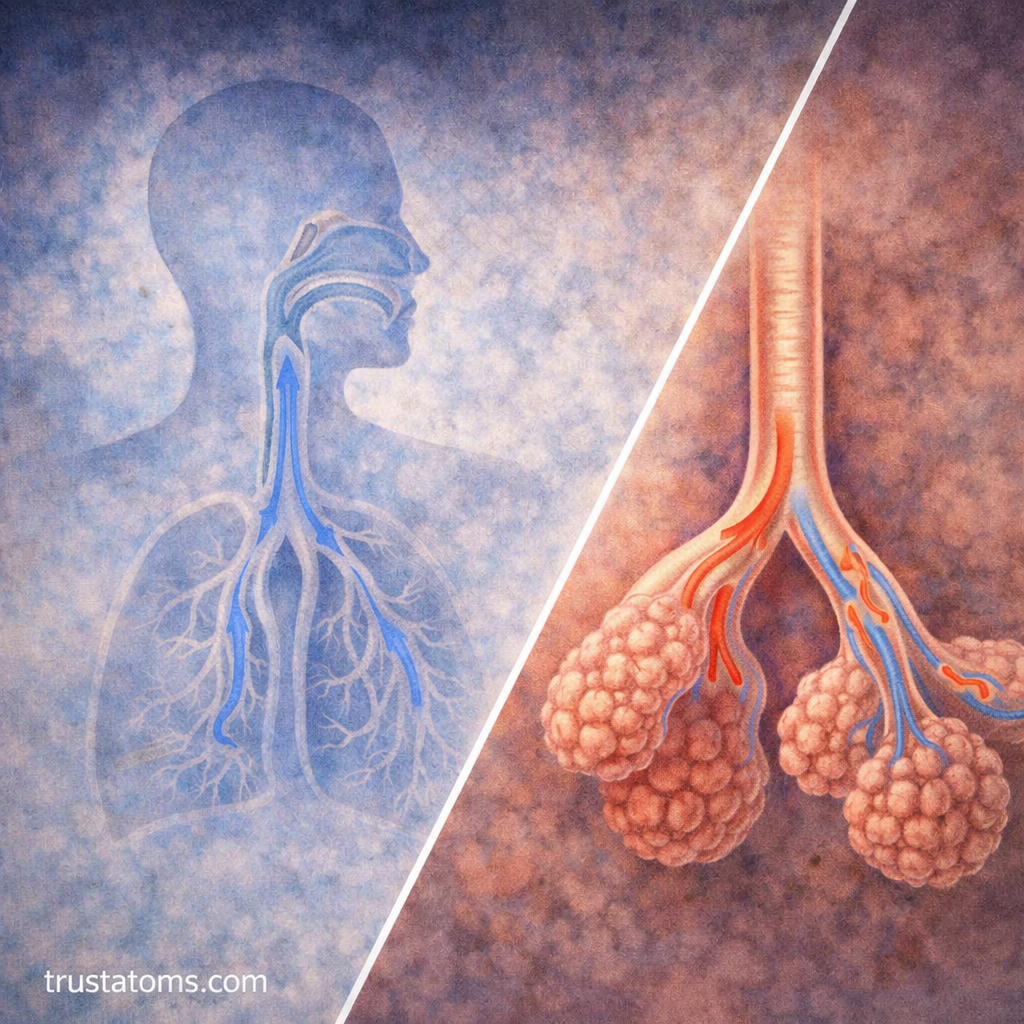
Dead space directly reduces the efficiency of breathing.
Example
If you inhale a normal breath:
- A portion fills the dead space
- The remaining air reaches the alveoli
This means:
- Larger dead space → Less effective oxygen exchange
- Smaller dead space → More efficient breathing
Factors That Affect Dead Space
Several conditions and variables can increase or decrease dead space.
1. Body Position
- Standing vs. lying down affects lung distribution
- Changes airflow and blood flow balance
2. Lung Health
- Diseases like emphysema increase alveolar dead space
- Damaged alveoli reduce gas exchange
3. Blood Flow (Perfusion)
- Reduced blood flow to the lungs increases dead space
- Seen in conditions like pulmonary embolism
4. Breathing Patterns
- Shallow breathing increases the proportion of dead space
- Deep breathing improves effective ventilation
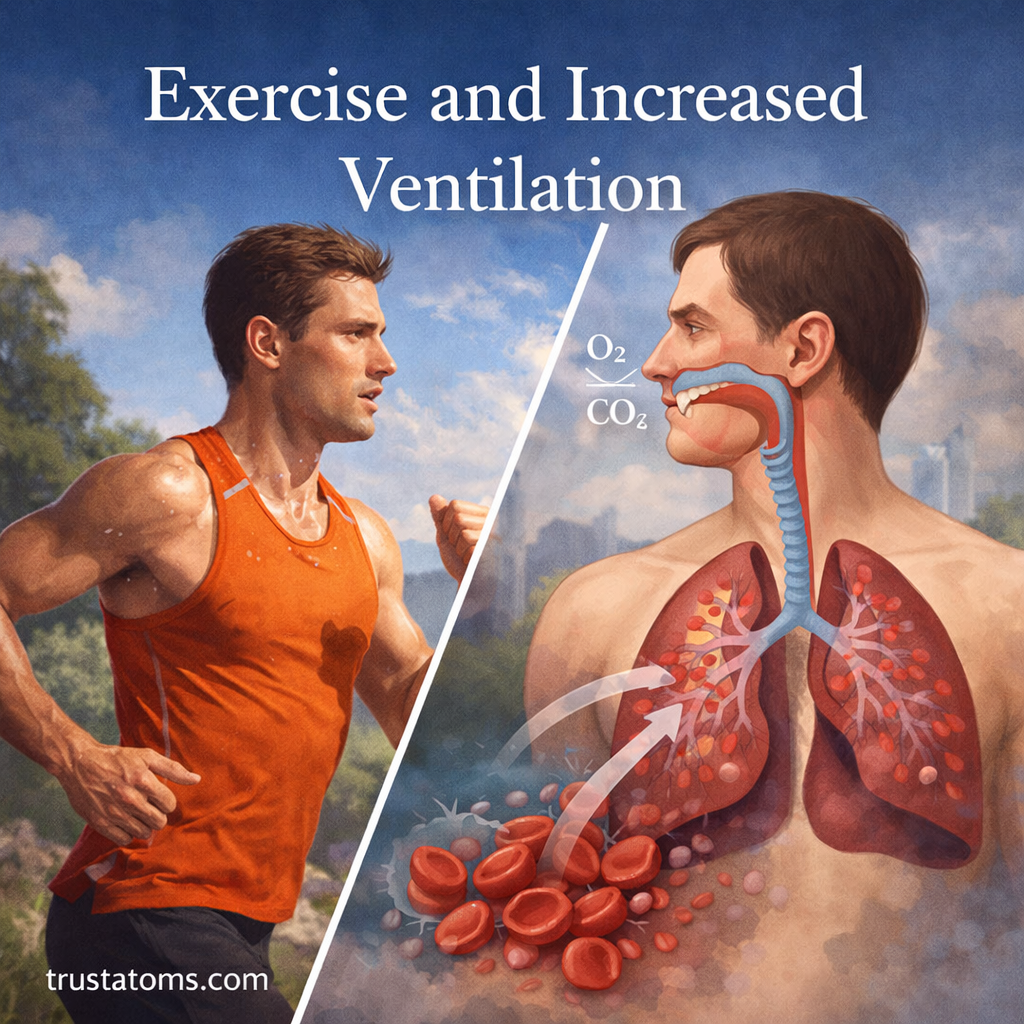
Dead Space During Exercise
Exercise significantly changes how dead space affects ventilation.
What Happens?
- Breathing becomes deeper (increased tidal volume)
- More air reaches the alveoli
- The relative impact of dead space decreases
Result
- Improved oxygen delivery
- More efficient breathing
Even though total ventilation increases, effective ventilation improves even more.
Clinical Importance of Dead Space
Understanding dead space is essential in medicine and respiratory care.
Mechanical Ventilation
In patients on ventilators:
- Dead space must be carefully managed
- Tubing and equipment can increase dead space
Lung Diseases
Conditions that increase dead space include:
- Chronic obstructive pulmonary disease (COPD)
- Pulmonary embolism
- Acute respiratory distress syndrome (ARDS)
Diagnostic Value
Doctors use dead space measurements to:
- Assess lung function
- Detect ventilation-perfusion mismatches
- Guide treatment decisions
Dead Space and Breathing Efficiency
Efficient breathing depends on maximizing alveolar ventilation.
Ways the Body Improves Efficiency
- Increasing tidal volume (deeper breaths)
- Optimizing airflow distribution
- Matching ventilation with blood flow
Why It Matters
Better efficiency means:
- More oxygen reaches tissues
- Less energy is wasted on ineffective breathing
- Improved endurance and performance
Common Misconceptions
“All Inhaled Air Is Used by the Body”
Not true. A significant portion remains in dead space and does not contribute to gas exchange.
“Breathing Faster Always Improves Oxygen Intake”
Not necessarily. Rapid, shallow breathing increases dead space proportion and reduces efficiency.
Why Dead Space Matters
Dead space is a key concept in understanding respiratory physiology.
It helps explain:
- Why breathing patterns affect oxygen delivery
- How diseases impair lung function
- How the body adapts during exercise
- Why efficient breathing is more important than just breathing more
Final Thoughts
Dead space may represent “unused” air, but understanding it is essential for grasping how the respiratory system truly works. By focusing on effective ventilation—ensuring that more air reaches the alveoli—the body can maximize oxygen delivery and maintain balance.
Whether in everyday breathing, athletic performance, or medical care, the relationship between dead space and ventilation highlights the importance of efficiency over volume.