Understanding how your body moves is essential for maintaining long-term health, preventing injuries, and improving performance in everyday life. Two key concepts that often come up in this context are range of motion and flexibility. While they’re closely related, they are not exactly the same—and knowing the difference can help you train smarter.
What Is Range of Motion?
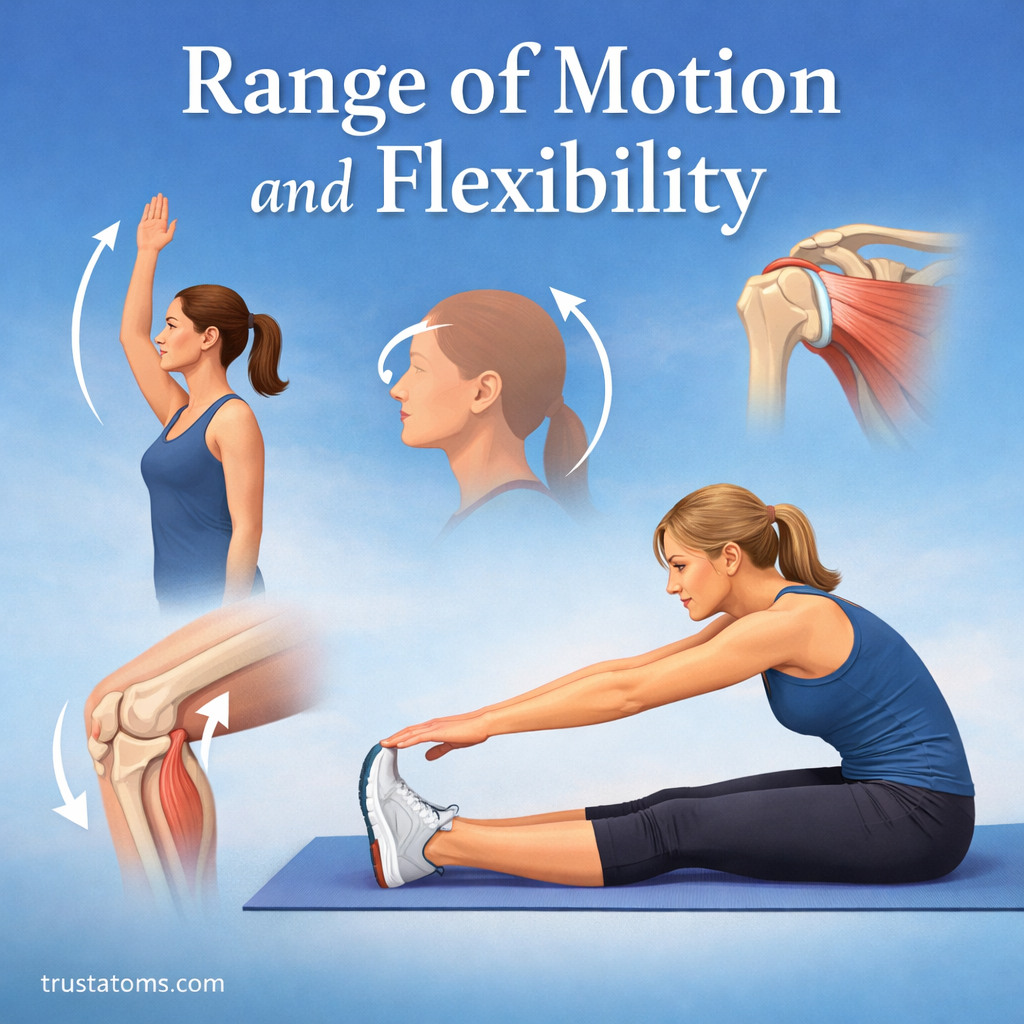
Range of motion (ROM) refers to the full movement potential of a joint, usually measured in degrees. It describes how far a joint can move in a specific direction.
Types of Range of Motion
There are three main types:
- Active ROM
Movement performed using your own muscle strength (e.g., lifting your arm overhead). - Passive ROM
Movement applied by an external force (like a therapist or gravity). - Assisted ROM
A combination of both, where you use some effort with help from an external source.
Examples
- Shoulder: Raising your arm overhead
- Knee: Bending and straightening your leg
- Neck: Turning your head side to side
ROM is influenced by joint structure, muscle strength, and nervous system control.
What Is Flexibility?
Flexibility refers to the ability of muscles and connective tissues to stretch. It determines how easily a muscle can lengthen during movement.
Key Components of Flexibility
- Muscle elasticity – How well muscles return to their original length
- Tendon and ligament adaptability – Their ability to tolerate stretch
- Stretch tolerance – How comfortable your body is with stretching
Static vs Dynamic Flexibility
- Static flexibility – Holding a stretch (e.g., touching your toes and holding)
- Dynamic flexibility – Moving through a range (e.g., leg swings)
Range of Motion vs Flexibility: What’s the Difference?
Although they are often used interchangeably, they serve different roles:
- Range of Motion
- Focuses on joint movement
- Depends on strength, control, and joint structure
- Measured in degrees
- Flexibility
- Focuses on muscle length
- Depends on tissue elasticity
- Measured by stretch capacity
How They Work Together
Good flexibility can support better ROM, but it doesn’t guarantee it. For example:
- You might have flexible hamstrings but still lack full hip mobility due to joint restrictions.
- You may improve ROM through strength training even without significant changes in flexibility.
Why Range of Motion and Flexibility Matter
Improving both can lead to noticeable benefits in daily life and physical performance.
Physical Benefits
- Better posture and alignment
- Reduced risk of injury
- Improved balance and coordination
- Increased efficiency in movement
Functional Benefits
- Easier performance of daily tasks (bending, reaching, lifting)
- Enhanced athletic performance
- Reduced stiffness and discomfort
Factors That Affect Range of Motion and Flexibility
Several variables influence how well your body moves:
- Age – ROM and flexibility tend to decrease over time
- Activity level – Sedentary lifestyles reduce mobility
- Injury history – Scar tissue and pain can limit movement
- Joint structure – Bone shape naturally limits ROM
- Muscle imbalances – Tight or weak muscles affect movement patterns
How to Improve Range of Motion
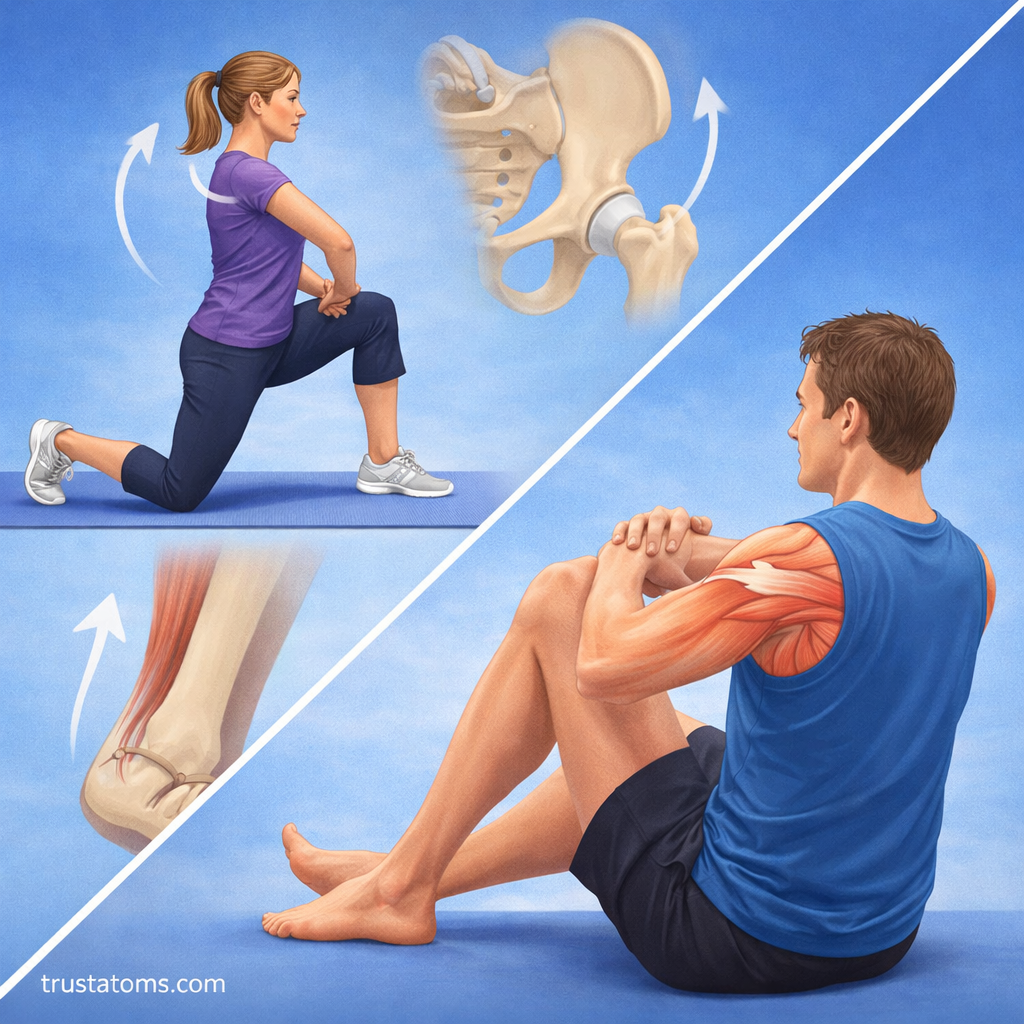
Improving ROM requires a combination of strength, control, and mobility work.
Effective Strategies
- Strength Training Through Full Range
- Use controlled movements
- Focus on proper form
- Mobility Exercises
- Joint circles
- Controlled articular rotations (CARs)
- Dynamic Stretching
- Leg swings
- Arm circles
- Consistency
- Practice regularly for lasting results
How to Improve Flexibility
Flexibility improves through consistent stretching and tissue adaptation.
Best Methods
- Static Stretching
- Hold stretches for 15–60 seconds
- PNF Stretching (Proprioceptive Neuromuscular Facilitation)
- Contract and relax technique
- Yoga or Stretching Routines
- Combine breath control with movement
Tips for Better Results
- Warm up before stretching
- Avoid bouncing (ballistic stretching)
- Breathe steadily during stretches
- Progress gradually
Common Mistakes to Avoid
When working on ROM and flexibility, avoid these common pitfalls:
- Stretching cold muscles
- Forcing movements beyond comfort
- Ignoring strength training
- Being inconsistent
- Focusing only on one area of the body
Range of Motion in Everyday Life
You use ROM constantly—even without realizing it.
Examples
- Reaching overhead to grab something
- Squatting to pick up objects
- Turning your head while driving
Limited ROM can make these tasks harder and increase strain on other body parts.
Final Thoughts
Range of motion and flexibility are foundational elements of human movement. While flexibility focuses on how far your muscles can stretch, range of motion reflects how well your joints can move through space.
Improving both doesn’t require extreme routines—just consistent, mindful practice. By combining mobility work, strength training, and stretching, you can build a body that moves efficiently, feels better, and performs at a higher level.