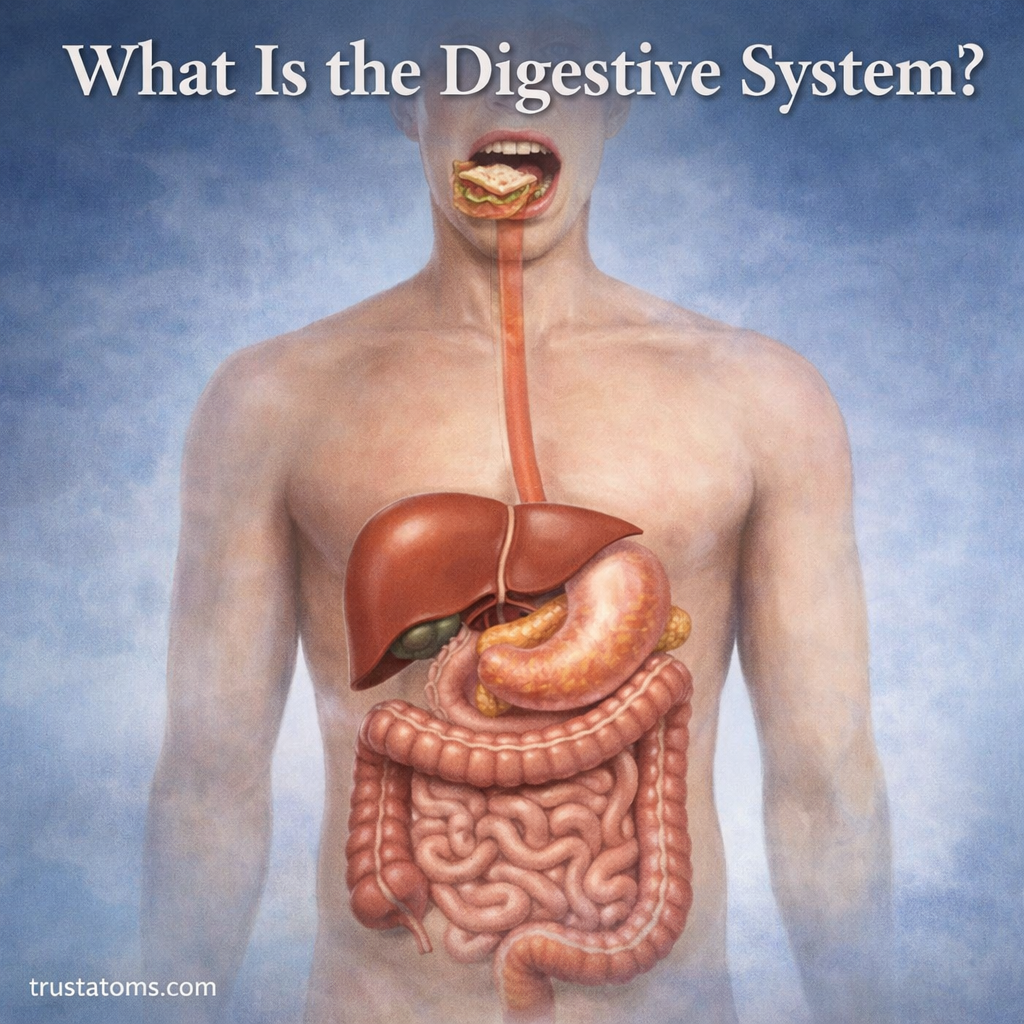
The digestive system is a group of organs that breaks down food, absorbs nutrients and water, and eliminates material the body cannot use. It includes the digestive tract and supporting organs that work together to turn food into substances cells can absorb and use.
Digestion begins in the mouth and continues through the stomach and intestines, where muscles, digestive juices, and specialized cells process food. Understanding these organs is an important part of human anatomy because digestion connects the body’s nutritional needs with its structure and function.
The digestive system does more than process meals. It also helps maintain fluid balance, supports immune defenses, and works with the circulatory system to distribute absorbed nutrients throughout the body.
Overview of the Digestive System
The digestive system contains two main groups of organs: the gastrointestinal (GI) tract and accessory digestive organs. The GI tract is a continuous muscular passage through which food, liquids, and digestive contents move.
Organs of the Gastrointestinal Tract
- Mouth: Receives food and begins chewing and chemical digestion.
- Pharynx and esophagus: Direct swallowed material toward the stomach.
- Stomach: Stores, mixes, and begins substantial protein digestion.
- Small intestine: Completes most chemical digestion and absorbs most nutrients.
- Large intestine: Absorbs water and electrolytes while processing remaining material.
- Rectum and anus: Store and eliminate feces.
For a closer examination of how these structures connect, see Digestive Tract Anatomy.
Accessory Digestive Organs
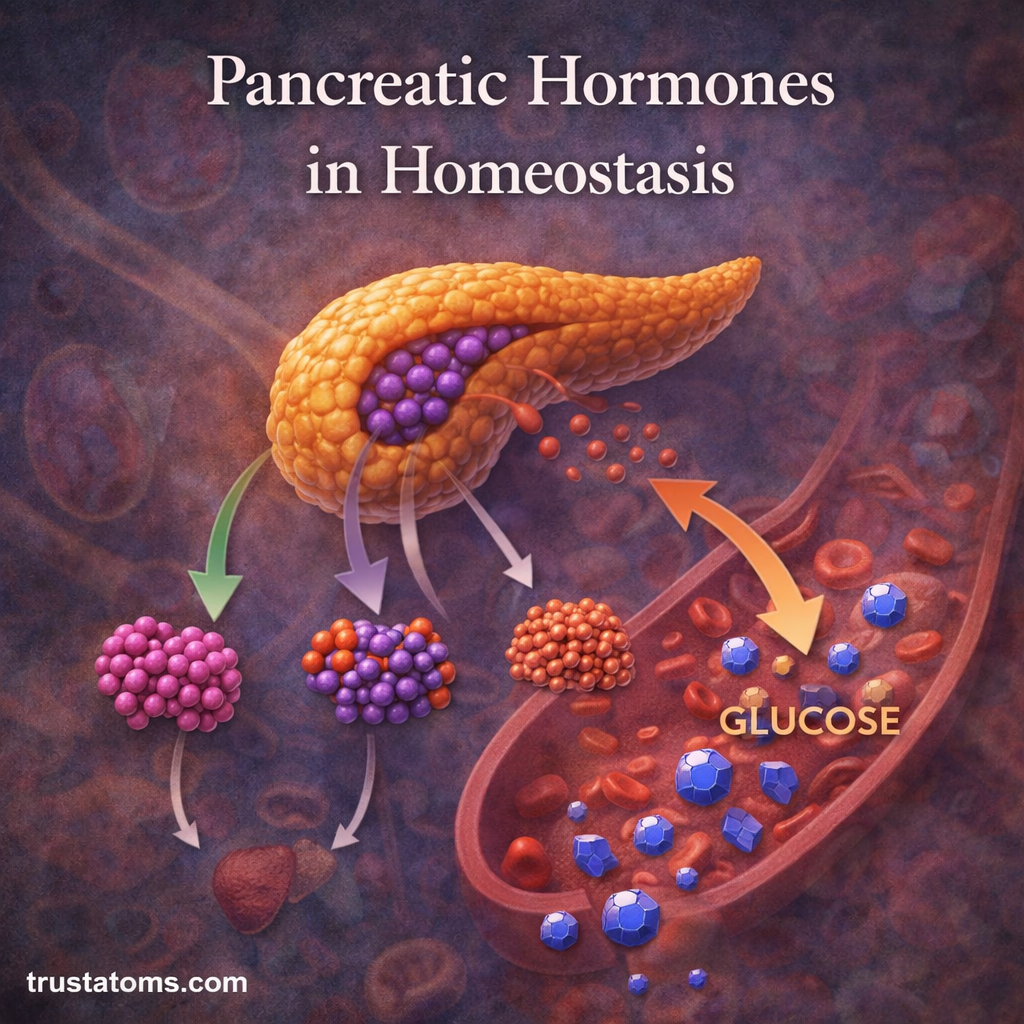
The liver, gallbladder, pancreas, salivary glands, teeth, and tongue assist digestion without forming the main passage through which food travels. The liver produces bile, the pancreas supplies digestive enzymes, and the gallbladder stores and concentrates bile.
The digestive process also depends on specialized enzymes that break large food molecules into absorbable components. Their individual functions are explained in Digestive Enzymes and Their Roles.
Movement through the digestive tract depends on coordinated muscle contractions. Gut Motility and Peristalsis explains how these contractions move and mix digestive contents.
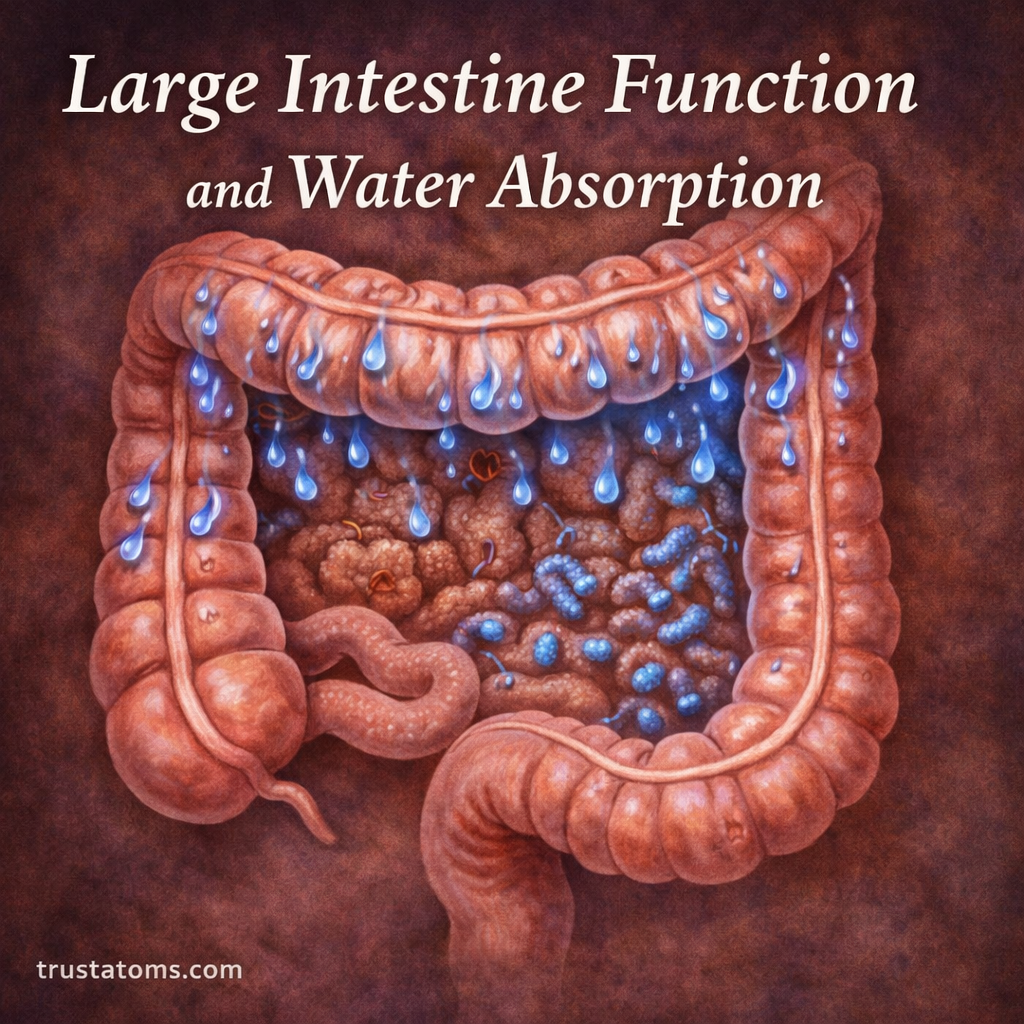
Once most nutrients have been absorbed, the colon helps recover water and electrolytes. This process is examined further in Large Intestine Function and Water Absorption.
The Four Main Functions of the Digestive System
Digestive organs perform several coordinated processes that transform food into absorbable nutrients and remove remaining material.
- Ingestion: Taking food and liquids into the mouth.
- Digestion: Physically and chemically breaking food into smaller components.
- Absorption: Moving nutrients, water, and electrolytes across the intestinal lining into blood or lymph.
- Elimination: Removing undigested material, microorganisms, and other substances through defecation.
Secretion and muscular movement support all four processes. Saliva, stomach acid, mucus, enzymes, and bile help prepare food for absorption, while muscle contractions keep digestive contents moving.
How Food Travels Through the Digestive System
Food passes through several organs, each with a different environment and function. The process is continuous, although different parts of a meal may move through the tract at different rates.
1. Mouth: Chewing and Saliva Begin Digestion
Teeth break food into smaller pieces, increasing the surface area available to digestive enzymes. The tongue mixes food with saliva and helps form a soft mass called a bolus for swallowing.
Salivary amylase begins breaking down starch. Saliva also lubricates food, making it easier to swallow and protecting tissues in the mouth.
2. Esophagus: Muscles Move Food to the Stomach
Swallowing moves the bolus through the pharynx into the esophagus. Coordinated muscular contractions called peristalsis propel it toward the stomach.
The lower esophageal sphincter normally helps limit the backward movement of stomach contents into the esophagus. Food does not simply fall into the stomach by gravity; muscular movement is responsible for transport.
3. Stomach: Acid and Mixing Process Food
The stomach temporarily stores food and mixes it with gastric secretions. Hydrochloric acid creates an acidic environment that helps denature proteins and supports the activity of pepsin, an enzyme involved in protein digestion.
Muscular contractions mix food into a semifluid material called chyme. The stomach releases chyme gradually through the pyloric sphincter into the duodenum, the first section of the small intestine.
4. Small Intestine: Most Digestion and Absorption Occur
The small intestine consists of the duodenum, jejunum, and ileum. Pancreatic enzymes and bile enter the duodenum, where they help process carbohydrates, proteins, and fats.
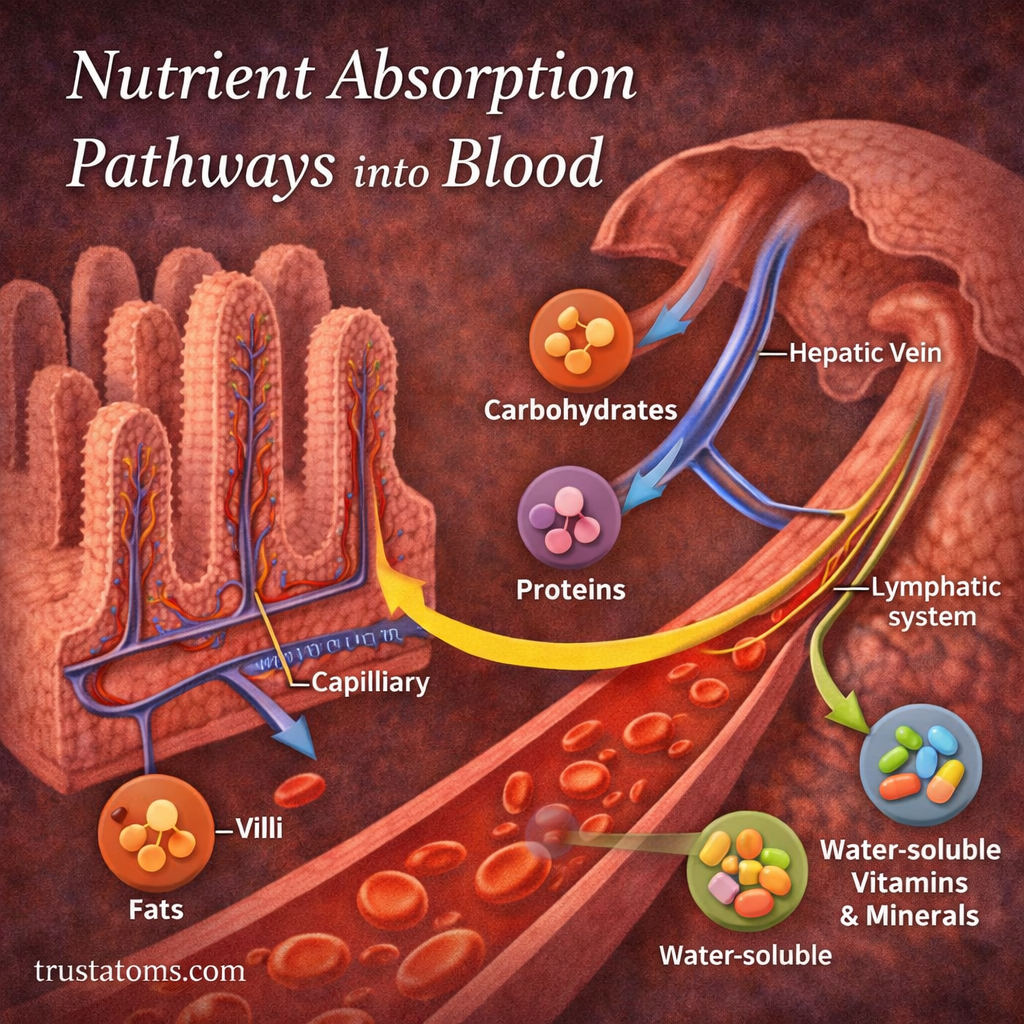
The intestinal lining contains folds, villi, and microvilli that greatly increase the surface area available for absorption. Most digested sugars and amino acids enter intestinal blood vessels, while many absorbed dietary fats are transported initially through lymphatic vessels.
The small intestine also absorbs vitamins, minerals, and substantial amounts of water. Specific nutrients use different transport mechanisms, so absorption is more complex than simply allowing dissolved food to pass through the intestinal wall.
5. Large Intestine: Water Recovery and Stool Formation
Material entering the large intestine contains water, electrolytes, undigested food components, and microorganisms. The colon absorbs additional water and electrolytes while bacteria ferment some carbohydrates that escaped digestion in the small intestine.
As water is recovered, the remaining contents become more solid. The colon also moves material toward the rectum through coordinated muscular activity.
6. Rectum and Anus: Waste Leaves the Body
The rectum temporarily stores feces. Stretch receptors help initiate the defecation reflex, while internal and external anal sphincters contribute to control over elimination.
Mechanical vs. Chemical Digestion
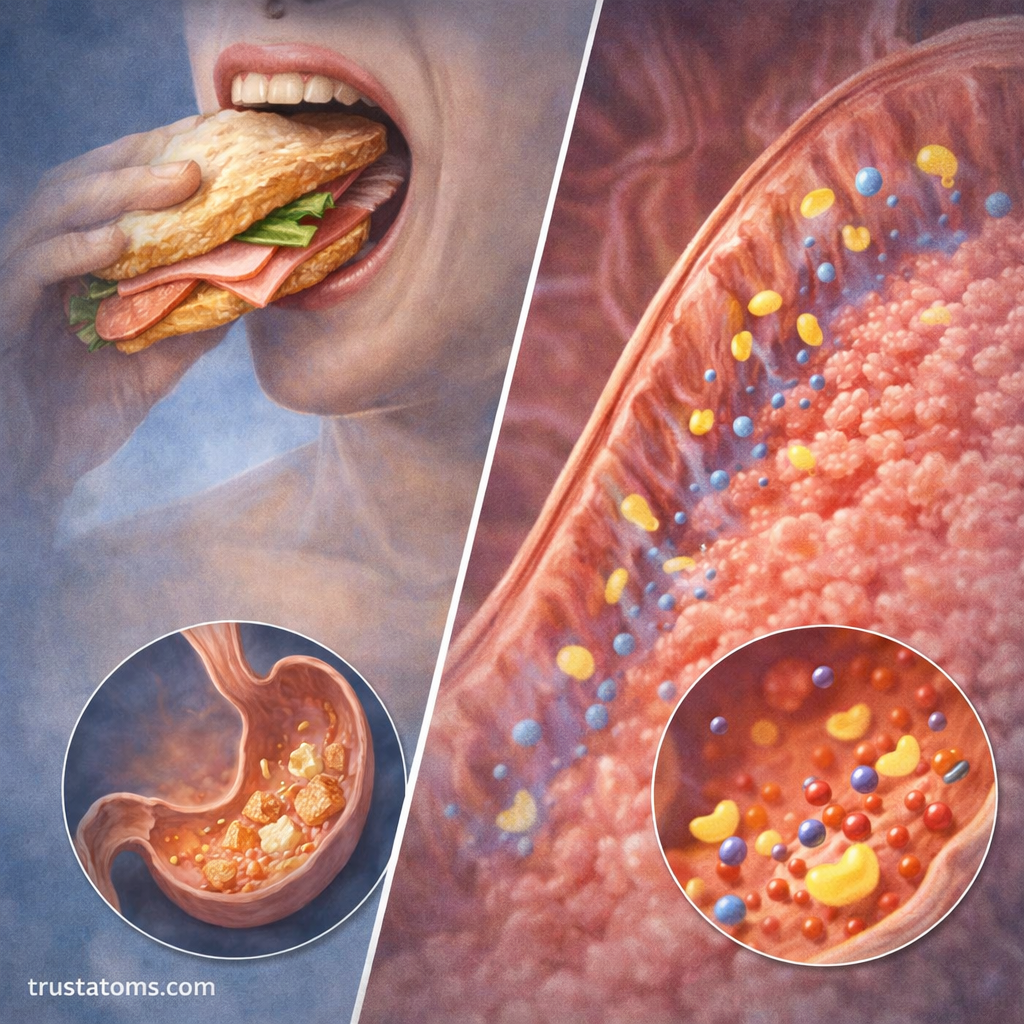
Digestion uses two complementary methods to process food. Physical breakdown makes food easier to mix and exposes more material to digestive chemicals, while chemical breakdown changes the molecules themselves.
- Mechanical digestion: Breaking food into smaller pieces through chewing, stomach mixing, and intestinal movements.
- Chemical digestion: Breaking large nutrient molecules into smaller molecules through enzymes and other digestive secretions.
For example, chewing bread breaks it into smaller pieces without changing the starch molecules into glucose. Enzymes begin breaking starch into smaller carbohydrates, and further digestion produces absorbable sugars.
| Feature | Mechanical Digestion | Chemical Digestion |
|---|---|---|
| Main process | Physical breakdown and mixing | Molecular breakdown |
| Primary agents | Teeth and muscular contractions | Digestive enzymes and secretions |
| Examples | Chewing and stomach churning | Amylase breaking down starch |
| Result | Smaller food particles | Smaller nutrient molecules |
| Main purpose | Improve mixing and exposure | Prepare nutrients for absorption |
How the Liver, Pancreas, and Gallbladder Assist Digestion
Food does not pass directly through these accessory organs, but their secretions are essential for normal digestion.
Liver
The liver produces bile, which contains bile salts that help emulsify dietary fats. Emulsification disperses fat into smaller droplets, making it easier for digestive enzymes to act. The liver also processes many absorbed nutrients arriving through the hepatic portal circulation.
Gallbladder
The gallbladder stores and concentrates bile between meals. When fatty food enters the small intestine, hormonal signals stimulate the gallbladder to contract and release bile into the digestive tract.
Pancreas
The pancreas releases digestive enzymes into the small intestine, including amylase for carbohydrates, lipase for fats, and proteases for proteins. It also secretes bicarbonate-rich fluid that helps neutralize acidic chyme entering from the stomach.
Worked Example: What Happens to a Meal Containing Starch, Protein, and Fat?
Consider a meal containing rice, chicken, and olive oil. These foods supply different nutrients, so the digestive system must process each through a somewhat different pathway.
- In the mouth: Chewing breaks the rice and chicken into smaller pieces. Salivary amylase begins acting on starch in the rice.
- In the stomach: Acid and pepsin begin substantial protein digestion, while muscular contractions mix the meal into chyme.
- In the duodenum: Pancreatic amylase continues starch digestion, proteases break down proteins, and bile helps disperse fats for pancreatic lipase.
- During absorption: Glucose and amino acids enter intestinal blood vessels. Many products of fat digestion enter intestinal cells and are packaged for transport through lymphatic vessels.
- In the colon: Undigested material, including some dietary fiber, reaches intestinal bacteria. Water and electrolytes continue to be absorbed before elimination.
This example shows why digestion requires several organs working in sequence. No single digestive organ performs every step needed to process a mixed meal.
How Digestion Supports Nutrition and Fluid Balance
The digestive system supplies substances needed for energy production, tissue maintenance, and growth. Carbohydrates provide absorbable sugars, proteins provide amino acids, and dietary fats supply fatty acids and other lipid components.
Digestion also helps maintain hydration. The small intestine absorbs much of the water entering the digestive tract, including water consumed in drinks and water released in digestive secretions. The large intestine recovers additional water and electrolytes.
The intestinal lining forms a selective barrier between the contents of the gut and internal tissues. Mucus, epithelial cells, immune defenses, and resident microorganisms contribute to normal intestinal function.
Common Digestive Problems and Healthy Habits
Digestive symptoms can arise from different causes, including altered motility, inflammation, infections, food intolerance, and structural problems. Common conditions include gastroesophageal reflux disease, constipation, diarrhea, peptic ulcers, and irritable bowel syndrome.
These conditions do not all result from poor diet or an imbalance of gut bacteria. Their causes and treatments differ, and persistent symptoms may require medical assessment.
General habits that support digestive health include eating a varied diet with adequate fiber, drinking sufficient fluids, remaining physically active, and following appropriate food safety practices. Individual dietary needs vary, particularly for people with diagnosed digestive conditions.
Common Misconceptions About the Digestive System
Misconception 1: Most Digestion Happens in the Stomach
The stomach mixes food and begins substantial protein digestion, but most chemical digestion and nutrient absorption occur in the small intestine.
Misconception 2: Bile Is a Digestive Enzyme
Bile is not an enzyme. Its bile salts help emulsify fats and support their absorption, while enzymes such as pancreatic lipase chemically break down fat molecules.
Misconception 3: The Large Intestine Absorbs All Nutrients
Most nutrient absorption occurs in the small intestine. The large intestine primarily recovers water and electrolytes and absorbs certain products of bacterial fermentation, including short-chain fatty acids.
Misconception 4: Digestion Stops Between Meals
The digestive tract remains active between meals. Muscular activity, secretions, and other regulatory processes continue even when food is not being consumed.
Frequently Asked Questions
What Is the Digestive System in Simple Terms?
The digestive system is the group of organs that processes food, absorbs nutrients and water, and removes undigested material. It includes the mouth, stomach, intestines, and accessory organs such as the liver and pancreas.
What Are the Main Organs of the Digestive System?
The main digestive tract includes the mouth, pharynx, esophagus, stomach, small intestine, large intestine, rectum, and anus. Accessory structures include the salivary glands, liver, gallbladder, pancreas, teeth, and tongue.
Where Does Most Digestion Take Place?
Most chemical digestion takes place in the small intestine, where pancreatic enzymes, intestinal enzymes, and bile help process food. The small intestine is also the primary location for nutrient absorption.
How Long Does Food Take to Pass Through the Digestive System?
Transit time varies with the meal, individual physiology, medications, and other factors. Food may leave the stomach over several hours, while movement through the intestines can take considerably longer. Complete passage commonly takes roughly one to several days.
What Is the Difference Between Digestion and Absorption?
Digestion breaks food into smaller physical particles and chemical components. Absorption moves nutrients, water, and electrolytes from the digestive tract across the intestinal lining into the blood or lymph.
The digestive system processes food through coordinated mechanical movement, chemical breakdown, nutrient absorption, and waste elimination. Its organs have distinct functions, with the small intestine handling most nutrient absorption and the large intestine recovering additional water and electrolytes. Together, these processes supply the body with usable nutrients while maintaining fluid balance and removing material that remains after digestion.
This article is for general education and is not medical advice. Talk to a qualified health professional about any medical concern.
Sources: OpenStax, Anatomy and Physiology 2e; Guyton and Hall, Textbook of Medical Physiology; Tortora and Derrickson, Principles of Anatomy and Physiology; National Institute of Diabetes and Digestive and Kidney Diseases (NIDDK), Your Digestive System & How It Works.