Digestion is the process by which the body breaks down food into nutrients that can be absorbed and used for energy, growth, and repair. This process occurs in two main ways: mechanical digestion and chemical digestion.
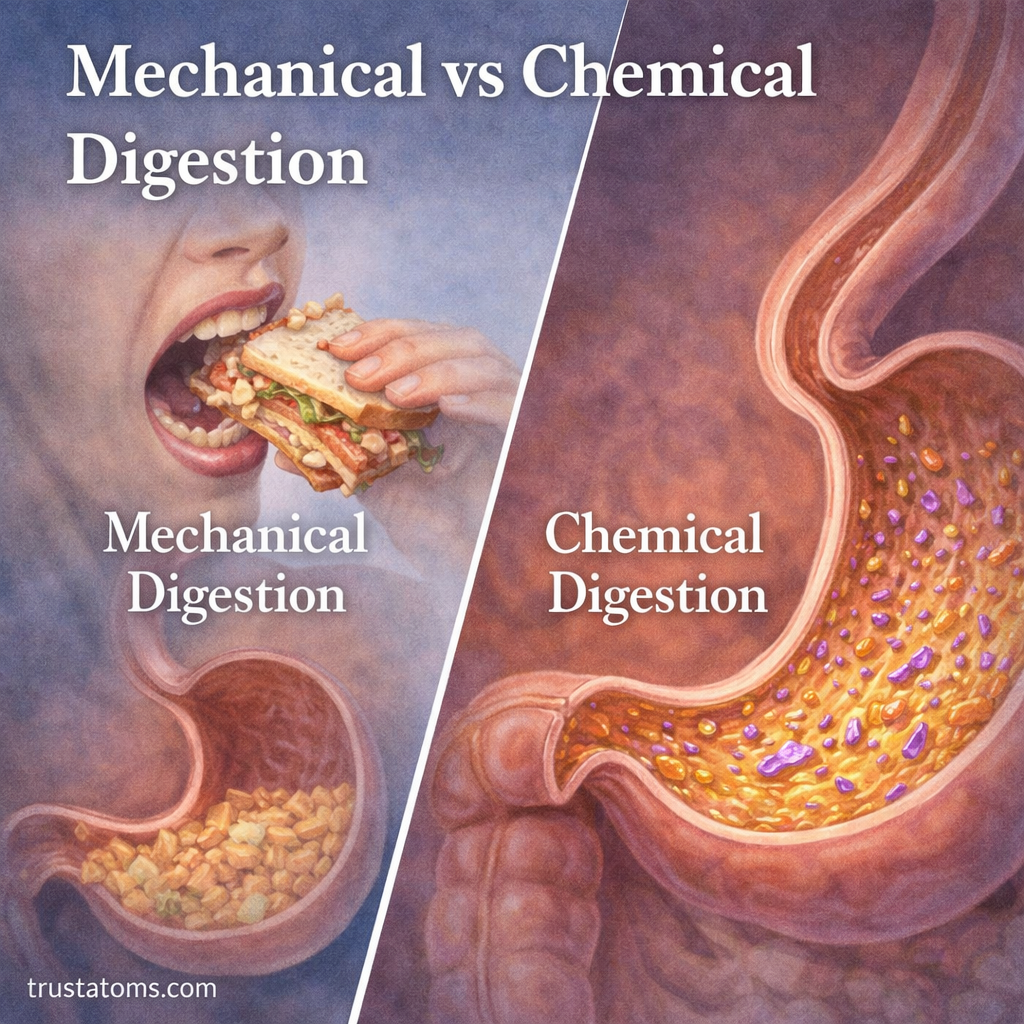
While both work together seamlessly, they serve different roles. Mechanical digestion physically breaks food into smaller pieces, while chemical digestion uses enzymes and acids to break food down at the molecular level.
Understanding the difference between these two processes helps explain how the body efficiently extracts nutrients from everything you eat.
What Is Mechanical Digestion?
Mechanical digestion refers to the physical breakdown of food into smaller pieces without changing its chemical structure.
Key Characteristics
- Does not alter the chemical composition of food
- Increases surface area for enzymes to act on
- Involves physical movement and force
Where Mechanical Digestion Occurs
Mechanical digestion takes place in several parts of the digestive system:
Mouth
- Teeth cut, tear, and grind food
- Tongue helps mix food with saliva
- Forms food into a bolus for swallowing
Stomach
- Muscular contractions churn and mix food
- Breaks food into a semi-liquid mixture (chyme)
Small Intestine
- Segmentation movements mix food with digestive juices
- Helps improve contact with absorptive surfaces
What Is Chemical Digestion?
Chemical digestion involves breaking down food into simpler molecules using enzymes and digestive chemicals.
Key Characteristics
- Changes the chemical structure of food
- Breaks macronutrients into absorbable units
- Relies on enzymes and acids
Where Chemical Digestion Occurs
Mouth
- Salivary enzymes begin breaking down carbohydrates
Stomach
- Hydrochloric acid (HCl) denatures proteins
- Enzymes like pepsin break proteins into smaller chains
Small Intestine
- Most chemical digestion occurs here
- Enzymes from the pancreas break down:
- Carbohydrates → simple sugars
- Proteins → amino acids
- Fats → fatty acids and glycerol
- Bile from the liver helps emulsify fats, making them easier to digest
Key Differences Between Mechanical and Chemical Digestion
Mechanical Digestion
- Physical process
- Breaks food into smaller pieces
- No chemical change
- Prepares food for further digestion
Chemical Digestion
- Biochemical process
- Breaks food into molecules
- Involves enzymes and acids
- Enables nutrient absorption
How Mechanical and Chemical Digestion Work Together
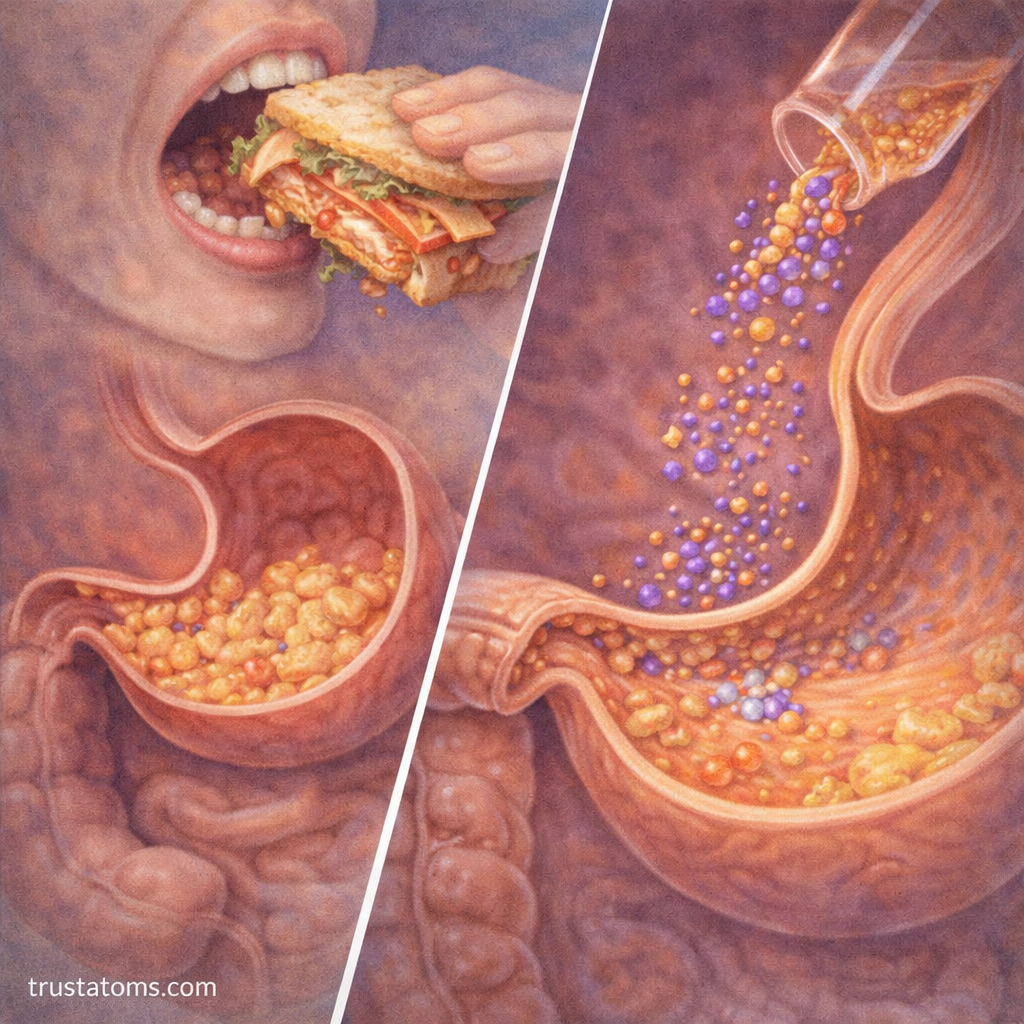
These two processes are not separate—they are highly coordinated.
Step-by-Step Interaction
- Mechanical digestion breaks food into smaller pieces
- Increased surface area allows enzymes to work more effectively
- Chemical digestion breaks food into absorbable molecules
- Nutrients are absorbed into the bloodstream
Without mechanical digestion, chemical digestion would be less efficient. Without chemical digestion, nutrients could not be absorbed at all.
Examples of Mechanical vs Chemical Digestion
Mechanical Digestion Examples
- Chewing food in the mouth
- Stomach churning food
- Intestinal mixing movements
Chemical Digestion Examples
- Salivary enzymes breaking down starch
- Stomach acid breaking down proteins
- Pancreatic enzymes digesting fats, proteins, and carbohydrates
Why Both Types of Digestion Are Important
Mechanical and chemical digestion are both essential for proper nutrient absorption.
Benefits of Mechanical Digestion
- Makes food easier to swallow
- Improves enzyme efficiency
- Reduces strain on the digestive system
Benefits of Chemical Digestion
- Converts food into usable nutrients
- Supports energy production
- Enables growth and tissue repair
Factors That Affect Digestion Efficiency
Several factors can influence how well both types of digestion work:
Eating Habits
- Eating too quickly reduces effective chewing
- Large food particles are harder to digest
Diet Quality
- Balanced diets support enzyme function
- Highly processed foods may disrupt digestion
Hydration
- Water supports enzyme activity and food movement
Digestive Health
- Enzyme deficiencies can impair chemical digestion
- Muscle or motility issues can affect mechanical digestion
Common Issues Related to Digestion
Problems in either process can lead to digestive discomfort or health issues.
Mechanical Digestion Issues
- Poor chewing habits
- Reduced stomach motility
Chemical Digestion Issues
- Low stomach acid
- Enzyme deficiencies
- Malabsorption disorders
These issues can result in symptoms like bloating, indigestion, or nutrient deficiencies.
Final Thoughts
Mechanical and chemical digestion are two essential processes that work together to break down food and provide your body with the nutrients it needs. One prepares food physically, while the other completes the breakdown at a molecular level.
By understanding how these processes function, you can better support your digestive health through mindful eating, proper nutrition, and healthy lifestyle habits.