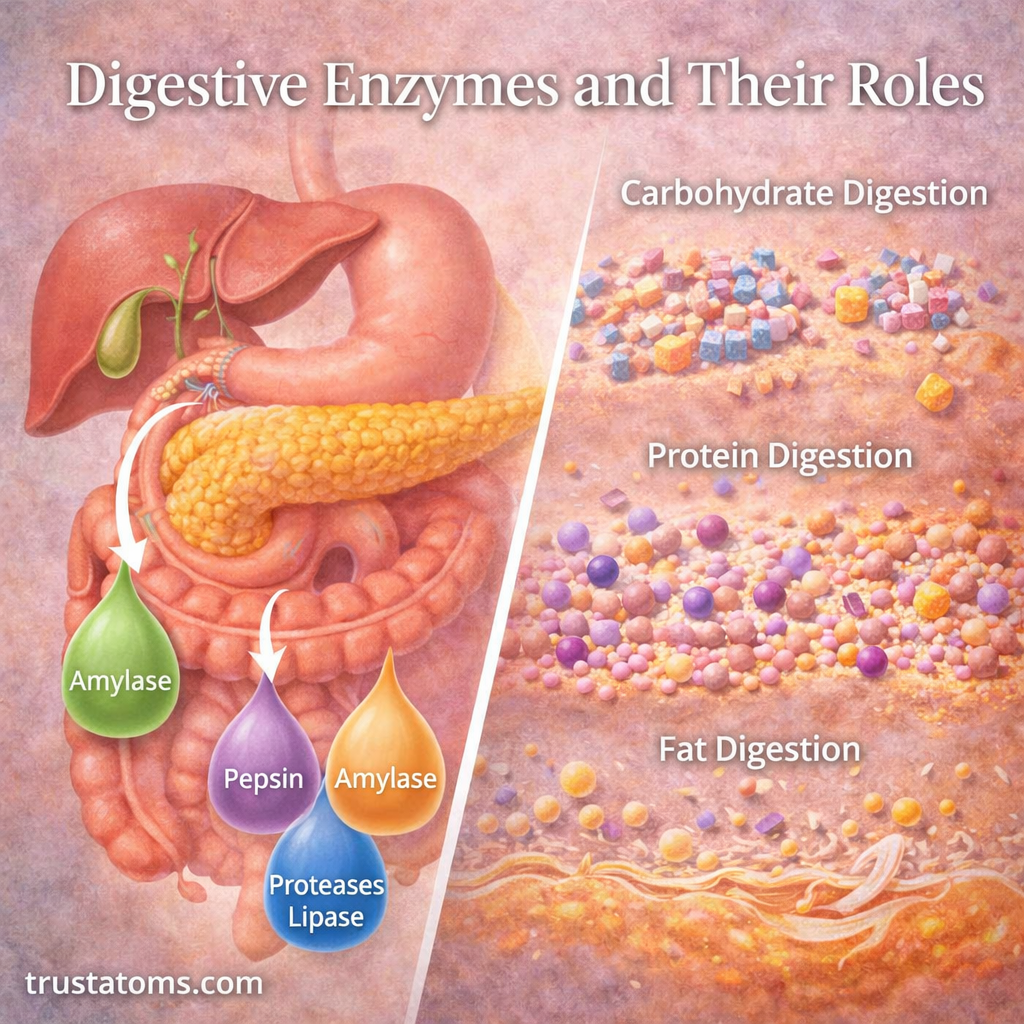
Digestive enzymes are specialized proteins that break down carbohydrates, proteins, and fats into smaller molecules the body can absorb. They work in the mouth, stomach, and small intestine, with different enzymes targeting specific nutrients at each stage of digestion.
Understanding digestive enzymes connects nutrition with human anatomy because the salivary glands, stomach, pancreas, and intestinal lining each contribute to chemical digestion. Without sufficient enzyme activity, food may pass through the intestines without being fully digested, potentially causing digestive symptoms and poor nutrient absorption.
What Are Digestive Enzymes?
Digestive enzymes are biological molecules that speed up chemical reactions in the digestive system. They break large food molecules into smaller, absorbable components.
Most digestive enzymes perform hydrolysis, a reaction that uses water to split chemical bonds. An enzyme acts on particular molecules, called substrates, without being consumed by the reaction.
Enzymes are selective. Amylase breaks down starch but not proteins, while proteases act on protein bonds. Their activity also depends on environmental conditions, especially acidity and temperature.
Where Digestive Enzymes Are Produced
Salivary Glands
The salivary glands release saliva containing salivary amylase. This enzyme begins breaking starch into shorter carbohydrate chains while food is chewed. Its activity decreases after food encounters the strongly acidic environment of the stomach.
Stomach
The stomach produces enzymes that start protein digestion. Chief cells release pepsinogen, an inactive precursor that becomes pepsin in acidic gastric conditions.
Pepsin breaks proteins into smaller peptides rather than directly converting all dietary protein into individual amino acids. The stomach also produces gastric lipase, which contributes to fat digestion.
Pancreas
The pancreas releases pancreatic amylase, lipase, and protein-digesting enzymes into the duodenum, the first part of the small intestine. Many pancreatic proteases are secreted as inactive precursors to protect pancreatic tissue from digestion.
Small Intestine
The small intestinal lining contains enzymes attached to its brush border, including lactase, sucrase-isomaltase, maltase-glucoamylase, and several peptidases. These enzymes complete important final steps before nutrients are absorbed.
Major Types of Digestive Enzymes and Their Functions
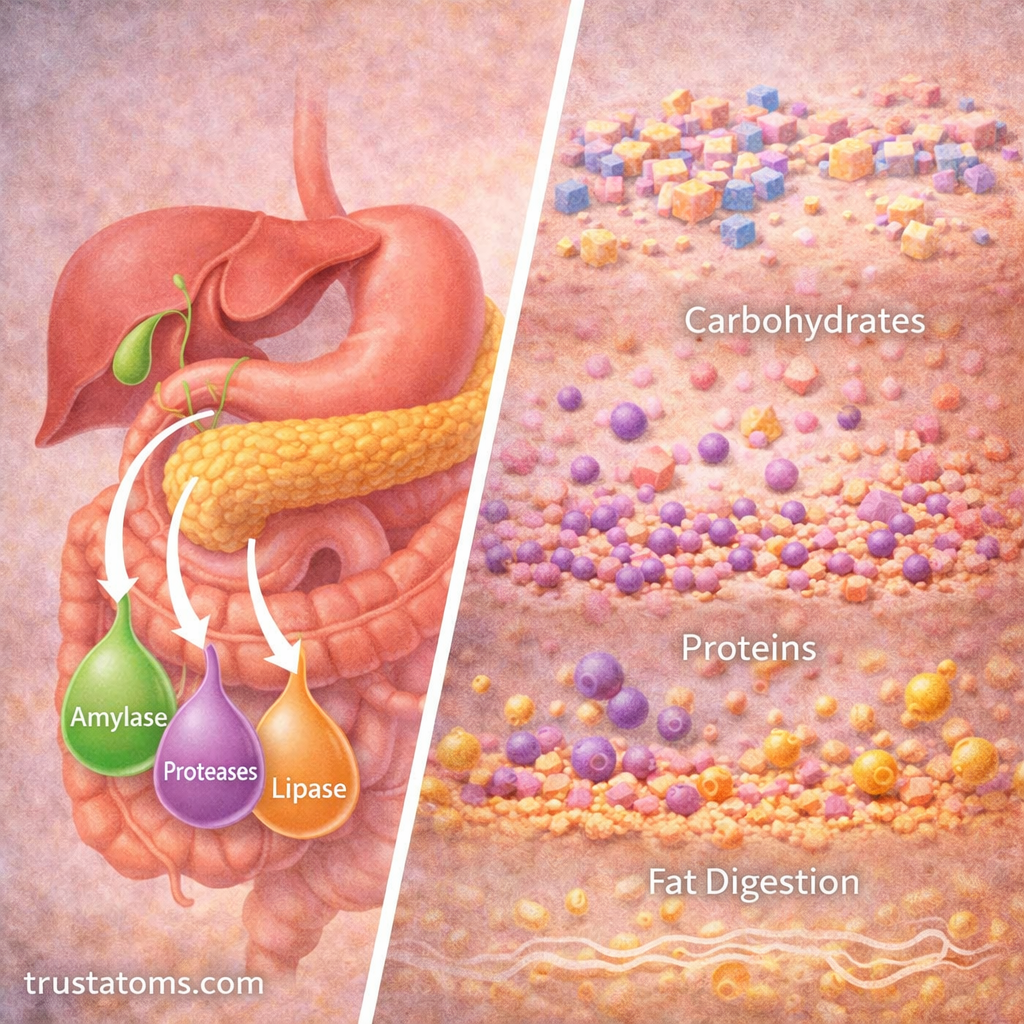
Digestive enzymes are grouped according to the nutrients they break down. Each group performs a different chemical task.
| Enzyme | Main Substrate | Products |
|---|---|---|
| Amylase | Starch | Shorter carbohydrates, including maltose and dextrins |
| Lactase | Lactose | Glucose and galactose |
| Sucrase | Sucrose | Glucose and fructose |
| Pepsin | Proteins | Smaller peptides |
| Trypsin and chymotrypsin | Proteins and peptides | Smaller peptides |
| Pancreatic lipase | Triglycerides | Free fatty acids and monoglycerides |
Carbohydrases Break Down Starches and Sugars
Carbohydrate-digesting enzymes convert digestible starches and certain sugars into monosaccharides that can cross the intestinal lining. Carbohydrate digestion begins in the mouth with amylase and continues mainly in the small intestine.
Humans lack enzymes that digest some plant fibers, such as cellulose. These carbohydrates therefore pass into the large intestine, where certain types can be fermented by gut bacteria.
Proteases Break Proteins Into Smaller Units
Protein digestion begins with pepsin in the stomach. Pancreatic proteases continue breaking peptide bonds in the small intestine, while intestinal peptidases help produce free amino acids and small peptides suitable for absorption.
Lipases Break Down Dietary Fats
Pancreatic lipase performs much of the digestion of dietary triglycerides. Bile salts, although not enzymes, help disperse fats into small droplets and support the formation of structures that transport digestion products toward intestinal cells.
After absorption, intestinal cells reassemble many fatty acids into triglycerides and package them into chylomicrons, which enter intestinal lymphatic vessels before reaching the bloodstream.
How Digestive Enzymes Work Together After a Meal
Consider a meal containing rice, chicken, and olive oil. Each food provides different nutrients that require different enzymes.
- Mouth: Salivary amylase begins digesting starch from the rice as chewing mixes food with saliva.
- Stomach: Gastric acid unfolds some chicken proteins, allowing pepsin to break them into smaller peptides.
- Duodenum: Pancreatic amylase continues starch digestion, proteases break down peptides, and lipase acts on fats from the olive oil.
- Intestinal brush border: Enzymes complete the breakdown of many carbohydrates and peptides into absorbable molecules.
- Absorption: Sugars and amino acids enter intestinal cells and then the circulation, while most long-chain dietary fats follow a lymphatic transport pathway.
This sequence illustrates why digestion requires several organs rather than one enzyme acting on every nutrient.
How pH Affects Digestive Enzyme Activity
Each digestive enzyme functions best within a particular pH range. Stomach acid creates conditions suitable for pepsin activation and activity, while most pancreatic enzymes work effectively in the near-neutral to slightly alkaline environment of the small intestine.
Pancreatic bicarbonate helps neutralize acidic material entering the duodenum. Without this adjustment, intestinal enzymes may function less effectively and the intestinal lining may be exposed to excessive acidity.
The relationship between stomach acidity and protein breakdown is examined further in Gastric Acid and Enzyme Activity.
How the Small Intestine Completes Digestion
Most chemical digestion and nutrient absorption occur in the small intestine. Pancreatic secretions mix with partially digested food, while enzymes on intestinal microvilli perform final reactions close to the absorptive surface.
These processes depend on the pancreas supplying enzymes and bicarbonate in appropriate amounts. Pancreas Function in Digestion explains how pancreatic secretions reach the intestine and support nutrient breakdown.
Once digestion produces absorbable molecules, intestinal transport proteins move sugars, amino acids, and other nutrients across the epithelial lining. Enzymes make absorption possible, but they do not themselves transport nutrients into the bloodstream.
What Happens When Digestive Enzymes Are Deficient?
Insufficient enzyme activity can leave nutrients incompletely digested. Depending on the enzyme affected, symptoms may include abdominal discomfort, bloating, diarrhea, or poor nutrient absorption.
- Lactase deficiency: Undigested lactose reaches the colon, where bacterial fermentation can produce gas, bloating, and diarrhea.
- Exocrine pancreatic insufficiency: Inadequate pancreatic enzyme secretion can cause fat malabsorption, greasy stools, weight loss, and nutritional deficiencies.
- Intestinal lining damage: Conditions affecting the small intestinal brush border can reduce enzyme activity and nutrient absorption.
Not all digestive symptoms indicate an enzyme deficiency. Treatment depends on the underlying cause, and enzyme replacement is useful for certain diagnosed conditions rather than being necessary for everyone.
Frequently Asked Questions
Which organ produces the most digestive enzymes?
The pancreas is the major source of enzymes released into the small intestine for digesting carbohydrates, proteins, and fats. The salivary glands, stomach, and intestinal lining also produce important digestive enzymes.
Are digestive enzymes the same as stomach acid?
No. Digestive enzymes are proteins that accelerate chemical reactions, while stomach acid creates an acidic environment, helps unfold proteins, and activates pepsinogen. Both contribute to digestion through different mechanisms.
Does everyone need digestive enzyme supplements?
No. Most healthy people produce enough digestive enzymes to process ordinary meals. Supplements or prescribed enzyme replacement may be appropriate for specific conditions, such as lactose intolerance or exocrine pancreatic insufficiency.
Digestive enzymes divide food into molecules small enough for intestinal absorption, with each enzyme acting on particular chemical bonds. Their coordinated activity depends on secretion from several organs, suitable pH conditions, and a functioning small intestinal lining. When one part of this process fails, the resulting symptoms and nutrient deficiencies depend on which digestive steps are affected.
This article is for general education and is not medical advice. Talk to a qualified health professional about any medical concern.
Sources: Hall, Guyton and Hall Textbook of Medical Physiology; OpenStax, Anatomy and Physiology 2e; National Institute of Diabetes and Digestive and Kidney Diseases.