The large intestine plays a crucial role in the final stages of digestion. While most nutrient absorption happens earlier in the digestive tract, the large intestine focuses on water balance, waste formation, and maintaining gut health.
In this guide, you’ll learn how the large intestine works, how it absorbs water, and why this process is essential for overall health.
What Is the Large Intestine?
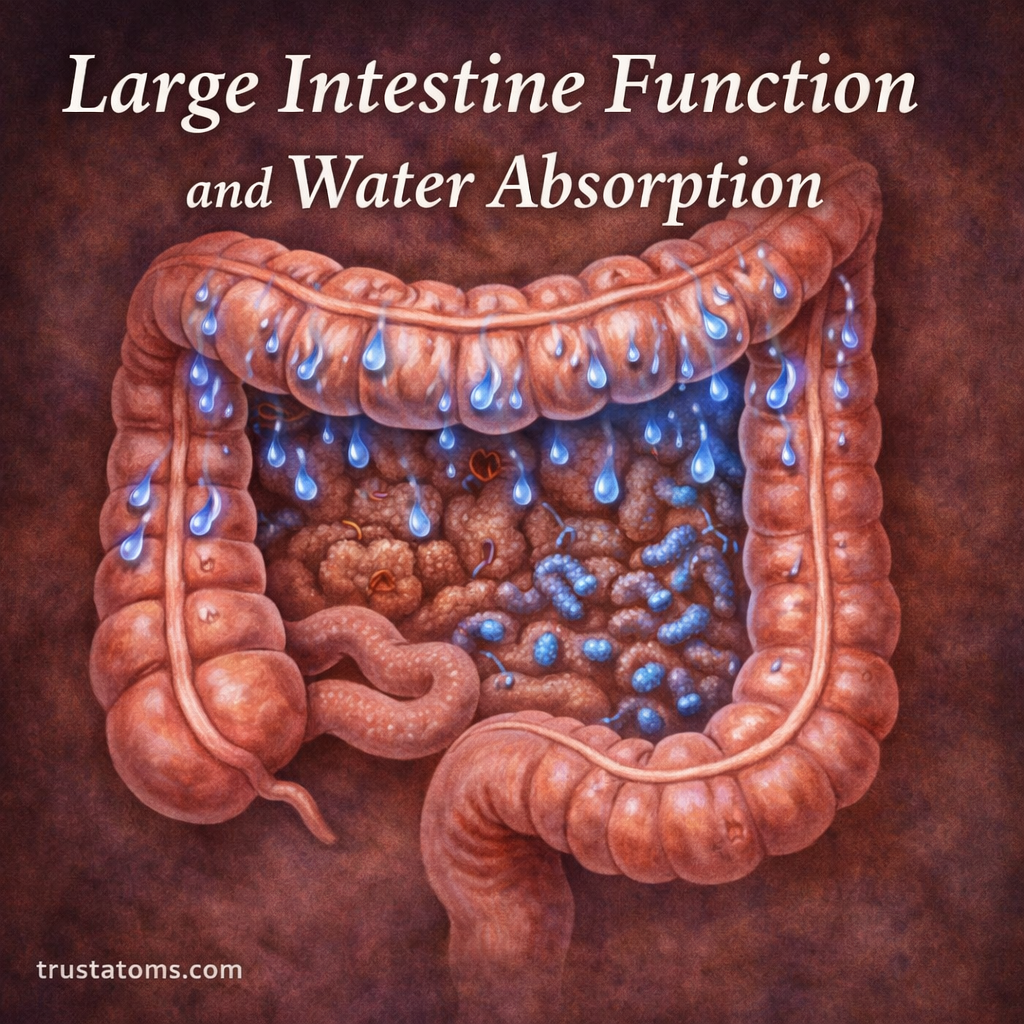
The large intestine is the final section of the digestive system, connecting the small intestine to the rectum and anus.
Main parts of the large intestine:
- Cecum
- Colon (ascending, transverse, descending, sigmoid)
- Rectum
- Anal canal
Key functions:
- Absorbs water and electrolytes
- Forms and stores feces
- Hosts beneficial gut bacteria
Although it doesn’t digest food in the same way as the small intestine, its role is vital for maintaining internal balance.
What Enters the Large Intestine?
By the time material reaches the large intestine, most nutrients have already been absorbed in the small intestine.
What remains:
- Undigested food fibers
- Water
- Salts and electrolytes
- Bacteria
- Waste products
This semi-liquid mixture is called chyme.
How Water Absorption Works
One of the primary functions of the large intestine is to absorb water from the remaining digestive material.
The absorption process:
- Chyme enters the large intestine from the small intestine
- The intestinal lining begins absorbing water
- Electrolytes like sodium are also reabsorbed
- The remaining material becomes more solid
- Feces are gradually formed
Why water absorption matters:
- Prevents dehydration
- Maintains electrolyte balance
- Helps form solid, manageable waste
Without this process, the body would lose large amounts of water daily.
The Role of Electrolytes
In addition to water, the large intestine absorbs important electrolytes.
Key electrolytes involved:
- Sodium
- Chloride
- Potassium
These minerals are essential for:
- Nerve function
- Muscle contractions
- Fluid balance
The colon carefully regulates how much of these substances are absorbed.
The Role of Gut Bacteria
The large intestine is home to trillions of beneficial bacteria, collectively known as the gut microbiota.
What these bacteria do:
- Break down undigested carbohydrates
- Produce vitamins like vitamin K and some B vitamins
- Support immune function
- Protect against harmful bacteria
Fermentation process:
Gut bacteria ferment dietary fiber, producing gases and short-chain fatty acids that benefit colon health.
Formation and Movement of Feces
As water is absorbed, the remaining material becomes feces.
How feces form:
- Water is removed from chyme
- Bacteria and fiber contribute to bulk
- Waste products are compacted
Movement through the colon:
The large intestine uses slow, wave-like contractions called peristalsis to move feces toward the rectum.
Storage and Elimination
The rectum serves as the storage site for feces until elimination.
The final steps:
- Feces enter the rectum
- Stretch receptors signal the need to defecate
- The anal sphincters control release
- Waste is expelled from the body
This process is carefully regulated by both voluntary and involuntary muscles.
What Happens When Water Absorption Is Imbalanced?
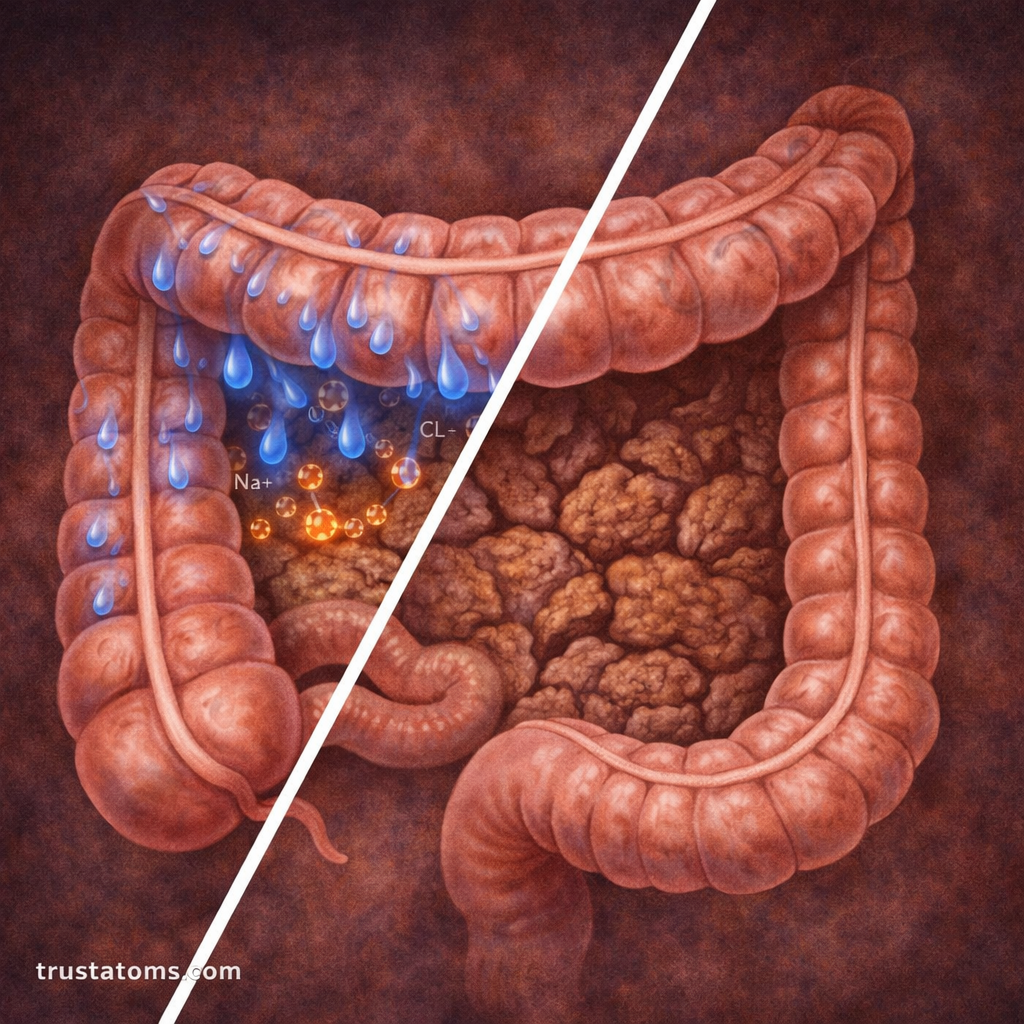
Proper water absorption is essential for normal bowel function.
Too little absorption:
- Leads to diarrhea
- Causes dehydration
- Results in loose, watery stools
Too much absorption:
- Leads to constipation
- Causes hard, dry stools
- Slows bowel movements
Maintaining balance is key to digestive health.
Why the Large Intestine Is Essential
Even though it doesn’t absorb most nutrients, the large intestine is critical for overall well-being.
Key benefits:
- Conserves water and prevents dehydration
- Maintains electrolyte balance
- Supports gut microbiome health
- Ensures proper waste elimination
Without it, the body would struggle to maintain fluid balance and eliminate waste effectively.
Final Thoughts
The large intestine is a vital part of your digestive system, responsible for water absorption, waste formation, and supporting beneficial bacteria.
By carefully regulating fluid levels and preparing waste for elimination, it helps maintain internal balance and overall health. Understanding its function highlights just how important the final stages of digestion truly are.